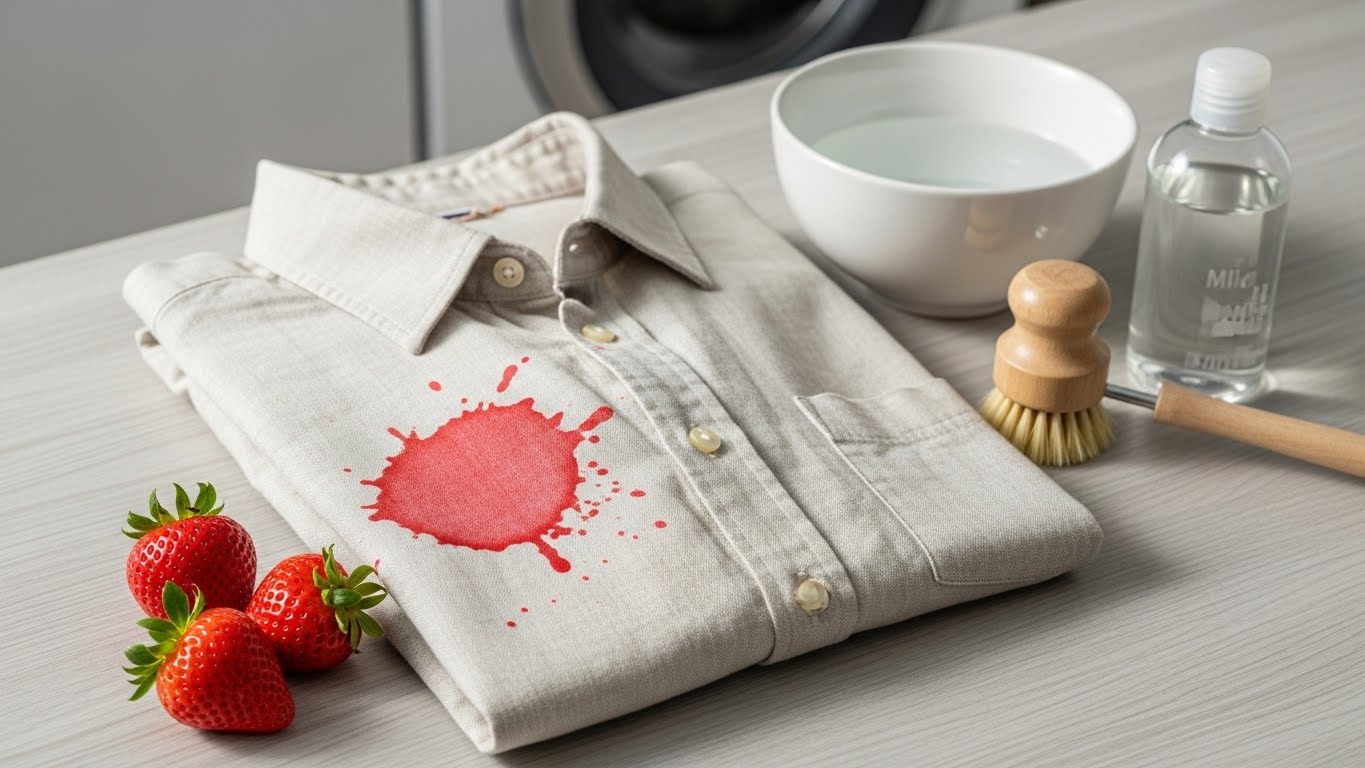
How to Get Strawberry Out of Clothes? Save Fabrics Easily
Act fast by blotting the stain gently and rinsing the back of the fabric with cold water to flush out pigment.
Avoid heat or rubbing, which can set the stain. You can soak the fabric in cold water with mild detergent or a vinegar solution.
For cotton, carefully pouring boiling water over the stain helps fade it. Use rubbing on sturdy fabrics if needed but test first.
Keep the fabric damp, and don’t dry it until the stain’s fully gone. More detailed steps can help you tackle even stubborn stains safely and effectively.
Key Takeaways
- Blot fresh strawberry juice immediately with a clean cloth to prevent spreading and avoid rubbing the stain.
- Rinse the stained area under cold running water from the back to flush out pigment without setting the stain.
- Soak the garment in cold water with mild detergent for 15–30 minutes to loosen the stain before washing.
- Use a vinegar-water mix or a salt-and-vinegar paste on the stain, then rinse thoroughly with cool water.
- Avoid applying heat or drying the garment until the stain is fully removed to prevent permanent setting.
Immediate Steps to Treat Strawberry Stains

Act quickly to minimize strawberry stains by blotting up fresh juice with a clean, absorbent cloth or paper towel to prevent it from soaking deeper into the fabric.
Blot fresh strawberry juice immediately with a clean cloth to stop it soaking into fabric.
Gently scrape off any jam or pulp residue with a dull knife, working from the stain’s edge toward the center to avoid spreading.
Don’t rub; the stain could worsen. Hold the stained area facing downward and rinse it under cold running water from the back to flush out pigment without driving it further in.
Avoid applying heat at this stage, as it can set the stain permanently.
After rinsing, soak the garment in cold water for 15–30 minutes to loosen pigments. For optimal removal of strawberry stains, consider using a specialized product like HG stain away no. 1, which is effective and safe for clothes.
For sturdier fabrics, add mild detergent to the soak, changing the water if it becomes heavily stained to prevent re-deposition. Using an enzyme-based stain remover can further enhance stain breakdown and improve results.
Using Vinegar to Remove Strawberry Stains
After rinsing and soaking the stained fabric as initial steps suggest, vinegar offers a practical solution to further break down strawberry pigments. Using vinegar, which contains acetic acid, helps disrupt stain molecules and makes them more water-soluble.
You can soak the fabric in a vinegar-water mix or apply a salt-vinegar paste directly to the stain. Soak times vary from 15 minutes to one hour, depending on the mixture. Always rinse thoroughly with cool water afterward to prevent residue and avoid hot water to stop stain setting. Test vinegar on a hidden area first, especially on delicate fabrics.
| Vinegar Ratio | Application Method | Soak Duration |
|---|---|---|
| 1/3 cup vinegar in water | Soak fabric in solution | 15 minutes |
| Equal parts salt & vinegar | Apply paste to stain | 30 minutes |
| 1 tbsp vinegar + detergent | Soak or spray stain area | 15 minutes |
| 1:3 vinegar to cold water | Spray or soak | Up to 1 hour |
| 1 tbsp vinegar + detergent | Soak in warm water solution | 15 minutes |
Employing Boiling Water for Cotton Fabrics
You can actually use boiling water to get rid of those pesky strawberry stains on cotton fabrics! Just pour the boiling water slowly from about six inches above the stain.
This method really helps to push the pigment out of the fibers. Since strawberry stains contain water-soluble pigments, boiling water can effectively dissolve some of the stain components.
But before you dive into that, make sure to rinse the stain with cold water first.
Oh, and remember to stretch the fabric taut for the best results!
Just a quick heads up—handle that boiling water with care to avoid any burns.
Also, it’s a good idea to test your fabric’s heat tolerance first.
You don’t want to accidentally damage your fabric while trying to clean it!
Boiling Water Technique
When treating strawberry stains on cotton fabrics, employing boiling water can dissolve the berry pigments effectively through heat and force.
Stretch the stained fabric taut over a sink or bowl, ensuring the stain faces up. Hold the fabric firmly; an embroidery hoop works well for clothing or removable sofa covers to keep the area taut while pouring. Using tools with ergonomic handles can help maintain a steady grip during this process.
Pour boiling water slowly from about 6 inches above the stain’s center. This force pushes the stain through the fibers without scrubbing or soap.
Repeat pours with fresh boiling water until the stain vanishes, visibly fading during the first pour. Optionally, add a splash of white distilled vinegar to the water for enhanced results.
This method safely removes fresh or set-in stains on colored or white cotton. After treatment, air-dry to confirm complete removal before laundering for sparkling clean results. Multiple bowls of microwaved boiling water can be used for tougher or older stains to ensure complete removal.
Safe Handling Tips
Frequently, proper safety measures prove essential before applying boiling water to cotton fabrics for stain removal.
First, check the care label to confirm 100% cotton or heavy cotton blends; avoid this method on delicate fibers or embellished garments.
Inspect for weak seams or trims that heat could damage, removing or shielding them beforehand.
Prepare a clear, stable workspace with a heatproof basin, gloves, and tongs, keeping children and pets away.
Remove excess strawberry solids gently, then rinse the stain from the fabric’s back with cold water. Since strawberry stains contain natural sugars and acids that complicate removal, timely rinsing is crucial to prevent permanent marks.
Test any pre-treater on a hidden area first.
When pouring boiling water, maintain control to avoid splashes, then immediately rinse with cold water to halt heat exposure. Additionally, maintaining proper air circulation around the drying fabric can help prevent moisture buildup that might cause odors or damage.
Always have first-aid supplies ready and ventilate the area properly if using chemicals alongside heat.
Safe Use of Bleach on White Clothing
To safely use bleach on your white clothes, it’s really important to dilute it properly. A good rule of thumb is to use about 1/4 cup of bleach per gallon of water when soaking or pretreating. Trust me, this makes a big difference.
Always ensure the room is well ventilated when handling bleach to protect yourself from fumes. Wearing impervious gloves and eye protection is also recommended to avoid irritation.
Oh, and here’s a tip: never apply bleach directly onto the fabric. Instead, add it to the wash water or pour it into the washer’s dispenser after the cycle has started.
Dilution Ratios Explained
Although bleach is a powerful agent for whitening and stain removal, you must use proper dilution ratios to protect your white clothing from damage.
For standard washing machines, use 1/2 cup bleach for sanitization, 1/3 cup for normal whitening, and up to 2/3 cup for heavily soiled loads. Improper dilution can lead to fiber weakening and discoloration, reducing the lifespan of your clothes.
High-efficiency machines require less: typically 1/4 cup for sanitization and filling to the dispenser’s max line for whitening.
When pretreating stains, dilute 1/4 cup bleach in 3/4 cup water or use a 1:4 bleach-to-water ratio, applying it directly on the stain. Always measure water first when preparing bleach solutions to ensure safe and effective dilution.
Never apply full-strength bleach to fabric to avoid fiber weakening or discoloration.
For small loads, 1/2 cup bleach suffices, while larger, heavily soiled loads need 2/3 cup.
Always dilute bleach before contact and measure accurately to maintain fabric integrity.
Bleach Application Tips
When handling bleach for white clothing, you must prioritize safety by verifying the garment’s care label and preparing your workspace properly.
Check for “bleach safe” symbols and avoid fabrics like wool, silk, and spandex. Always wear chemical-resistant gloves and eye protection, and ensure good ventilation to prevent inhaling fumes.
Never mix bleach with ammonia or vinegar to avoid toxic gases.
Before full application, perform a spot test using a diluted bleach solution on a hidden area, checking for color loss or damage over five minutes.
If safe, pre-soak the stained garment briefly in diluted bleach (1/4 cup per gallon water) before washing. Use hot water when allowed and add bleach to the washer dispenser to prevent splotching. It is important to fill dispenser to the max-fill line when using bleach in the washer to ensure proper dilution and effectiveness.
Limit contact time to preserve fabric integrity and avoid frequent bleaching to extend garment life. Additionally, understanding chemical reactions can help prevent hazards and damage when using bleach.
Treating Colored Fabrics With Commercial Products
If you want to remove strawberry stains from colored fabrics effectively, using commercial products designed for such purposes can be a reliable approach.
Start with an oxygen-based laundry booster containing sodium percarbonate. Pre-soak the stain in warm water for 15–30 minutes to break down pigments. Always pretest cleaning agents on an inconspicuous area to determine colorfastness before full application. Maintaining proper moisture levels during treatment helps prevent fabric damage and stain spreading.
Begin by pre-soaking the stain in warm water with an oxygen-based booster containing sodium percarbonate.
Enzyme-based pretreaters work well too; apply the spray or gel directly on the stain, let it sit 5–15 minutes, then wash in the warmest safe water.
Color-safe bleach alternatives can be applied by rubbing in and waiting about 10 minutes before laundering, but always check fabric labels first.
For delicate fabrics, solvent-based spotters or isopropyl can dissolve pigments. Test for colorfastness, blot gently, and rinse afterward.
Always air-dry to confirm stain removal before using heat dryers, which can set stains permanently.
Alternative Home Remedies for Strawberry Stains
Exploring alternative home remedies offers effective ways to tackle strawberry stains without relying on commercial products. You can try these methods with common household items:
- Boiling Water Method: Pour boiling water over the stain on heat-resistant fabrics. Make certain the fabric can handle the heat to avoid damage. Follow with a regular machine wash to remove residue. Treating the stain quickly with hot water can significantly improve removal success. However, be cautious because using hot water improperly can sometimes set stains permanently.
- Lemon Juice Application: Dab fresh lemon juice on the stain, sprinkle salt, then place the garment in sunlight for a few hours. This activates natural bleaching, especially effective on white clothes. Rinse and wash afterward. Applying such acidic solutions should be done gently to avoid damaging delicate fibers.
- Vinegar and Salt Paste: Mix equal parts salt and white vinegar into a paste. Apply to the stain, let sit for 30 minutes, then rinse with cool water before washing as usual. For best results, address the stain immediately to increase the likelihood of complete removal. Blotting gently from the outer edges inward during application helps prevent spreading the stain further.
How to Handle Delicate Fabrics With Stains?
Because delicate fabrics like silk and wool require special care, you’ll need to adjust your stain removal approach to prevent damage.
Delicate fabrics like silk and wool need gentle stain removal methods to avoid damage.
For silk, avoid hot water and heat; rinse the stain from the back with cold water to push out pigments. Use a gentle detergent or mild vinegar solution applied carefully without rubbing. Since silk is vulnerable to heat damage, always ensure treatments are done at low temperatures.
Wool also demands cold water rinses from the back to flush out tannins. Pretreat wool stains by soaking in cool water with mild detergent for 30 minutes.
Always check fabric care labels before treatment and test solutions on hidden areas first. Blot stains gently, never rub, to avoid deeper penetration.
After treating, air dry your delicate garments, steering clear of heat until the stain is fully removed. This method preserves fabric integrity while effectively tackling strawberry stains.
Preventing Stain Set-In and Dryer Mistakes
When you spot a strawberry stain, acting quickly can prevent it from setting permanently. First, rinse the stain with cold running water from the back to flush out pigment without driving it deeper.
Next, blot gently with a clean cloth; never rub to avoid spreading. Finally, keep the garment damp or sealed if you can’t treat it immediately, preventing oxidation and drying.
To avoid dryer mistakes that set stains, follow these steps:
- Never put stained clothes in the dryer until the stain is fully removed.
- Avoid ironing or applying heat to stained areas.
- Use only cold water for initial rinses and treatments; heat locks in the stain.
Tips for Repeating Treatments and Final Checks
If the strawberry stain remains after your initial treatment, you’ll need to repeat the process carefully while monitoring the fabric’s condition. Only repeat treatments if the fabric shows no damage and confirm colorfastness with a spot test. It is important to test rubbing on an inconspicuous area before applying it to the stain to ensure fabric safety and effectiveness of this stain removal method.
Limit yourself to 2–3 mild cycles, cold rinse, detergent, or vinegar, before escalating to enzyme or oxygen-based removers. Pause if you notice odor or fabric weakening and consider professional cleaning for delicate textiles.
Allow soak times of 10–30 minutes and inspect thoroughly between cycles. Before drying, check stain removal under natural light and confirm fabric integrity.
Avoid heat until the stain is fully gone to prevent permanent setting. If discoloration persists, repeat mild pretreatments rather than drying. Document your methods if professional help becomes necessary.
Frequently Asked Questions
Can Strawberry Stains Be Removed From Upholstery or Carpets?
Yes, you can remove strawberry stains from upholstery or carpets. Start by blotting excess juice without rubbing.
Then, use a solution of lukewarm water and dishwashing liquid to dab the stain gently with a white cloth.
For stubborn spots, apply a neutral detergent or oxygen bleach as directed.
Always rinse with plain water afterward, blot dry, and let air dry.
Repeat if necessary, and avoid harsh scrubbing to prevent fabric damage.
Are There Any Natural Enzymes That Help Break Down Strawberry Stains?
You might be surprised to learn that natural enzymes like amylases and proteases can effectively break down strawberry stains.
Amylases target the complex sugars in the fruit’s juice, while proteases attack any protein traces.
These enzymes, found in sources like pineapple (bromelain) and papaya (papain), work best when you soak the fabric in warm water.
Just remember, applying them methodically and following up with a proper wash guarantees thorough stain removal.
How Long Should Strawberry-Stained Clothes Soak Before Washing?
You should soak strawberry-stained clothes for at least 15 to 30 minutes before washing.
For fresh stains, a 15-minute soak in a cool water and white vinegar solution works well.
Always rinse with cold water first to prevent setting the stain, then proceed with soaking and washing.
Is It Safe to Use Stain Removers on Baby Clothes With Strawberry Stains?
You absolutely should be cautious when treating baby clothes with stain removers. After all, their delicate skin deserves the gentlest care.
Stick to non-toxic options like diluted vinegar and baking soda paste, which safely lift strawberry stains without harsh chemicals.
Always test any solution on a hidden spot first to avoid damage. Avoid strong commercial removers unless you thoroughly rinse and make certain they’re safe for sensitive fabrics.
Safety first, always.
Can Strawberry Stains Cause Fabric Discoloration Over Time?
Yes, strawberry stains can cause fabric discoloration over time. The anthocyanin pigments bind strongly to fibers, and tannins can oxidize, creating brownish halos.
If you don’t treat stains quickly or expose them to heat, sunlight, or drying, the pigments set permanently. Light-colored and natural fabrics show discoloration more clearly.
To prevent this, act fast with cold water rinses and avoid heat until stains are fully removed.
Protect Your Clothes From Future Strawberry Stains
By acting quickly and following these steps, you’ll tackle strawberry stains like a pro, wiping them away before they set like shadows at dusk.
Remember to choose the right method for your fabric and avoid the dryer until the stain’s completely gone.
With patience and precision, you can restore your clothes to their original freshness, keeping those pesky stains from leaving a permanent mark on your wardrobe.