
Random Spots Appearing on Carpet: Causes and Solutions
Random spots on your carpet often stem from sticky residues that trap dirt, moisture wicking from hidden spills, or chemical reactions causing delayed discoloration.
Overwetting or poor rinsing leaves residues that attract soil, while forgotten spills penetrate padding and cause stains later.
Mold growth from trapped moisture also creates spots and health risks. Addressing these requires proper cleaning, prompt drying, and residue removal. Explore these underlying causes and effective prevention strategies for lasting carpet appearance.
Key Takeaways
- Dirt, oils, and sticky residues from foot traffic attract soil, causing random spots and discoloration in carpet fibers.
- Moisture wicking from spills or cleaning pushes hidden contaminants upward, creating delayed, random stain appearances.
- Chemical residues from harsh cleaners or household chemicals can bleach or discolor fibers, causing sudden random spots.
- Mold growth in damp carpet fibers and padding develops spots, especially if moisture remains untreated over 24–48 hours.
- Poor rinsing and leftover detergent residues magnetize dirt, accelerating random soil buildup and persistent spot formation.
Why Random Spots Appear on Carpet?
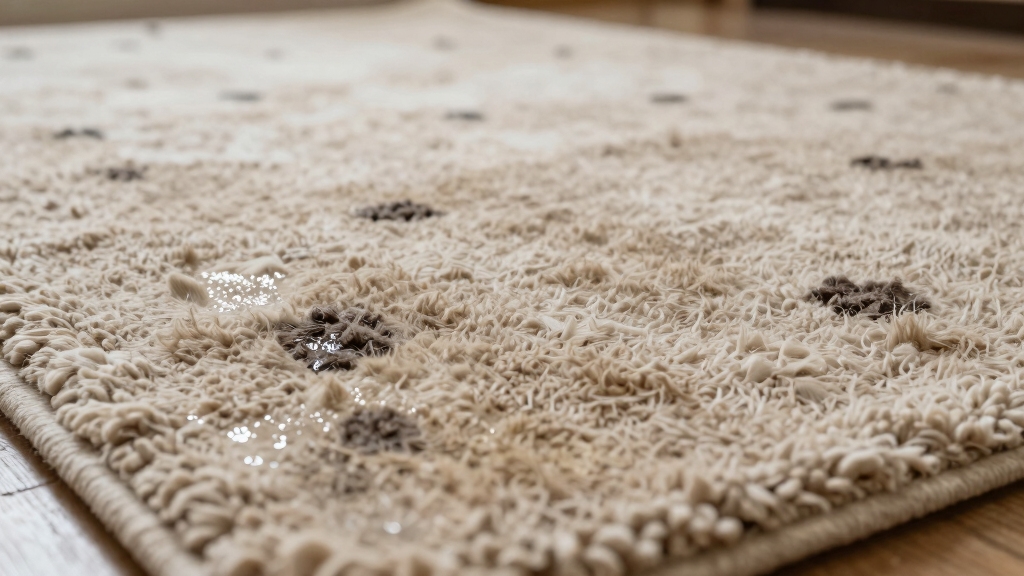
Random spots on your carpet often result from a combination of factors including soiling accumulation, wicking of deep stains, pet-related incidents, chemical bleaching, and hidden spills.
Dirt and oils from bare feet embed in fibers, especially olefin, attracting more soil and causing discoloration in high-traffic areas. Soiling is most common in these areas and can be identified by observing traffic patterns and stain colors. Regular vacuuming and prompt blotting can help reduce soil buildup and prevent permanent discoloration.
Moisture from spills or cleaning penetrates the padding, carrying dirt upward as it evaporates, making deep stains resurface larger. Twisted carpet fibers can act like wicks to absorb liquids, contributing to the wicking effect.
Pets repeatedly urinating in one spot cause organic staining that requires enzyme cleaners, as residues wick back to the surface.
Chemical agents like toilet bowl cleaners or pesticides can bleach fibers, creating delayed discoloration activated by heat or moisture. Avoiding harsh chemicals and consulting professionals for treatment can prevent further damage.
Hidden spills, including sugary drinks or unseen splashes, ferment or attract grime, resurfacing as new spots during routine cleaning or over time. Immediate blotting of liquid spills with a white paper towel is recommended to prevent stains from setting.
How Sticky Residues Cause Persistent Carpet Spots?
When you clean your carpet without thoroughly rinsing out cleaning agents, sticky residues can build up on the fibers, causing persistent spots that attract dirt and grime. Residual detergents and soaps dry stiffly, trapping soil and creating a film that’s difficult to remove. Improper rinsing can leave concentrated cleaning solutions on fibers, creating a sticky residue that worsens the problem.
Poor rinsing, excessive product use, and faulty extraction all contribute to these sticky deposits, accelerating re-soiling and making spots recur rapidly. These residues often release irritants and volatile compounds, which can affect indoor air quality and trigger allergic reactions.
| Cause | Effect |
|---|---|
| Improper rinsing | Sticky residue film attracts dirt |
| Low-quality detergents | Detergent residue magnetizes soil |
| Faulty equipment | Leaves unextracted solution residue |
| Dirt-attracting substances | Creates persistent, embedded spots |
| Excess moisture | Promotes mold and residue buildup |
To prevent persistent spots, use residue-free cleaners and make certain thorough rinsing with proper extraction.
Why Moisture Wicking Creates Unexpected Carpet Stains?
Although moisture often seems beneficial during carpet cleaning, it can unexpectedly cause stains to reappear through a process called moisture wicking.
This occurs when cleaning solutions and excess water penetrate the carpet backing and padding, drawing trapped soil and dissolved particles upward via capillary action as the carpet dries from top to bottom. Soil and grime build-up near the carpet backing is a key contributor to this stain recurrence. Poor ventilation and prolonged dampness can exacerbate this issue by allowing moisture to remain longer within the carpet layers.
You might find moisture wicking triggered by:
- Overwetting during cleaning, saturating the carpet base with water and detergents.
- Prolonged drying times that extend the period for wicking to transfer contaminants.
- Synthetic fibers and carpet padding absorbing moisture, facilitating stain migration.
Understanding this mechanism helps you prevent unexpected carpet stains by controlling moisture levels and promoting rapid drying through proper ventilation and moisture control.
How Forgotten Spills Cause Carpet Discoloration?
You know how sometimes you accidentally spill something on your carpet and then just forget about it?
Well, that can lead to some sneaky problems. When those spills go unnoticed, the liquids can seep deep down into the carpet backing and pad. It’s like the stains are hiding out of sight! Regularly monitoring moisture levels with moisture meters can help detect hidden dampness before it causes further issues.
Now, here’s where it gets interesting. Over time, things like heat and moisture can stir up those trapped residues. This means that even if you think the stain is gone, it can come back to haunt you. It might pop up unexpectedly, leaving you scratching your head. This phenomenon is often caused by wicking, where moisture from deep within the carpet moves upward and re-discolors the fibers.
Understanding why these stains can reappear later is super important. It helps you take the right steps to prevent any permanent damage to your beloved carpet.
Deep Spill Penetration
If you overlook a spill on your carpet, it won’t just sit on the surface. Liquids penetrate deeply into the fibers and padding, dissolving dyes from the backing or padding layers. This process causes hidden discoloration that emerges over time as dissolved dyes migrate upward via capillary action. Regular spot cleaning can help in treating mild discoloration before it worsens. Prompt cleanup and treatment using enzyme cleaners can reduce the risk of permanent damage and odors.
As a result, yellow or brown spots appear. Moisture trapped below the surface also promotes bacterial breakdown, weakening fibers and causing permanent dullness.
Key factors in deep spill penetration include:
- Liquids solubilize synthetic or natural dyes in the carpet backing and padding.
- Padding acts as a reservoir, releasing dyes under pressure like foot traffic.
- Incomplete drying prolongs dye migration, intensifying discoloration.
Addressing these hidden issues requires thorough drying and professional extraction to prevent persistent carpet damage.
Delayed Stain Appearance
Since spilled substances can penetrate deeply into the carpet pile, backing, and padding, stains often remain hidden for weeks or months before becoming visible. Carpet fibers act as wicks, drawing moisture and soluble residues upward, where evaporation leaves behind discoloration. This phenomenon explains why spills can resurface long after the initial accident. Using effective spot removers promptly can help mitigate these hidden stains before they fully develop.
Sticky residues from minor spills trap dirt gradually, forming dark spots despite initial invisibility. Chemical agents like pesticides or toilet bowl cleaners cause delayed color loss through oxidation, appearing only after environmental triggers.
Detergent residues from improper cleaning attract dirt, causing recurring stains that enlarge over time. Transparent spills may cause browning or fiber degradation as bacteria break down organic matter beneath the surface.
To prevent delayed stain appearance, thorough extraction of moisture, residues, and contaminants is essential. These hidden deposits promote prolonged discoloration and fiber damage long after the spill occurs.
Heat And Moisture Effects
Understanding heat and moisture effects is essential for addressing how forgotten spills cause carpet discoloration.
When spills go unnoticed, heat and humidity interact with residues, altering fiber dyes and promoting stain permanence. Moisture seeps deeply, enabling dirt wicking and mold growth beneath the surface, which manifests as random dark spots. Prompt cleaning can prevent set-in stains that are more difficult to remove.
Heat accelerates chemical reactions in spill residues, triggering delayed color changes and fiber degradation.
Consider these key impacts:
- Heat-moisture cycles cause fibers to swell and contract, distorting color uniformity and increasing browning risk.
- Moisture retained from spills fosters mildew, resulting in visible, irregular discoloration.
- Elevated temperatures combined with humidity soften protective coatings, making fibers more vulnerable to permanent staining.
Additionally, excess moisture can cause delamination as water seeps between carpet backing and fibers, creating bubbles that worsen discoloration.
How Chemical Damage Triggers Mysterious Carpet Spots?
Chemical damage triggers mysterious carpet spots by penetrating deep into the carpet fibers, backing, and padding. It remains dormant until activated by heat, moisture, or cleaning. Some chemicals, like acetone, are known for their strong solvency and potential to alter surfaces when not handled properly.
Chemicals like benzoyl peroxide, acids, and alkalis wick upward over time, oxidizing or bleaching dyes and altering fiber structure. For example, benzoyl peroxide in acne medications causes permanent dye oxidation. Benzoyl peroxide spots often show a yellow center with orange halo, which spreads as the oxidation progresses.
Hydrochloric acid from toilet cleaners produces pink or orange discoloration. Alkalis such as sodium hydroxide degrade fibers and produce stains.
These agents disrupt dye molecules. Acids can shift red hues to blue, and alkalis erode fabric integrity. Initial exposure often goes unnoticed.
Latent chemicals resurface during humid conditions or cleaning, triggering visible spots. Recognizing this delayed activation helps explain unexplained carpet discolorations linked to common household products containing bleaching or corrosive agents. Proper chemical handling practices can help minimize such damage.
How Mold Growth Causes Carpet Spots?
You know those pesky mold spots that can pop up on carpets? They usually show up when moisture, oxygen, and nutrients like dust team up on the carpet fibers. This is especially common in places with high humidity like basements and bathrooms.
Mold just loves those damp, poorly ventilated spots where the temperature is perfect for its rapid growth. All mold types require water to grow, so the presence of excess moisture enables growth. So, if you’re in one of those areas, you might notice not only visible discoloration but also some hidden contamination lurking beneath the surface.
To keep those mold spots at bay, it’s important to maintain low indoor humidity levels. Make sure your carpets dry completely after cleaning or spills, and try to boost airflow in your home.
That way, you can prevent mold from taking hold and avoid damaging your carpets.
Mold Development Conditions
Mold frequently develops on carpets when moisture accumulates within the fibers, creating an environment that supports spore attachment and growth. This moisture can come from leaks, spills, or high indoor humidity, all of which promote rapid mold colonization. Early recognition of visual and tactile signs helps prevent worsening and spread.
Understanding key conditions can help you mitigate mold risks effectively:
- Humidity and Temperature: Mold thrives above 60% humidity and prefers warmth between 77°F and 86°F, accelerating growth. Prolonged exposure to these conditions increases the likelihood of mold spore survival and infestation.
- Ventilation: Poor airflow traps moisture, making drying difficult and fostering mold development in carpets and padding. Mold spreads through airborne spores that settle on these damp surfaces.
- Water Damage: Even minor leaks or floods saturate carpets quickly, enabling mold to establish itself within 24-48 hours. Immediate remediation and drying are critical to prevent mold from penetrating deep into fibers.
High-Risk Carpet Areas
Frequently, carpets in certain areas present higher risks for mold growth due to persistent moisture and environmental conditions that favor spore colonization.
Basements, with below-ground carpeting, expose fibers to groundwater seepage and condensation from foundation walls, creating constant dampness. Mold spores develop into mold in about 24–48 hours after contacting moisture, so immediate drying is crucial. Poor insulation and cracks in foundation walls can also create cold spots that promote moisture retention and mold development.
Poor air circulation and stable temperatures further support mold proliferation.
Wet carpet from water damage events like leaks or flooding can develop mold within 24 to 48 hours, as porous fibers and padding retain moisture long after surface drying.
Natural fiber carpets, such as wool or cotton, provide organic nutrients and retain moisture longer than synthetics, increasing mold susceptibility.
Additionally, carpets in humid or damp climates face elevated mold risk due to sustained moisture and frequent water exposure.
Identifying these high-risk zones helps you understand where mold spots are most likely to appear.
Prevention And Control
Effectively preventing and controlling mold spots on carpets requires understanding how mold establishes itself under specific conditions.
Mold needs moisture, oxygen, and organic material, like carpet fibers, to thrive, especially in humid, warm environments above 70% relative humidity. Carpet retains moisture easily, creating an ideal environment for airborne spores to settle and grow ideal environment.
You can reduce mold growth by guaranteeing moisture and maintaining proper ventilation.
Follow these key steps:
- Immediate Moisture Control: Dry spills and leaks within 24-48 hours using fans and towels. Avoid prolonged wetness to stop spore activation.
- Humidity Management: Keep indoor humidity below 60-70% with dehumidifiers, seal condensation sources, and ensure air circulation to prevent dampness.
- Regular Cleaning & Disinfection: Deep clean carpets frequently with mold-killing agents, shampoo with anti-mold products, and replace padding if mold penetrates deeply.
How to Prevent Random Carpet Spots From Returning?
When you act quickly to blot spills and ensure thorough drying, you substantially reduce the chance of carpet spots reappearing.
Immediately blot spills with absorbent towels applying firm pressure to prevent liquids penetrating into the padding.
Avoid over-wetting during cleaning to stop moisture pushing stains deeper.
Use professional extraction methods and weighted towels to remove residual moisture and residues effectively. This helps prevent wicking that causes stains to reappear from deep within the carpet fibers.
Rinse treated areas thoroughly with clean water and blot until no residue transfers to the cloth.
Accelerate drying by deploying fans, air movers, or air conditioning, and restrict foot traffic until the carpet is completely dry, typically 24 hours under weighted towels.
Employ residue-free, professional-grade cleaners, and schedule regular vacuuming.
For stubborn stains, rely on certified professionals to prevent fiber damage and wicking from subfloor moisture, ensuring long-term spot prevention.
Frequently Asked Questions
Can Carpet Type Affect the Likelihood of Random Spots Appearing?
Yes, your carpet type markedly affects random spots’ appearance. For instance, Triexta and polyester fibers naturally resist stains, reducing spot formation.
Nylon’s durability and stain treatments also help, especially in high-traffic areas. Wool repels moisture but needs maintenance to avoid spotting.
Low-pile and patterned carpets hide stains better than high-pile or solid colors. Choosing fibers and styles suited to your environment minimizes visible spots and prolongs carpet cleanliness.
Do Pets Contribute to the Formation of Random Carpet Spots?
Pets absolutely contribute to random carpet spots. Their urine acts like a silent artist, painting stains deep into fibers through chemical reactions.
The pH shifts cause uric acid crystals to form stubborn deposits, altering dyes and causing discoloration. These spots aren’t just surface blemishes—they penetrate, bond, and react with carpet materials, often reactivating odors and damage.
To protect your carpet, prompt cleaning and enzyme treatments are essential to break down these persistent compounds.
How Does Carpet Padding Influence Stain Development and Removal?
Carpet padding markedly impacts stain development and removal. If your padding absorbs moisture, especially foam-rubber, it traps spills, causing stains to wick back to the surface even after cleaning.
This prolongs discoloration and odor issues.
To prevent this, use moisture-resistant or antimicrobial padding, and act quickly to dry wet areas. If padding saturates, replacing it’s essential since embedded stains and mildew become nearly impossible to eliminate fully otherwise.
Are Professional Carpet Cleanings More Effective Against Random Spots?
When it comes to tackling random spots, professional carpet cleanings really take the cake. They use hot water extraction and targeted pre-treatments that remove up to 98% of embedded contaminants, far surpassing DIY methods.
Can Air Quality Impact the Frequency of Carpet Spotting?
Yes, air quality directly impacts how often your carpet develops spots.
Poor indoor air quality increases airborne particles like dust, allergens, and mold spores, which settle into carpet fibers, causing visible dirt and stains.
High traffic and pollution accelerate this buildup, making spots appear more frequently.
Maintaining ideal humidity (30-50%) and regular cleaning helps reduce particle resuspension and microbial growth, minimizing spot recurrence and preserving carpet appearance.
Protect Your Carpet From Random Spots Permanently
Now that you understand why random spots appear on your carpet from sticky residues and moisture wicking to forgotten spills and mold growth, you’re better equipped to tackle them promptly.
Think of your carpet like a vintage clock: even the smallest speck can throw off its pristine appearance.
By regularly cleaning and addressing chemical damage early, you’ll prevent those pesky spots from returning and keep your carpet looking flawless for years to come.