Will Bleach Kill Spiders: Effective Control Without Damage
You can kill spiders and their eggs by applying fresh bleach directly, as it rapidly breaks down spider silk and disrupts their cellular structures through oxidative action. Bleach dissolves webs within a minute and penetrates egg sacs, lowering hatch rates with thorough coverage.
However, bleach lacks residual effects and damages surfaces, so effectiveness is limited to exposed spiders and eggs on contact. For a full understanding of its use, risks, and alternatives, keep exploring this topic further.
Key Takeaways
- Bleach kills spiders on direct contact by oxidizing their exoskeletons and disrupting cellular processes.
- Fresh bleach dissolves spider webs within 10–60 seconds, preventing spider return.
- Bleach can penetrate and destroy many spider eggs, lowering hatch rates but not guaranteeing complete elimination.
- Effectiveness requires thorough, direct application; bleach has no residual effect and cannot reach hidden spiders.
- Frequent use risks damaging surfaces, fabrics, and indoor air quality due to bleach’s corrosive and toxic properties.
How Bleach Kills Spiders and Their Eggs?
Bleach kills spiders and their eggs primarily through the oxidative action of sodium hypochlorite, which rapidly breaks down the proteins in spider silk and damages the spiders’ exoskeletons and internal systems upon direct contact.
Germicidal bleach, containing a higher concentration of sodium hypochlorite, can provide a more potent effect when used carefully on nonporous surfaces.
When you apply fresh bleach, it dissolves spider silk within 10–60 seconds by unraveling the web’s molecular structure, causing effervescence on prey surfaces.
Black widow egg sacs dissolve in 15–25 seconds, enabling egg collection without residual toxicity, as eggs remain viable with normal hatch rates.
Direct bleach contact disrupts adult spiders’ cellular functions, leading to rapid death, although fumes or residues only irritate.
Aged bleach loses effectiveness, softening but not fully dissolving silk. Because bleach requires direct application, indirect exposure fails to kill spiders or eggs effectively.
For best results and safety, it is important to spray the mixture directly on spiders from 6″ to 10″ away and clean the surface afterward to remove any residual bleach. Always ensure you use bleach in a well-ventilated area to avoid harmful fumes during application.
How to Use Bleach for Spider Control Safely?
When applying a sodium hypochlorite solution for spider control, you should mix one part bleach with three parts water to achieve an effective 5% concentration. Use fresh bleach, as aged bleach loses potency on spider silk.
Sodium hypochlorite works by acting as a strong oxidizer that breaks down the protein structure of spiderwebs and residues. It is important to avoid mixing bleach with other cleaning agents like OxiClean, as this can produce toxic gases and pose serious health risks.
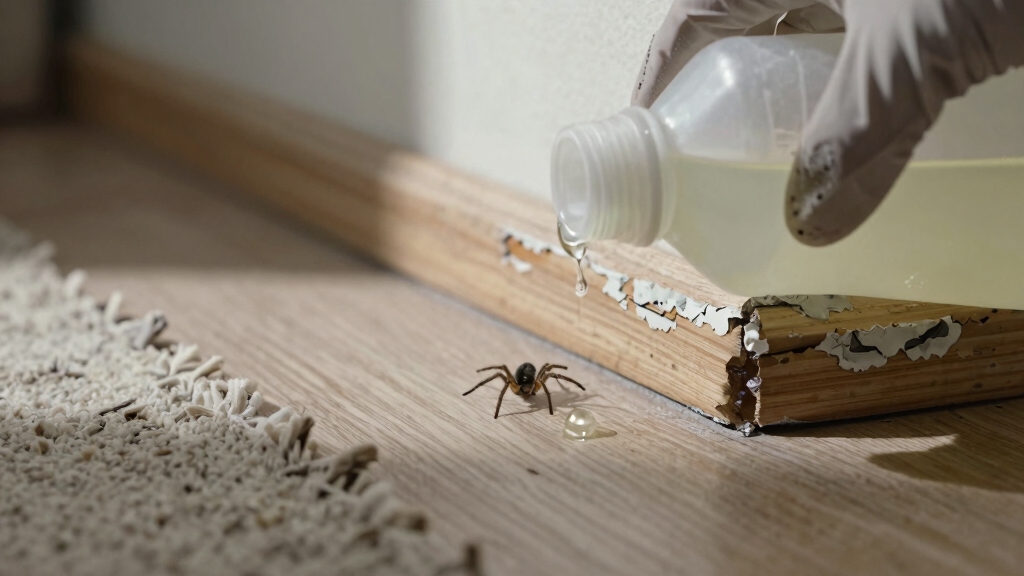
Spray from 6–10 inches away, allowing a 10-minute dwell time before rinsing. Target nests, entry points, baseboards, and exterior crevices weekly for peak control.
| Step | Details |
|---|---|
| Mixing Ratio | 1 part bleach : 3 parts water |
| Application | Spray 6–10 inches, 10-minute dwell |
| Target Areas | Nests, baseboards, cracks |
Post-application, rinse surfaces and dispose of dead spiders to maintain cleanliness and effectiveness.
Safety Precautions for Using Bleach Against Spiders

Although sodium hypochlorite solutions effectively control spiders, you must observe strict safety precautions to prevent chemical exposure and environmental damage.
Always wear gloves, eye protection, long sleeves, and pants to minimize skin contact.
Make sure proper ventilation to avoid inhaling fumes, and wash hands thoroughly after handling bleach.
Avoid applying bleach on bare metal, wood, dried plants, carpets, or floors, as it causes stains and damage.
Test mixtures on inconspicuous surfaces before use.
When treating outdoor areas, close windows, pre-wet vegetation, and cover sensitive plants to prevent uptake.
Disposable-bag vacuums are preferred for cleaning up spiders after treatment to prevent insect escape.
Store bleach mixtures in original, labeled containers away from children, pets, and food.
Dispose of residues and dead spiders promptly, using tightly sealed containers.
Follow label directions precisely, as bleach is a hazardous pesticide that irritates respiratory systems and poses ingestion risks. It is also important to keep flammable materials away during use to reduce the risk of fire.
Effectiveness of Bleach for Killing Spiders and Eggs
Understanding how bleach affects spiders and their eggs is essential to evaluating its utility as a pest control agent.
The hypochlorous acid in bleach disrupts cellular processes and damages spiders’ soft exoskeletons, causing suffocation and death upon direct contact. It also breaks down webs, reducing likelihood of spider return.
However, bleach acts as a non-selective agent that can damage surrounding surfaces and plants if applied carelessly.
Fresh bleach solutions are highly effective, but aged bleach loses potency, reducing its lethality.
Regarding eggs, bleach penetrates and kills many spider eggs, markedly lowering hatch rates, especially in species like black widows.
However, it doesn’t guarantee complete egg elimination, as some eggs survive exposure.
Diluted bleach sprays applied directly to spiders and nesting areas can kill visible spiders and dissolve webs, hindering re-infestation. Proper dilution and application techniques help minimize environmental contamination risks.
While bleach offers immediate control of spiders and eggs, its limited residual effect and inability to reach hidden pests restrict its effectiveness as a standalone long-term solution.
Risks of Bleach Damage to Your Home and Belongings
Hey there! Just a heads up about using bleach around your home. It can really mess up surfaces and lead to some pretty stubborn stains on different materials. Once that happens, it’s often permanent, which is definitely not what you want. Moreover, bleach can damage plumbing if used repeatedly or improperly, so caution is key.
Plus, bleach has this knack for weakening fabrics and breaking down certain surfaces over time. That can really compromise the integrity of your belongings, and nobody wants that, right?
And let’s not forget about the strong odors it leaves behind. Those can impact your indoor air quality, so you’ll want to make sure you ventilate the area thoroughly after using it. Bleach fumes produce VOCs that are linked to respiratory illnesses, so it’s always better to be safe than sorry!
Surface Staining Concerns
Frequently, bleach causes staining and surface damage when used improperly on household materials. Its strong oxidizing properties can discolor colored surfaces and fabrics, leaving permanent marks.
You might notice salt residues forming visible scratches after repeated use. In enclosed spaces, volatile organic compounds (VOCs) from bleach can also cause lingering discoloration.
However, the bleach formulations used in healthcare settings often include anticorrosion agents to minimize damage to surfaces, a feature not commonly found in household bleach products, which may help reduce such risks. This advancement is part of the improved surface compatibility.
To minimize these risks, consider the following:
Avoid direct bleach application on colored textiles to prevent irreversible fading. Limit bleach contact time on floors and grout to prevent uneven staining. Additionally, using alternatives like eco-friendly cleaners can help protect surfaces from harsh chemical effects.
Dilute bleach properly to prevent concentrated spots that remove dyes. Ventilate areas to reduce VOC buildup and associated surface discoloration.
Understanding these mechanisms helps protect your belongings while using bleach safely and effectively.
Material Degradation Risks
Besides causing surface staining, bleach poses significant risks of material degradation to various components in your home. Its high alkalinity (pH 11-13) corrodes metals, weakening fixtures and appliances, especially in poorly ventilated areas where vapors accumulate.
Additionally, the oxidizing action of bleach breaks apart molecular bonds in some materials, accelerating their breakdown. The presence of additives and stabilizers in bleach formulations can further contribute to residue buildup and damage on treated surfaces.
Bleach chemically breaks down textile fibers, causing permanent discoloration and brittleness in fabrics, carpets, and upholstery, reducing their lifespan.
It etches natural stone surfaces and damages hardwood and laminate flooring by causing warping and swelling. Prolonged exposure to bleach can also accelerate the degradation of polymeric materials found in household items.
Vinyl and linoleum flooring can become brittle and crack, while grout loses structural integrity from bleach penetration. Bleach also embrittles plastics and rubber, leading to cracks in plumbing and appliance components.
Paint and protective coatings fade, blister, and peel under bleach exposure, often requiring refinishing. Using bleach to kill spiders risks significant, often irreversible damage to your home’s materials.
Odor and Residue Issues
Although bleach effectively eliminates many household pests, its strong odor and persistent residue present significant challenges for maintaining a safe and pleasant indoor environment.
The chemical fumes can linger for hours, irritating your respiratory system and potentially attracting more spiders indoors due to scent trails. Additionally, the use of bleach can be harmful to plumbing and septic systems if not handled properly, so choosing septic-safe cleaners is important for household safety.
Residue left on fabrics, porous surfaces, and upholstery can cause visible staining and discoloration, complicating cleanup efforts.
Improper ventilation heightens exposure risks to you, your pets, and children. Consider these factors carefully:
- Bleach fumes persist, causing respiratory irritation and nausea.
- Residue stains surfaces and fabrics, requiring immediate wiping.
- Lingering scent may attract rather than repel spiders.
- Porous materials absorb odors, complicating odor elimination.
Because bleach use acts only as a bandaid to a potentially worsening problem, it does not guarantee full removal of spider eggs or hidden infestations.
Why Bleach Is Not a Long-Term Solution for Spiders?
You know, bleach might seem like a quick fix for spider problems, but it’s really not a long-term solution.
The thing is, bleach doesn’t have any residual effect. That means it only kills the spiders you actually spray it on, and it won’t stop new ones from coming in.
Plus, let’s talk about the environmental hazards. Bleach is pretty corrosive, which makes it not the best choice for regular use. The harsh chemicals can also cause surface damage if used repeatedly or left on surfaces too long.
Additionally, mixing bleach with other cleaners can create toxic gases, posing serious health risks. It just doesn’t work well for ongoing control of spider infestations. So, in the end, relying on bleach alone isn’t going to keep those pesky spiders away for good.
Lack Of Residual Effect
Because bleach evaporates rapidly and breaks down upon drying, it lacks any lasting chemical residue to deter spiders after application. When you apply bleach, its active ingredient, sodium hypochlorite, dissipates quickly, leaving no persistent barrier against reinfestation.
You’ll notice:
- Bleach kills spiders only on direct contact, without residual insecticidal properties.
- Surfaces dry with no chemical film, allowing new spiders to enter freely.
- Frequent reapplication is necessary to maintain any efficacy.
- Post-application cleaning removes any possible lingering effects, neutralizing bleach further.
This rapid neutralization means bleach acts solely as an immediate kill agent, not a preventive measure. Unlike commercial pesticides designed for prolonged protection, bleach’s transient activity fails to provide multi-day deterrence. Spiders return soon after treatment.
However, bleach can be effective for immediate disposal of spider egg sacs because it penetrates the silk casing and destroys the eggs’ soft exoskeletons, making thorough coverage essential for success effective egg sack disposal.
Environmental And Practical Limits
While bleach can kill spiders on contact, its use as a long-term solution faces significant environmental and practical limitations.
Sodium hypochlorite’s corrosive properties damage surfaces and pose environmental hazards, contaminating soil and water.
Bleach fumes irritate your skin, eyes, and respiratory system, making protective gear and ventilation essential during application.
Its effectiveness diminishes after six months, requiring frequent reapplication that increases exposure risks.
Bleach stains and corrodes household materials, restricting use on wood, electronics, and fabrics.
Importantly, bleach only kills visible spiders; it doesn’t eliminate eggs or hidden infestations, often requiring professional pest control for lasting eradication.
Additionally, bleach isn’t registered as an insecticide, limiting its reliability.
For safer, sustainable spider control, consider vacuuming or natural repellents instead of relying on bleach.
Using harsh chemicals like bleach can also produce toxic fumes that pose health risks similar to those found with oven cleaners.
Environmental Risks of Using Bleach for Spider Control
Although bleach is commonly used for spider control, it poses significant environmental risks that you should consider before application.
Its use introduces moisture that promotes mold growth and pest attraction, degrades indoor air quality via volatile organic compounds, and disrupts septic system microbial balance. It also contaminates aquatic ecosystems with persistent toxic byproducts.
Bleach for spider control risks mold growth, indoor air pollution, septic disruption, and aquatic toxicity.
Specifically, you face risks such as:
- Mold proliferation under surfaces despite bleach use, fostering new pests
- Release of chloroform and nitrogen trichloride vapors causing respiratory issues
- Septic system malfunction due to microbial colony destruction
- Formation of hazardous chemical byproducts through reactions with organic matter
Moreover, the strong odors indicate the presence of volatile compounds that can harm respiratory health. These factors underscore bleach’s environmental impact, urging caution and thorough evaluation before employing it for spider control.
Natural Alternatives to Bleach for Controlling Spiders
Considering the environmental hazards associated with bleach use, exploring natural alternatives offers safer options for spider control.
Vinegar solutions, combining white vinegar with coconut oil or water, effectively repel spiders and disrupt web rebuilding by leveraging acetic acid’s toxicity. For better application, it is recommended to shake the spray bottle vigorously before use to ensure proper mixing.
Essential oils such as lemon, lavender, peppermint, and eucalyptus, diluted and sprayed on entry points and webs, emit odors spiders avoid.
Citrus-based repellents utilizing peels or lemon juice mixtures provide additional deterrence through strong scents.
Physical barriers like cedar chips and mechanical applications such as rubbing alcohol or WD-40 interfere with spider movement and entry.
Dry powders including diatomaceous earth and baking soda dehydrate pests when applied to infested areas.
These methods offer non-toxic, cost-effective alternatives to bleach, minimizing environmental impact while maintaining efficacy in spider management.
When to Call a Professional Pest Control Service?
If you notice signs of venomous spiders such as black widows or brown recluses in your home, it’s critical to contact a professional pest control service immediately. These experts identify dangerous species, assess infestation extent, and use EPA-approved treatments to guarantee safety.
You should also call a professional when you find large colonies, extensive webs, or numerous egg sacs indicating active breeding. Spider webs repeatedly reappear despite cleaning, signaling persistent infestation. Large or widespread infestation beyond manageable levels requires expert intervention.
If family members or pets exhibit allergic reactions or bites, especially from venomous species, it’s time to seek help. A thorough inspection can locate nesting sites, entry points, and environmental factors.
Professional pest control combines accurate diagnosis with targeted treatments, minimizing health risks and effectively controlling spider populations beyond what DIY methods achieve.
How to Prevent Spiders Without Harsh Chemicals?
By integrating natural repellents and physical barriers, you can effectively prevent spiders without relying on harsh chemicals.
Utilize spider-repellent plants like lavender, mint, eucalyptus, and citronella near entry points to discourage web building. These plants emit scents that spiders find unpleasant, which helps keep them away from your home.
Apply essential oil sprays of peppermint, spearmint, citronella, cinnamon, or cloves weekly to doors, windows, and spider-prone areas for continuous deterrence.
Implement natural household repellents such as vinegar-water mixtures, citrus peels, cedar wood chips, and rosemary stems to reduce spider presence indoors.
Seal foundation cracks and gaps around windows and doors to block entry. Regular home inspections can help identify and address these potential entry points.
Maintain cleanliness by regularly dusting, vacuuming webs, and decluttering to eliminate hiding spots.
Remove organic debris and thick vegetation near your home’s exterior to reduce spider habitat.
Additionally, sprinkle diatomaceous earth around the foundation to physically eliminate spiders, ensuring sustained control during peak seasons.
Frequently Asked Questions
Can Bleach Be Safely Used Indoors Without Ventilation?
No, you shouldn’t use bleach indoors without ventilation.
Bleach fumes can irritate your eyes, throat, and lungs, especially in enclosed spaces.
Without airflow, these fumes linger, increasing respiratory risks, particularly if you have asthma or COPD.
Always open windows, use fans, and dilute bleach properly to reduce fume concentration.
Avoid mixing bleach with other cleaners to prevent toxic gas formation.
Prioritize safety by wearing protective gear and ensuring good ventilation.
Does Bleach Kill Other Common Household Pests Besides Spiders?
Yes, bleach can kill some common household pests like mosquitoes and cockroaches on direct contact by disrupting their physical structures and respiratory systems.
However, its effectiveness is limited due to rapid evaporation and lack of residual action.
For pests like bed bugs, bleach fails to eradicate infestations despite heavy use.
You’ll find pesticides more reliable for long-term control since bleach isn’t designed or classified as a pesticide and doesn’t provide lasting pest management.
How Long Does Bleach Take to Kill a Spider on Contact?
Bleach typically takes about 5 to 10 minutes to kill a spider after direct contact. Larger spiders may require the full duration, while smaller ones might succumb sooner.
The active hypochlorous acid disrupts cellular functions, damages the exoskeleton, and suffocates the spider. Instant kills are rare and not reliably supported.
You should guarantee thorough coverage and maintain safety precautions during application for effective results.
Can Bleach Cause Allergic Reactions in Sensitive Individuals?
Yes, bleach can cause allergic reactions in sensitive individuals.
When you inhale bleach fumes or get it on your skin, you might experience irritation, redness, or rashes.
Prolonged exposure could lead to chemical burns or dermatitis-like symptoms.
Those with respiratory conditions may see worsened asthma or allergies.
It’s important to handle bleach carefully, avoid close-range spray application, and guarantee proper ventilation to minimize these risks.
Is Bleach Effective Against Spider Bites or Venom?
Don’t expect bleach to be a miracle cure for spider bites. It won’t neutralize venom.
Bleach can’t extract toxins already absorbed by your bloodstream or tissue cells. While some claim bleach mixtures help, there’s no scientific proof they work.
Applying bleach can cause chemical burns or worsen irritation. Instead, focus on cleaning the bite area, using ice packs, and seeking medical advice for proper treatment and infection prevention.
Prevention Over Chemicals: The Better Spider Strategy
While bleach can act as a chemical sword against spiders and their eggs, cutting through their defenses with its corrosive power, it’s not without collateral damage.
You risk harming your home’s surfaces and the environment, turning a quick fix into a lasting stain. For safer, sustainable spider control, consider natural alternatives or professional help.
Remember, prevention is your best shield. Keeping spiders at bay without releasing harsh chemicals in your living space.