
Odor on Clothes After Washing: Causes and Easy Fixes
If your clothes smell after washing, it’s often due to bacteria and sweat compounds clinging tightly to synthetic fibers or trapped in residual detergent and fabric oils.
Your washer may harbor mold and bacterial colonies, especially in seals and dispensers, recycling odors back onto garments.
Overloading, incorrect water temperature, and insufficient drying further worsen odor persistence.
Proper detergent use, wash settings, and machine maintenance are essential to fully eliminate odors. Understanding these factors helps guarantee truly fresh laundry every time.
Key Takeaways
- Bacteria and mildew in washers and fabrics cause persistent odors if not fully eliminated during washing.
- Excess or insufficient detergent leaves residues that trap odor-causing compounds in clothes.
- Overloading the washer and incorrect water temperature reduce cleaning efficiency, allowing odors to remain.
- Promptly drying clothes and airing out washers prevent bacterial growth and musty smells.
- Regular washer maintenance, including cleaning seals and running hot water cycles, helps eliminate odor sources.
Why Your Clothes Smell After Washing?
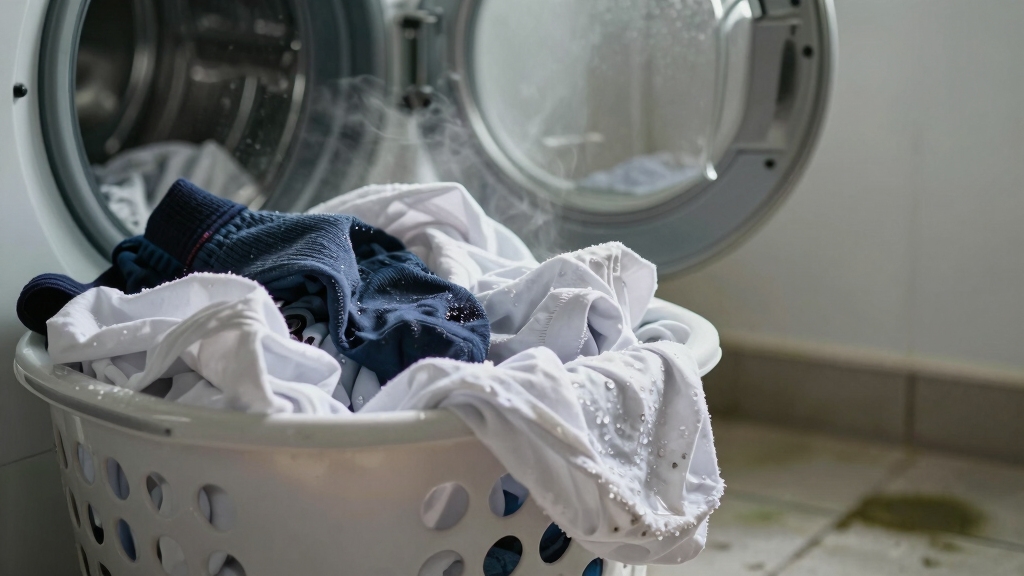
Although you might expect freshly washed clothes to smell clean, persistent odors often result from bacteria and sweat compounds trapped in fabric fibers.
These microscopic agents adhere tightly to textiles, resisting removal during standard washing cycles. The retention of sweat oils and bacteria creates an environment where odors persist due to incomplete bacterial elimination.
Additionally, improper detergent use, either excess or insufficient amounts, can leave residues that encapsulate these malodorous compounds, making odors harder to eradicate.
Washing machines themselves may harbor bacterial colonies and mildew, transferring unpleasant smells back onto fabrics.
Inadequate wash parameters, like incorrect water temperature or overloading, reduce cleaning efficiency, allowing bacteria and odors to survive.
Consequently, understanding these factors is essential to diagnosing why your laundry fails to smell fresh post-wash.
Moreover, improper drying and poor ventilation after washing can cause moisture retention in fabrics, fostering microbial growth that leads to persistent odors.
How Sweat and Bacteria Cause Odors?
When sweat mixes with the bacteria on your skin, it creates those sour-smelling compounds that can really cling to fabric fibers. You know the ones I mean! It’s pretty interesting how this works.
Now, here’s the kicker: synthetic materials like polyester are actually really good at trapping both those bacteria and the odors. They hold onto them much better than natural fibers do. So, if you’re dealing with persistent smells on your clothes even after washing, understanding this whole interaction is super important. It can help you figure out what to do next!
Using pH-neutral, water-based cleaners can help remove odors and protect fabric integrity during washing.
Sweat Meets Skin Bacteria
Sweat interacts with the bacteria naturally present on your skin to produce odor-causing compounds that cling stubbornly to fabric fibers. Bacteria consume body oils (sebum) combined with sweat, generating sour-smelling molecules.
Synthetic fabrics amplify this effect by trapping bacteria more effectively. Even after washing, if bacteria aren’t fully eliminated, odors persist.
| Factor | Mechanism | Result |
|---|---|---|
| Sweat | Provides moisture and nutrients | Supports bacterial growth |
| Skin Bacteria | Metabolize sebum and sweat | Produce volatile odor compounds |
| Fabric Type | Synthetic fibers trap more bacteria | Retain odor molecules longer |
| Washing Efficiency | Partial bacteria removal | Odors remain post-wash |
| Residual Moisture | Sustains bacterial activity | Musty and sour smells develop |
Using enzyme cleaners can help break down odor-causing compounds and eliminate stubborn smells that persist after washing.
Fabric Traps Odor
Fabric fibers act as reservoirs that absorb and retain odor-causing compounds generated by the interaction of sweat and skin bacteria.
When sweat mixes with sebum, bacteria metabolize these oils, producing volatile fatty acids responsible for sour, musty smells.
Synthetic fibers like polyester and rayon exacerbate odor retention due to their low moisture permeability and higher bacterial adhesion.
These fibers trap bacteria and residual oils more effectively than natural fabrics, intensifying odors.
Even after washing, incomplete bacterial removal allows odor persistence.
Excess moisture in fibers promotes bacterial survival and odor production.
To minimize this, you must make certain detergents remove both oils and bacteria without leaving residue that can trap smells.
Understanding the fabric’s role in odor retention is critical to selecting proper washing techniques and preventing persistent post-wash odors.
Using enzyme-based cleaners can help break down odor-causing compounds and improve fabric freshness.
Why Detergent Buildup Makes Clothes Smell?
If you’re using too much detergent, you might end up with a residue that builds up on your clothes. This can trap odors right in the fabric fibers, which is definitely not what you want!
On the flip side, if you don’t use enough detergent, it won’t effectively remove sweat, oils, and bacteria. That means those smells can linger, and nobody likes that.
Detergent residue can also cause skin irritation and allergic reactions, making it important to use the right amount and rinse thoroughly.
Detergent Residue Effects
Excess detergent often leaves behind a stubborn residue that traps odors within your clothes. This buildup clings to fabric fibers, creating a barrier that prevents effective odor removal during washing.
Residual detergent combines with dirt, sweat, and bacteria, forming a compound that intensifies unpleasant smells. It also alters fabric pH, promoting bacterial survival, which further contributes to odor retention.
You might notice that clothes feel stiff or look dull, signs of detergent accumulation. Additionally, leftover detergent can transfer mildew-like odors from the washing machine directly to your garments.
This residue impairs rinsing efficiency, so odors remain embedded even after multiple washes. Addressing detergent residue is essential for odor-free laundry, as it directly affects both fabric cleanliness and microbial control.
Using a low-sudsing formula can help prevent residue buildup, especially in high-efficiency washing machines, improving rinsing and odor removal.
Balancing Detergent Amounts
Detergent buildup doesn’t just leave residue; it actively traps odors within your clothes by creating a layer that hinders thorough cleaning.
When you use too much detergent, excess particles combine with sweat, oils, and bacteria, embedding foul smells deep in fabric fibers. Conversely, too little detergent fails to break down these odor-causing agents effectively.
To balance detergent amounts and prevent odor buildup, keep these points in mind:
- Measure detergent precisely according to load size and soil level to avoid excess residue.
- Use high-efficiency detergents with appropriate formulations that rinse out thoroughly.
- Regularly clean your washing machine to prevent old detergent deposits from transferring odors back to your clothes.
Choosing detergents with chelating agents can also help prevent mineral buildup that traps odors and residue in fabrics.
How a Dirty Washer Causes Odors?
When your washing machine accumulates fabric particles, detergent residue, and grime, it creates an ideal environment for bacteria and mildew to thrive.
These microorganisms colonize damp, nutrient-rich surfaces inside the drum, seals, and detergent dispensers.
Over time, this buildup emits musty odors that transfer onto your clothes during washing cycles.
Additionally, mold spores can develop within hours if wet clothes remain in the machine, exacerbating the smell problem.
A dirty washer also recirculates gunk, reducing the efficiency of washing and rinsing processes.
This contamination locks odors into fabric fibers, even after laundering.
To prevent this, you need to regularly clean your washer’s interior components with appropriate agents.
Run maintenance cycles to disrupt bacterial growth and maintain peak hygiene, ensuring fresh-smelling laundry every time.
Waiting until the washer is completely dry before loading clothes helps prevent mold growth and odor retention.
Washing Mistakes That Cause Odor
Maintaining a clean washing machine is essential, but even the best hygiene practices won’t prevent odors if common washing errors occur.
Keeping your washing machine clean helps, but common washing mistakes can still cause unpleasant odors.
These mistakes undermine cleaning effectiveness and trap odor-causing bacteria in fabrics. Avoid these pitfalls:
- Overloading the Washer: Packing clothes tightly restricts water and detergent flow. This prevents thorough rinsing and allows grime and bacteria to persist in fibers.
- Incorrect Water Temperature: Using warm or cold water for heavily soiled or synthetic fabrics fails to kill bacteria effectively. Hot water is necessary to eliminate odor-causing microbes.
- Excessive or Insufficient Detergent: Too much detergent leaves residue that traps odors. Too little detergent can’t break down sweat and oils thoroughly, enabling bacteria to survive post-wash.
Correcting these errors improves odor removal by ensuring ideal cleaning conditions for fabric and bacteria elimination. Additionally, maintaining proper airflow and drying after washing is critical to prevent mold and lingering odors by reducing moisture in fabrics through effective air circulation.
How to Prevent Clothes Odor When Washing?
Prevent odors on clothes by optimizing your washing routine to eliminate bacteria and residue effectively.
First, use the correct detergent amount to avoid buildup that traps odors or insufficient cleaning.
Select water temperature based on fabric care labels; hot water kills bacteria more efficiently than warm or cold water.
Avoid overloading your washer, as crowded loads hinder agitation and thorough rinsing, allowing grime and bacteria to persist.
Add vinegar or a laundry sanitizer sparingly to reduce 99.9% of odor-causing bacteria without damaging fabrics.
Immediately transfer wet clothes to the dryer to prevent mildew growth from lingering moisture.
By controlling these variables—detergent dosage, load size, water temperature, and prompt drying—you’ll greatly reduce bacterial survival and residue retention.
This ensures fresher clothes after every wash.
Using a homemade washing powder with water softening ingredients can also help prevent odor-causing buildup.
How to Properly Clean Your Washing Machine?
Controlling detergent dosage, load size, and water temperature helps reduce bacteria and residue on clothes. However, those same factors affect your washing machine’s cleanliness.
Neglecting machine maintenance allows detergent buildup, fabric particles, and moisture to accumulate. This fosters bacterial and mold growth that transfers odors back onto clothes.
To clean your washing machine effectively:
- Run a monthly maintenance cycle using hot water with a washing machine cleaner or white vinegar to dissolve residues and kill bacteria.
- Regularly clean detergent dispensers and rubber seals, where grime and mildew accumulate. Use a brush and disinfectant for this.
- Leave the door or lid open after cycles to promote drying and prevent mold spores from developing in damp areas.
Implement these steps to maintain a hygienic washing environment and eliminate odor sources.
How to Handle Laundry After Washing to Avoid Odors?
Frequently, the way you handle laundry immediately after washing determines whether odors develop or dissipate.
You must promptly transfer wet clothes from the washer to the dryer. Leaving them damp in the machine encourages mildew and bacteria growth, triggering sour, musty odors.
Transfer wet clothes promptly to prevent mildew and bacteria growth that cause sour, musty odors.
Avoid folding or storing clothes until completely dry, as residual moisture promotes microbial activity and odor formation.
If you can’t dry immediately, hang garments to air dry in a well-ventilated area to minimize moisture retention.
Additionally, make certain your dryer functions efficiently to eliminate all dampness. Partial drying can lock in persistent smells.
Frequently Asked Questions
Can Fabric Softeners Cause or Prevent Odors on Clothes?
Fabric softeners can sometimes cause odors if they leave residue that traps bacteria and sweat compounds in fibers.
However, they don’t prevent odors directly since they lack antibacterial properties.
If you use too much softener, it builds up, creating a breeding ground for odor-causing bacteria.
To avoid this, use softeners sparingly and ensure thorough rinsing.
For odor control, focus on proper detergent use, machine cleaning, and drying rather than relying on fabric softeners.
How Does Water Hardness Affect Laundry Odor?
Water hardness directly impacts laundry odor by interfering with detergent efficiency.
When you use hard water, minerals like calcium and magnesium bind with detergent. This forms insoluble residues that trap odors and bacteria in your fabrics.
This buildup prevents thorough cleaning, allowing odor-causing bacteria to thrive.
If you don’t address water hardness, you’ll notice persistent musty smells despite washing.
Using water softeners or detergent boosters can help neutralize minerals and keep your clothes fresh.
Are There Specific Detergents for Odor-Prone Fabrics?
Yes, you’ll find detergents formulated specifically for odor-prone fabrics, especially synthetic blends like polyester.
These detergents contain enzymes and anti-microbial agents designed to break down sweat-related oils and eliminate odor-causing bacteria deeply embedded in fibers.
When choosing, prioritize products labeled for sportswear or odor control, as they target sebum and bacterial residues effectively.
Using these specialized detergents optimizes odor removal and prevents buildup that standard detergents might miss.
Can Odor Remain on Clothes After Dry Cleaning?
Yes, odor can remain on clothes after dry cleaning if the source is deeply embedded bacteria or oils that dry cleaning solvents don’t fully eliminate.
Unlike water-based washing, dry cleaning primarily targets surface stains and doesn’t always remove odor-causing microbes.
To prevent residual smells, you should make certain the cleaner uses appropriate additives or supplemental treatments designed to neutralize bacteria and oils, especially on synthetic or odor-prone fabrics.
Do Certain Clothing Materials Retain Odors Longer Than Others?
Yes, certain clothing materials retain odors longer than others.
Synthetic fabrics like polyester, spandex, and rayon trap bacteria and sweat compounds more effectively due to their fiber structure, leading to persistent smells.
Natural fibers such as cotton release odors more easily.
When you wear or wash synthetics, bacteria cling tightly in the fabric, making odor removal more challenging.
Choosing fabrics wisely and using proper washing techniques helps minimize odor retention.
Final Thoughts: The Science Behind Fresh-Smelling Laundry
Just like a skilled alchemist transforms base metals into gold, you can turn your laundry routine into a precise science that banishes odor for good.
By understanding bacteria’s role, preventing detergent buildup, and maintaining a clean washer, you control the variables causing that stubborn smell.
With these targeted steps, you’ll make certain your clothes come out fresh every time. Proof that a methodical approach to washing is the key to odor-free fabric.