How to Get Coffee Stain Out of Couch: Proven Methods
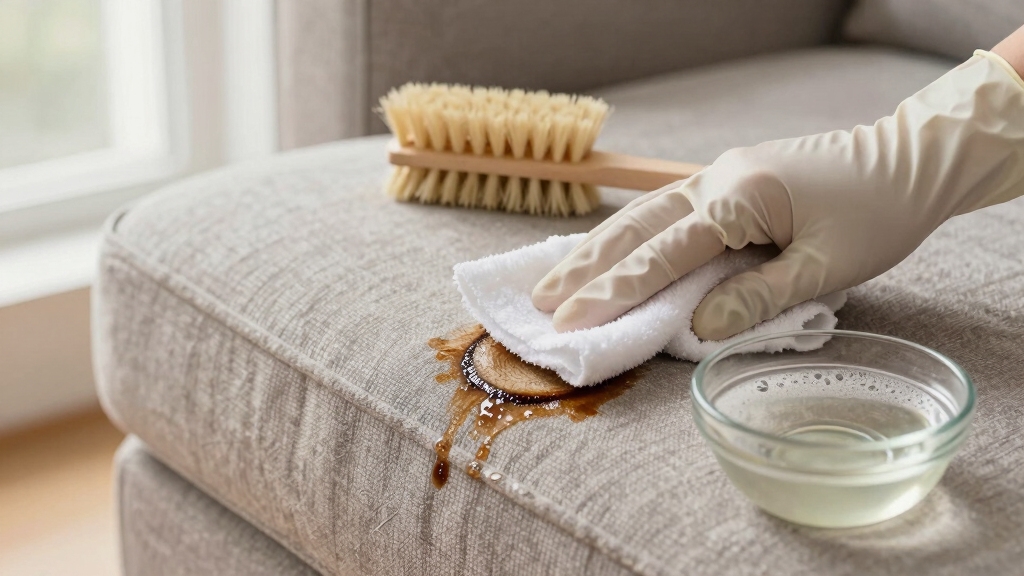
Blot excess coffee immediately with a dry microfiber towel, working from edges to center without rubbing to avoid spreading.
Mix one tablespoon vinegar with two cups warm water and gently blot the stain until it lifts, then rinse with cold water.
For stubborn stains, presoak using a dish soap and vinegar solution, then blot dry.
Avoid saturating fabric and always test solutions on hidden spots. Understanding these steps guarantees effective removal and prepares you for tackling more persistent coffee stains.
Key Takeaways
- Blot excess coffee immediately with a dry microfiber towel, working from edges to center without rubbing to avoid spreading the stain.
- Apply a mixture of one tablespoon white vinegar and two cups warm water with a cloth, blotting gently until the stain lifts.
- Use a presoaking solution of warm water, dish soap, and vinegar for 15 minutes, then gently scrub and rinse with cold water.
- For tough stains, apply a baking soda paste or sparkling mineral water, dab dry, and repeat as needed to lift the stain.
- Soak fabric in cold water with liquid detergent for set-in stains, then apply enzyme cleaner or diluted vinegar, blot, rinse, and air dry.
Blot and Prepare Coffee Stains Quickly

Act quickly to blot excess coffee from your couch using a clean, dry microfiber towel or paper towels. These materials efficiently absorb liquid without spreading the stain.
Blot fresh coffee spills promptly with a dry microfiber or paper towel to prevent stain spreading.
Avoid rubbing, as it forces the coffee deeper into fabric fibers and enlarges the stain area. Use paper towels for their high absorbency, especially if the spill is substantial.
Microfiber towels excel at soaking up moisture, providing a controlled blotting action. Work from the outer edges toward the center to prevent the stain from spreading.
Immediate action is critical; the longer coffee sits, the harder it’s to remove. Make sure your blotting tool remains dry by switching towels or layers frequently to maximize absorption.
Proper initial blotting sets the foundation for effective stain removal in subsequent cleaning steps.
Lift Coffee Stains With Vinegar
Once you’ve blotted the excess coffee, you can move on to lifting the stain using a vinegar solution.
Mix one tablespoon of white vinegar with two cups of warm water to create an effective cleaning agent.
Apply the solution with a clean cloth, gently blotting the stained area until the coffee begins to lift.
Avoid saturating the fabric to prevent damage.
After treatment, rinse the area with cold water to remove vinegar residue and blot dry.
Prepare a vinegar-water solution for targeted stain treatment.
Use a soft cloth to apply and blot, not rub, the stain.
Monitor the stain’s fading progress carefully.
Rinse with cold water and blot dry to finish.
This method is reliable for both fresh and set-in coffee stains on upholstery.
For best results, always patch test cleaning agents on an inconspicuous area to ensure fabric safety.
Treat Coffee Stains Using Dish Soap
To tackle coffee stains with dish soap, start by preparing a presoak solution using warm water, dish soap, and a bit of vinegar.
Begin by creating a presoak solution of warm water, dish soap, and vinegar to treat coffee stains.
Mix 1 quart warm water, ½ teaspoon dish soap, and 1 tablespoon vinegar. Soak the stained area for 15 minutes to loosen the coffee residue.
After soaking, gently apply the solution to the stain using a sponge. Rub in a circular motion to lift the stain without damaging the fabric.
Avoid excessive scrubbing to prevent fabric wear. Once the stain starts to lift, rinse the area with cold water to remove soap residue.
Finally, blot dry with a clean microfiber towel to absorb moisture. This method effectively targets coffee stains, especially those with milk, restoring your couch’s appearance efficiently.
Ensure proper ventilation while cleaning to facilitate quick drying and prevent mold growth, as emphasized in immediate response.
Try Alternative Household Tricks for Tough Stains
When conventional methods fall short, turning to alternative household tricks can effectively tackle tough coffee stains. You’ll want to use precise, controlled techniques to avoid damage while maximizing stain removal.
Try these options on synthetic fabrics or delicate upholstery:
Apply a baking soda and water paste with a toothbrush to gently lift the stain.
Moisten the area, spray glass cleaner, let it dry, then dab off residue carefully.
Pour sparkling mineral water sparingly, dab dry, and repeat to flush out the stain.
Use rubbing alcohol on a sponge for stubborn remnants, but test fabric first.
These methods complement traditional cleaning without harsh chemicals, giving you versatile tools to restore your couch.
Always test any solution in an inconspicuous spot to make certain fabric safety before full application.
For best results, ensure you pretest cleaning solutions on a small hidden area by dabbing and blotting before full use.
Handle Set-In Coffee Stains and Prevent Damage
Although set-in coffee stains can be stubborn, you can loosen them effectively by soaking the fabric in cold water mixed with liquid detergent.
Avoid using bar or powder soap, as these can worsen the stain. After soaking, apply an enzyme cleaner or a diluted vinegar solution directly to the affected area.
Gently blot or rub with a cloth to lift the stain, then rinse with cold water. Repeat this process if the stain persists, but don’t saturate the fabric excessively to prevent damage.
Always air dry the upholstery after treatment and inspect the stain before proceeding with full cleaning. This method protects your couch’s fibers while maximizing stain removal efficiency.
For best results, always test treatments on an inconspicuous area first to ensure colorfastness and fabric safety.
Frequently Asked Questions
Can Coffee Stains Damage Different Couch Fabric Types?
Yes, coffee stains can damage different couch fabrics differently.
Natural fibers like cotton or linen may absorb stains quickly, causing discoloration and potential fiber weakening.
Synthetic fabrics like polyester resist stains better but can still retain odors or residues if untreated.
Delicate materials like silk or velvet require careful handling to avoid damage during cleaning.
You should always test cleaning solutions on a hidden area to prevent color fading or fabric deterioration.
How Long Can a Coffee Stain Sit Before It’s Permanent?
A coffee stain can start setting within minutes, becoming increasingly permanent after about 30 minutes to an hour.
The longer it sits, the more it bonds with fabric fibers, especially on porous or delicate materials.
Acting within the first 5-10 minutes is critical to prevent permanent damage.
After 24 hours, stains are much harder to remove and may require enzymatic or commercial cleaners to lift effectively.
Are There Any Professional Cleaning Services Recommended for Coffee Stains?
You can trust professional upholstery cleaners like Stanley Steemer, COIT, or local carpet and furniture cleaning services with specialized stain removal expertise.
They use industrial-grade equipment and safe, effective solutions to tackle coffee stains deeply embedded in fabric.
Always check reviews and confirm they handle your couch’s material.
Scheduling prompt professional cleaning can prevent permanent damage and restore your couch’s appearance efficiently, especially if home methods haven’t worked.
Can Coffee Stains Cause Odors if Not Treated Properly?
They say, “a stitch in time saves nine,” and that applies here.
Yes, if you don’t treat coffee stains promptly, they can cause unpleasant odors as the residue ferments and bacteria grow.
You’ll want to act quickly, blotting and cleaning with appropriate solutions to prevent odor development.
Ignoring stains allows moisture and organic matter to linger, leading to persistent smells that become harder to eliminate over time.
What Should I Avoid Using on My Couch to Prevent Stain Damage?
Avoid using bar or powder soap on your couch, as they can set stains permanently.
Don’t rub the stain aggressively, which spreads and embeds it deeper.
Steer clear of harsh chemicals without testing for colorfastness first, especially on delicate upholstery.
Avoid excessive water that soaks cushions, leading to mold or damage.
Instead, use gentle, tested solutions like diluted vinegar, dish soap mixtures, or commercial cleaners designed for upholstery.
From Stain to Spotless: Your Next Move Matters
Now that you know the key steps to tackle coffee stains, the real challenge begins. Will your couch emerge spotless or bear the mark of that spill?
Act fast, use vinegar and dish soap strategically, and don’t underestimate alternative household tricks. For stubborn, set-in stains, your approach must be precise to avoid damage.
Ready to put these methods to the test and reclaim your couch’s pristine look? The outcome depends on your next move.