Best Way to Clean Sliding Glass Doors: Expert Cleaning Guide
To clean sliding glass doors effectively, start by clearing and vacuuming the tracks to remove debris and prevent clogs.
Use a mild dish soap solution for grease and a vinegar-water mix to tackle mineral spots.
Spray and gently scrub mildew with a mildew-safe cleaner.
Mist the glass, then squeegee from top to bottom, wiping the blade after each stroke.
Finish with a microfiber cloth buff to avoid streaks.
Keep following for a full step-by-step guide to flawless sliding doors.
Key Takeaways
- Remove loose debris and vacuum tracks with a narrow nozzle before any wet cleaning for smooth door operation.
- Use mild dish soap for grease, mildew-safe cleaner for mold, and a 50:50 vinegar-water mix for general glass cleaning.
- Clean glass on cloudy days using a microfiber cloth in smooth, overlapping strokes to avoid streaks.
- Use a squeegee from top to bottom with consistent pressure, wiping the blade after each pass to prevent grime redeposit.
- Rinse tracks and glass thoroughly with clean or distilled water to remove residues and prevent buildup or mineral spots.
Clear and Prep Your Sliding Glass Door Tracks
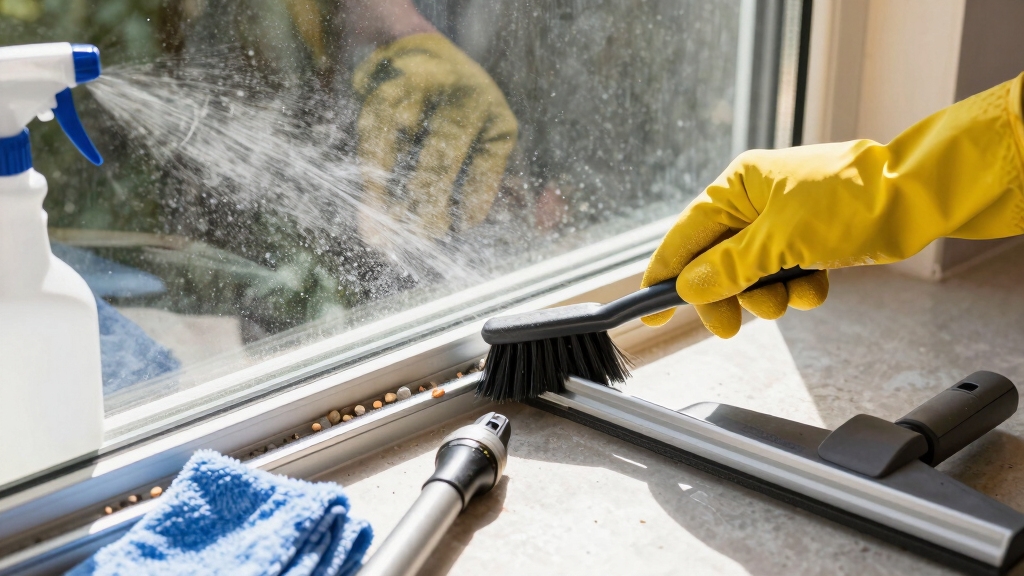
Start by clearing out any loose debris from the sliding glass door tracks to guarantee smooth operation. Use your hands or a small brush to remove leaves, dust, and crumbs trapped in the grooves.
Begin by clearing debris from sliding door tracks to ensure smooth, hassle-free operation.
Pay close attention to corners where dirt tends to accumulate. Next, dampen a microfiber cloth with soapy water and gently wipe the tracks, loosening any stubborn grime.
Avoid saturating the tracks to prevent water damage. Use a cotton swab or an old toothbrush to reach tight edges and corners that the cloth can’t access.
After scrubbing, wipe down the tracks with a clean, damp cloth to remove soap residue. Finally, dry the tracks thoroughly using a paper towel or dry cloth to prevent moisture buildup. This ensures your sliding door glides effortlessly and stays in good condition. Regular maintenance such as daily cleaning with a squeegee helps prevent buildup and keeps the tracks functioning smoothly.
Vacuum Loose Dirt From Sliding Glass Door Tracks
To keep your sliding glass door tracks running smoothly, it’s important to remove any loose dirt.
If you let it build up, it can really interfere with how well your door operates.
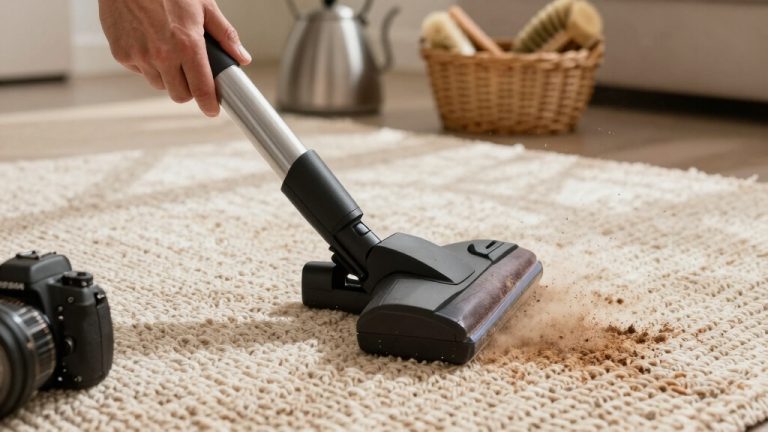
Grab your vacuum cleaner and attach the narrow nozzle—this will help you get into those tricky grooves and corners.
Just take your time and methodically vacuum each section.
Make sure to get every bit of debris before you move on to wiping or scrubbing.
It’ll make a big difference!
For best results, vacuuming is an essential first step to remove loose dust and debris before applying any cleaning solution.
Importance Of Track Vacuuming
Vacuuming loose dirt from sliding glass door tracks prevents buildup that can obstruct smooth operation and damage the door mechanism over time.
When you regularly remove debris, you reduce friction, allowing the door to glide easily without strain.
Dirt and grit trapped in the tracks can cause scratches and wear, leading to costly repairs or replacement.
By keeping the tracks free of loose particles, you also prevent the accumulation of grime when moisture combines with dust.
This proactive step helps maintain the door’s functionality and extends its lifespan.
Consistent vacuuming is essential, especially in high-traffic areas or homes with pets, where dirt collects rapidly.
Prioritize this task before any wet cleaning to guarantee dirt removal is thorough and effective.
Using tools with ergonomic handles can make the cleaning process more comfortable and efficient.
Effective Vacuuming Techniques
Maintaining clean sliding glass door tracks depends heavily on how effectively you remove loose dirt and debris.
Start by clearing any large particles by hand to avoid clogging your vacuum. Attach a narrow nozzle to your vacuum cleaner to reach deep inside the tracks.
Move slowly along the entire length, paying close attention to corners where dirt accumulates. Use short, deliberate strokes to ensure thorough suction of dust, crumbs, and hair.
If debris is stubborn, gently loosen it with a small brush before vacuuming again. After vacuuming, wipe the tracks with a damp microfiber cloth to pick up any remaining fine particles.
This methodical approach prevents buildup that can hinder door movement and extends the life of your sliding glass doors. For tight spaces like door tracks, choosing a vacuum with strong suction power and portability can greatly improve cleaning effectiveness.
Pick the Best Cleaning Solution for Sliding Glass Doors
Choosing the right cleaning solution plays a crucial role in achieving spotless and streak-free sliding glass doors.
Start by selecting a mild dish soap mixed with warm water for greasy smudges or heavy dirt.
For general cleaning, a 50:50 white vinegar and water mix offers an effective, streak-free shine without harsh chemicals.
Avoid abrasive cleaners that can damage glass or frames.
If you encounter mildew or mold, opt for a mildew-safe cleaner specifically designed for glass surfaces.
Always prepare your solution fresh to maintain its effectiveness.
Use a spray bottle to mist the glass evenly, ensuring complete coverage.
For a safer and more eco-friendly option, consider using plant-based, biodegradable ingredients to clean your sliding glass doors.
Clean Sliding Glass Door Panels Without Streaks
To clean sliding glass door panels without streaks, start by misting the glass evenly with water or a gentle cleaning solution to loosen dirt and dust.
Next, wipe the glass using a clean microfiber cloth in smooth, overlapping strokes. Avoid circular motions that can leave streaks.
Dry the glass immediately with another dry microfiber cloth or use a squeegee, moving from top to bottom to prevent drips.
Clean on a cloudy day to avoid quick drying that causes streaks.
Use distilled water for the final rinse to reduce mineral spots.
Buff the glass with a dry cloth in circular motions to restore shine.
Replace or rinse microfiber cloths frequently to maintain absorbency and avoid residue.
Get Rid of Grease, Mildew, and Hard Water Stains
Sure! Here’s a more conversational version of your text:
—
If you’re dealing with those pesky grease smudges, try mixing up a mild dish soap solution. Just grab a microfiber cloth and give it a gentle scrub. It works wonders!
Now, when it comes to mildew, you’ll want to reach for a mildew-safe cleaner. Don’t forget to pay extra attention to those corners and edges where moisture tends to hang out. That’s usually where mildew likes to set up shop.
And for those stubborn hard water spots, a vinegar-water mix can be your best friend. Just soak the spots for about 5 to 10 minutes before scrubbing. This should really help loosen those deposits and make your surfaces shine again!
Remember to always test your cleaning solutions on a small hidden area first to ensure surface safety and avoid damage.
Grease Smudge Removal
Tackle grease smudges on your sliding glass doors by applying a mild dish soap mixed with warm water directly to the affected areas.
Let the solution sit for a few minutes to break down the grease before gently scrubbing with a soft microfiber cloth.
Focus on smudged spots, using circular motions to lift grease without scratching the glass.
Rinse the area with clean water to remove soap residue and prevent streaking.
Use a soft-bristled brush or old toothbrush for stubborn grease near door handles and edges.
Avoid harsh chemicals that can damage glass or door frames.
Dry thoroughly with a clean microfiber cloth to avoid water spots and streaks.
Methodical cleaning guarantees a clear, grease-free finish on your sliding glass doors.
For best results, use a microfiber cloth designed for streak-free polishing and gentle cleaning on delicate surfaces.
Mildew Treatment Tips
Although mildew can stubbornly cling to your sliding glass doors, you can effectively remove it by applying a mildew-safe cleaner directly to affected areas.
Start by spraying the cleaner evenly on moldy spots, focusing on corners and edges where moisture accumulates.
Let it sit for the recommended time to break down the mildew.
Then, gently scrub with a soft brush or cloth, applying moderate pressure to avoid damage.
After scrubbing, rinse thoroughly with clean water to remove residue.
Don’t forget to vacuum and wipe down tracks and frames, using cotton swabs or an old toothbrush for tight areas.
Finally, dry all surfaces completely with a microfiber cloth to prevent mildew from returning.
Consistent mildew treatment keeps your sliding doors clear and extends their lifespan.
To further prevent mildew growth, enhance ventilation and control indoor humidity levels using dehumidifiers and airflow.
Hard Water Spot Care
Dealing with hard water spots requires targeted cleaning techniques that effectively dissolve mineral deposits without damaging your sliding glass doors.
Start by soaking the affected areas with a 50:50 white vinegar and water solution for 5 to 10 minutes. This softens mineral buildup, making it easier to remove.
Next, scrub gently using a soft cloth or sponge, focusing on corners and dual-pane edges where moisture accumulates. Avoid abrasive tools to protect the glass surface.
To get rid of grease and mildew alongside hard water stains, follow these key steps:
Apply mild dish soap for greasy smudges and rinse thoroughly. Use a mildew-safe cleaner on mold or grime spots.
Rinse all treated areas well and dry with a microfiber cloth to prevent streaks. This methodical approach guarantees spotless, clear sliding glass doors without damage.
For ongoing maintenance, consider using pH-neutral stone cleaners that preserve sealants and prevent residue buildup on adjacent stone surfaces.
Clean and Maintain Sliding Glass Door Frames and Rails
Maintaining sliding glass door frames and rails starts with removing dust and debris using a vacuum with a narrow attachment. This ensures you reach tight corners.
Next, wipe the tracks and frames with a damp microfiber cloth soaked in a mild detergent solution or a vinegar-water mix to cut through grime.
Use an old toothbrush or cotton swabs to scrub stubborn dirt from narrow edges and corners.
Rinse the tracks thoroughly with clean water to remove any residue, preventing buildup that could hinder sliding.
After drying, inspect the rails for any remaining debris or sticky spots, repeating cleaning as necessary.
Regularly maintaining these components keeps your sliding door operating smoothly and extends its lifespan by preventing wear caused by dirt and grime accumulation.
How to Use a Squeegee and Microfiber Cloth on Sliding Glass Doors?
Start by thoroughly misting the glass with water or your chosen cleaning solution to loosen dirt and dust.
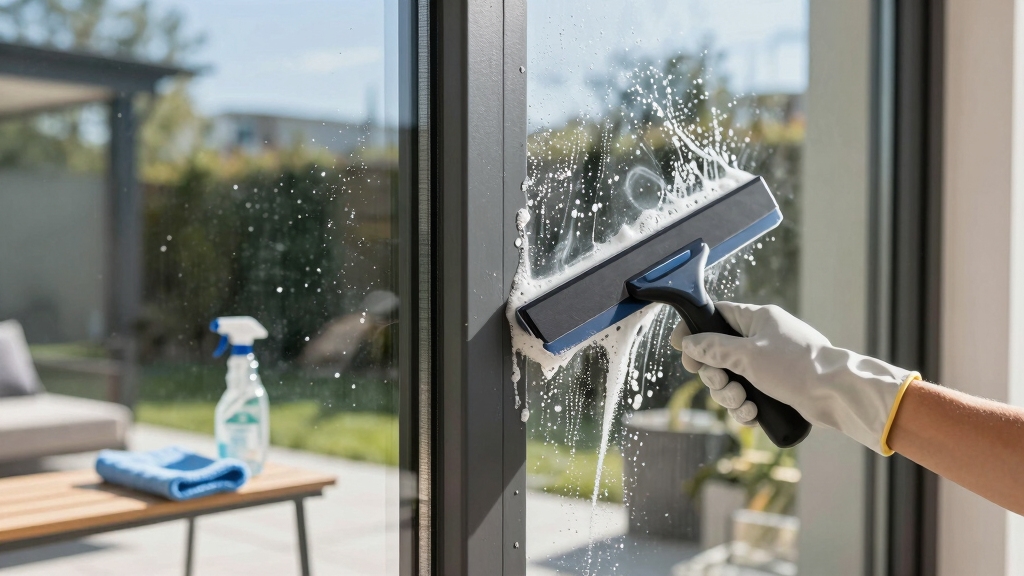
Next, use a squeegee to remove the liquid, working from top to bottom in smooth, straight strokes.
Wipe the squeegee blade with a clean cloth after each pass to prevent redepositing grime.
Once the excess moisture is removed, grab a dry microfiber cloth to gently buff the glass, eliminating any remaining streaks or spots.
Remember to:
- Maintain consistent pressure with the squeegee for even cleaning.
- Use a fresh microfiber cloth section to avoid smudges.
- Focus on edges and corners where residue collects.
This method guarantees a spotless finish without scratching or streaking your sliding glass doors.
Tips to Prevent Streaks and Spots on Sliding Glass Doors
Frequently, streaks and spots appear on sliding glass doors due to improper cleaning techniques or environmental factors. To prevent them, start by rinsing the glass with clean water to remove loose dirt and dust.
Always clean on a cloudy day or in shaded areas to avoid quick drying, which causes streaks. Use a 50:50 vinegar-water mix or a mild window cleaner, applying it with a microfiber cloth in smooth S-strokes or circular motions.
After washing, immediately squeegee from top to bottom to remove excess liquid. Finally, dry and buff the surface with a clean microfiber cloth, focusing on corners and edges.
For mineral spots, use distilled water to rinse, minimizing residue. These steps make certain your sliding glass doors stay clear and spotless.
Deep Clean Sliding Glass Doors: When and How to Do It
Although regular cleaning keeps your sliding glass doors clear, a deep clean is essential when dirt, grime, or stains build up beyond surface-level dirt.
You’ll want to focus on thorough track cleaning, stain removal, and a detailed glass wash. Start by vacuuming the tracks and scrubbing tight edges with a toothbrush.
Next, soak hard water spots with vinegar-water and tackle grease with dish soap. For the glass, rinse first, then wipe with soapy water or a vinegar mix, letting the solution sit for a few minutes on stubborn areas.
Finally, dry with a microfiber cloth, buffing in circular motions to prevent streaks.
Key steps include:
- Clearing and vacuuming tracks thoroughly
- Applying targeted stain treatments for spots and mold
- Using vinegar-water for a streak-free glass finish
Frequently Asked Questions
How Often Should I Lubricate Sliding Glass Door Tracks?
You should lubricate sliding glass door tracks about every six months to keep them operating smoothly.
If you notice the door sticking or making noise, lubricate sooner.
First, clean the tracks thoroughly by vacuuming and wiping away debris.
Then, apply a silicone-based lubricant sparingly to avoid attracting dust.
Regular lubrication prevents wear and extends your door’s lifespan, ensuring effortless sliding and reducing the risk of damage over time.
Can I Use Commercial Pressure Washers on Sliding Glass Doors?
You shouldn’t use commercial pressure washers on sliding glass doors. The high pressure can damage glass, seals, and frames, causing leaks or cracks.
Instead, clean gently with soapy water and a microfiber cloth. For tracks, vacuum and scrub with mild detergent.
If you want thorough cleaning, use a garden hose with low pressure and avoid direct spraying on seals. This method protects your doors and maintains their smooth operation.
What Safety Precautions Should I Take When Cleaning High Sliding Doors?
Before you start, pause; your safety depends on it.
Always use a sturdy ladder on level ground. Never overreach; reposition instead.
Wear non-slip shoes and gloves for grip and protection.
Secure your tools to avoid dropping them.
If the door is very high, consider a telescoping cleaner or ask for help.
Avoid cleaning in wet or windy conditions to prevent slips or falls.
Take your time; your safety matters most.
How Do I Fix a Sliding Door That Sticks After Cleaning?
To fix a sliding door that sticks after cleaning, first check the tracks for leftover debris or moisture.
Vacuum and wipe them thoroughly, then dry completely.
Inspect the rollers; if dirty, clean with a cloth, and lubricate them with a silicone-based spray.
Avoid oil lubricants, as they attract dust.
Finally, adjust the door’s alignment screws to assure smooth movement.
Test the door, repeating the process if it still sticks.
Are There Eco-Friendly Products Recommended for Sliding Glass Door Maintenance?
Think of eco-friendly products as the gentle rain nurturing your sliding glass doors without harm.
You can use a 50:50 mix of white vinegar and water for streak-free cleaning, mild dish soap with warm water to cut grease, and natural brushes for scrubbing tracks.
These ingredients clean effectively without harsh chemicals. Always rinse thoroughly and dry with microfiber cloths to keep your doors clear, fresh, and environmentally kind.
Let the Light In: Sparkling Doors Start Here
Now that you’ve mastered each step, your sliding glass doors will sparkle like a clear morning lake.
By regularly clearing tracks, choosing the right cleaner, and wiping with precision, you keep grime and streaks at bay. Remember, a little maintenance goes a long way; think of it as giving your doors a revitalizing gust of new air.
Stick to these methods, and your doors will stay spotless and glide smoothly for years to come.