

Can Bleach Kill Algae: Best Uses, Risks & Alternatives
Yes, you can kill algae effectively using bleach because it rapidly oxidizes and breaks down algal cells, disrupting their photosynthesis.
Household bleach at about 1,000 ppm works well on sealed, non-porous surfaces, while higher concentrations are needed for porous materials.
Bleach acts quickly, often whitening algae within minutes, but it won’t prevent regrowth or kill spores.
To fully control algae, you’ll also want to address dead algae removal and moisture management for lasting results.
Key Takeaways
- Bleach kills algae by oxidizing and breaking down cell walls and enzymes, causing rapid algal death on contact.
- Household bleach at ~1,000 ppm concentration effectively bleaches algae white within 10 minutes on non-porous surfaces.
- Higher bleach concentrations (3,000–5,000 ppm) are needed for porous materials to penetrate and kill embedded algae.
- Bleach’s effectiveness is temporary and does not prevent new algae growth or spore germination without moisture control.
- After bleach application, physical removal of dead algae and rinsing are essential to prevent nutrient buildup and regrowth.
How Does Bleach Kill Algae on Different Surfaces?
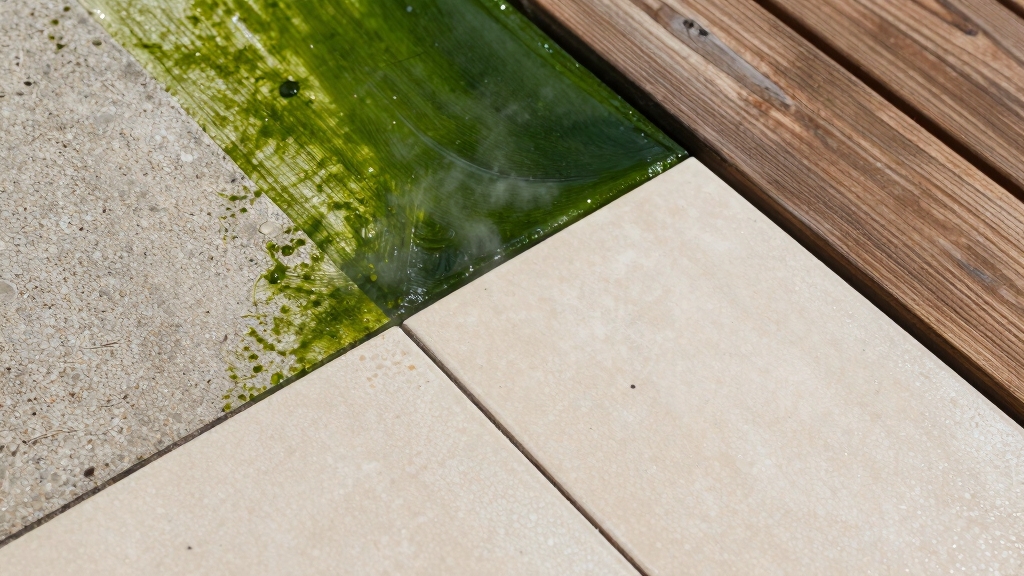
Although bleach effectively kills algae on various surfaces, its impact depends on the material’s porosity and sealing.
On non-porous, sealed surfaces like painted wood, stucco, tile, or brick, chlorine bleach swiftly oxidizes algae cells. This process breaks down their walls and enzymes, disrupting photosynthesis and killing algae rapidly.
However, porous materials absorb bleach, reducing its concentration and effectiveness. You’ll need stronger dilutions or repeated applications to reach algae embedded deep in stone or unsealed surfaces.
Lab tests confirm that household bleach with 3-6.5% sodium hypochlorite kills algae cultures promptly. However, material characteristics influence how well it penetrates and acts.
Therefore, understanding surface type helps you optimize bleach use for algae removal while ensuring you don’t damage the substrate. Always rinse thoroughly after treatment to remove residues and prevent potential damage to sensitive materials, especially plastics prone to surface degradation.
What Bleach Concentrations Work Best for Algae Removal?
You’ll find that specific bleach concentrations consistently yield the most effective algae removal across different surfaces.
Optimal bleach concentrations ensure the most effective algae removal on various surfaces.
For porous materials, diluting 12.5% sodium hypochlorite to 3,000–5,000 ppm (roughly 1 cup per gallon of water) achieves thorough algae kill.
On sealed, non-porous surfaces, a 1,000 ppm free chlorine solution (about 3 tablespoons per gallon) effectively eliminates algae.
Laboratory data shows household bleach at 3–6.5% sodium hypochlorite kills algae cultures dose-dependently, with higher concentrations causing immediate cell death visible as whitening.
In swimming pools, super-chlorination to 10–20 ppm chlorine eradicates algae outbreaks efficiently without additives like cyanuric acid.
Applying the correct concentration guarantees oxidation disrupts algae cell walls and enzymatic functions, maximizing removal while minimizing surface damage.
Always adjust concentration based on surface type and algae severity for best results.
For enhanced sanitation and odor control, combining bleach treatment with steam cleaning can penetrate deep into surfaces and kill residual microbes effectively.
How Fast Does Bleach Kill Algae: And What to Expect?
When you apply bleach to algae, the speed of kill depends largely on concentration and exposure time. At high concentrations, such as those in super-chlorination (10-20 ppm), algae cells turn white almost immediately, indicating rapid cell death within a minute.
Moderate bleach levels (around 1,000 ppm) typically bleach algae white within 10 minutes, with complete kill occurring by 100 minutes. After treatment, dead algae usually sinks by the first day, aiding removal.
However, contact time of 10-15 minutes is essential before scrubbing to ensure effective enzyme denaturation and cell wall disruption. Keep in mind, bleach kills algae cells but may not eliminate roots, requiring physical removal.
For cleaning concrete surfaces affected by algae, it is important to note that acidic cleaners like vinegar can cause surface erosion and should be used cautiously to avoid damage.
How to Safely Use Bleach Outdoors to Remove Algae?
To remove algae safely outdoors, start by preparing a diluted bleach solution tailored to the surface type.
Use about 3 tablespoons of household bleach per gallon of water for non-porous surfaces like painted wood or tile. For porous materials like brick or stone, use a stronger dilution of 1 cup per gallon.
Apply the solution evenly, allowing 10 to 15 minutes of contact time for effective algae cell destruction through sodium hypochlorite oxidation.
Afterward, scrub with a stiff brush to dislodge residues.
Always wear protective gloves and eyewear to avoid irritation and avoid mixing bleach with other chemicals.
Rinse thoroughly with water to minimize environmental impact and prevent damage to surrounding vegetation.
This method balances algae eradication efficiency with safety and surface preservation.
For best results, ensure the bleach solution maintains a neutral pH to protect the treated surfaces from damage.
Why You Must Remove Dead Algae After Bleach Treatment
After applying bleach to kill algae, removing the dead algae promptly prevents potential health risks and surface damage. Dead algae can release spores that trigger allergic reactions or respiratory issues, so clearing it reduces health hazards.
Additionally, decomposing algae releases nutrients like phosphates that encourage new algae growth, undermining your treatment efforts. Physically removing the dead residue also prevents staining or surface deterioration, especially on porous materials where bleach alone may not eradicate algae roots.
Evidence shows that scrubbing and rinsing within 10-15 minutes after bleaching effectively removes cellular debris and residual organic matter, limiting nutrient buildup. By promptly removing dead algae, you maintain the integrity of treated surfaces and support long-term control.
This ensures your bleach application achieves maximum efficacy without fostering conditions that promote algae recurrence. It is important to note that bleach must be fresh and properly diluted to maintain its disinfecting power, as aged bleach can lose potency and reduce effectiveness, especially against resilient organisms like algae. Fresh bleach potency
Limitations of Bleach for Algae Control
Although bleach effectively kills surface algae, it has notable limitations in fully eradicating algae roots, especially on porous materials where physical removal remains necessary.
Bleach’s sodium hypochlorite oxidizes algae cells but may not penetrate deeply into substrates like brick or wood, leaving roots intact.
Additionally, bleach degrades under heat and UV exposure, reducing its efficacy over time.
It also doesn’t address environmental factors like moisture that promote regrowth.
Moreover, dead algae can release nutrients such as phosphates, potentially encouraging new blooms if not properly managed.
While bleach rapidly kills algae on non-porous surfaces, relying solely on it risks incomplete control.
Consequently, you should combine bleach treatment with physical cleaning and consider nutrient management to achieve more thorough and lasting algae removal.
For stronger antimicrobial action on hard surfaces, germicidal bleach offers enhanced disinfection power compared to regular bleach, but it must be used with care and proper safety precautions.
How to Prevent Algae From Returning After Bleach Treatment?
To keep algae from making a comeback after you’ve treated it with bleach, it’s super important to tackle the moisture sources that help it thrive. If you don’t reduce the dampness in the area, algae can just reappear on those surfaces you just cleaned.
Also, consider using some preventative treatments. Algaecides or enzyme-based solutions can really help in stopping future outbreaks. They’re pretty effective and can give you peace of mind that your surfaces will stay clear of algae for longer!
Using products with powerful filtration systems can also help maintain cleaner surfaces by trapping microscopic particles that contribute to algae growth.
Address Moisture Sources
Controlling moisture sources plays a vital role in preventing algae from returning after a bleach treatment.
Algae thrive in damp environments, so you need to identify and eliminate excess moisture to disrupt its growth cycle.
Inspect areas for leaks, poor drainage, or standing water, and fix these issues promptly.
Make certain surfaces dry thoroughly after cleaning since residual moisture encourages algae regrowth.
Improving ventilation around treated areas also reduces humidity levels, creating unfavorable conditions for algae.
Studies show that without addressing moisture, bleach’s effectiveness is temporary, as algae spores persist in wet environments.
By systematically managing water sources, you limit the nutrients and habitat algae require, markedly lowering the chance of recurrence.
This evidence-based approach complements the initial bleach treatment and enhances long-term algae control.
Using proper drying techniques, such as employing dehumidifiers and fans, accelerates moisture evaporation and helps prevent regrowth.
Use Preventative Treatments
Since bleach treatment removes existing algae but doesn’t prevent new growth, you need to apply preventative treatments to inhibit regrowth effectively.
Targeting residual nutrients and environmental conditions that foster algae is vital for lasting control. You should implement measures that reduce moisture, limit nutrient availability, and disrupt algae life cycles.
Consider these evidence-based strategies:
Use algaecides or enzyme treatments post-bleach to degrade organic matter and inhibit spores.
Apply phosphate binders to reduce nutrients released by dead algae, preventing rapid regrowth.
Maintain dry, well-ventilated surfaces to limit moisture critical for algae development.
Additionally, using specialized outdoor stone cleaners can help maintain stone surfaces and prevent algae buildup without damaging sealants or finishes.
Effective Alternatives to Bleach for Killing Algae
If you’re dealing with a bit of algae, vinegar can be a handy option for small-scale removal. It does a decent job of killing algae, but just keep in mind that it mightn’t be the best choice for larger areas.
On the other hand, if you’re looking for something with a quicker impact, bromine might be the way to go. It works faster than chlorine, especially when you’re using a two-part pool treatment system.
For long-term control, combining chemical treatments with physical removal and addressing environmental factors is important to prevent regrowth and maintain effective algae management, similar to integrated approaches used in organic matter removal.
Vinegar As Algae Killer
When tackling algae growth on a smaller residential scale, vinegar can serve as a practical alternative to bleach. Its acetic acid content disrupts the cell membranes of algae, leading to cellular damage and death.
However, vinegar’s effectiveness diminishes on larger or porous surfaces and requires repeated applications for stubborn growth. Vinegar is non-toxic and biodegradable, making it environmentally safer than bleach, but it lacks the rapid kill action bleach provides.
Consider these factors when using vinegar:
- Works best on non-porous, sealed surfaces with light algae buildup.
- Requires multiple treatments for thorough removal and prevention.
- Less effective on extensive infestations or in aquatic environments.
Using vinegar offers you a milder, eco-friendlier option, though you may need patience and persistence.
Bromine Versus Chlorine
Although both bromine and chlorine serve as effective algaecides, their chemical properties and modes of action influence their suitability for different applications.
Bromine reacts slower than chlorine but tends to kill algae faster in two-part pool systems. It offers sustained disinfection with less irritation.
Chlorine, particularly sodium hypochlorite, acts quickly by oxidizing algae cell components. This effectively sanitizes surfaces and pools, but it can degrade under UV light, requiring frequent dosing.
You’ll find chlorine more cost-effective and widely available, while bromine excels in warmer water and stable residual maintenance.
Both require proper dosing—10-20 ppm chlorine or equivalent bromine levels—to eliminate algae outbreaks efficiently.
Choosing between them depends on your specific environment: chlorine suits rapid, high-impact treatment; bromine supports longer-lasting control with lower volatility.
How to Combine Bleach With Other Treatments for Best Results?
Since bleach effectively kills algae by oxidizing cellular components, combining it with complementary treatments can enhance both immediate removal and long-term prevention.
Bleach eliminates algae quickly by targeting cells, and combined treatments boost lasting control and cleanup.
After applying bleach, you should physically remove dead algae to prevent spore release and allergen buildup. Following this, use a phosphate treatment to address nutrient residues released by dying algae, which can otherwise fuel regrowth.
Finally, apply algaecides or enzyme treatments to inhibit future outbreaks and improve water clarity.
- Physically scrub and rinse surfaces post-bleach application.
- Treat residual nutrients with phosphate removers.
- Use algaecides or enzyme-based products for sustained control.
Frequently Asked Questions
Can Bleach Harm Plants or Pets Nearby During Algae Treatment?
Yes, bleach can harm plants and pets nearby during algae treatment. You should avoid direct contact with vegetation, as bleach’s sodium hypochlorite oxidizes organic material, damaging plant tissues.
Pets exposed to bleach fumes or residues risk irritation or poisoning. Always keep pets away until surfaces dry, and rinse treated areas thoroughly.
Use protective barriers or spot treatments to minimize exposure, ensuring safe algae removal without collateral harm to your garden or animals.
How Does Bleach Affect Water Quality in Natural Ponds or Lakes?
Bleach can harm water quality in natural ponds or lakes by releasing chlorine and sodium hypochlorite, which are toxic to aquatic life.
You might think it’s a quick fix, but chlorine oxidizes organic matter and kills beneficial microorganisms, disrupting ecosystems.
Residual chemicals can persist, causing oxygen depletion and harming fish and plants.
Is Bleach Safe for Removing Algae on Food Preparation Surfaces?
You can use bleach to remove algae on food preparation surfaces, but you must handle it carefully.
Dilute household bleach properly, typically 1 tablespoon per gallon of water, to avoid harmful residues.
After applying and waiting 10-15 minutes, scrub and rinse thoroughly with clean water to guarantee safety.
Avoid high concentrations or prolonged contact, as bleach can leave toxins.
Proper rinsing prevents contamination, making it a safe, effective algae remover when used correctly.
What Personal Protective Equipment Is Recommended When Using Bleach Outdoors?
You should wear chemical-resistant gloves, goggles, and long sleeves when using bleach outdoors to protect your skin and eyes from splashes and fumes.
A mask or respirator is recommended if you’re in a poorly ventilated area to avoid inhaling chlorine vapors.
Closed-toe shoes help protect your feet.
These precautions minimize irritation and chemical exposure, ensuring you safely handle bleach during algae removal or surface cleaning tasks outside.
Can Bleach Damage the Color or Finish of Outdoor Furniture?
You might think bleach will strip your outdoor furniture to bare bones instantly, and honestly, it can.
Bleach’s strong sodium hypochlorite oxidizes organic materials, so it can fade colors and damage finishes, especially on porous or painted surfaces.
If you use it, dilute properly and test a small area first.
Sealed, non-porous furniture fares better, but repeated exposure risks dulling or degrading the finish over time.
Use caution to protect your investment.
Bleach Kills Fast, But Algae Doesn’t Leave Quietly
So, you want to bleach away algae like a superhero armed with a bottle of chemical justice? Sure, bleach can zap algae off surfaces fast, but don’t expect it to vanish like magic.
Dead algae still cling like that one stubborn guest at a party. Use it wisely, at the right strength, and always clean up afterward.
Remember, bleach isn’t a miracle cure; it’s just one tool in your algae-fighting arsenal, not the algae apocalypse.

One Comment