Best Way to Clean Oven Racks: Easy Methods That Actually Work
To clean your oven racks effectively, first remove them from a cooled oven. Work in a ventilated space using gloves for safety.
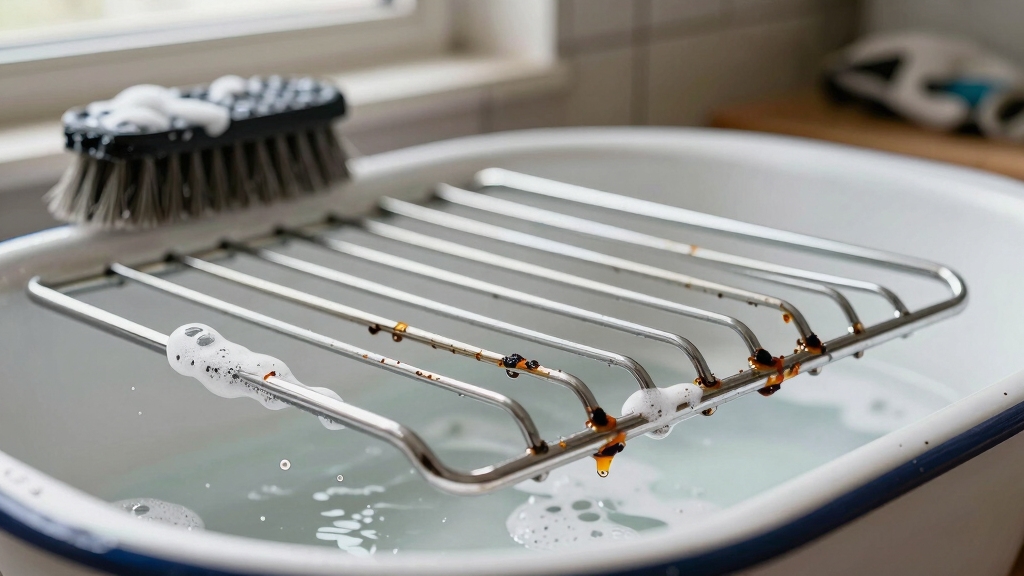
Soak the racks overnight in a solution of hot water mixed with dishwasher tabs or a vinegar and baking soda mixture to loosen grime.
After soaking, scrub gently with a nylon brush or melamine eraser to avoid scratches.
Rinse thoroughly and dry completely to prevent rust. Consider light oiling before reinstalling. You’ll find more precise tips and methods that enhance this process.
Key Takeaways
- Remove oven racks and soak overnight in a solution of hot water with dishwasher tabs or ammonia for heavy grime removal.
- Use a baking soda and vinegar soak followed by gentle scrubbing with a non-abrasive sponge or nylon brush for effective grease breakdown.
- Start cleaning with hot soapy water and soft cloth, progressing to melamine erasers or nylon brushes for stubborn spots without scratching.
- Rinse racks thoroughly and dry completely after cleaning to prevent rust and ensure smooth rack operation.
- Work in a well-ventilated area, wear gloves, and avoid steel wool unless absolutely necessary to protect metal surfaces and coatings.
Preparing Oven Racks for Cleaning

Before you begin cleaning, make sure the oven racks have completely cooled to avoid burns.
Once cool, carefully remove the racks from the oven and place them on a protected surface such as a countertop, sink, or bathtub lined with a waterproof barrier.
Inspect each rack thoroughly for heavy buildup or stuck-on debris. Use a putty knife or similar tool to gently scrape off any stubborn grime without damaging the metal.
Confirm that all oven controls are turned off before proceeding to avoid accidents.
Avoid leaving racks inside the oven during a self-cleaning cycle, as this can damage both the racks and oven.
Most manufacturers advise removing all oven racks before self-cleaning to prevent warping and fire hazards.
Choosing the Best Cleaning Method for Your Oven Racks
When selecting the best cleaning method for your oven racks, consider the level of grime buildup and the materials available to you.
Start by evaluating how dirty the racks are. Light stains require less intensive methods than heavy grease. Then, evaluate the cleaning agents and tools you have on hand.
Begin by assessing the grime level, then choose cleaning tools and agents accordingly for best results.
- For light grime, hot soapy water with a soft cloth is effective and easy.
- Stubborn stains call for steel wool or a soap-filled pad for targeted scrubbing.
- Heavy buildup might need soaking with dishwasher tabs or ammonia solutions overnight.
- Commercial degreaser sprays work well for spot treatments on tough grease patches.
Choose the method that aligns with your grime level and materials. Ensure careful rinsing and drying afterward to prevent rust. Wearing rubber gloves during cleaning protects your hands from harsh chemicals and irritants.
Cleaning Oven Racks With Vinegar and Baking Soda
First things first, take out your oven racks and set them down on a protected surface, like a sink or tub lined with a towel. This will help catch any mess and keep things tidy.
Now, grab some baking soda and sprinkle it evenly over the racks. Don’t be shy with it! Once you’ve got a nice layer, it’s time to spray some white vinegar on top. You’ll see it start to fizz and foam up, which is totally normal. Just wait until that fizzing action settles down.
Next, you’ll want to cover the racks with hot water. This is where the magic really starts! Let them soak for about 8 to 10 hours. It’s a bit of a wait, but trust me, it’s worth it.
When you’re ready, take a non-abrasive sponge and give those racks a good scrub. You’ll be amazed at how easily the grime comes off. Finally, rinse them clean, and you’re all done! Your oven racks will look brand new. Using natural ingredients like baking soda and vinegar is a cost-effective and safer way to clean compared to commercial cleaners.
Vinegar and Baking Soda
Sprinkle a generous layer of baking soda evenly over your oven racks to target grime and grease buildup.
Next, spray white vinegar over the baking soda; wait until the foaming reaction subsides.
Then, place the racks in a tub or large container and cover them completely with hot water.
Let them soak for 8 to 10 hours or overnight for best results.
After soaking:
- Remove racks carefully from the water.
- Use a non-abrasive sponge to scrub away loosened residue.
- Rinse racks thoroughly with clean water.
- Dry the racks completely before reinstalling.
This method breaks down tough grease and makes cleaning more efficient without harsh chemicals. For best results, always soak parts in hot water mixed with dish soap to loosen stubborn grime before scrubbing.
Soaking and Scrubbing
Soaking the oven racks in a hot water bath after applying baking soda and vinegar allows the mixture to penetrate and loosen stubborn grime effectively.
Start by sprinkling baking soda evenly over the racks, then spray white vinegar until the bubbling stops.
Place the racks in a tub or large container and cover them completely with hot water.
Let them soak for 8 to 10 hours or overnight to break down grease and baked-on residue.
After soaking, use a non-abrasive sponge or cloth to scrub the racks thoroughly, focusing on crevices and corners.
Rinse each rack under warm water to remove all residue, then dry completely with a clean towel to prevent rust before reinstalling them in the oven.
For best results, always ensure to use non-abrasive cleaners to protect the oven rack’s finish while cleaning.
Soaking Oven Racks With Dish Soap and Dishwasher Tabs
When you want to tackle greasy oven racks efficiently, dissolving dishwasher tabs in boiling water creates a powerful cleaning solution.
Start by adding three dishwasher tabs to a basin filled with boiling water, ensuring they dissolve completely.
Next, fully submerge the oven racks in this hot, soapy mixture. Let them soak for several hours or overnight to break down tough grime.
After soaking, gently scrub the racks with a non-scratching sponge to remove loosened residue.
Finally, rinse thoroughly, paying special attention to glide mechanisms to prevent buildup.
For an enhanced cleaning effect, you can soak the racks in a mixture of ammonia and water to soften baked-on grime more effectively.
Cleaning Oven Racks Using Ammonia Soak
After soaking your oven racks in the dishwasher tab solution, you might encounter stubborn grease that requires a stronger approach. For this, use an ammonia soak.
Place the racks inside a large trash bag, add about ½ cup of ammonia and a few drops of dish soap, then seal the bag tightly. Alternatively, fill a tub with warm water mixed with ammonia and dish soap, and submerge the racks fully.
Let them soak for several hours or overnight, allowing the ammonia to break down tough grime. After soaking, scrub the racks carefully with a nylon brush or a melamine eraser to remove loosened buildup.
Rinse both sides thoroughly with water to remove all residues. This method is highly effective for heavy-duty cleaning without damaging your racks. Always ensure you follow safety precautions when using ammonia to protect yourself and your surfaces.
Using Commercial Cleaners on Oven Racks
To tackle tough grease and baked-on grime, you can turn to commercial oven rack cleaners designed specifically for heavy-duty degreasing.
Here’s how to use them effectively:
- Spray the cleaner evenly over the racks, focusing on stubborn grease spots.
- Let the solution sit for 15-30 minutes, following the product’s instructions for optimal breakdown of grime.
- Use a toothbrush or non-abrasive pad to gently scrub the affected areas, ensuring you cover every crevice.
- Rinse the racks thoroughly with warm water to remove all residue. Dry completely before reinstalling to prevent rust.
This method saves time and effort, especially when dealing with racks that resist traditional cleaning.
Be sure to work in a well-ventilated area and wear gloves to protect your skin, as many oven cleaners contain harsh chemicals that can cause chemical burns.
Effective Tools and Techniques for Scrubbing Oven Racks
When it comes to scrubbing oven racks, choosing the right tools is key. You definitely want to go for non-abrasive sponges or nylon brushes. These will help protect the finish on your racks while still getting the job done.
For light grime, gentle techniques are your best bet. Soaking the racks and giving them a soft scrub usually does the trick. But if you’re dealing with tougher grease spots, you might need to step it up a notch. In those cases, a tougher pad or even a toothbrush can be really effective. Just remember to strike a balance—while you want to be thorough, you also don’t want to damage those metal surfaces. Using multi-purpose cleaners designed for ovens can also enhance cleaning effectiveness without harming the racks.
Best Scrubbing Tools
When scrubbing oven racks, choosing the right tools can make the difference between efficient cleaning and frustrating effort. To tackle grease and grime effectively, equip yourself with these essentials:
- Non-abrasive sponges – Perfect for gentle scrubbing without scratching the metal surface.
- Nylon brushes – Ideal for reaching into crevices and loosening baked-on debris.
- Melamine erasers – Useful for stubborn spots that resist softer tools without damaging the rack.
- Toothbrushes – Excellent for precision cleaning around corners and joints.
Use these tools methodically, starting with the gentlest option and progressing as needed. Focus on consistent, firm pressure to dislodge buildup without harming the racks.
Avoid steel wool unless absolutely necessary, as it can scratch and accelerate rusting. This approach guarantees thorough cleaning while preserving your racks’ longevity. For best results, always clean in a well-ventilated area on a stable surface to prevent accidents and protect your equipment.
Gentle Vs. Abrasive Techniques
Balancing gentle and abrasive scrubbing techniques guarantees you effectively remove grime without damaging your oven racks.
Start with a non-abrasive sponge or soft cloth soaked in hot, soapy water to lift surface dirt. This gentle approach prevents scratching and preserves the rack’s finish.
When buildup resists, switch to a nylon brush or melamine eraser, which offers firmer scrubbing power without harsh abrasion. Avoid steel wool or soap-filled pads unless absolutely necessary, as they can cause permanent scratches.
Always rinse thoroughly after scrubbing to remove residue and prevent corrosion. By alternating between gentle and moderately abrasive tools, you maintain the racks’ integrity while ensuring cleanliness.
This methodical approach extends your racks’ lifespan and prepares them for tougher cleaning methods if needed.
Handling Tough Grease Spots
Tackling tough grease spots requires a strategic combination of the right tools and scrubbing techniques to break down stubborn buildup without damaging your oven racks.
Start by selecting effective scrubbing aids that balance power and care.
- Use a nylon brush or melamine eraser for scrubbing without scratching.
- Apply a commercial degreaser or ammonia soak to loosen thick grease.
- Let cleaning solutions sit 15-30 minutes or soak racks overnight for maximum effect.
- Follow with a non-abrasive sponge to scrub remaining residue gently.
Avoid steel wool on coated racks to prevent surface damage. Rinse racks thoroughly after scrubbing to remove any chemical traces.
Dry racks completely to prevent rust before reinstalling. This methodical approach makes certain your oven racks become grease-free and maintain longevity.
Preventing Rust and Maintaining Your Oven Racks
Protect your oven racks from rust by thoroughly drying them after every cleaning session. Moisture left on the surface promotes corrosion.
Once cleaned, use a soft cloth to wipe down every inch, especially in crevices and joints where water tends to linger. For sliding racks, apply a light coat of vegetable oil to discolored or dry areas to maintain smooth movement and prevent oxidation.
Avoid using steel wool excessively, as it can scratch protective coatings, exposing metal to rust. Store racks in a dry area if removed for extended periods.
Regularly inspect for early rust spots and address them promptly with gentle scrubbing and drying. Consistent maintenance preserves the racks’ lifespan and ensures safe, efficient oven use.
Frequently Asked Questions
Can Oven Racks Be Cleaned in a Dishwasher?
You can clean oven racks in a dishwasher, but it’s not always ideal.
Dishwashers may not remove heavy grease or baked-on grime effectively.
For better results, soak racks overnight in a solution of boiling water and dishwasher tabs.
Then scrub gently before rinsing.
Avoid harsh scrubbing inside the dishwasher to prevent damage.
If your racks have delicate glide mechanisms, rinse thoroughly afterward to protect them from residue buildup.
How Often Should Oven Racks Be Deep Cleaned?
You should deep clean your oven racks every three to six months, depending on how often you use the oven and how greasy the racks get.
If you cook frequently or notice heavy buildup, clean them more often.
Regular inspections help you catch stubborn grime early.
Light cleaning with hot soapy water can be weekly, but a thorough soak and scrub every few months will keep your racks in peak condition and prevent rust or discoloration.
Are There Natural Alternatives to Commercial Cleaners?
You can let nature’s gentle touch work wonders with vinegar and baking soda. Sprinkle baking soda over your racks, then spray white vinegar until it foams like a bubbling spring.
After covering with hot water, soak overnight. This method breaks down grime without harsh chemicals.
It’s a precise, methodical approach that cleans deeply and safely, leaving your racks refreshed and chemical-free. Perfect if you want to avoid commercial cleaners altogether.
Can Rust on Oven Racks Be Completely Removed?
You can remove most rust on oven racks, but complete removal depends on severity.
Start by scrubbing with a steel wool pad or a soap-filled abrasive sponge to break down rust spots. For stubborn rust, soak racks in a mixture of ammonia and dish soap overnight, then scrub with a nylon brush.
Afterward, rinse thoroughly and dry completely to prevent new rust. Severe corrosion might require replacement for safety and effectiveness.
Is It Safe to Use Bleach on Oven Racks?
You probably didn’t know that over 60% of oven rack cleaners avoid bleach due to safety concerns.
It’s not safe to use bleach on oven racks because it can corrode metal and leave harmful residues.
Instead, use baking soda and vinegar or ammonia-based methods for effective cleaning.
Always rinse racks thoroughly to remove any cleaner remnants and prevent damage or health risks.
Bleach isn’t recommended for metal oven racks.
Clean Oven Racks Easily with the Right Tools and Techniques
Now that you know the best ways to clean oven racks, it’s time to roll up your sleeves and get to work.
Whether you choose natural solutions like vinegar and baking soda or a commercial cleaner, consistency is key.
With the right tools and techniques, you’ll have your racks sparkling in no time.
Remember, an ounce of prevention is worth a pound of cure. Regular maintenance will keep rust and grime at bay for good.