How to Get Rid of Food Coloring: Step-by-Step Cleaning Guide
To get rid of food coloring effectively, act immediately by rinsing the affected area with cold water to prevent dye bonding and penetration.
Blot excess dye gently, then use soap on skin.
For fabrics, flush stains from the back with cold water, pretreat with a stain remover, and wash promptly in cold water with a heavy-duty detergent.
Avoid heat until fully treated, especially on delicate materials.
Understanding these steps guarantees efficient stain removal and better long-term results.
Key Takeaways
- Rinse stains immediately with cold water to prevent dye from bonding and penetrating deeper into skin or fabric.
- Blot excess food coloring gently without rubbing to avoid spreading or embedding the stain further.
- Use soap and water on skin, and pretreat fabric stains with stain remover before washing in cold water.
- For persistent fabric stains, soak in oxygen bleach solution if safe for the material, avoiding heat until fully removed.
- For delicate fabrics, use mild detergent sparingly and consider professional cleaning to prevent damage and permanent staining.
How to Remove Food Coloring From Skin Quickly?

When you get food coloring on your skin, acting quickly is essential to prevent the dye from setting.
Begin by rinsing the area immediately with cold water, which helps prevent the dye from bonding to skin proteins.
Follow this with thorough washing using soap and water, applying gentle friction to avoid embedding the stain deeper.
Non-gel whitening toothpaste can also be used as a mild abrasive agent to lift color without damaging skin.
For persistent stains, consider natural remedies like baby oil, baking soda paste, or a lemon-and-salt mixture to chemically and physically loosen remaining dye particles.
Throughout, avoid harsh scrubbing that risks skin irritation or deeper dye penetration.
Immediate treatment with appropriate cleaning solutions prevents dye from bonding deeply.
Why Acting Fast Makes Food Coloring Stains Easier to Remove?
Acting fast is key when it comes to tackling food coloring stains. As soon as you notice the stain, grab some cold water and soap. You want to rinse it out right away to stop the dye from settling in.
Fresh stains are much easier to deal with because they’re more soluble, meaning they respond well to a bit of gentle rubbing. Just be careful not to push the color deeper into the fabric or skin.
If you wait too long, though, that dye can dry and bind to the material, which makes getting rid of it a real hassle. So, don’t delay! The sooner you treat it, the better your chances of getting it out. Using cold water initially is important because it slows dye absorption and prevents permanent setting.
Importance Of Immediate Washing
Frequently, acting immediately after food coloring contacts your skin or fabric markedly improves stain removal efficacy.
When you rinse the affected area promptly with cold water, you prevent the dye from setting into fibers or skin pores.
Cold water flushes out dye particles before they bond chemically or physically with the substrate.
Applying gentle soap and water enhances this by breaking down the colorant’s molecular adherence.
For skin, using hand sanitizer accelerates dye breakdown, preventing deeper staining.
On fabric, blotting excess dye and flushing from the stain’s reverse side before pretreatment minimizes penetration.
Immediate washing reduces the time dye interacts with surfaces, limiting stain permanence and simplifying subsequent cleaning steps.
Delaying treatment allows dye molecules to fixate, making removal more labor-intensive and less effective.
Prompt action is essential because delayed cleaning allows residues to harden, increasing stain difficulty.
Fresh Stains Versus Dried
Stains from food coloring almost always respond better to prompt treatment because the dye molecules haven’t yet bonded firmly with skin or fabric fibers. Acting quickly prevents the dye from setting, making removal more effective.
When stains dry, the dye penetrates deeper, complicating extraction and often requiring harsher treatment.
To visualize the difference, consider these scenarios:
Fresh stains appear vivid and wet, easily blotting or rinsing off.
Dried stains show a dull, set-in appearance, resistant to water.
Immediate cold water rinsing flushes out loose dye particles.
Dried stains demand extended soaking or chemical agents.
Delay allows dye molecules to form stronger bonds with fibers.
Immediate action is crucial because delaying treatment increases the difficulty of stain removal and the risk of permanent damage.
Benefits Of Gentle Rubbing
Acting swiftly on fresh food coloring marks lets you use gentle rubbing to lift the dye without embedding it deeper into skin or fabric.
When the stain is still wet, the dye molecules haven’t fully bonded with fibers or skin cells, making surface agitation effective in loosening and removing color particles.
Gentle rubbing applies enough mechanical force to dislodge the pigment without driving it further into the substrate, which can happen with aggressive scrubbing.
This controlled friction also helps distribute cleaning agents like soap evenly, enhancing their stain-breaking action.
Delaying treatment allows dye to set, requiring harsher methods that risk damage.
Consequently, prompt, gentle rubbing optimizes stain removal efficiency while preserving the integrity of the affected material.
Additionally, using appropriate cleaning agents and techniques prevents the buildup of residue in fibers, which can attract dirt and cause long-term issues.
Easy Household Tricks to Remove Food Coloring Stains
Start by rinsing the stained area with cold water to prevent the dye from setting into the fibers or skin.
Prompt treatment is critical, as dried stains resist removal. Next, apply one of the following household agents to break down dye molecules effectively:
- Hand sanitizer for rapid dye dissolution on skin
- Non-gel whitening toothpaste combined with gentle rubbing to lift color
- Baby oil or a baking soda paste to absorb and loosen residual pigment
- Lemon juice and salt paste exploiting natural acids to dissolve stains
- Mild dish soap mixed with water for initial cleaning without abrasion
Each method relies on chemical interactions, solvent action, mild abrasion, or acid-base reactions to dislodge dye particles while minimizing damage.
Avoid harsh scrubbing to prevent embedding the stain deeper. Immediate blotting with a clean cloth can help reduce stain spread and improve removal success, as outlined in general stain removal techniques.
Best Ways to Remove Food Coloring From Clothes
To effectively remove food coloring from clothes, promptly blot any excess dye with a paper towel to prevent further absorption into the fabric.
Next, flush the stained area from the back using cold water. This technique pushes the dye out of the fibers rather than deeper in. Avoid rubbing aggressively to prevent setting the stain.
For washable fabrics, soaking in cold water with a heavy-duty detergent can loosen dye particles.
For persistent stains, an oxygen bleach soak, following fabric care label guidelines, helps break down pigments without harsh chemicals.
Refrain from applying heat via dryers until the stain is fully removed, as heat can permanently set the dye.
Delicate materials like silk or wool require professional cleaning to avoid damage and ineffective stain removal.
Using cold water for rinsing and washing helps prevent the stain from setting permanently.
How to Pretreat and Wash Clothes With Food Coloring Stains?
Apply a stain remover directly to the food coloring mark as soon as possible to break down pigments before washing. Start by blotting excess dye with a clean cloth to prevent further absorption.
Apply stain remover promptly and blot excess dye to prevent deeper fabric absorption before washing.
Rinse the fabric under cold water from the back of the stain, pushing color out of fibers. After pretreatment, launder with a heavy-duty detergent in cold water to avoid setting the stain.
Avoid using heat in the dryer until the stain is completely removed, as heat can fix the dye permanently.
- Blot gently to lift fresh dye without spreading
- Flush cold water through fabric’s reverse side
- Apply a commercial stain remover targeting pigment molecules
- Wash promptly in cold water with strong detergent
- Air-dry and inspect before any heat application
For best results on synthetic fabrics like polyester, consider using a plant-based enzymatic stain remover to safely and effectively break down the food coloring.
Gentle Cleaning for Delicate Fabrics With Food Coloring
While pretreating and washing can effectively handle many food coloring stains on everyday fabrics, delicate materials like silk and wool demand a more cautious approach.
You should avoid aggressive scrubbing or soaking, which can damage fibers and set stains permanently. Instead, immediately blot excess dye gently with a clean cloth.
Then rinse the stained area under cold water, directing flow from the back to push color outward. Use a mild detergent formulated for delicate fabrics, applying it sparingly and allowing a brief dwell time before rinsing.
Avoid bleach or harsh chemicals unless the care label explicitly permits oxygen-based bleaches. If the stain persists, consider professional dry cleaning to prevent fiber degradation.
This targeted, gentle method minimizes fabric stress while maximizing stain removal efficacy on sensitive materials. Always perform a patch test on a hidden area before applying any treatment to avoid damage.
How to Get Food Coloring Out of Carpet and Upholstery?
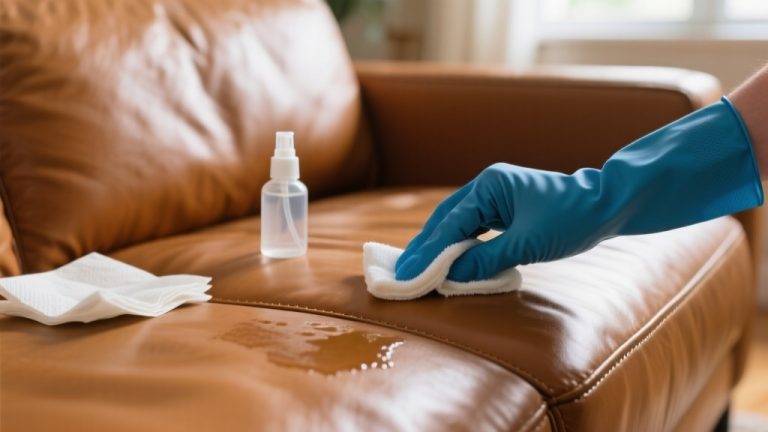
When you’re dealing with food coloring stains on your carpet or upholstery, it’s important to be gentle. You really don’t want to rub too hard, or you might push the dye deeper into the fibers, making it even harder to get out.
Instead, I suggest mixing up a solution with dish soap, ammonia, and some lukewarm water. This combo can work wonders for breaking down that stubborn stain.
Once you have your solution ready, grab a white cloth or some paper towels. Start blotting the stained area gently, repeating this process to lift the residue without spreading the stain further.
Just take your time with it, and you’ll have a better chance at getting that food coloring out! Always test solutions on an inconspicuous area first to avoid discoloration or damage to your carpet or upholstery.
Gentle Stain Removal
Frequently, the key to removing food coloring stains from carpet and upholstery lies in gentle, methodical treatment rather than aggressive scrubbing, which can embed the dye deeper into fibers.
You should focus on blotting the stain with a white cloth, applying minimal pressure to lift color without spreading it.
Repeatedly use a mild cleaning solution with controlled dwell time to loosen dye particles. Avoid harsh abrasives that risk damaging the fabric’s integrity.
To visualize the process:
- Blot excess dye carefully with a white cloth.
- Apply a gentle cleaning mix using a spray bottle.
- Let the solution sit briefly to penetrate fibers.
- Dab the stain repeatedly without rubbing.
- Use paper towels to absorb moisture after each cycle.
This approach minimizes fiber damage and maximizes stain lifting efficiency.
Effective Cleaning Solutions
Start by preparing a cleaning solution tailored for carpet and upholstery stains. Combine dish soap, ammonia, and lukewarm water in measured proportions.
This mixture leverages surfactants to emulsify the dye while ammonia acts as an alkaline agent to break down pigment molecules.
Apply the solution sparingly using a white cloth, gently blotting rather than rubbing to prevent dye penetration deeper into fibers.
After blotting, use paper towels to absorb loosened stain residues efficiently.
Repeat this spot treatment cycle until the stain diminishes, allowing brief dwell times to enhance stain loosening without saturating the fabric.
Avoid aggressive scrubbing, which risks spreading the dye.
This method balances chemical action with mechanical blotting, optimizing stain lift while preserving fiber integrity and preventing permanent set of the food coloring in carpet or upholstery.
How to Prevent Food Coloring Stains While Cooking and Decorating?
During cooking and decorating, minimizing food coloring stains requires deliberate protective measures and hygiene practices. You need to control exposure and limit contact with skin, fabrics, and surfaces by adopting systematic precautions.
Minimize food coloring stains by using protective measures and controlling contact with skin, fabrics, and surfaces.
Prepare your workspace to avoid accidental spills and transfer.
Wear disposable gloves to prevent direct skin contact with dyes. Use aprons or old clothing to shield fabrics from splashes. Cover countertops with washable mats or parchment paper.
Handle coloring agents with small, controlled tools like droppers or brushes. Wash hands immediately after applying color to reduce stain absorption.
Natural Alternatives to Artificial Food Coloring for Stain-Free Fun
While protective measures help reduce accidental staining from artificial food coloring, choosing natural color sources can further minimize the risk altogether. You can use turmeric for vibrant yellows, beet juice for reds, and red cabbage for blues and purples.
These natural dyes contain pigments like curcumin, betalains, and anthocyanins, which bind less aggressively to skin and fabric fibers, lowering stain potential. Additionally, their chemical structures degrade more readily with water and mild detergents, making removal easier if stains occur.
You should also consider black coffee or onion skins to achieve browns and earthy tones. By substituting synthetic dyes with these organic pigments, you reduce exposure to persistent, synthetic chromophores that resist conventional stain removal.
This approach enhances stain-free use without compromising color intensity or safety.
Frequently Asked Questions
Can Food Coloring Cause Allergic Skin Reactions?
Yes, food coloring can cause allergic skin reactions, especially if you have sensitive skin or a predisposition to allergies.
When you come into contact with artificial dyes, your immune system might interpret them as harmful. This can trigger symptoms like redness, itching, or hives.
You should be cautious, perform patch tests, and avoid prolonged exposure. If reactions occur, consult a healthcare professional for diagnosis and treatment to prevent more severe allergic responses.
Is Food Coloring Harmful if Ingested in Large Amounts?
Imagine a flood of vibrant pigments overwhelming your body’s delicate balance.
Consuming large amounts of food coloring isn’t exactly a health hazard, but it can pose risks.
You might experience mild digestive discomfort or allergic responses depending on sensitivity.
Regulatory agencies set strict limits to keep consumption safe, so staying within those boundaries is wise.
Excessive intake could tax your system, but typical use in foods won’t cause harm.
How Long Does Food Coloring Stay in Your System?
Food coloring typically stays in your system for 24 to 48 hours.
Once ingested, your body metabolizes and excretes the dyes primarily through urine and feces.
The exact duration varies depending on your metabolism, the type and amount of dye consumed, and individual health factors.
Synthetic dyes are generally eliminated faster than natural dyes, but none accumulate markedly in your body over time under normal consumption levels.
Are There Any Health Risks From Inhaling Food Coloring Powder?
While you won’t find food coloring powder in a medieval apothecary’s kit, inhaling it today can pose health risks.
You might experience respiratory irritation, coughing, or sneezing due to fine particles entering your lungs.
Prolonged exposure could lead to more serious pulmonary issues.
To minimize risks, always handle powders in well-ventilated areas.
Use protective masks and avoid direct inhalation of the dust to maintain your respiratory health.
Can Food Coloring Stain Teeth Permanently?
Food coloring typically doesn’t cause permanent teeth staining, but it can temporarily discolor your enamel, especially if you consume highly pigmented or acidic dyes frequently.
The stains usually respond well to regular brushing and professional dental cleaning.
However, if you neglect oral hygiene, these colorants might embed in plaque or enamel irregularities, increasing the risk of longer-lasting discoloration.
Maintaining good dental care minimizes any potential staining effects from food coloring.
How to Get Rid of Food Coloring Stains Before They Set
Getting rid of food coloring is like defusing a ticking stain bomb. Act quickly to prevent permanent damage.
Using targeted household solutions and proper pretreatment techniques guarantees effective removal from skin, clothes, and fabrics.
For delicate materials, gentle methods preserve texture while eliminating color. Preventive measures and natural alternatives reduce future risks.
By understanding and applying these precise steps, you’ll maintain a stain-free environment efficiently and confidently every time.