What Is Laundry Starch? Types, Uses & Benefits
Laundry starch coats your fabric fibers with a thin, heat-activated layer that sharpens creases, adds crispness, and boosts wrinkle resistance. This is especially effective on natural fibers like cotton and linen.
You control stiffness by adjusting starch concentration and applying it evenly. Heat-setting with ironing reinforces fiber alignment.
Although starch improves fabric structure and presentation, improper use can cause brittleness or residue. Understanding its precise application and fabric compatibility guarantees peak results and garment longevity.
The following details clarify these aspects further.
Key Takeaways
- Laundry starch coats fabric fibers with a thin layer that hardens, producing a crisp, polished look and enhanced fabric firmness.
- It improves wrinkle resistance by restricting fiber movement and helps maintain sharp creases, especially on natural fibers like cotton and linen.
- Starch application enhances ironing efficiency by smoothing fibers and reducing limpness, prolonging a freshly ironed appearance.
- Different starch types and concentrations allow customization of stiffness, with heat setting during ironing solidifying the coating.
- Best suited for natural fibers; improper use on synthetics or delicate fabrics can cause brittleness, residue, or damage.
Understanding Laundry Starch and Its Function

When you apply laundry starch, it works by coating fabric fibers with a thin layer that hardens as it dries. This gives your clothes a firmer, crisper texture.
This coating aligns and binds individual fibers, enhancing the fabric’s structural integrity and enabling it to maintain sharp creases. The starch, typically a suspension of plant-derived carbohydrates like corn or wheat starch, interacts most effectively with natural fibers.
These fibers respond well to heat setting during ironing. The drying process solidifies the starch layer, creating a semi-rigid surface that resists limpness and wrinkling.
By adjusting starch concentration, you control stiffness. Lighter coatings yield moderate crispness, while heavier ones increase rigidity. This mechanism supports fabric shaping and prolongs the freshly ironed appearance.
It improves clothing presentation without altering the underlying fiber composition. Using plant-based enzymes in fabric care can enhance cleaning effectiveness while maintaining fiber integrity.
How to Use Laundry Starch for Best Results?
To get that perfect stiffness and smoothness in your laundry, it’s all about applying laundry starch evenly. Make sure to give the product a good shake before you use it—that helps prevent any clumping.
Now, when you’re choosing fabrics, focus on those that really respond well to starch, like cotton and linen. Just a heads up, steer clear of delicate or synthetic fibers since they can get damaged or end up feeling overly rigid.
Proper application and care can help maintain fabric integrity and appearance, much like how gentle cleaning methods preserve delicate surfaces.
Proper Application Techniques
Apply laundry starch evenly and sparingly to guarantee ideal fabric stiffness without residue buildup.
Before use, shake or mix the starch thoroughly to prevent clumps. For liquid starch, dilute if necessary, then immerse or spray fabric evenly.
Iron immediately while starch is damp to set stiffness. Avoid heavy application to prevent fabric stiffness and visible buildup.
Since moisture levels affect fabric drying, proper ventilation can help achieve the best drying times when starching clothes.
| Step | Action |
|---|---|
| Preparation | Shake/mix starch thoroughly |
| Application | Spray or immerse fabric evenly |
| Setting | Iron damp fabric promptly |
Consistent technique guarantees a smooth, crisp finish and prolongs garment life.
Adjust application intensity depending on desired stiffness, always erring on lighter coverage to maintain fabric flexibility.
Fabric Compatibility Tips
Although laundry starch enhances crispness effectively, not all fabrics respond well to its application. You should restrict starch use primarily to natural fibers such as cotton and linen, which absorb starch evenly and tolerate heat-setting during ironing.
Synthetic fibers like polyester and nylon often resist starch penetration, resulting in uneven stiffness or residue buildup. Delicate fabrics such as silk and wool typically require caution; starch can cause excessive rigidity and damage fiber flexibility.
Before full application, test starch on a fabric swatch to assess absorption and texture changes. Adjust starch concentration and application method based on fiber type to optimize finish without compromising fabric integrity.
Using starch selectively guarantees a crisp appearance while maintaining garment longevity and comfort. Additionally, following proper fabric compatibility guidelines ensures safe and effective treatment without risking damage.
Best Fabrics for Using Laundry Starch
Fabric selection plays a crucial role in achieving ideal results with laundry starch, as not all textiles respond equally to starch application.
Natural fibers like cotton and linen are the best candidates because their cellulose structure readily absorbs and binds starch molecules. This enhances stiffness and crease retention.
Cotton’s fiber morphology allows for uniform starch coating, providing a crisp finish without excessive buildup. Linen’s coarser weave benefits from starch by improving shape retention and reducing wrinkling.
Conversely, synthetic fabrics such as polyester or nylon resist starch adhesion due to their hydrophobic surfaces. This results in uneven stiffening or flaking.
Blended fabrics show variable responses depending on fiber ratios. Consequently, you should prioritize 100% cotton or linen garments for starching to achieve peak firmness, durability, and a polished appearance.
For best results, always test starch application on a hidden spot to ensure fabric compatibility and avoid damage.
Types of Laundry Starch and Their Uses
Laundry starch products come in several distinct forms, each tailored to specific ironing needs and fabric types.
You’ll find liquid starch, a ready-to-use suspension that applies evenly and suits heavier fabrics needing strong stiffness.
Spray starch offers a fine mist, ideal for light, controlled application on delicate materials or quick touch-ups.
Spray starch delivers a gentle mist, perfect for delicate fabrics and effortless, precise touch-ups.
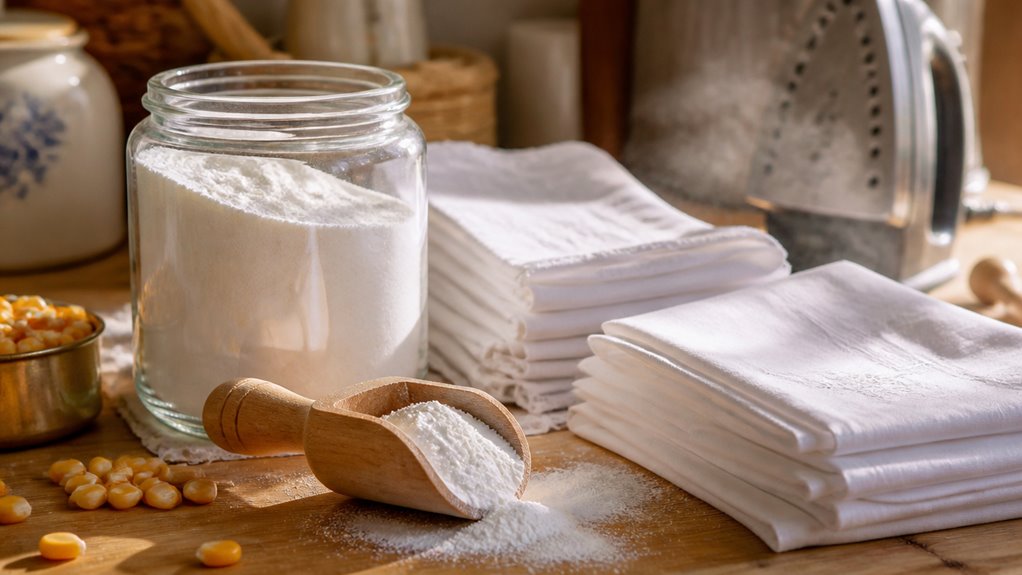
Homemade starch blends, typically cornstarch mixed with water, provide customizable stiffness but require precise mixing to avoid clumping.
Commercial starches vary in plant-derived starch bases, such as corn, wheat, and potato, affecting texture and hold strength.
When selecting a starch type, consider the fabric’s fiber content and desired crispness.
Heavier starches enhance crease retention on cottons and linens, while lighter sprays maintain softness in blends or synthetics.
Proper application guarantees peak finish without fabric damage or residue buildup.
Many plant-derived starches also prioritize environmental safety and gentle handling of fabrics, aligning with natural cleaning philosophies.
Key Benefits of Laundry Starch for Clothing and Linens
Using laundry starch can really make a difference in how your clothes and linens look and feel.
When you apply it, you’ll see that it adds a nice crispness to the fabric. It coats the fibers and helps them hold their shape as they dry, which is pretty cool.
Plus, it’s great for preventing wrinkles, so you can keep that smooth, polished look for longer.
Knowing these benefits can definitely help you choose the right starch application for your clothing and linens.
Additionally, just like the importance of moisture control in cleaning laminate floors, managing moisture when using starch is key to achieving the best results without damaging fabrics.
Enhanced Fabric Crispness
Achieving enhanced crispness in clothing and linens often hinges on the strategic use of starch during laundering.
When you apply starch, it forms a thin, hardened layer on fabric fibers, increasing rigidity and producing a visibly sharper, more structured appearance.
This effect is particularly noticeable on natural fibers like cotton, which respond well to starch treatment and heat setting.
By controlling starch concentration and application, you can tailor fabric stiffness to your needs:
- Achieve a polished, professional look on shirts and uniforms.
- Maintain fabric shape and improve tactile firmness for linens.
- Enhance ironing efficiency by reducing fabric limpness and smoothing fiber alignment.
This precise starch coating reinforces fabric structure, giving your garments and linens a consistently crisp finish that stands out.
Similar to fabric care, maintaining optimal conditions such as using pH-neutral cleaners can significantly prolong the life and appearance of treated materials.
Improved Wrinkle Resistance
Building on the enhanced crispness starch provides, it also plays a significant role in improving wrinkle resistance in clothing and linens.
When you apply starch, it forms a thin, rigid coating over fabric fibers, which restricts fiber movement during wear and handling. This coating maintains fiber alignment, reducing the formation of wrinkles.
Additionally, starch’s ability to set sharp creases during ironing enhances the garment’s structural integrity. The heat-activated bonding of starch molecules further stabilizes fabric shape, preventing deformation.
You’ll notice that natural fibers, which respond well to starch treatment, exhibit prolonged wrinkle resistance compared to untreated fabrics.
However, applying starch evenly and in appropriate amounts is vital. Excess starch can cause brittleness or uneven stiffness, compromising fabric flexibility and comfort.
Consequently, starch optimizes wrinkle control by reinforcing fiber structure without permanently altering the textile.
Similarly, using biodegradable surfactants in laundry products can complement starch by effectively removing residues without damaging fabric fibers.
Common Laundry Starch Mistakes to Avoid
Although laundry starch offers clear benefits in fabric finishing, users often make mistakes that compromise its effectiveness and garment integrity. To maximize starch performance and protect your fabrics, avoid these common errors:
- Over-application: Applying too much starch creates stiffness, visible residue, and fabric brittleness. This reduces garment lifespan.
- Skipping dilution or mixing: Using undiluted or poorly mixed starch leads to uneven coating and clumping. This causes patchy stiffness and ironing difficulties.
- Ignoring fabric type: Starching delicate or synthetic fabrics can cause rigidity or damage. Starch works best on natural fibers like cotton or linen.
- Using products with inappropriate pH levels or harsh ingredients can weaken fabric fibers similarly to how alkaline hand soaps disrupt the skin’s protective barrier, so always choose starch solutions formulated for fabric care with balanced pH and composition.
Frequently Asked Questions
Can Laundry Starch Cause Allergic Reactions on Sensitive Skin?
Yes, laundry starch can cause allergic reactions on sensitive skin, especially if you have a plant-based starch sensitivity or if additives in commercial products irritate you.
The starch coating may trap residues or chemicals against your skin, potentially triggering dermatitis or itching.
To minimize risk, test starch-treated garments on a small skin area first. Use hypoallergenic formulas and avoid heavy starching if your skin reacts negatively.
How Long Does Starched Fabric Maintain Its Crispness?
You can expect starched fabric to maintain its crispness for a few days, typically lasting through one or two wears, depending on fabric type and starch amount.
Natural fibers hold starch better, so crispness stays longer. Heavy starching prolongs stiffness but risks buildup and reduced fabric softness.
Washing removes starch, so after laundering, the crispness resets.
Proper storage and minimal handling help retain the finish between uses.
Is Laundry Starch Safe for Use on Children’s Clothing?
Sure, if you want your kid’s clothes to feel like cardboard armor, go ahead and starch away.
Technically, laundry starch is safe on most fabrics, but children’s clothing usually requires softness and flexibility.
Starch can cause stiffness, irritation, and even reduce fabric breathability.
Use it sparingly or avoid it altogether on kids’ wear, especially delicate fibers, to prevent discomfort and potential skin sensitivity.
Always test first and follow product guidelines carefully.
Can Starch Buildup Be Removed From Fabric Completely?
Yes, you can remove starch buildup completely from fabric by thoroughly washing it with a strong detergent and warm water.
Pre-soaking the garment helps loosen hardened starch. Avoid excessive agitation to protect fibers.
Repeated washing cycles may be necessary for heavy buildup. Using a fabric softener afterwards can restore softness.
Keep in mind that persistent buildup may weaken fibers over time, so moderate starch use prevents difficult removal.
Does Starch Affect the Color or Fading of Dyed Fabrics?
Starch itself doesn’t chemically alter dyed fabrics or cause fading directly.
However, if applied excessively or unevenly, starch buildup can create a barrier that affects dye penetration during washing.
This can potentially cause uneven color retention over time. You should use light, even applications and avoid heavy starching on delicate or brightly dyed fabrics to minimize any risk of color dulling or uneven wear.
Proper rinsing and laundering remain essential for color preservation.
How to Use Laundry Starch for a Professional Finish
Now that you understand laundry starch, you can confidently use it to give your clothes a crisp, professional finish.
For example, imagine you’re preparing for an important meeting. Applying starch to your shirt sleeves guarantees they stay sharp and wrinkle-free all day.
Just remember to choose the right starch type and fabric to avoid stiffness or residue.
With careful use, laundry starch becomes a powerful tool to maintain your wardrobe’s polished appearance efficiently.