Best Way to Clean Brass: Easy & Effective Methods
To clean brass effectively, first make certain it’s unlacquered. For quick shine, apply a thin layer of ketchup or tomato paste, letting mild acids dissolve tarnish before rinsing and drying promptly.
For a brighter finish, use a paste of lemon juice and baking soda, scrubbing gently and rinsing thoroughly. Tough tarnish may require commercial cleaners or electrolysis.
To preserve delicate or antique brass, favor gentle, non-abrasive methods and avoid harsh chemicals. Explore deeper techniques tailored to your brass’s condition and finish.
Key Takeaways
- Use natural acidic cleaners like ketchup or lemon juice and baking soda paste for gentle, effective tarnish removal on unlacquered brass.
- Apply homemade pastes evenly, allow 1–20 minutes for reaction, then rinse thoroughly and dry immediately to prevent water spots.
- For heavy tarnish, consider electrolysis with salt and baking soda solution, maintaining hot water for maximum cleaning efficiency.
- Commercial brass cleaners and polishes offer stronger oxidation removal and protective finishes but may remove patina and require careful use.
- Regular maintenance with mild soapy water, pH-neutral cleaners, and light mineral oil buffs preserves shine and protects delicate or antique brass.
Quick Brass Cleaning With the Ketchup Method
If you want to quickly brighten tarnished brass without scrubbing, the ketchup method is your best bet.
Apply a thin, even layer of ketchup directly onto the brass surface, ensuring full coverage.
Spread a thin, even layer of ketchup over the brass for complete coverage.
Let it sit undisturbed for 20 minutes to allow the mild acids and natural enzymes in the tomato base to break down tarnish.
Afterward, rinse the brass thoroughly with warm water to remove all residue, then dry it immediately with a soft cloth to prevent water spots.
For a stronger treatment, you can substitute ketchup with tomato paste or sauce, leaving it on for up to one hour before rinsing.
This method requires no rubbing, making it ideal for fast, effective cleaning that yields a shiny, uniform finish comparable to commercial brass cleaners.
However, always ensure the brass is unlacquered before using acidic treatments like this to avoid damaging the protective lacquer coating.
Using Lemon Juice and Baking Soda for a Bright Brass Finish
Sure! Here’s a more conversational version of your text:
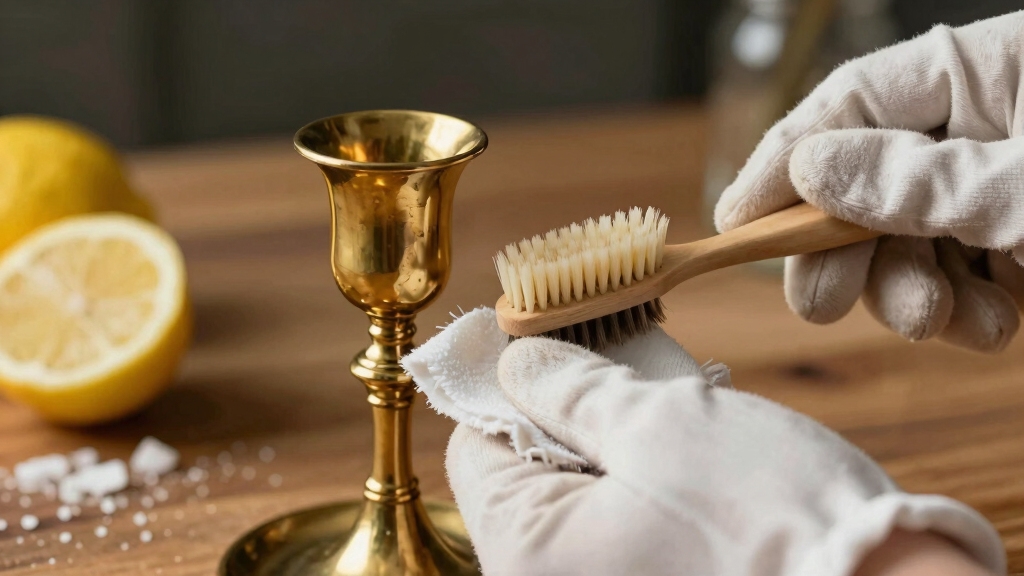
To get that shiny brass finish you’re looking for, start by mixing half a lemon’s juice with a teaspoon of baking soda. This will create a nice thick paste. Once you have that ready, just apply it evenly over the brass surface. Remember to rub gently, especially in those detailed areas—no one wants to scratch that beautiful finish!
You’ll notice that the chemical reaction kicks in pretty quickly, dissolving the tarnish. After you’ve given it some time to work its magic, rinse it off and dry the brass. You’ll be left with a bright, even finish that looks fantastic! Keep in mind that this homemade method is effective but does not provide post-cleaning protection, so you may need to clean your brass more frequently.
Mixing The Paste
Combine half a lemon’s juice with a teaspoon of baking soda to create a thick, consistent paste ideal for brightening brass surfaces.
Start by squeezing fresh lemon juice into a small bowl, then gradually add baking soda while stirring continuously to avoid lumps.
The reaction between the acidic lemon juice and alkaline baking soda produces a mildly effervescent mixture that thickens quickly.
Aim for a paste texture similar to toothpaste, dense enough to adhere to vertical or intricate brass parts without dripping.
If the paste is too runny, add a pinch more baking soda; if too stiff, add a few drops of lemon juice.
This precise balance guarantees effective tarnish removal without abrasive damage.
Once mixed, use the paste promptly for peak freshness and reactive power.
For maintaining delicate surfaces, it’s important to avoid abrasive ingredients similar to those found in many granite cleaners.
Application Techniques
Having prepared the lemon juice and baking soda paste to the right consistency, you’re ready to apply it effectively to brass surfaces.
Use a soft cloth or your fingers to spread the paste evenly, focusing on tarnished or dull areas. Apply gentle pressure, ensuring the paste penetrates detailed crevices without scratching.
Work in small sections to maintain control and prevent drying before rinsing. Allow the paste to sit for 1–2 minutes for peak reaction time.
Next, rinse thoroughly with warm water to remove all residue, preventing streaks or buildup.
Finally, dry and buff the brass with a microfiber cloth, enhancing the shine and ensuring an even finish.
This method provides a bright, clean surface without abrasive damage or harsh odors. For best results, always use soft microfiber cloths to avoid scratching delicate surfaces.
Cleaning Benefits
Achieving a bright, clean brass finish hinges on the chemical reaction between lemon juice’s acidity and baking soda’s mild abrasiveness.
When mixed into a paste and applied, this combination effectively dissolves tarnish without scratching, revealing the metal’s natural luster.
You’ll find this method ideal for intricate details where harsh scrubbing risks damage.
Key benefits include:
Rapid tarnish removal through acid-base reaction.
Gentle, non-abrasive action preserving delicate surfaces.
Easy application with a thick, spreadable paste.
Minimal odor compared to vinegar-based alternatives.
Simple rinsing guarantees an even, streak-free shine.
For best results, ensure proper ventilation during cleaning to avoid any irritation from fumes associated with chemical reactions or cleaning agents proper ventilation.
Choosing Commercial Brass Cleaners for Tough Tarnish
When you’re dealing with tough brass tarnish, it’s a good idea to reach for some reliable commercial cleaners like Bar Keepers Friend or Brass-O. These products are known for their effectiveness, so you can trust they’ll get the job done.
To use them, just grab a soft cloth or a toothbrush. Make sure to apply the cleaner evenly, but be careful not to scrub too hard; you don’t want to damage the surface.
Once you’re done, rinse everything thoroughly and give it a good polish. This will help restore that beautiful shine and keep your brass looking its best! Many effective brass cleaners also create a protective barrier that helps prevent future tarnish buildup.
Effective Commercial Cleaner Options
Several commercial brass cleaners provide efficient solutions for removing tough tarnish that home remedies may struggle with. You’ll find these products designed to react chemically with patina, breaking it down quickly without abrasive damage.
Here are some reliable options worth weighing:
Bar Keepers Friend Liquid: Apply with cloth; removes patina instantly and is widely available.
Brass-O Cleaner: Targets oxidation and polishes simultaneously.
Toothpaste (non-gel): Use a toothbrush to scrub dirt and mild tarnish off.
Specialized Brass Polishes: Contain anti-corrosion agents enhancing shine and protection.
Multi-surface Metal Cleaners: Suitable for mixed-metal items with brass components.
Each product requires following manufacturer instructions precisely to avoid surface damage and ensure peak results. When selecting a product, consider the material’s specific needs, much like choosing a pH-balanced cleaner for delicate surfaces such as quartzite.
Application Techniques and Tips
Selecting a commercial brass cleaner is only part of the process; applying it correctly guarantees peak removal of tough tarnish without damaging your item.
Begin by shaking the cleaner well and applying a small amount onto a soft cloth or sponge to control the cleaner’s distribution and avoid excess moisture.
Rub the surface gently but firmly in circular motions to break down the patina evenly.
For detailed items, use a soft toothbrush to reach crevices without scratching.
Always follow the manufacturer’s dwell time recommendations to prevent etching.
After cleaning, thoroughly rinse with warm water to remove residue, then dry immediately with a microfiber cloth to prevent water spots.
Finish with a polish or protective coat to maintain the brass’s luster and extend protection against future tarnish.
Using a pH-neutral cleaner during maintenance helps prevent corrosion and dulling after the initial cleaning.
How to Remove Heavy Brass Tarnish With Electrolysis?
To remove heavy brass tarnish effectively, you can use electrolysis, a chemical process that transfers tarnish from the brass surface onto aluminum foil.
Start by crumpling aluminum foil and placing it in a container, ensuring it contacts the brass item directly. Prepare a hot water solution with 1 tablespoon each of salt and baking soda per 300 ml water. Submerge the brass fully for about three hours.
During this time, tarnish ions migrate to the foil, lifting corrosion without abrasive damage.
Key points to follow:
- Use crumpled aluminum foil to maximize surface contact.
- Maintain hot water temperature for peak reaction speed.
- Combine salt and baking soda for effective conductivity.
- Submerge brass completely to guarantee uniform cleaning.
- Rinse and lightly scrub post-treatment to remove loosened grime.
Be sure to monitor the process carefully, as prolonged soaking can sometimes lead to surface degradation if not controlled, a principle important in electrolytic cleaning.
Effective Household Mixtures for Natural Brass Shine
After handling heavily tarnished brass with electrolysis, you might want a gentler approach for routine maintenance or light tarnish removal.
Consider applying a thin layer of ketchup, leaving it on for 20 minutes, then rinsing and drying. This method effortlessly restores a shiny, even finish without rubbing.
Alternatively, mix half lemon juice with a teaspoon of baking soda to form a thick paste. Rub the paste onto your brass pieces for immediate cleaning, especially effective on intricate details without scratching.
For a quick natural shine, you can also use tomato paste, leaving it for an hour before washing off.
These household mixtures provide efficient, non-abrasive solutions that rival commercial cleaners. They ensure your brass gleams naturally while minimizing effort and potential surface damage.
To maintain the shine and protect surfaces, it’s important to use non-abrasive formulas that prevent scratching and discoloration.
Gentle Brass Cleaning to Preserve Patina
How do you clean brass without stripping its prized patina? You need a delicate approach that removes grime but preserves the surface’s natural aging.
Start by using warm water mixed with mild dish soap and gently wipe with a damp microfiber cloth to avoid abrasions.
Begin with warm, soapy water and a soft microfiber cloth for gentle, abrasion-free cleaning.
For crevices, use a soft toothbrush lightly dipped in the solution.
Rinse with plain water and dry immediately to prevent water spots.
Consider a light buff with mineral oil to enhance gleam without altering the patina.
Avoid abrasive cleaners or scrubbing tools that wear away surface layers.
Use cotton swabs for intricate details.
Employ soft, non-abrasive materials like microfiber cloths.
Refrain from commercial polishes that aggressively remove oxidation.
Dry thoroughly after cleaning to prevent tarnish development.
Cleaning and Caring for Vintage and Delicate Brass Items
When handling vintage and delicate brass items, you must prioritize preservation by choosing cleaning methods that eliminate grime without compromising the metal’s integrity or historic value.
Start with warm water and mild dish soap applied with a damp microfiber cloth to gently remove surface dirt.
Use a soft toothbrush or cotton swabs for crevices, avoiding abrasives and scrubbing to prevent surface damage.
Rinse thoroughly with plain water and dry immediately to prevent spotting.
If necessary, apply a thin layer of mineral oil to enhance shine without altering the patina.
For fragile antiques, always test any cleaning mixture on a hidden area first.
Avoid harsh commercial cleaners or mechanical polishing that can strip historic finishes and reduce value.
Handle each piece with care to maintain its authenticity and structural soundness.
Frequently Asked Questions
How Often Should Brass Be Cleaned to Maintain Its Shine?
You should clean brass every three to six months to maintain its shine, depending on exposure to air, humidity, and handling.
Frequent dusting with a soft cloth helps prevent grime buildup, reducing the need for deep cleaning.
For pieces in high-contact areas or outdoor environments, clean more often.
Always dry thoroughly after cleaning to avoid water spots.
Regular maintenance preserves the finish and minimizes tarnish, keeping your brass looking polished and bright.
Can Brass Cleaning Methods Damage Lacquer Coatings?
You’ll want to tread lightly around lacquer coatings; harsh cleaners can wear away this delicate armor, leaving your brass vulnerable.
Abrasive scrubs or acidic mixtures, like lemon juice or ketchup, might nibble at the lacquer’s thin shield, causing dullness or peeling.
Instead, use mild soap and water with a soft cloth to gently clean lacquered brass, preserving its protective layer and preventing any unwanted damage during your polishing routine.
What Are the Safety Precautions for Using Commercial Brass Cleaners?
When using commercial brass cleaners, you should always wear gloves and work in a well-ventilated area to avoid inhaling fumes.
Avoid contact with skin and eyes, and never ingest the cleaner.
Follow the manufacturer’s instructions precisely, use minimal amounts, and test on a small, inconspicuous area first.
Store cleaners away from children and pets.
Rinse thoroughly after cleaning to remove residues that could cause corrosion or damage to the brass surface.
How to Store Brass Items to Prevent Tarnishing?
Store your brass items in a cool, dry place away from humidity, which accelerates tarnishing. Wrap them in acid-free tissue paper or a soft cloth to prevent scratches and exposure to air.
Use airtight containers or sealed plastic bags with anti-tarnish strips to absorb moisture and pollutants. Avoid direct sunlight and extreme temperature changes.
Regularly inspect and gently clean with a soft cloth to maintain their finish and prevent buildup of tarnish.
Are There Any Natural Brass Polish Alternatives for Allergy Sufferers?
Nearly 60% of individuals with skin sensitivities prefer natural cleaning solutions to avoid allergic reactions.
You can use the ketchup method: apply a layer, wait 20 minutes, then rinse for an effective, allergy-friendly polish without harsh chemicals.
Alternatively, mix half lemon juice with a teaspoon of baking soda into a paste; it cleans thoroughly without scratching.
Both options avoid synthetic irritants, ensuring safe, precise brass care for allergy sufferers.
Restore the Shine: Choosing the Right Brass Cleaning Method
You’ve seen how different methods suit various brass conditions, from quick ketchup cleaning to electrolysis for heavy tarnish.
For example, a vintage brass lamp restored with lemon juice and baking soda regained its shine without losing patina, preserving its antique value.
Always choose a method matching your brass’s condition to avoid damage. By applying precise techniques, you’ll maintain brass’s luster and longevity, ensuring your pieces look their best for years.