Best Way to Clean Fabric Couch: Expert Tips You Must Know
To clean your fabric couch effectively, first identify its cleaning code: W, S, WS, or X to choose the correct method.
Vacuum thoroughly, removing cushions and debris. Spot-treat stains promptly using appropriate solutions, blotting gently without rubbing.
Use water-based cleaners for W codes and solvents for S codes, testing all products on hidden areas first. Avoid over-wetting to prevent damage.
With careful preparation and regular maintenance, your couch will stay fresh and last longer. Discover detailed techniques tailored for different fabrics next.
Key Takeaways
- Identify your couch’s fabric cleaning code (W, S, WS, X) to choose the safest cleaning method and avoid damage.
- Vacuum thoroughly with upholstery attachments to remove dust, debris, and pet hair before any wet cleaning.
- Spot-treat stains promptly using mild detergents for W codes or solvent-based cleaners for S codes, testing first on hidden areas.
- Avoid over-wetting fabric and use gentle, non-abrasive tools like microfiber cloths and soft brushes for cleaning.
- Regularly vacuum every two weeks and rotate cushions quarterly to maintain fabric appearance and extend couch lifespan.
Understanding Fabric Cleaning Codes
Before you start cleaning your fabric couch, you need to understand the fabric cleaning codes that manufacturers provide.
These codes, W, S, WS (or SW), and X, indicate the safest cleaning methods to protect your fabric from damage like fading or shrinkage.
You’ll typically find them on tags under cushions or on the frame. Code W means you can use water-based cleaners or mild detergents gently, avoiding over-wetting.
Code S requires solvent-based cleaners only, as water can harm natural fibers like wool or silk.
WS or SW codes offer flexibility with either water or solvent cleaners, but test first on a hidden spot.
Code X signals no liquid cleaners; only vacuuming or professional cleaning is safe.
Recognizing these codes is essential for proper maintenance and helps avoid accidental damage to your upholstery.
Interpreting these codes correctly guarantees your couch stays in great shape. It is also important to follow manufacturer guidelines for cleaning appliances and furniture to prevent hazards such as fires or damage.
Essential Tools and Cleaning Solutions
When tackling fabric couch cleaning, having the right tools and solutions is essential to achieve effective and safe results.
Start with a vacuum cleaner equipped with upholstery-specific attachments, like turbo nozzles and rotating brushes, to remove dust and embedded dirt. It is important to focus on creases and seams where dirt tends to accumulate to ensure thorough cleaning. Using plant-based enzymes in cleaning solutions can help break down organic stains effectively without damaging fabric fibers.
Choose cleaning solutions based on your couch’s fabric code—mild detergents diluted with distilled water for “W” codes or solvent-based cleaners for “S” fabrics.
Enzyme-based cleaners work well on organic stains without damaging fibers.
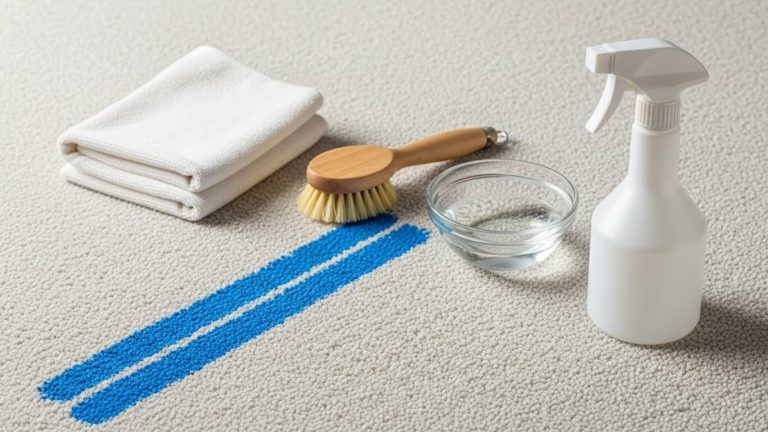
Use soft-bristle upholstery brushes to gently agitate the fabric and spray bottles for even solution application.
Always have clean, white microfiber cloths and absorbent towels on hand to blot stains and soak moisture, preventing mold.
Buckets for mixing solutions and handheld vacuums improve maneuverability and control during cleaning.
Preparing Your Couch for Cleaning
Before you dive into cleaning your couch, the first thing you should do is find that fabric care label from the manufacturer. It’s super important because it tells you exactly how to clean your couch without damaging it.
Once you’ve got that info, it’s time to tackle the dirt! Grab your vacuum and give your couch a good thorough cleaning. Make sure to get into all those little crevices and under the cushions—trust me, that’s where a lot of the dirt likes to hide. It’s best to vacuum sofa surfaces bi-weekly to prevent dust and crumb buildup and keep your couch fresh. Using a high-efficiency filter vacuum helps trap fine particles and allergens, enhancing your cleaning results.
Check Fabric Care Label
Although it might seem simple, checking the fabric care label on your couch is essential for choosing the right cleaning method and avoiding damage.
These labels provide specific instructions tailored to your upholstery material. To do this effectively:
- Locate the label, often under cushions, along seams, or beneath the sofa frame.
- Identify the cleaning code: W (water-based), S (solvent-based), WS (both), X (vacuum only), or DC (dry clean only).
- Follow the indicated method strictly to prevent discoloration, fabric damage, or voided warranties.
- If the label is missing or unreadable, consult the manufacturer or assume the safest cleaning approach. This step is important because ignoring instructions can void warranties or cause damage to your sofa.
- Using the proper cleaning tools designed for your fabric type can improve cleaning effectiveness and preserve the upholstery’s integrity.
Remove Loose Debris
Once you’ve identified the appropriate cleaning method from your fabric care label, the next step is to clear away any loose debris from your couch.
Start by removing cushion covers and fluffing cushions to shake out dust and crumbs. Use a soft-bristled brush to loosen dirt on the fabric surface, then vacuum thoroughly using an upholstery brush attachment and crevice tool to reach seams and under cushions.
Repeat vacuum passes on high-traffic areas to maximize dirt removal. Pre-treat stubborn debris spots by brushing or vacuuming before applying any cleaning solution.
Ensure the fabric is dry and debris-free to prevent staining. Using a fast-acting formula can help speed up the cleaning process for tough stains.
| Step | Tool/Method | Purpose |
|---|---|---|
| Remove Cushion Covers | Hands, shaking | Dislodge trapped dust/crumbs |
| Brush Surface | Soft-bristled brush | Loosen embedded dirt |
| Vacuum Thoroughly | Vacuum with attachments | Remove loosened debris |
| Pre-treat Stains | Brush/vacuum | Prepare stubborn dirt for cleaning |
Step-by-Step Cleaning Process
First things first, let’s get those cushions off your couch and grab a vacuum with a soft brush attachment. You’ll want to give it a good vacuuming to get rid of all that dust and debris that tends to accumulate. It’s amazing how much dirt can hide in there!
Remember, regular vacuuming helps prevent dirt buildup and keeps your fabric looking fresh. Using gentle cleaning methods is essential to avoid damage, much like how certain surfaces require pH-balanced cleaners for safe maintenance.
Now, if you happen to spot any stains, don’t panic! Just grab a dry cloth and start blotting the spill right away. It’s super important to act fast.
After that, you’ll want to apply the right cleaning solution based on your fabric’s care code. But hold on a second—make sure to test your cleaner on a hidden spot first. You wouldn’t want to accidentally damage the fabric!
Once you’ve done that, you can gently blot the stained area and watch the magic happen.
Prepare and Vacuum
How do you guarantee your fabric couch is thoroughly cleaned from the ground up?
Start by removing all cushions and pillows to expose every surface, including crevices.
Check the manufacturer’s cleaning code to select safe cleaning methods. Check the label before cleaning to determine appropriate cleaning methods and avoid damage.
Lightly brush the fabric to loosen embedded debris and pet hair before vacuuming. Using non-toxic cleaning products at this stage can help maintain fabric safety and indoor air quality.
Then, use a vacuum with an upholstery attachment to remove dirt and dust carefully, focusing on seams and under cushions.
- Remove cushions and pillows; check fabric cleaning code.
- Brush fabric gently to loosen debris and hair.
- Vacuum slowly with upholstery attachment, targeting folds and seams.
- Inspect and remove remaining lint or dust with a lint roller or soft brush.
Spot Clean Stains
Although stains on your fabric couch can vary widely, identifying the type of stain is crucial before treating it.
First, determine if it’s water-based, oil-based, or a special stain like ink or pet accidents. Check the manufacturer’s cleaning code for guidance to prevent fabric damage during cleaning, as different materials require specific cleaning methods.
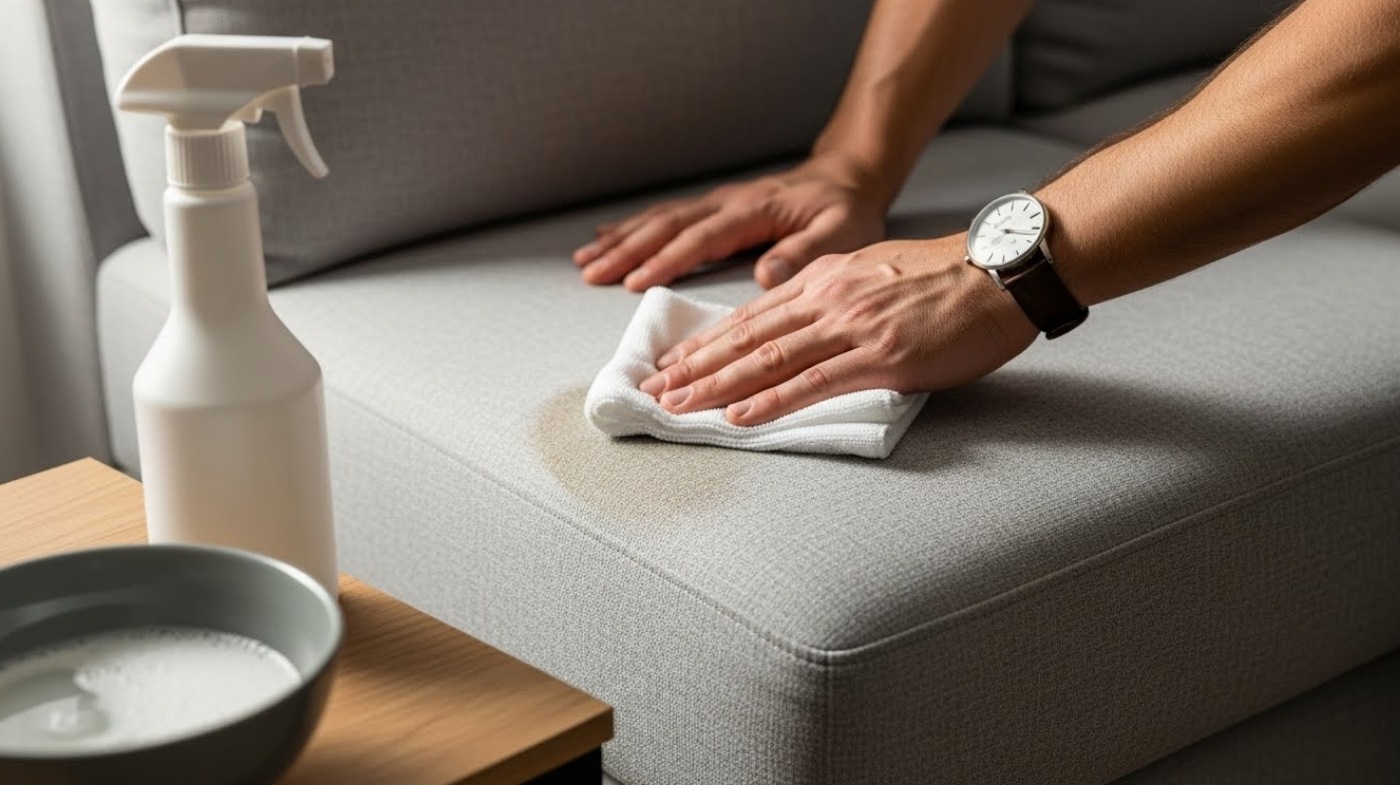
Immediately blot excess liquid with a clean cloth, never rub to avoid spreading. Replace the cloth as it saturates.
Next, prepare a cleaning solution: mild dish soap with warm water works for most stains. Add white vinegar for tougher ones.
Dab the solution from the stain’s edge inward, blotting gently or using a soft brush.
Rinse by blotting with a damp cloth, then dry thoroughly to prevent mildew.
Cleaning Tips for Different Fabric Types
When caring for fabric couches, recognizing the specific cleaning requirements of different fabric types guarantees you maintain their appearance and longevity. Each fabric demands a tailored approach to avoid damage.
- For synthetic fabrics like polyester and microfiber, use mild dish soap with water for routine cleaning and spot stains. Avoid harsh chemicals and over-soaking. Regular vacuuming and prompt spill attention are crucial for maintaining fabric couches.
- Natural fibers such as cotton and wool require dry cleaning or wool-safe shampoos. Never use hot water and air dry away from direct sunlight.
- Velvet and delicate fabrics need professional dry cleaning or gentle solvent-based cleaners. Avoid water-based solutions and test spots first.
- Always check the upholstery care code: ‘W’ allows water-based cleaners, ‘S’ requires solvents only, and ‘X’ limits you to vacuuming or brushing.
Preventative Maintenance for Fabric Couches
Understanding the specific cleaning needs of your fabric type helps set the foundation for effective preventative maintenance.
Knowing your fabric’s cleaning requirements is key to effective and lasting couch care.
Start by vacuuming your couch every two weeks using an upholstery attachment to remove dust and debris without damaging fibers. Don’t forget to vacuum beneath cushions to catch hidden dirt. Using a wet/dry vacuum can also be effective in extracting moisture and preventing buildup.
Flip, fluff, and rotate cushions every three months to ensure even wear and maintain their shape.
Increase frequency if pets or children frequently use the couch.
Immediately blot spills with a clean, absorbent cloth—never rub—to minimize staining.
Regularly use a fabric depiller in gentle circular motions to eliminate pills and fuzz, preserving a smooth surface.
Always consult manufacturer’s care codes on cushion tags before cleaning to avoid damage and maintain warranty coverage, as following cleaning codes is crucial to prevent voiding warranties.
When to Consider Professional Cleaning Services?
If you notice deep-set stains that resist your home cleaning efforts or persistent odors from pets and smoke, it’s time to contemplate professional cleaning services. Professionals bring advanced techniques and tailored treatments that protect your fabric while restoring its appearance.
Consider professional cleaning when you face:
- Stubborn stains and odors that DIY methods can’t eliminate without risking fabric damage. These services often use specialized formulations designed to clean effectively without harming delicate fabrics.
- Accumulated allergens affecting air quality and respiratory health in your home. Professional cleaning effectively removes dust mites, pet dander, pollen, and other airborne particles, contributing to a healthier indoor environment and improved respiratory health through allergen removal.
- Signs of fabric deterioration, such as fading or texture changes, that need expert care. Expert treatments can also include protective agents to help slow further wear and maintain fabric vibrancy.
- Extended periods without deep cleaning, allowing grime to build beyond typical removal methods. Routine professional care can preserve your fabric’s appearance and prolong its lifespan.
Frequently Asked Questions
How Often Should I Replace My Fabric Couch to Maintain Hygiene?
You should consider replacing your fabric couch every 7 to 12 years to maintain hygiene.
However, factors like heavy use, pets, or kids might shorten that to 5 to 7 years.
Keep an eye on persistent stains, odors, fabric damage, or allergens that cleaning can’t fix.
Regular deep cleaning helps, but if your couch starts harboring allergens or smells despite efforts, it’s time to replace it for health reasons.
Can Fabric Couch Cleaning Improve Indoor Air Quality?
Absolutely, cleaning your fabric couch can improve indoor air quality like clearing fog from a window.
When you remove dust, mold spores, and allergens trapped in the upholstery, you prevent them from circulating in your home’s air.
Regular, thorough cleaning reduces harmful particles and VOCs, which can trigger respiratory issues.
What Are the Environmental Impacts of Common Upholstery Cleaners?
You’ll find common upholstery cleaners often contain harsh chemicals like phosphates and VOCs, which harm aquatic life and worsen air quality.
Their plastic packaging adds to landfill and ocean pollution, while manufacturing consumes nonrenewable resources and energy, increasing carbon footprints.
Improper disposal contaminates soil and water, contributing to environmental degradation.
Choosing eco-friendly products and proper waste management helps you minimize these negative impacts effectively.
Are There Natural Alternatives to Commercial Fabric Protectors?
Yes, you can use natural alternatives to commercial fabric protectors. For example, white vinegar acts as a mild water repellent.
Mixing it with mild dish soap and distilled water creates a DIY fabric protector. Baking soda helps deodorize and freshen fabrics naturally.
These options reduce chemical exposure and are safe for indoor use. They’re effective for water-safe upholstery, allowing you to maintain your fabric’s cleanliness without harsh toxins.
How Can I Safely Remove Pet Hair From a Fabric Couch?
Want to turn your couch into a fur museum? Of course not. To safely remove pet hair, start by shaking cushions outside.
Then use a stiff-bristled brush to loosen hair. Vacuum slowly with a pet-hair attachment in multiple directions, grabbing stubborn strands with damp rubber gloves.
Finish with a lint roller or microfiber cloth. This methodical approach prevents fabric damage while evicting every last furball from your favorite seat.
Bring Your Sofa Back to Life With Smarter Cleaning Habits
Think of cleaning your fabric couch like tuning a delicate instrument: skip a step, and the harmony’s off.
Just as a violin needs careful adjustment, your couch demands the right cleaning codes, tools, and techniques to keep it looking its best.
Following this methodical approach not only restores its beauty but extends its life.
Remember, consistent care today prevents costly repairs tomorrow, making your couch a lasting centerpiece in your home.