Best Way to Get Rid of Soap Scum on Glass: Like a Pro
To get rid of soap scum on glass effectively, spray a mix of equal parts white vinegar and dish soap. Let it sit 5–10 minutes to dissolve minerals and grease.
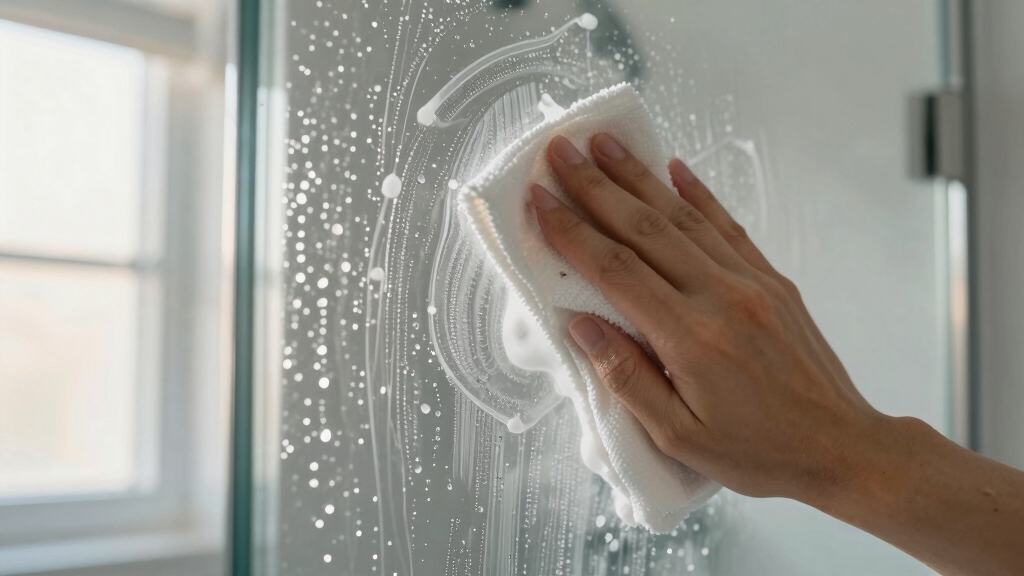
Then scrub gently with a microfiber cloth or non-abrasive sponge. Rinse thoroughly with warm water to avoid streaks and residue.
For tough buildup, add baking soda for extra abrasiveness. Using the right tools and simple preventive habits keeps glass sparkling longer.
Explore more techniques to keep your shower doors crystal clear.
Key Takeaways
- Use a vinegar and dish soap mixture to dissolve mineral deposits and cut grease, then scrub gently with a non-abrasive sponge.
- Apply a baking soda paste on stubborn scum, let it sit 15–20 minutes, then scrub with a soft sponge and rinse thoroughly.
- Rinse glass with warm water before cleaning to loosen grime and soften soap scum for easier removal.
- Dry and polish glass with a high-quality microfiber cloth after cleaning to prevent streaks and residue buildup.
- Regularly wipe glass surfaces with a squeegee or microfiber cloth after showers to reduce soap scum formation.
Understanding Soap Scum on Glass Shower Doors

Soap scum forms when minerals in hard water combine with soap residue, creating a stubborn film on your glass shower doors.
Soap scum develops as minerals in hard water react with soap residue, leaving a persistent film on glass surfaces.
You’ll notice this buildup as a cloudy, chalky layer that dulls the glass and resists simple wiping. Understanding this helps you target the problem effectively.
Soap scum isn’t just dirt; it’s a chemical reaction involving calcium, magnesium, and soap compounds that bond tightly to surfaces. This means that water alone won’t remove it—you need cleaners that break down these minerals or dissolve the soap residue.
Regular exposure to hard water accelerates scum formation, so addressing water quality and residue type is essential. Knowing this chemistry guides you to choose proper methods and products to restore your glass shower doors’ clarity and shine.
Installing a water softener can significantly reduce the minerals in your water that cause soap scum buildup, making cleaning easier and preventing future deposits.
Preparing Glass for Soap Scum Removal
Preparing your glass shower doors properly sets the foundation for effective soap scum removal. Start by rinsing the glass thoroughly with warm water to loosen surface grime and soften hardened deposits.
Use a plastic cup or handheld sprayer to guarantee full coverage without splashing. Next, wipe the glass with a microfiber cloth or a non-abrasive sponge to remove loose dirt and prevent scratching during cleaning.
Avoid harsh scrubbing before applying cleaner, as this can embed particles into the glass. Check the water temperature to avoid shocking the glass with extreme heat or cold, which might cause damage.
Finally, ensure good ventilation in the bathroom to speed drying and reduce moisture buildup that contributes to soap scum formation. Taking these preparatory steps guarantees your cleaning agents work efficiently.
Before starting, dust and clean window frames and edges with a mild detergent to prevent grime transfer and scratches, ensuring better overall cleaning results with proper surface preparation.
Best Vinegar-Based Mixes to Break Down Soap Scum
If you’re looking to tackle soap scum on glass surfaces, you can’t go wrong with a mix of white vinegar and dish soap. Seriously, this combo works wonders!
Just spray it on, and you’ll see how easily it cuts through all that gunk.
Now, if you’re dealing with some really stubborn buildup, try spraying vinegar first and then scrubbing with baking soda on a damp sponge. It adds just the right amount of abrasiveness to get the job done without scratching the glass.
And the best part? These vinegar-based mixes not only break down the residue but also make your cleanup process faster and more effective.
It’s a win-win!
For an eco-friendly option, consider using products with biodegradable agents that are safe for household use and the environment.
Vinegar And Dish Soap
Harness the powerful combination of vinegar and dish soap to effectively break down soap scum on glass surfaces.
Mix equal parts white vinegar and dish soap in a spray bottle for an easy-to-use solution. Spray generously on glass doors or tiles and let it sit for 5-10 minutes to loosen buildup.
The vinegar’s acidity dissolves mineral deposits, while the dish soap cuts through greasy residues. After soaking, scrub gently with a non-abrasive sponge or microfiber cloth to avoid scratching the glass.
Rinse thoroughly with warm water to remove all residues and prevent streaks. For regular maintenance, use a mix of 1 cup vinegar, 1 cup water, and 1 teaspoon Blue Dawn dish soap weekly to keep soap scum at bay and glass sparkling clear.
Avoid using acidic cleaners like vinegar on surfaces such as granite to prevent etching or dulling the stone.
Vinegar Baking Soda Combo
Building on the effectiveness of vinegar and dish soap, combining vinegar with baking soda creates a powerful duo that tackles even stubborn soap scum on glass surfaces.
You’ll find this combo breaks down residue by leveraging vinegar’s acidity and baking soda’s gentle abrasiveness. Here’s how to use it effectively:
- Spray equal parts white vinegar and warm water onto glass.
- Let it sit for 5–10 minutes to loosen soap scum.
- Sprinkle baking soda on a damp sponge, then scrub glass in circular motions.
- Rinse thoroughly with warm water to remove all residue.
This method softens and lifts buildup without harsh chemicals or scratching. Use it weekly to maintain sparkling glass and prevent soap scum from hardening.
Ensure your shower doors stay clear and spotless. For stubborn buildup, consider using a steam cleaner to enhance removal effectiveness.
Natural Ways to Break Down Soap Scum
Hey there! If you’re looking to tackle that pesky soap scum naturally, I’ve got some great tips for you. First up, grab some lemon juice and apply it directly to the glass. The acidity in lemon juice works wonders at dissolving that buildup with hardly any effort on your part.
Now, if you’re dealing with some tougher residue, here’s what you can do: sprinkle a bit of baking soda on a damp sponge. Then, just scrub in circular motions. This technique is super effective at breaking down stubborn scum without scratching your surfaces.
And here’s a little bonus: combining these two methods really amps up your cleaning game. You’ll have a powerful, chemical-free approach to restoring your glass surfaces in no time!
For the best results, always avoid using acidic or abrasive cleaners on delicate surfaces to prevent damage, especially when dealing with natural stone or glass, as recommended by cleaning safety principles.
Lemon Juice Effectiveness
How exactly does lemon juice tackle soap scum on glass surfaces? Lemon juice’s natural acidity breaks down the mineral deposits and soap residue, effectively dissolving soap scum without harsh chemicals. When you apply lemon juice, it loosens buildup, making it easier to wipe away.
Here’s how to maximize lemon juice effectiveness:
- Squeeze fresh lemon juice directly onto the glass or apply with a cloth.
- Let it sit for 5–10 minutes to penetrate and dissolve soap scum.
- For stubborn spots, scrub gently with a lemon half dipped in salt.
- Rinse with warm water and wipe dry with a microfiber cloth to prevent streaks.
Using lemon juice is practical, natural, and safe for glass. It gives you a sparkling finish without abrasive cleaners. For best results, always ensure thorough rinsing and drying to prevent moisture buildup and potential residue prevention and drying.
Baking Soda Scrubbing
Scrub stubborn soap scum from your glass surfaces using baking soda, a gentle yet effective natural abrasive.
Start by sprinkling baking soda directly onto a damp, non-abrasive sponge after spraying your glass with equal parts white vinegar and warm water.
This combination softens residue, making scrubbing easier.
Use circular motions to gently lift soap scum without scratching the glass.
For heavier buildup, create a paste by mixing baking soda with water, apply it to the affected areas, and let it sit for 15-20 minutes before scrubbing.
Always rinse thoroughly with warm water afterward to remove all residue.
This method is safe, eco-friendly, and highly effective, making baking soda scrubbing a reliable approach to maintaining crystal-clear glass surfaces free from soap scum.
To prevent future buildup, ensure good bathroom ventilation to reduce moisture and inhibit mold growth.
Dish Soap Recipes and Commercial Cleaners for Tough Soap Scum
Harness the power of dish soap combined with vinegar to tackle tough soap scum on glass surfaces effectively. This combo breaks down buildup without harsh chemicals.
For tougher grime, commercial cleaners offer specialized formulas that restore clarity quickly. Here’s how to maximize your cleaning:
- Mix 1 cup white vinegar, 1 cup water, and 1 teaspoon Blue Dawn dish soap; spray and let sit before wiping.
- Use equal parts vinegar and dish soap in a spray bottle for persistent soap scum on glass and tile.
- Apply Pine-Sol with a microfiber cloth for effortless residue removal.
- Try commercial removers like Restoration Powder or Invisible Glass cleaner for heavy deposits; follow instructions carefully.
These methods deliver powerful, efficient soap scum removal while protecting your glass surfaces. Always clean in a well-ventilated outdoor area to ensure safety and prevent inhaling fumes.
Safe Scrubbing Tools and Techniques to Protect Glass Shower Doors
While powerful dish soap and commercial cleaners break down soap scum effectively, using the right scrubbing tools and techniques guarantees your glass shower doors stay clear without damage.
Avoid abrasive scrubbers that can scratch glass; instead, opt for non-abrasive sponges, microfiber cloths, or soft scrub pads.
Always soak Magic Erasers before use and scrub gently in circular motions.
Rinse thoroughly after scrubbing to prevent residue buildup. Start with a warm water rinse to loosen grime before applying cleaners.
Using a high-quality microfiber cloth for drying and polishing helps achieve a streak-free shine without scratching the glass.
| Tool | Use Case |
|---|---|
| Microfiber Cloth | Drying & polishing |
| Non-Abrasive Sponge | Scrubbing moderate scum |
| Magic Eraser (wet) | Stubborn hard water stains |
| Soft Scrub Pad | Heavy soap scum buildup |
| Plastic Cup Rinse | Pre-cleaning preparation |
Use these tools and methods to maintain pristine glass shower doors safely.
Simple Habits to Prevent Soap Scum on Glass Shower Doors
Regularly adopting simple habits can drastically reduce soap scum buildup on your glass shower doors. This makes maintenance easier and extends their clarity.
By integrating these practical steps into your routine, you’ll keep your glass sparkling longer and minimize deep cleaning efforts.
- Use a squeegee or microfiber cloth to wipe down glass surfaces after each shower. This prevents residue from settling.
- Rinse glass doors with plain water or a vinegar solution before drying. This helps break down soap film.
- Favor liquid soaps over bar soaps to reduce the oily residue that causes scum.
- Apply a protective coating like Clear-Fusion™ V periodically to create a barrier against soap scum and hard water stains.
Stick to these habits, and you’ll maintain crystal-clear shower doors effortlessly.
Frequently Asked Questions
Can Soap Scum Damage the Glass Permanently if Left Untreated?
Yes, if you leave soap scum untreated, it can cause permanent damage to your glass.
Over time, the minerals and residues etch the surface, making it cloudy and hard to restore.
You’ll notice scratches or dull spots that no cleaner can fully remove.
To protect your glass, you need to clean soap scum regularly and use gentle, effective methods to prevent buildup from becoming irreversible.
How Often Should I Deep Clean My Glass Shower Doors?
You should deep clean your glass shower doors about once a month to keep soap scum and mineral buildup under control.
If you notice stubborn spots or heavy buildup, don’t wait. Tackle them right away using vinegar-based sprays or a baking soda paste.
Weekly light cleaning with a squeegee or microfiber cloth helps prevent buildup. This makes monthly deep cleans easier and protects your glass from permanent damage.
Are There Any Health Risks From Using Vinegar-Based Cleaners?
You won’t face serious health risks using vinegar-based cleaners, but you should handle them carefully.
Vinegar’s acidity can irritate your skin, eyes, or respiratory tract if you’re sensitive or use it in a poorly ventilated area.
Always dilute vinegar properly, wear gloves, and make sure there’s good airflow while cleaning.
Avoid mixing vinegar with bleach or ammonia, as that creates harmful fumes.
Taking these precautions keeps you safe and your home clean.
What Should I Do if Soap Scum Reappears Quickly After Cleaning?
If soap scum reappears quickly, you should improve your routine by wiping down glass with a squeegee or microfiber cloth after every shower to prevent buildup.
Also, switch to liquid soap to reduce residue and consider applying a protective coating like Clear-Fusion™ V.
Regularly rinse glass with water before cleaning and keep using effective solutions like vinegar-dish soap mixes.
Consistent maintenance is key to stopping soap scum from coming back fast.
Can Hard Water Deposits Be Removed Without Damaging Glass Coatings?
Yes, you can remove hard water deposits without damaging glass coatings by using gentle, non-abrasive methods.
Start with a vinegar and water spray, let it sit a few minutes, then wipe with a soft microfiber cloth.
Avoid harsh scrubbing pads or acidic cleaners like undiluted lemon juice.
Using a Magic Eraser dampened and gently rubbed can also help.
Always rinse thoroughly and dry with microfiber to protect your glass coatings effectively.
Say Goodbye to Soap Scum and Hello to Crystal-Clear Glass
You might be surprised to learn that nearly 80% of homeowners struggle with soap scum on glass shower doors.
By using vinegar-based mixes or natural solutions, you can effectively break down buildup without harsh chemicals.
Remember to prep your glass properly and choose safe scrubbing tools to avoid damage.
With consistent cleaning and simple preventative habits, you’ll keep your shower doors sparkling clear and extend their lifespan. This will make your bathroom look fresh and inviting every day.