Best Way to Keep Mice Out of Your House: Simple DIY Tips
To keep mice out, start by sealing all entry points larger than ¼ inch using steel wool, copper mesh, or durable sealants.
Focus on doors, windows, pipes, and vents. Remove food and water sources by storing items in airtight containers and fixing leaks.
Place snap traps along walls and in corners with small bait amounts to catch invaders early. Combine exclusion, sanitation, and monitoring for lasting control. Explore deeper strategies to strengthen your defense against infestations.
Key Takeaways
- Seal all gaps larger than 1/4 inch around doors, windows, pipes, and vents with steel wool or metal mesh to block mouse entry.
- Store food in airtight, rodent-proof containers and promptly clean spills to eliminate mouse attractants and food sources.
- Remove clutter and outdoor debris like wood piles and dense vegetation near your home to reduce mouse shelter options.
- Use snap traps baited with attractive food, placed along walls and high-activity areas, for effective and safe mouse removal.
- Regularly inspect for signs of mice such as droppings, gnaw marks, and rub marks to detect and address infestations early.
Why Sanitation Is Key to Keeping Mice Out?

By maintaining strict sanitation practices, you directly reduce the factors that attract mice, such as accessible food, water, and shelter.
Eliminating food sources like fresh produce, pet food, and high-protein items limits mice survival and enhances bait and trap effectiveness. Proper placement and knowledge of mouse behavior are essential to maximize the success of these methods, as snap traps and glue traps require correct use to be effective.
Store all food in rodent-proof containers, clean spills immediately, and dispose of trash in sealed, resilient bins. Using rodent-proof containers helps prevent contamination and reduces odor that can attract rodents.
Regularly remove moisture by addressing leaks, condensation, and puddles, since water availability sustains rodent presence.
Keep kitchens, garbage areas, and outdoor cooking spaces clean to prevent resource accumulation.
Additionally, removing clutter and potential nesting sites restricts shelter options. Although sanitation rarely eradicates mice alone, it prevents population growth and supports other control methods by denying basic necessities.
Consistent adherence to these sanitation standards is critical for effective, long-term mouse management in your home.
How to Seal Your Home Against Mice?
Effectively sealing your home against mice requires identifying and closing all potential entry points, as even openings as small as a quarter inch can allow rodents inside.
Sealing all potential entry points, even tiny gaps, is essential to keep mice out of your home.
Begin by inspecting areas within 50 feet of food sources, focusing on gaps around pipes, doors, windows, vents, foundation cracks, utility lines, rooflines, and eaves. Using weather-resistant bait near these areas can enhance control efforts.
Seal small gaps under ½ inch with sealant or mortar, fill holes using stainless steel or copper wool, and cover openings with ¼-inch wire mesh to prevent gnawing and airflow that attracts mice.
For larger openings, install metal flashing, hardware cloth, or metal kick plates, and repair foundation cracks with concrete or metal.
Make sure doors have tight-fitting sweeps, weatherstripping, and metal thresholds.
Maintain seals quarterly and combine with sanitation to maximize exclusion effectiveness. Successful long-term control also requires continuous efforts and multiple strategies beyond sealing alone.
How to Spot Early Signs of Mouse Activity?
Sealing your home closes off entry points, but spotting early signs of mouse activity helps catch infestations before they escalate. Early detection is crucial, much like how prompt treatment is essential to prevent long-term damage in other pest and stain issues, as seen with enzymatic treatments for pet stains.
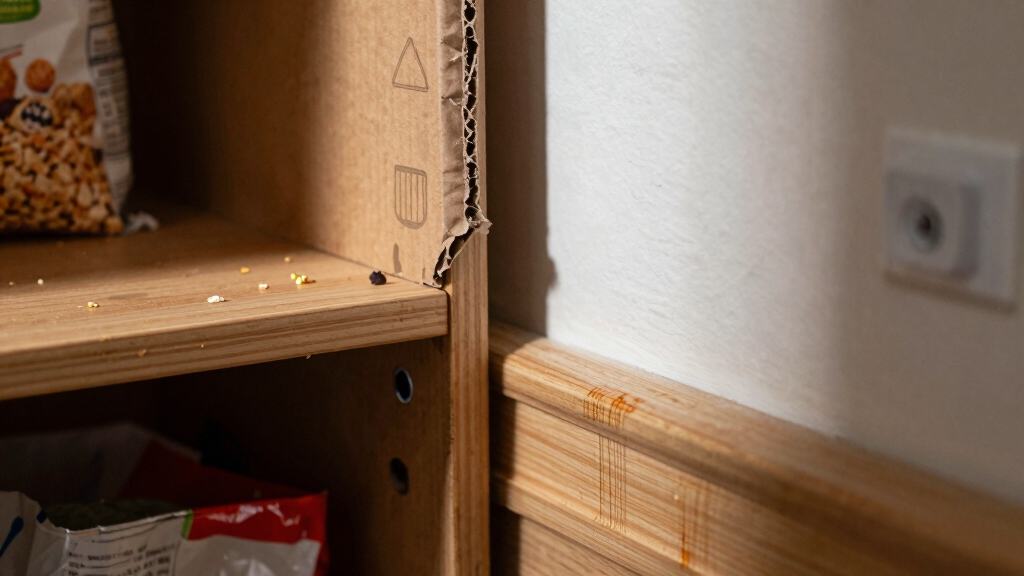
You should watch for small, dark droppings clustered near food sources, fresh gnaw marks on packaging or wires, and faint musky odors in cabinets.
Listen for soft scratching or squeaking sounds at night, especially near walls and attics. Daytime sightings or paw prints in dust also confirm presence. Mice are more commonly active in the evening but can sometimes be seen during the day.
| Sign | Indicator | Location |
|---|---|---|
| Droppings | Small, dark pellets | Kitchens, attics |
| Gnaw Marks | Fresh shavings, chewed edges | Food packaging, wires |
| Sounds | Nocturnal scratching, squeaks | Walls, ceilings, appliances |
Monitoring Mouse Infestations: Simple Detection Tips
When it comes to keeping an eye on mouse activity, it’s a good idea to use non-toxic bait options. This way, you can monitor without worrying about pets or kids getting into anything harmful.
Just remember to place those bait stations carefully—along the perimeter walls and in areas that see a lot of foot traffic. Spacing them about 12 feet apart tends to work best for effective detection. Don’t forget to check in regularly for signs of nesting, too.
Keep an eye out for droppings, gnaw marks, and those telltale musky odors. These indicators can really help you gauge how serious the infestation might be. It’s all about staying proactive! Using tools like ultrasonic detectors can help locate hidden entry points and mouse activity inside your home.
Additionally, maintaining habitat management by sealing cracks and removing food sources is essential to prevent infestation growth.
Non-Toxic Bait Options
Regularly employing non-toxic bait options allows you to monitor mouse infestations accurately while minimizing risks to pets, children, and non-target wildlife.
Use food-based baits like sunflower seeds, oats, or nutty chocolate to attract mice effectively without toxic exposure.
Non-toxic attractant gels mimic food scents and draw rodents swiftly into monitoring traps.
Pellet formulations such as RatX combine corn gluten meal and sodium chloride to dehydrate rodents post-ingestion, blocking thirst signals without secondary poisoning.
Contrapest bait reduces rodent fertility, proven effective in population control.
Integrate soft cheeses or marshmallows in bait boxes to enhance trap interaction safely.
Avoid second-generation poisons to protect predators and maintain ecosystem balance.
Employ these non-toxic options consistently for precise detection while preserving household and environmental safety. Regular maintenance and gentle cleaning methods are essential to avoid surface damage when managing pest control areas.
Additionally, always ensure that trapping and baiting are part of a broader integrated pest management strategy to maximize effectiveness.
Strategic Bait Placement
Positioning bait strategically is essential for effective mouse monitoring and control. Place traps along walls and in corners where you detect mouse activity, pressing the bait end against the wall to encourage exploration.
Avoid open areas since mice avoid exposed spaces. Focus bait placement near signs like droppings, gnaw marks, and odors in shadowed corners or feeding zones. Using baits with a strong, appealing aroma enhances their effectiveness by attracting mice from a distance.
Use multiple traps spaced every 2–3 feet in high-activity areas, deploying small bait amounts to cover severe infestations. Consistent monitoring and routine adjustment of bait placement improve long-term control success.
Position bait between harborage and food sources to intersect travel routes. Regularly check bait consumption; relocate unused stations at least 5 feet to new active zones. For exterior control, bait near entry points after sealing gaps.
Adjust trap positions vertically for attics or crawl spaces to maximize interception of mouse pathways.
Identifying Nesting Signs
After placing bait strategically, you need to confirm whether mice are actively nesting inside your home.
Detect nesting by spotting droppings; dark, rice-sized grains near food or baseboards and listening for nighttime scratching from 10 PM onward. Since mice reproduce rapidly during winter, with females producing multiple litters, early detection is crucial to prevent a population explosion. Maintaining a dry environment can also help reduce the likelihood of infestations by limiting moisture retention, which rodents seek for nesting.
Look for dark rub marks or faint footprints in dust. Identify nests as 4-6 inch balls of shredded paper or fabric in enclosed, warm spaces like wall voids or behind appliances.
| Sign Type | Key Indicators |
|---|---|
| Droppings | Dark, rice-sized; fresh soft, old hard |
| Noises | Nighttime scratching, regular location |
| Rub Marks | Dark smudges, footprints in dust |
| Nest Structures | Shredded material balls, food debris |
| Locations | Walls, attics, boxes, behind appliances |
Use these signs to locate and seal entry points confidently.
Choosing Effective Mouse Traps for Quick Control
When it comes to dealing with mice, snap traps are definitely the way to go if you want quick and reliable kills. They work with a spring-loaded mechanism that delivers instant results, which is pretty important when you’re trying to handle a pest problem effectively.
Some popular models to consider are the Victor Wooden traps or GONZO traps. These are known for their enhanced effectiveness and the fact that you can reuse them, which is a nice bonus. Now, placement is key.
Make sure to put those traps along walls and in areas where you’ve noticed a lot of mouse activity. This will really help maximize your capture rates and get those pesky mice under control. Using traps with ergonomic handles can also make setting and resetting them easier and safer. If you encounter issues accessing resources online for pest control tips, it might be due to a security block triggered by suspicious activity detected by services like Cloudflare.
Snap Trap Advantages
Choose snap traps for quick and effective mouse control, as they consistently outperform other trapping methods in capture rates and reliability. Controlled tests show snap traps achieve a 56.2% capture rate, vastly exceeding glue traps’ 8.3%.
In urban environments with high rodent infestations, professional-grade snap traps have demonstrated high acceptability and effectiveness as a safer alternative to toxic pesticides, reducing harmful chemical use rat trap acceptability. Their mechanical operation makes them effective immediately without the need for power sources or chemicals, similar to how mechanical tools work for drain cleaning.
Professional-grade snap traps with enhanced spring mechanisms improve effectiveness further. They’re inexpensive, widely available, and require no hazardous chemicals, making them safe for household use.
You can immediately confirm catches and swiftly remove rodents, preventing odor and secondary pest issues. Snap traps operate mechanically without electricity or batteries, ensuring simple, low-maintenance use.
Their versatility extends to baiting options like peanut butter, nesting materials, or small meats, increasing their appeal to mice. Ideal for low-level infestations, snap traps provide reliable, rapid rodent control in sensitive indoor environments where rodenticides are unsuitable.
Optimal Trap Placement
Maximizing the effectiveness of snap traps depends heavily on their placement within your home.
Position traps along walls, behind appliances, and in darkened corners where mice frequently travel. Place traps perpendicular to walls with the trigger end touching the wall, ensuring no gap to prevent mice from bypassing. Inspect first to determine mouse activity; typical active areas include behind objects and darkened corners. Maintaining a clean, dry environment around traps helps prevent mold growth and preserves trap effectiveness by reducing moisture and mildew.
Use pairs of traps back-to-back only when parallel to walls. Space traps every 2-3 feet in high-activity zones, increasing density to one inch apart in severe infestations.
Avoid open areas since mice prefer edges and dark recesses. Secure traps vertically or horizontally using zip ties on pipes or racks for stability.
Extend placement outside near entrances, foundations, and harborage spots to intercept mice early. This strategic positioning maximizes capture rates and accelerates population control effectively. Keep exterior-placed traps protected from dust, dirt, and elements to maintain trap efficacy and prevent damage.
Safe and Effective Mouse Baiting Methods
Effectively baiting mouse traps requires selecting the right type and amount of bait, applying it securely, and strategically placing traps along mouse travel routes.
Peanut butter, due to its high fat content and sticky texture, ranks as the top bait choice; alternatives like hazelnut spread and soft commercial baits (e.g., Nectus 2G) also perform well.
Use pea-sized amounts to prevent bait theft without triggering traps. Avoid using too much bait as excess allows nibbling without engaging the mechanism.
Secure bait by smearing it on triggers or fastening solid bait with thread or hot glue, ensuring mice must engage the mechanism.
Position traps near walls, entry points, and visible rodent activity, spacing bait placements a few feet apart.
Replace bait regularly to maintain scent potency, and eliminate competing food sources for maximum effectiveness.
Combining Methods for Long-Term Mouse Control and Maintenance
Baiting traps correctly sets the foundation for mouse control, but maintaining a rodent-free environment requires combining multiple strategies over time.
Seal all entry points larger than 1/4 inch using steel wool, heavy-duty sealants, and MouseShield foam to prevent re-entry.
Maintain rigorous sanitation by storing food in airtight containers, managing waste tightly, and eliminating water sources.
Regularly trim vegetation, remove debris, and elevate firewood outdoors to reduce nesting sites.
Position traps no more than 10 feet apart along walls and entryways, integrating humane or snap traps with monitoring systems for real-time activity.
Conduct ongoing inspections and employ integrated pest management, combining exclusion, sanitation, and physical controls.
Supplement with natural repellents or ultrasonic devices as needed.
When DIY methods fall short, enlist professional, eco-friendly services for tailored long-term solutions.
Frequently Asked Questions
Can Pets Deter Mice From Entering My Home?
Yes, pets can deter mice, but pets won’t fully prevent entry.
Cats reduce rodent activity through hunting and scent marking, while some dogs scare mice away.
However, effectiveness varies by pet’s hunting skill and environment.
Pets alone won’t eliminate infestations, especially where food sources exist.
You should combine pets with sealing entry points, maintaining cleanliness, and using deterrents for reliable control.
Don’t rely solely on pets to keep mice out.
How Often Should I Replace Mouse Traps?
You don’t have to replace mouse traps daily like a royal decree demands fresh scrolls, but if your snap traps caught a rodent, reset them promptly.
Ideally, do this every day.
Glue and live traps need checks twice daily, especially in hot zones, to avoid unpleasant surprises.
Rotate trap locations every few days, and swap bait regularly to keep it fresh and tempting.
Frequent attention guarantees efficient, humane rodent control without guesswork.
Are Ultrasonic Repellents Effective Against Mice?
Ultrasonic repellents aren’t reliably effective against mice. Studies show they only reduce rodent activity by 30-50%, with mice quickly habituating within a week.
Commercial devices often don’t match their claimed output and lack research-grade sophistication. While some lab tests indicate possible effects, these don’t translate to real homes.
You’ll achieve better results by sealing entry points, maintaining cleanliness, and integrating traditional control methods instead of relying solely on ultrasonic repellents.
What Plants Naturally Repel Mice Outdoors?
You should use peppermint, lavender, rosemary, and marigolds to repel mice outdoors.
Studies show peppermint oil’s menthol content can reduce rodent activity by up to 80%.
Peppermint’s strong scent overwhelms mice, while lavender disrupts their olfactory receptors.
Rosemary emits compounds unappealing to rodents, and marigolds produce pyrethrum, an effective natural repellent.
Planting these around your property perimeter creates a fragrant, multi-layered defense against mice and rats.
Can Mice Cause Structural Damage to My House?
Yes, mice can cause significant structural damage to your house. They gnaw on wooden frames, beams, and insulation, weakening load-bearing components and reducing energy efficiency by up to 30%.
Their burrowing compromises foundation stability, especially in older homes. Additionally, chewing on electrical wiring creates fire hazards and costly malfunctions.
Ignoring these issues leads to expensive repairs, safety risks, and potential property devaluation. You should address infestations promptly to protect your home’s integrity.
Protect Your Home With Proven Mouse Prevention Tactics
Keeping mice out starts with thorough sanitation and sealing entry points. You can block gaps as small as ¼ inch since mice squeeze through tiny holes.
Studies show that homes with proper exclusion methods reduce infestations by up to 80%. Regular monitoring and combining traps with safe baiting guarantees quick, effective control.
By staying vigilant and using integrated strategies, you’ll maintain a mouse-free environment and protect your home long-term.