Can Bleach Kill Parvo: Effective Disinfection Guide
Yes, bleach can kill canine parvovirus when used correctly. You need fresh household bleach with about 0.5–1% sodium hypochlorite, applied on cleaned, hard, non-porous surfaces.
Maintain at least a 10-minute contact time for effective viral inactivation. Avoid color-safe bleaches and never mix bleach with other cleaners. Proper surface cleaning and following concentration guidelines are critical.
Keep safety precautions in mind. You’ll find detailed guidance on preparation, application, and alternatives to guarantee safe and thorough parvo disinfection.
Key Takeaways
- Sodium hypochlorite in bleach disrupts parvovirus’s protective capsid, rendering it non-infectious on hard, non-porous surfaces.
- Use fresh bleach diluted to 0.5–1% sodium hypochlorite with at least 10 minutes contact time for effective parvovirus inactivation.
- Thoroughly clean surfaces to remove organic matter before bleach application, as debris neutralizes bleach’s virucidal activity.
- Only standard, EPA-registered bleach products with sodium hypochlorite are effective; avoid color-safe bleaches and mixing with other cleaners.
- Bleach is ineffective on porous surfaces and requires proper rinsing, drying, and ventilation for safe and effective use.
How Bleach Kills Canine Parvovirus on Surfaces?
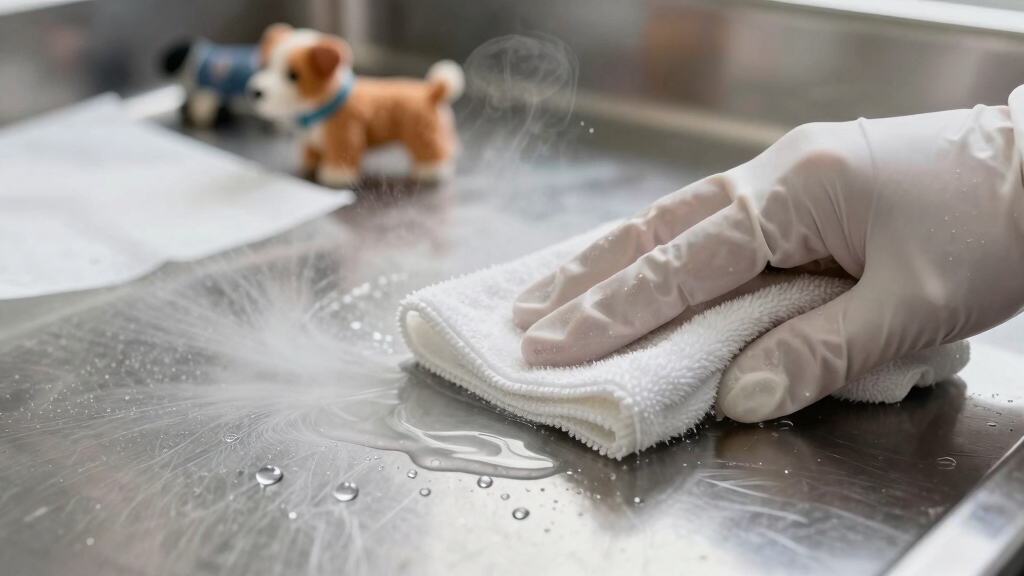
Although canine parvovirus is notoriously resilient, bleach effectively inactivates it on hard, non-porous surfaces by disrupting the viral capsid through its active ingredient, sodium hypochlorite.
When you apply a properly diluted bleach solution, typically ½ cup per gallon of water, yielding approximately 0.5-1% sodium hypochlorite, you initiate oxidative damage that dismantles the virus’s protective protein coat.
This compromises viral integrity, rendering it non-infectious. To ensure complete inactivation, maintain a minimum contact time of 10 minutes; shorter exposures greatly reduce efficacy.
Higher concentrations, such as 0.75%, can achieve inactivation within one minute. Remember, the bleach must be fresh and contain active sodium hypochlorite at label strength.
Applying bleach correctly guarantees you neutralize the virus’s robustness, effectively halting its transmission via contaminated surfaces.
For maximum safety and effectiveness, always use bleach in well-ventilated areas and wear protective gloves and eye protection during application.
Cleaning Surfaces Before Bleach Use
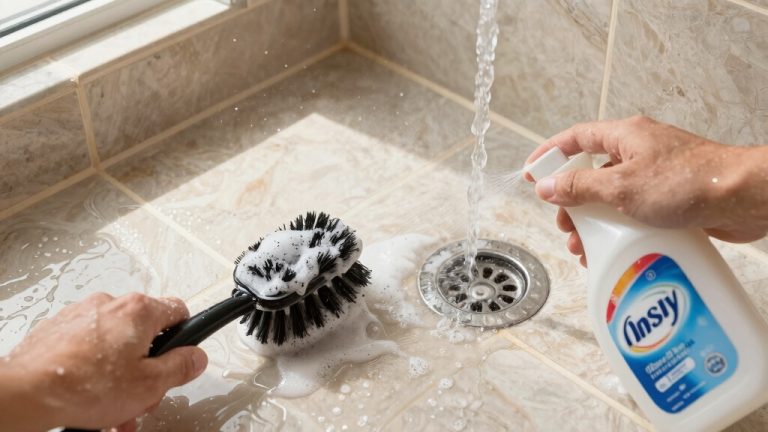
Before applying bleach to disinfect surfaces contaminated with canine parvovirus, you must thoroughly clean them to remove all organic matter and debris. Organic material neutralizes bleach’s virucidal activity, rendering it ineffective. Use detergent and water to scrub surfaces, then rinse and allow to air dry before applying bleach.
Follow this cleaning checklist:
| Step | Action |
|---|---|
| 1. Remove debris | Sweep or wipe loose dirt |
| 2. Wash | Scrub with detergent solution |
| 3. Rinse | Thoroughly with clean water |
| 4. Dry | Air dry completely |
Proper cleaning guarantees bleach contacts the virus directly, maximizing disinfection efficacy. Skipping this step compromises bleach’s ability to inactivate canine parvovirus. Ensuring proper ventilation during cleaning helps maintain a safe environment when using harsh chemicals like bleach.
Bleach Concentrations and Contact Times That Kill Parvo
To effectively kill parvo on hard surfaces, you’ll want to mix up a bleach solution with at least 0.5% sodium hypochlorite. This means about ½ cup of bleach per gallon of water.
Now, once you’ve got your solution ready, it’s essential to let it sit on the surface for at least 10 minutes. This contact time helps ensure that the virus is fully inactivated. If you use a higher concentration of bleach, you can cut that time down to as little as 1 minute.
Just remember, getting the dilution right and sticking to those contact times is super important for reliable disinfection. Be cautious when using bleach around fabrics, as improper use can cause fabric damage and discoloration.
Effective Bleach Concentrations
Effectively killing canine parvovirus with bleach depends on using the correct concentration and contact time. You must make certain the sodium hypochlorite concentration aligns with proven virucidal levels to inactivate the virus reliably.
Standard household bleach diluted to approximately 0.5–1% active ingredient is recommended for practical disinfection.
Keep these key points in mind:
- Dilute ½ cup (about 120 ml) of standard bleach per gallon (3.8 L) of water.
- Use fresh bleach to maintain sodium hypochlorite potency.
- Avoid lower concentrations (<0.37%) as they require extended contact.
- Higher concentration (~0.75%) can reduce contact time but risks surface damage.
- Always confirm bleach contains sodium hypochlorite and is EPA-registered for parvovirus.
Following these concentration guidelines ensures effective parvovirus inactivation on non-porous surfaces. For best results, apply bleach using a fast-drying, clear finish method to avoid residue that can affect treated surfaces.
Required Contact Durations
Choosing the right bleach concentration only sets the stage for parvovirus inactivation. The contact duration directly impacts disinfection success.
For a standard household bleach dilution of ½ cup per gallon (approximately 0.5-1% sodium hypochlorite), you must maintain at least a 10-minute contact time to guarantee effective viral kill.
Lower concentrations, like 0.37%, require 15 minutes to reduce viral load by 4-5 log10.
In contrast, stronger 0.75% solutions achieve significant inactivation within just 1 minute.
Shorter contact times compromise efficacy, especially against resilient parvovirus. Avoid contact times under 10 minutes unless using higher concentrations validated for rapid kill.
Because bleach degrades over time and loses potency, it is important to use fresh solutions to ensure effective disinfection.
Which Bleach Types Work Best Against Parvo?
To effectively tackle parvo, you’ll want to stick with standard bleach that contains sodium hypochlorite at the right concentration. This is really important because color-safe bleaches just don’t have the germicidal properties needed to combat this virus.
So, what should you look for? Make sure you choose EPA-registered products that specifically claim to kill parvovirus.
One good option is Clorox Disinfecting Bleach. It’s reliable and gets the job done when it comes to disinfection.
It is crucial to avoid mixing bleach with other cleaners like OxiClean due to the risk of producing toxic gases and reducing disinfectant effectiveness.
Standard Bleach Requirements
Although many bleach products exist, only those containing sodium hypochlorite at proper concentrations will reliably kill canine parvovirus.
You need to make certain the bleach is fresh and labeled for disinfectant use, typically household bleach like Clorox Disinfecting Bleach.
Proper dilution and contact time are critical for efficacy.
Dilute ½ cup bleach per gallon of water (about 0.5-1% sodium hypochlorite).
Maintain a minimum 10-minute contact time for inactivation.
Pre-clean surfaces to remove organic debris before applying bleach.
Avoid aged bleach; potency declines into ineffective compounds.
Use only bleach products with explicit “kills germs” or parvovirus claims.
For safe and effective use, always apply bleach in well-ventilated areas wearing protective gear to prevent health risks.
Color-Safe Bleach Ineffectiveness
Since not all bleach products are created equal, understanding which types effectively combat canine parvovirus is essential for proper disinfection.
Color-safe bleach lacks the necessary concentration of sodium hypochlorite, the active ingredient that inactivates parvovirus.
These products typically contain hydrogen peroxide or other oxygen-based agents without proven virucidal efficacy against parvo.
Thus, relying on color-safe bleach compromises disinfection efforts.
You must use standard household bleach labeled to contain sodium hypochlorite at approximately 0.5–1% concentration.
Proper dilution—½ cup per gallon of water—and a minimum 10-minute contact time are critical for viral inactivation.
Avoid aged or diluted bleach, as potency diminishes.
In short, color-safe bleaches don’t meet the chemical or concentration requirements to reliably neutralize canine parvovirus, making them ineffective for this purpose.
For safer and effective alternatives, consider non-toxic disinfectants that provide broad-spectrum viral and bacterial control without harsh chemicals.
EPA-Registered Parvo Killers
Standard household bleach containing sodium hypochlorite remains the benchmark for disinfecting surfaces contaminated with canine parvovirus. However, not all products meet the stringent requirements for EPA registration against parvo.
You need EPA-registered disinfectants explicitly listing canine parvovirus on their label to guarantee efficacy. Look for products with proven sodium hypochlorite concentrations and validated contact times.
Key points to consider:
Use fresh standard bleach with 0.5–1% sodium hypochlorite for effective virucidal activity. Maintain at least a 10-minute contact time for complete inactivation.
Avoid color-safe or aged bleach lacking EPA parvo kill claims. Clorox Disinfecting Bleach is EPA-registered and widely validated.
Alternative EPA-registered products with accelerated hydrogen peroxide offer rapid disinfection. Selecting the right EPA-registered product guarantees reliable parvovirus elimination on hard, non-porous surfaces.
For safe and effective use, ensure proper ventilation and protective measures when applying bleach to disinfect areas contaminated with parvo.
Common Cleaning and Application Mistakes That Reduce Bleach Effectiveness
When you fail to thoroughly clean surfaces before applying bleach, its ability to kill parvovirus drops drastically. Organic matter like dirt, feces, or grime neutralizes sodium hypochlorite, rendering disinfection ineffective.
Another common mistake is using bleach concentrations below the recommended ½ cup per gallon (0.5-1%) or applying insufficient contact time of less than 10 minutes. Both of these compromise viral inactivation.
Using aged bleach reduces available sodium hypochlorite, lowering potency.
Additionally, applying bleach on porous surfaces or without ensuring proper rinsing and drying post-contact time limits its virucidal action.
Avoid color-safe or non-EPA-registered bleaches, as they lack verified parvo-killing claims. To maximize efficacy, always pre-clean, use a fresh, correctly diluted solution, maintain at least 10 minutes contact on hard, non-porous surfaces, and rinse thoroughly afterward.
For effective cleaning, it is important to use safe cleaners appropriate for the surface to avoid damage while ensuring disinfection.
Effective Alternatives to Bleach for Killing Canine Parvovirus
If you’re looking to step away from bleach, several effective alternatives can neutralize canine parvovirus with comparable reliability.
These options offer targeted virucidal activity, often with shorter contact times and less corrosive effects.
When selecting an alternative, consider the surface type, organic load, and manufacturer’s instructions to ensure efficacy.
- Accelerated hydrogen peroxide: proven rapid parvovirus inactivation, less toxic residue
- Potassium peroxymonosulfate: broad-spectrum virucide suitable for porous and non-porous surfaces
- Quaternary ammonium compounds (in combination formulations): effective when paired with synergistic agents
- Commercial veterinary disinfectants (e.g., Fuzion): EPA-registered, claims 1-minute kill time on parvo
- Peracetic acid-based products: strong oxidizing agent, effective in presence of organic matter
Using these alternatives properly maintains high disinfection standards against canine parvovirus.
Tips for Using Bleach Safely Around Your Pets
Although bleach is a powerful disinfectant against canine parvovirus, you must handle it carefully around your pets to prevent accidental exposure and toxicity.
Always dilute bleach according to label instructions, typically ½ cup per gallon of water, to guarantee safe, effective concentrations.
Use it in well-ventilated areas to minimize inhalation risks for both you and your animals.
Never apply bleach directly on pets or their bedding.
After treating surfaces, rinse thoroughly and allow them to air dry completely before allowing pets back into the area.
Store bleach securely out of reach to avoid accidental ingestion or contact.
Wearing gloves and eye protection during preparation and application will protect you from irritation.
Following these precautions guarantees you maximize disinfection efficacy while safeguarding pet health.
How to Manage Environmental and Organic Matter Challenges When Disinfecting Parvo?
Proper use of bleach around your pets sets the stage for effective parvovirus control, but tackling environmental and organic matter challenges requires additional attention.
Organic debris neutralizes sodium hypochlorite, rendering bleach ineffective against parvo. You must meticulously clean surfaces before disinfection to maintain virucidal activity.
To manage these challenges effectively:
Remove all visible organic matter from surfaces via scrubbing and rinsing.
Use detergents or enzymatic cleaners to break down biological residues.
Apply bleach only on pre-cleaned, dry, non-porous surfaces.
Make sure the bleach solution is freshly prepared to maintain potency.
Maintain the recommended contact time (minimum 10 minutes) for effective viral inactivation.
Frequently Asked Questions
Can Bleach Harm My Dog’s Skin or Coat During Cleaning?
Yes, bleach can harm your dog’s skin and coat if it comes into direct contact during cleaning.
It’s a strong chemical that causes irritation, dryness, and even burns.
Always rinse your dog thoroughly after exposure or, better yet, avoid applying bleach directly on their fur.
Use it only on hard, non-porous surfaces and wash your dog with gentle, pet-safe shampoo after recovery to eliminate any residual virus safely.
How Long Does Parvovirus Survive Outside the Host Without Disinfection?
Parvovirus persists, surviving stubbornly outside hosts for months.
It can remain viable on surfaces for up to several months without disinfection, especially in cool, damp environments.
This tenacity demands thorough sanitation practices because the virus withstands harsh conditions, posing ongoing risks.
To protect your environment effectively, you must apply potent disinfectants and eliminate organic debris.
This prevents prolonged parvovirus presence and potential infections.
Is Bleach Safe to Use on All Types of Flooring and Furniture?
Bleach isn’t safe for all flooring and furniture types.
You should avoid using it on porous surfaces like unfinished wood, laminate, or fabric, as it can cause discoloration, damage, or corrosion.
It works best on hard, non-porous surfaces like tile or sealed concrete.
Always test a small area first, use proper dilution, and guarantee good ventilation.
For delicate materials, consider alternative disinfectants to prevent damage.
What Should I Do if My Bleach Solution Loses Its Smell or Potency?
If your bleach solution loses its smell or potency, discard it immediately.
Prepare a fresh solution and verify concentration carefully.
Use ½ cup of household bleach per gallon of water to ensure a 0.5–1% sodium hypochlorite level.
Avoid aged bleach bottles, as their active ingredient degrades over time.
Always mix fresh solutions before use and maintain proper contact time.
Store bleach in a cool, dark place to preserve effectiveness.
Can Bleach Fumes Cause Respiratory Issues in Humans or Pets?
Yes, bleach fumes can cause respiratory issues for you and your pets. When inhaled, these fumes irritate the mucous membranes and respiratory tract, potentially leading to coughing, wheezing, shortness of breath, or exacerbation of asthma.
Always use bleach in well-ventilated areas and avoid mixing it with ammonia or acids. Limit exposure time to reduce risks.
Protect vulnerable individuals by ensuring proper ventilation and wearing protective gear if needed.
Pet Safety First: The Power of Proper Disinfection
When tackling canine parvovirus, bleach is your go-to weapon, but only if you follow the rules to a T. Clean surfaces thoroughly before applying bleach at the right concentration and contact time. This ain’t the time to cut corners.
Remember, bleach’s power can be compromised by organic matter, so don’t let that throw a wrench in your efforts. Use it wisely and safely to keep your pets protected and your environment virus-free.