How Do You Get Scuff Marks off of Laminate Flooring
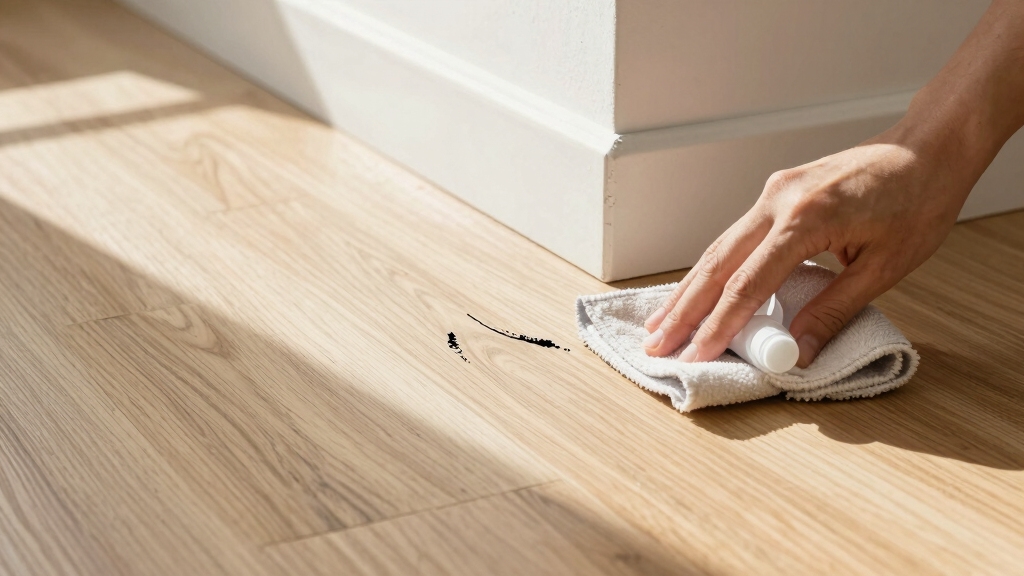
To remove scuff marks from laminate flooring, start by dampening a microfiber cloth. Wring it well to avoid excess moisture and gently rub the scuff in circular motions.
For tougher marks, apply WD-40 sparingly onto the cloth, never directly on the floor. Then wipe the area with a damp cloth to remove residue and dry thoroughly.
Avoid harsh chemicals and abrasive tools to preserve your floor’s finish. Explore additional safe techniques and cleaner options to maintain your laminate’s durability and appearance.
Key Takeaways
- Use a damp microfiber cloth with firm, circular motions to gently break down and lift scuff marks without damaging the laminate finish.
- Apply WD-40 sparingly onto a microfiber cloth, rub scuffs in circular motions, then wipe with a damp cloth to remove lubricant residue.
- Avoid excess moisture and harsh chemicals to prevent swelling, warping, or finish damage on laminate flooring.
- For tougher scuffs, use a rubber eraser or dry mop with dusting pads, applying moderate pressure to avoid abrasion.
- Always test removal methods on an inconspicuous area to ensure compatibility with your laminate floor’s finish and avoid dulling.
Removing Scuff Marks From Laminate Floors: Quick Overview

Although laminate floors are durable, scuff marks can still appear from daily use. To address this, you’ll need targeted removal techniques that preserve the floor’s finish.
Laminate floors resist wear but require careful scuff removal to maintain their finish and durability.
Begin by evaluating the scuff’s severity and surface type, as this guides your choice of method. Mechanical approaches like applying pressure with a dry mop or using a tennis ball exploit abrasion to lift marks without damaging the laminate.
For rubber residue, a pencil eraser provides a precise, controlled option. Chemical methods involve nonabrasive commercial cleaners or specialized products compatible with laminate, ensuring no finish degradation.
Always avoid excess moisture to prevent swelling or warping. Understanding these options equips you to remove scuffs effectively while maintaining the floor’s integrity and warranty. Regular cleaning with pH-neutral cleaners also helps prevent residue buildup that can worsen scuff visibility.
Removing Scuff Marks With a Microfiber Cloth
Frequently, removing scuff marks from laminate flooring starts with a microfiber cloth due to its gentle yet effective cleaning properties.
Begin by dampening one corner of the cloth with water, then thoroughly wring it out to guarantee it’s damp, not wet. Excess moisture can damage laminate surfaces.
Apply firm, circular motions directly to the scuff mark, focusing on breaking down the residue without abrading the floor’s finish. Use the dry end of the cloth to absorb moisture immediately after cleaning each spot.
If marks persist, repeat the process using a laminate surface cleaner applied to the microfiber cloth, never directly on the floor. This method minimizes risk of damage while efficiently lifting scuffs, preserving both the laminate’s appearance and structural integrity.
For best results, choose a microfiber cloth with a high polyester content for enhanced softness and cleaning efficiency, ensuring a streak-free shine without scratching delicate surfaces.
Buffing Scuffs With a Tennis Ball
To buff scuff marks effectively with a tennis ball, you’ll want to start by cutting an X into the ball. This little trick allows you to securely attach it to a broom handle, which gives you better control and lets you apply the right amount of pressure.
Once you’ve got that set up, just go ahead and rub the ball directly on the scuff. The coarse texture of the tennis ball is perfect for lifting those marks without causing any damage to your laminate surface. It’s a simple and practical solution that works really well on laminate and similar flooring types, especially for those stubborn scuffs that just won’t budge.
Give it a try! When cleaning floors, it is important to use pH-neutral cleaners to avoid damaging the surface finish.
Tennis Ball Preparation
Prepare a tennis ball by cutting an X-shaped slit into it and securely attaching it to a broom handle. This modification transforms the tennis ball into an effective buffing tool for scuff marks on laminate flooring.
The X-shaped cut guarantees a firm grip on the broom handle, preventing slippage during use. Position the slit so the ball remains stable when pressure is applied. Use a strong adhesive or tape if necessary to enhance attachment.
The coarse texture of the tennis ball’s surface is ideal for gently abrading scuff marks without damaging the laminate finish. Once prepared, this tool allows you to apply controlled pressure and buff scuffs efficiently.
Proper preparation guarantees optimum contact and durability, making the process more effective and safe for your flooring. Using tools with ergonomic grips can further improve control and reduce strain during cleaning tasks.
Application Techniques
When buffing scuff marks with a tennis ball, apply firm, consistent pressure to ensure the coarse surface effectively abrades the residue without damaging the laminate finish.
Hold the ball firmly and rub it directly onto the scuff in controlled, circular motions. For larger areas, attach a tennis ball to a broom handle by cutting an X into the ball.
Then flip the broom to use the ball end for buffing while sweeping. Maintain steady pressure throughout to break down the scuff without scratching.
This technique efficiently removes rubber-based marks and dirt embedded in the surface texture. After buffing, wipe the area with a clean, dry microfiber cloth to remove loosened debris and restore the floor’s appearance.
Using a microfiber cloth afterward helps enhance cleaning by trapping fine dust and allergens effectively.
Surface Compatibility
Although the tennis ball method works well on many laminate floors, you should confirm your floor’s surface type before using it to avoid unintended damage.
Laminate flooring with a durable, matte finish typically tolerates the tennis ball’s coarse texture, allowing effective buffing of scuff marks.
However, high-gloss or ultra-shiny laminates may be more sensitive; the abrasive action can dull the surface or cause micro-scratches.
To guarantee compatibility, test the tennis ball on a small, inconspicuous area first.
When applying, use firm but controlled pressure to prevent excessive abrasion.
Avoid using this technique on floors with delicate coatings or vinyl overlays, as damage may occur.
Properly evaluating surface compatibility preserves your laminate’s finish while effectively removing scuffs through this mechanical buffing approach.
For ongoing care, consider using gentle pads and adjustable settings designed for sealed hard surfaces to maintain your floor’s integrity.
Erasing Scuffs Safely Using a Rubber Eraser
Frequently, a rubber eraser provides an effective and gentle solution for removing scuff marks on laminate flooring. You should use a standard pencil eraser, applying it directly to the scuff in circular motions.
This method specifically targets rubber residue left by shoes, gradually fading marks without damaging the laminate’s surface. Before proceeding on light-colored or high-gloss laminate, test the eraser on an inconspicuous area to confirm no discoloration occurs.
Apply consistent but moderate pressure to avoid abrasion. This technique is especially useful for small, localized scuffs and complements other cleaning methods. For more thorough cleaning, consider using tools with ergonomic handles designed to reduce fatigue and improve control during maintenance.
How to Use a Dry Mop to Remove Tough Scuff Marks?
Apply firm pressure using a dry mop equipped with disposable dusting pads to effectively lift and remove tough scuff marks from laminate flooring. Position the mop head flat against the affected area, ensuring full contact between the pad and the floor surface.
Move the mop in slow, deliberate strokes over the scuff marks, maintaining consistent downward force to dislodge embedded residues. Avoid using liquids or sprays, as moisture can damage laminate floors.
Replace the dusting pad as it becomes saturated with debris to maintain efficacy. This method is particularly effective for high gloss laminate finishes that resist other cleaning techniques.
To protect your flooring, ensure thorough drying and avoid moisture transfer, as excessive dampness can cause floor damage over time.
Using WD-40 Safely on Laminate Floor Scuffs
When you’re dealing with scuffs on your laminate floors, WD-40 can be a handy solution. Just remember, it’s best to spray it onto a clean cloth instead of directly on the floor. This little tip helps prevent any potential damage to the surface.
Now, when you apply it, go easy! A gentle touch is key, especially if your laminate has an ultra-shiny or piano finish. You don’t want to risk dulling that beautiful shine.
Once you’ve tackled the scuff, make sure to wipe the area thoroughly with a damp cloth. This step is super important to remove any leftover lubricant. You definitely don’t want slippery floors!
Avoid using harsh chemicals like bleach or ammonia, as they can damage your flooring, similar to how they affect granite surfaces.
Proper WD-40 Application
You’ll often find WD-40 effective for removing scuff marks on ultra-shiny laminate floors, including delicate piano finishes. To apply it properly, spray WD-40 onto a clean microfiber cloth. Never spray directly on the floor.
Gently rub the scuff marks in circular motions, avoiding excessive pressure. Afterward, wipe the area with a damp cloth to remove any lubricant residue. This prevents slipperiness and buildup.
For maintaining the appearance and durability of your laminate floor, always ensure it is thoroughly dried after cleaning to prevent material degradation.
| Step | Action | Purpose |
|---|---|---|
| Spray | Apply WD-40 on cloth | Controlled application |
| Rub | Circular motion on scuff | Loosen and lift marks |
| Wipe | Damp cloth clean-up | Remove residue, prevent slip |
This method preserves laminate integrity while effectively eliminating scuffs without damage.
Protecting Laminate Finish
Following the proper WD-40 application guarantees effective scuff removal while minimizing risk to your laminate floor.
To protect the laminate finish, always spray WD-40 onto a clean microfiber cloth rather than directly on the floor. This prevents excess lubricant buildup that can cause slipping or attract dirt.
Apply gentle, circular motions when rubbing scuffs to avoid damaging the protective layer. Avoid saturating the area, as excess moisture can seep into seams and cause swelling or warping.
After treatment, promptly wipe the surface with a damp cloth to remove residual oils, preventing long-term residue buildup.
Using WD-40 sparingly and precisely preserves the integrity of ultra-shiny and piano finish laminates, ensuring the floor remains both visually appealing and structurally sound.
Removing Residue Safely
Although WD-40 effectively loosens scuff marks on laminate floors, removing its oily residue promptly is essential to prevent slippery surfaces and dirt attraction.
To use WD-40 safely, spray a small amount onto a clean microfiber cloth. Never apply it directly to the floor. Gently rub the scuff mark until it loosens.
Immediately follow with a damp microfiber cloth to wipe away all lubricant traces, ensuring no oily film remains. Avoid excessive moisture to protect the laminate finish.
Afterward, dry the area thoroughly with a soft, dry cloth. This method preserves the floor’s integrity while eliminating residue that compromises safety and cleanliness.
Picking the Best Commercial Cleaner for Laminate Scuff Marks
Several commercial cleaners have proven effective for laminate scuff marks, but selecting the right one demands careful consideration of your floor’s finish and sensitivity. You want a product that’s nonabrasive and compatible with your specific laminate type to avoid damage.
When choosing the best commercial cleaner, keep these factors in mind:
- Floor Finish Compatibility – Confirm the cleaner suits high gloss, matte, or textured laminates.
- Nonabrasive Formulation – Prevent scratches by avoiding harsh chemicals or scrubbing agents.
- Residue-Free Cleaning – Ensure the product doesn’t leave a film that attracts dirt or dulls the surface.
- Manufacturer Recommendations – Check if the cleaner preserves your floor’s warranty and longevity.
Brands like Mr. Clean Magic Eraser, Simple Green, and Goo Gone often meet these criteria, providing effective and safe scuff mark removal.
Frequently Asked Questions
Can Scuff Marks Damage the Laminate Flooring Surface Permanently?
Scuff marks themselves typically don’t cause permanent damage to laminate flooring because they usually sit on the surface as rubber or dirt residue.
However, if you use abrasive tools or harsh chemicals, you risk scratching or dulling the protective wear layer.
You should always use gentle methods and compatible cleaners to avoid compromising the laminate’s finish.
Proper care guarantees the surface remains intact and visually appealing over time.
How Often Should I Clean to Prevent Scuff Mark Buildup?
You should clean your laminate flooring at least once a week to prevent scuff mark buildup.
High-traffic areas may require more frequent attention, such as every two to three days.
Regular dry mopping or using a microfiber cloth helps remove abrasive particles that cause scuffs.
Promptly addressing dirt and debris minimizes abrasive wear.
Consistent cleaning preserves your floor’s finish, extending its lifespan and maintaining its appearance without risking moisture damage.
Are There Homemade Remedies Safe for Laminate Floor Scuffs?
Picture a damp microfiber cloth gliding over your laminate’s surface, lifting scuffs without a trace.
Yes, homemade remedies like this are safe and effective. You can also use a regular pencil eraser to gently rub away marks, targeting rubber residue without harsh chemicals.
Always test on a hidden spot first. These methods offer controlled, precise removal while preserving laminate integrity, making them smart, budget-friendly options you can trust.
Can Shoe Types Influence the Amount of Scuff Marks?
Yes, shoe types markedly influence scuff mark formation on laminate flooring.
Shoes with soft rubber soles or coarse textures tend to leave more scuffs due to their material’s friction and residue transfer.
Conversely, hard-soled or smooth-bottom shoes produce fewer marks.
You should consider footwear materials and sole designs to minimize scuffs, especially in high-traffic areas.
This will help preserve your laminate’s appearance and reduce cleaning frequency.
Is It Necessary to Seal Laminate Floors to Avoid Scuffs?
You don’t need to seal laminate floors to prevent scuffs because laminate surfaces come with a factory-applied wear layer designed to resist scratches and scuff marks.
Applying additional sealants can interfere with this protective layer, potentially causing damage or adhesion issues.
Instead, focus on proper maintenance, use protective pads under furniture, and promptly clean scuffs with recommended methods to preserve your floor’s integrity and appearance.
Simple Fixes That Bring Laminate Floors Back to Life
So, it turns out those pesky scuff marks aren’t as permanent as your Monday morning blues.
With just a microfiber cloth, a tennis ball, or even WD-40 used carefully, you can restore your laminate floor’s sleek finish without calling in a pro. Ironically, the simplest tools often do the trick best.
This proves that sometimes, keeping your floors spotless is less about complicated products and more about knowing exactly which everyday item to reach for.