
How to Clean a Berber Rug: Act Fast on Spills
To clean your Berber rug safely, use a vacuum without a beater bar or with a soft brush attachment to protect the loops from snagging.
Spot-clean spills immediately by blotting with a damp white towel. Avoid rubbing, and apply gentle solutions like diluted vinegar or baking soda to lift stains.
For deep cleaning, choose fiber-appropriate methods and make certain thorough drying to prevent mold and fiber damage. Understanding these critical steps can help you maintain your rug’s durability and appearance longer.
Key Takeaways
- Vacuum Berber rugs gently using suction-only or soft brush attachments to protect looped fibers and avoid snagging or unraveling.
- Immediately blot spills with a clean, damp white towel without rubbing to prevent spreading and fiber damage.
- Use baking soda and a 1:1 white vinegar-water solution for odor and stain removal, always patch testing first.
- Deep clean nylon Berber rugs with steam and plain water; use low-moisture shampoo for olefin and mild wool-safe detergents for wool fibers.
- Rotate rugs quarterly, vacuum high-traffic areas twice weekly, and shake outdoors regularly to maintain cleanliness and fiber longevity.
How to Pick the Best Vacuum for Your Berber Rug?
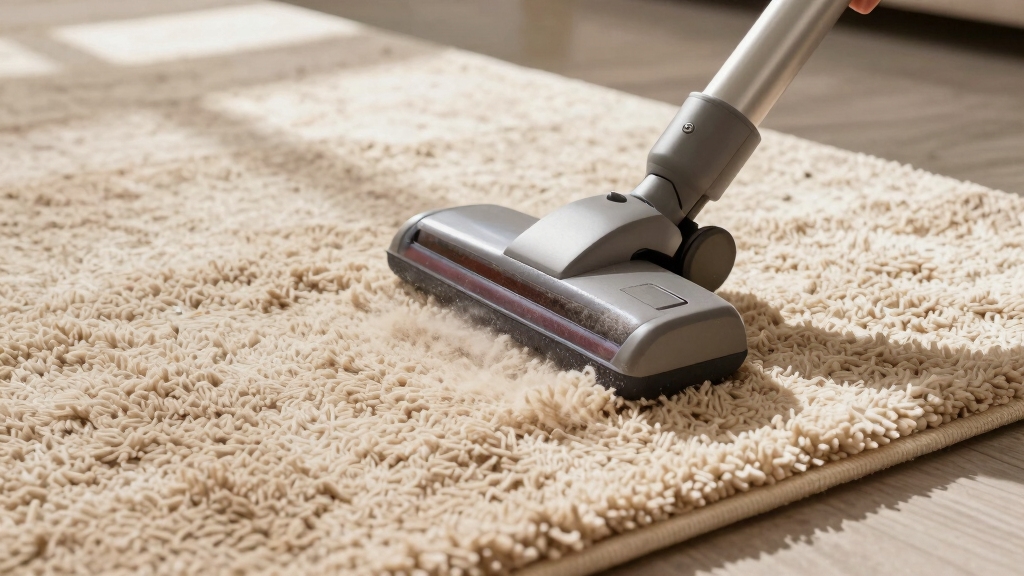
When choosing the best vacuum for your Berber rug, focus on models that combine strong suction power with specialized brush roll technology to protect the carpet’s looped fibers. Lightweight vacuums with swivel steering can also help you maneuver easily around furniture without damaging the rug.
Prioritize vacuums with powerful suction and gentle brush rolls to safeguard your Berber rug’s delicate loops.
Opt for vacuums featuring soft brush rolls, like the Kirby Sentria II, which prevent fiber pulling or catching by using soft bristles and adjustable height powered floorheads.
You’ll want a motor delivering around 1200W for effective fine dust extraction while maintaining consistent suction, achievable with bagged designs such as the Miele Classic C1 Olympus.
Many vacuums with self-sealing dust bags also include a bag-full indicator to reduce dust exposure during disposal. Consider vacuums with full-bag indicators to sustain peak performance.
Wide cleaning paths of 12 to 15 inches, coupled with extended power cords, enhance efficiency across large areas.
Models excelling in pet hair removal, like the SEBO Airbelt D4 Premium, also improve Berber rug care by addressing embedded debris without damaging loops. High-quality filtration systems, including HEPA filters, are beneficial for trapping allergens that may settle into the rug fibers.
Safely Vacuuming Berber Rugs Without Damaging Loops
Vacuuming Berber rugs carefully requires selecting a vacuum without a beater bar to prevent damaging the looped fibers.
Use suction-only vacuums or those with soft brushes, avoiding rotating brushes that fray tight loops. For thin-pile Berbers, upholstery or stair attachments work best.
Vacuum high-traffic areas twice weekly and other spots once weekly to prevent dirt buildup. Use slow, steady passes along the pile direction, following the fringe end across the width.
Avoid against-pile vacuuming that raises fibers and causes damage. Perform multiple passes in varied directions for thorough dirt removal without stressing fibers.
Always confirm the rug is completely dry after spot cleaning before vacuuming to avoid trapping moisture. Clean edges and corners with appropriate attachments to maintain the rug’s integrity and longevity.
Choosing vacuums with soft bristles and adjustable suction power helps protect delicate fibers while ensuring effective cleaning.
Spot Cleaning Stains on Berber Rugs: Effective Techniques
Maintaining your Berber rug’s appearance requires prompt and careful attention to stains to prevent permanent damage to the looped fibers. Because Berber rugs are made from dense, textured wool fibers, specialized care is essential to preserve their look and durability.
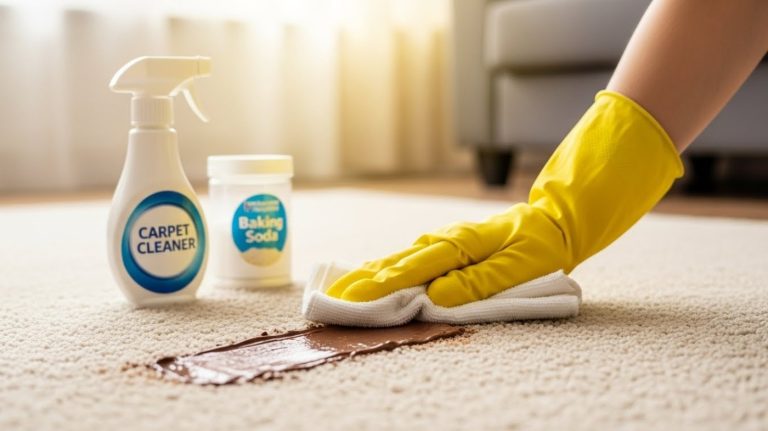
Begin by immediately blotting spills with a clean, damp white towel using minimal water. Never rub, as this risks spreading stains and damaging loops. Using blotting instead of scrubbing and employing blunt tools to remove excess chocolate gently can help prevent damage.
Use cold water and a colorfast rag initially, then pass a wet or dry vacuum to remove moisture.
For surface stains, sprinkle baking soda to absorb moisture and dirt, followed by an equal-ratio white vinegar and water solution to eliminate odors and lift residues. Always patch test cleaning agents on an inconspicuous spot to ensure colorfastness and fiber safety.
Recommended Cleaning Solutions for Berber Rugs
When it comes to cleaning your Berber rug, you definitely want to start off on the right foot. Begin with some gentle spot treatments using a mild wool-safe detergent mixture. This will help protect the fibers while you’re cleaning and ensure fiber integrity is maintained.
Now, if you encounter tougher stains, don’t worry! You can carefully apply a safe stain remover—like a baking soda and vinegar solution. Just make sure to test it on a small, inconspicuous area first.
This way, you can avoid any damage to the fibers while effectively lifting dirt and odors from your beautiful Berber rug. It is also important to identify specific fiber before cleaning to select the most appropriate methods and products.
Gentle Spot Treatment
When tackling spots on your Berber rug, choosing the right cleaning solution is essential to preserve its looped fibers and overall integrity.
Start by applying baking soda to neutralize odors and loosen stubborn stains. Baking soda also helps to deodorize carpets effectively before vacuuming.
Then spray a 1:1 mixture of white distilled vinegar and water to lift residues without harsh chemicals. For pet-related stains, this method effectively removes both discoloration and odor.
Mild dish soap diluted in water works well for gentle spot treatment; use a dabbing motion to avoid fiber damage and repeat as needed. Always blot from edges inward to prevent spreading the stain.
Always begin with plain water to minimize chemical exposure and fiber deterioration. It is important to remember that improper cleaning methods can embed dirt deeper and damage loops, so gentle care is paramount.
Wool Detergent Mix
After spot treating your Berber rug, the next step involves preparing a wool detergent mix designed to clean the entire rug without compromising its delicate fibers.
Start by filling a large bucket with 10 cups of lukewarm water, never hot, to protect the wool. Add 1 cup of mild wool detergent, such as Dreft, and mix gently.
Ensure you have a lukewarm water solution because hot water can damage the wool fibers. Using a mild, pH-neutral detergent helps maintain the wool’s softness and prevents fiber damage.
For extra fiber care, you can add white vinegar at a 1:1 ratio with water in a spray bottle for targeted use later. Before applying, shake the rug to remove dust. Pour the solution evenly, saturate the low-pile fibers, and work in the detergent with a soft brush on soiled areas.
Rinse thoroughly with lukewarm water to eliminate all soap residues, blot excess moisture, and roll the rug to expel water without soaking it. Ensuring proper drying techniques after cleaning helps prevent mold and mildew growth.
Safe Stain Removers
Frequently, effective stain removal hinges on selecting products that preserve the integrity of Berber rug fibers while targeting specific blemishes.
You’ll want to choose solutions proven safe and efficient:
- Folex Stain Remover – An enzyme-based spray approved by the Carpet and Rug Institute, works swiftly on grease and mystery stains without damaging wool fibers. It is particularly valued because it works quickly with no rinsing and leaves no residue, making it easy to blot out without harming delicate fabrics.
- 6% Hydrogen Peroxide – Acts as a color-safe bleach alternative for set-in stains; apply cautiously after a hidden spot test. This is similar to specialty formulas like Woolite Advanced that contain hydrogen peroxide to lighten stains and sanitize soft surfaces.
- Vinegar and Baking Soda Mix – Absorbs liquids and neutralizes odors, especially effective on pet stains and wool fibers. Using powders or granules such as Capture Dry Powder Carpet Cleaner can also be beneficial as they absorb dirt and freshen fabrics without damage.
- Woolite Advanced Stain Remover – Sanitizes and removes stains with a gentle rinse, suitable for wool Berber rugs. It is an EPA-registered sanitizer that kills 99.9% of bacteria while being gentle enough for many soft surfaces, though it is not suitable for all carpet fibers.
Deep Cleaning Berber Rugs at Home: Step-by-Step Methods
Preparing your Berber rug for deep cleaning involves several critical steps to guarantee effective dirt removal without damaging the fibers.
Start by vacuuming thoroughly with a suction-only vacuum to eliminate loose debris, avoiding beater bars on looped fibers. Make repeated passes to ensure a more effective cleanup without harming the loops.
Test your chosen cleaning solution on a hidden area to prevent color bleeding. Identify your Berber’s fiber type—nylon, olefin, or wool—to select the appropriate method.
For nylon, use steam cleaning with plain water and optional vinegar; extract moisture fully. Olefin requires shampooing with low moisture; rinse with plain water to remove residue.
For wool, apply dry cleaning powders or mild wool-safe detergents, avoiding excess moisture. Work in small sections, scrub gently if using DIY solutions, and air dry flat with fans, avoiding direct sunlight to maintain fiber integrity.
Common Berber Rug Cleaning Mistakes to Avoid
When it comes to cleaning your Berber rug, there are a few common mistakes you definitely want to avoid.
First off, steer clear of using beater bars. Those looped fibers can easily get snagged and unravel if they’re subjected to aggressive agitation. It’s just not worth the risk!
Also, be cautious with the cleaning products you choose. Harsh chemicals can strip the dyes or even damage the integrity of the fibers. Always remember to spot test for colorfastness before going all in with a new cleaner.
And let’s not forget about drying. It’s super important to follow proper drying protocols. Berber rugs are made with dense loops that tend to hold onto moisture longer, which can lead to mold growth or distortion of the fibers if they stay damp for too long.
Using an airmover immediately after cleaning each area can accelerate drying and reduce wicking.
Using Beater Bars
When you use a vacuum with a beater bar on a Berber rug, you risk pulling and damaging the carpet’s loop structure. Beater bars aggressively agitate the loops, causing irreversible fraying and fiber deterioration.
This mechanical action compromises the rug’s integrity, leading to bald spots and a shortened lifespan. To protect your Berber rug, avoid beater bars and consider these guidelines:
- Choose vacuums without rotating brushes or with adjustable settings to disable them.
- Use suction-only modes or soft bristle brush attachments for gentle cleaning.
- Vacuum with light, even passes to prevent loop unraveling.
- Employ hose attachments for targeted debris removal without mechanical agitation. It is also important to use non-abrasive cleaning methods to maintain the fibers’ strength and appearance.
Additionally, regular maintenance such as shaking the rug to remove dust before cleaning helps preserve its condition pre-clean step. Following these steps preserves your rug’s durability and appearance over time.
Applying Harsh Chemicals
While avoiding mechanical damage like beater bars preserves your Berber rug’s loop structure, chemical mishandling poses an equally severe threat.
Applying undiluted chlorine bleach causes permanent fading, color shifting from back to front, and lingering chemical odors that signal prior damage.
Formaldehyde-based dyes create weak color bonds, resulting in water-activated ink-like stains and persistent odors that trigger allergic reactions. Moroccan dyeing shortcuts have shown that such chemicals can also contaminate cleaning environments, complicating safe maintenance.
Strong detergents break down wool fibers, strip natural dyes, and leave chemical residues, dulling colors and mimicking mechanical wear. Additionally, these chemicals can alter the pH balance of fibers, accelerating degradation.
Disinfectants, though effective, often cause discoloration, residue buildup, and allergen retention, complicating safe use around pets. These chemicals also fail to eliminate embedded odors, instead intensifying irritants like 4-PC compounds.
To preserve your rug’s integrity and appearance, avoid harsh chemicals and opt for gentle, fiber-safe cleaning methods tailored to Berber textiles.
Ignoring Proper Drying
Ignoring proper drying after cleaning your Berber rug can lead to significant damage, including mold growth, fiber deterioration, and structural weakening.
You must make certain complete dryness to prevent moisture from lingering deep within fibers, which promotes mold and mildew development. Mold on textiles can spread and cause persistent odors if not addressed promptly, so isolation and careful drying are essential.
To avoid these issues, follow these critical steps:
- Use fans and open windows to enhance airflow and accelerate drying.
- Hang the rug evenly outdoors to prevent moisture trapping in folds.
- Avoid direct sunlight or hair dryers that can damage fibers.
- Employ dehumidifiers in humid conditions to reduce drying time and inhibit mold growth. Drying times can vary widely depending on rug thickness and environmental conditions, often taking anywhere from 6 to 12 hours or more for complete dryness typical drying range.
Failing to properly dry your Berber rug compromises its structural integrity and natural resilience, causing the backing to weaken and fibers to lose texture.
Maintaining proper ventilation during drying is crucial to prevent mold spore proliferation and fabric damage. Prioritize thorough drying to maintain your rug’s longevity and appearance.
Drying and Maintenance Tips for Berber Rugs
Properly drying your Berber rug is essential to maintaining its shape and preventing damage. After rinsing, roll it gently to expel excess water, then air dry flat to avoid distortion.
Berber rugs traditionally use sheep’s wool, which requires careful drying to preserve the fibers. To ensure thorough moisture removal and prevent mold, use air circulation techniques such as fans to promote airflow around the rug.
Gently roll your Berber rug after rinsing and air dry flat to preserve its shape and prevent damage.
Hang it outdoors on a balcony or line for 1-3 days in indirect sunlight, using fans to accelerate drying while preventing color fading. Avoid direct heat sources like hair dryers or steam cleaning unless employing a double extraction method.
Make certain complete dryness before replacing to prevent mold growth. For routine maintenance, vacuum weekly using suction without a beater bar, rotate quarterly, and shake the rug outdoors to remove embedded dirt.
Blot spills immediately without rubbing. Deep clean professionally every 12-18 months. Always test cleaning solutions on an inconspicuous area and avoid harsh chemicals to preserve your rug’s longevity and appearance.
Frequently Asked Questions
Can Berber Rugs Be Cleaned Professionally Without Voiding Warranty?
Yes, you can clean Berber rugs professionally without voiding the warranty, but you must follow strict guidelines. Always choose IICRC-certified technicians who use hot water extraction with CRI Seal of Approval products.
Avoid optical brighteners, bleach, or DIY methods. Keep cleaning receipts as proof, and adhere to the recommended cleaning frequency, typically every 12 to 24 months.
Checking the manufacturer’s label beforehand is vital to guarantee compliance and preserve your warranty coverage.
What Is the Best Way to Store a Berber Rug Long-Term?
Did you know professional pest treatments protect rugs for up to three years? To store your Berber rug long-term, first clean and dry it thoroughly to prevent mold.
Roll it around a cardboard tube, wrapping it in acid-free paper, then breathable fabric like cotton. Secure with plastic wrap and tape.
Store in a cool, dry, climate-controlled space elevated off the ground. Inspect biannually, using desiccants and dehumidifiers to maintain ideal conditions.
How Often Should a Berber Rug Be Professionally Cleaned?
You should have your Berber rug professionally cleaned every 12 to 18 months under normal conditions. If your rug is in a high-traffic area, increase cleaning frequency to every 6 to 12 months.
Low-traffic or delicate rugs may only need professional cleaning every couple of years. Always assess factors like foot traffic, spills, and visible dirt to adjust your schedule accordingly, ensuring your rug maintains its texture and appearance ideally.
Are Natural Fiber Berber Rugs More Delicate Than Synthetic Ones?
Natural fiber Berber rugs are more delicate than synthetic ones. Like handling a rare butterfly, you must be cautious.
You’ll find natural fibers such as wool, jute, and sisal absorb moisture easily and require gentle cleaning to avoid damage. They tend to collect dust and need professional care, especially wool.
In contrast, synthetics like nylon or polypropylene resist stains, moisture, and crushing. This makes them easier and more durable for everyday use.
Can Pet Odors Be Effectively Removed From Berber Rugs at Home?
Yes, you can effectively remove pet odors from Berber rugs at home. Start by sprinkling baking soda to absorb moisture and odors.
Then apply an equal mix of white vinegar and water to break down odor-causing compounds. Blot gently to protect the rug’s tight weave.
For deeper cleaning, use pet-specific enzyme cleaners that biodegrade urine proteins. Finish with thorough drying to prevent mold and lock in freshness without harsh chemicals.
Long-Lasting Beauty Through Smart Berber Rug Care
By vacuuming your Berber rug gently, you protect its dense loops. Remember, 80% of damage occurs from improper cleaning. Spot-treat stains promptly with recommended solutions to maintain fiber integrity.
Deep clean only when necessary, following precise steps to avoid fiber distortion. Always air-dry thoroughly to prevent mold.
With careful maintenance and the right tools, your Berber rug will retain its durability and texture. This ensures it stays both functional and visually appealing for years to come.