How to Clean Stainless Steel Water Bottle: Simple Daily Care
To clean your stainless steel water bottle, rinse it daily with warm water and a soft brush or sponge, using mild dish soap to remove residue.
Weekly, deep clean by soaking with baking soda and adding vinegar to loosen grime, then scrub and rinse thoroughly.
Use long-handled brushes for tight spaces, avoid abrasive tools to protect the surface, and air dry completely to prevent bacteria.
Maintaining this routine helps prevent odors and stains; further details cover stain removal, cleaning tools, and care tips.
Key Takeaways
- Rinse the bottle immediately after use with warm water and wash regularly with mild dish soap and a soft bottle brush.
- Perform a weekly deep clean by soaking with baking soda and white vinegar, then scrub and rinse thoroughly.
- Use long-handled bottle brushes and detailing brushes to clean hard-to-reach areas and bottle threads.
- Avoid harsh chemicals and abrasive tools to prevent scratching and preserve the bottle’s corrosion resistance.
- Air dry the bottle upside down with the lid off to prevent moisture buildup and bacterial growth.
How to Clean Your Stainless Steel Bottle Daily
Regularly cleaning your stainless steel water bottle makes certain it remains hygienic and odor-free.
Start by rinsing the bottle with warm water to eliminate loose debris.
Begin by rinsing your bottle with warm water to wash away any loose debris.
Next, add a teaspoon of dish soap, fill the bottle with hot water, and either shake vigorously with the lid secured or scrub the interior using a long-handled brush.
Use a soapy sponge to clean accessible exterior surfaces, and a wooden spoon handle to maneuver the sponge in hard-to-reach spots such as the bottle’s bottom.
After thorough scrubbing, rinse the bottle completely to remove all soap residues.
Finally, air dry the bottle upside down with the lid off to prevent moisture accumulation and bacterial growth.
Following these steps daily maintains cleanliness and prevents odor development effectively.
For enhanced protection and to maintain the bottle’s shine, consider using a pH-neutral cleaner formulated for stainless steel surfaces.
How to Deep Clean With Baking Soda and Vinegar?
After maintaining your stainless steel bottle with daily cleaning, incorporating a weekly deep cleaning routine using baking soda and vinegar can effectively remove stubborn residues and neutralize odors.
Start by dissolving a teaspoon of baking soda in warm water, filling the bottle, and letting it soak for 15 minutes.
This alkaline solution helps break down organic residues and acts as a mild disinfectant.
Next, add two tablespoons of white vinegar and fill the bottle with warm water.
The acidic nature of vinegar reacts with baking soda, producing carbon dioxide bubbles that loosen grime.
Shake vigorously, then use a bottle brush to scrub internal surfaces. Rinse thoroughly with warm water to remove all residues.
This combination leverages chemical reactions for effective cleaning without damaging the stainless steel surface.
For best results, use pH-neutral cleaners to avoid damaging the surface finish during regular maintenance.
Tools for Cleaning Hard-to-Reach Areas of Stainless Steel Bottles
When you need to clean hard-to-reach areas inside your stainless steel water bottle, using the right tools makes a significant difference in effectiveness.
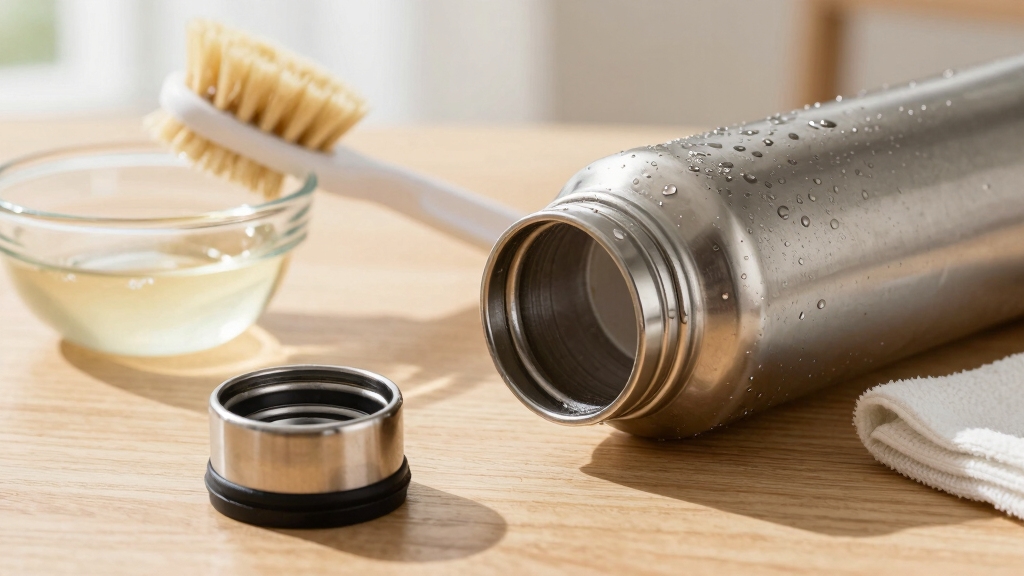
Employ a long-handled bottle brush designed to reach deep into the bottle’s interior, ensuring thorough scrubbing without scratching the steel.
Utilize a detailing brush to clean threads and narrow spaces, preventing residue buildup.
For stubborn spots at the bottom or corners, shaking uncooked rice with hot soapy water acts as an abrasive agent, dislodging debris without damage.
A wooden spoon handle can help maneuver a sponge into tight areas, providing control during cleaning.
Avoid harsh or abrasive brushes that can scratch the surface, compromising the bottle’s integrity and facilitating bacterial growth.
Selecting appropriate tools maintains hygiene and prolongs your bottle’s lifespan.
Regular cleaning with gentle tools and biodegradable solutions helps prevent buildup and extends the cleaning frequency.
How to Remove Stubborn Stains and Odors From Your Bottle Safely?
Although stainless steel bottles resist many stains and odors, persistent residues can develop over time and require targeted cleaning methods to eliminate them effectively and safely.
To remove these, create a paste of baking soda and water; its mild abrasive and antimicrobial properties break down internal stains without scratching.
Apply gently using a soft brush or sponge.
For odors, fill the bottle with warm water and add two tablespoons of white vinegar, then shake and let it soak for 15 minutes before rinsing thoroughly.
Denture tablets or specialized bottle-cleaning tablets also dissolve tough residues safely when soaked as directed.
Avoid harsh chemicals like chlorine bleach, which can damage the steel’s surface and leave harmful residues.
Always rinse thoroughly after treatment and air dry completely to prevent moisture buildup and bacterial growth.
Using biodegradable and non-toxic cleaners can further ensure safe and eco-friendly maintenance of your stainless steel bottle.
How Often to Clean and Deep Clean Your Bottle?
Regular cleaning plays a crucial role in maintaining the hygiene and longevity of your stainless steel water bottle. You should rinse and replace water daily, especially if it’s been sitting overnight or exposed to heat.
Every few days or weekly, wash the bottle with hot soapy water, using a brush or sponge to reach all surfaces. For thorough maintenance, deep clean your bottle weekly by soaking it with a baking soda and vinegar solution to eliminate bacteria and odors effectively.
Additionally, perform a monthly deep clean to combat mold and mildew buildup. Don’t forget to remove and clean seals or gaskets every one to two months, as these areas often harbor hidden residues.
Adhering to this schedule prevents bacterial growth and preserves your bottle’s integrity. To further protect your bottle’s surface and maintain its appearance, consider applying a breathable, non-toxic protector designed for metal surfaces after thorough cleaning.
How to Protect Your Stainless Steel Bottle While Cleaning?
When it comes to cleaning your stainless steel bottle, you want to make sure it stays in great shape, right? So, the first thing to keep in mind is to steer clear of harsh abrasives or scouring pads. These can really scratch up the surface and make it look worn out.
Instead, why not opt for gentler tools? Soft sponges or non-abrasive cloths work wonders and help preserve that shiny finish. Trust me, using the right cleaning tools not only makes the job easier but also helps your bottle last longer.
So, let’s keep it nice and safe while we keep it clean! Additionally, choosing non-toxic cleaning methods ensures both your bottle’s surface and your health stay protected.
Avoid Harsh Abrasives
When cleaning your stainless steel water bottle, you should steer clear of harsh abrasives like scouring pads or strong bottle brushes.
These materials can scratch the bottle’s surface, compromising its corrosion resistance and promoting bacterial growth in damaged areas.
Scratches may also dull the bottle’s finish, reducing its aesthetic appeal. Instead, rely on non-abrasive cleaning tools to maintain the integrity of the steel.
Avoiding aggressive scrubbing preserves the protective passive oxide layer that prevents rust and staining.
Over time, harsh abrasives degrade this layer, increasing the risk of contamination and reducing the bottle’s lifespan.
Protect your bottle by choosing gentle cleaning methods that effectively remove residue without damaging the surface, ensuring hygienic and long-lasting use.
Similar to granite care, using harsh chemicals or abrasive materials can lead to surface damage that compromises protective layers and overall durability.
Use Gentle Cleaning Tools
Choose soft, non-abrasive cleaning tools such as gentle sponges or cloths to preserve your stainless steel water bottle’s surface. Avoid harsh brushes or scouring pads that can cause micro-abrasions, compromising corrosion resistance.
Use a long-handled bottle brush with soft bristles for internal cleaning, and a wooden spoon handle to maneuver sponges in tight spots. These tools maintain integrity and hygiene without damaging the steel.
| Tool Type | Purpose |
|---|---|
| Soft sponge/cloth | Surface cleaning, non-scratching |
| Long-handled brush | Interior scrubbing, thread areas |
| Wooden spoon handle | Reaches difficult spots |
Selecting appropriate tools guarantees your bottle remains scratch-free and durable. This extends its lifespan while effectively removing residues and biofilms. Using natural, biodegradable cleaning products can further protect your bottle’s finish while being eco-friendly.
Tips to Keep Your Bottle Smelling Fresh Between Washes
To keep your stainless steel bottle smelling fresh between washes, it’s a good idea to rinse it daily with warm water. This helps get rid of any residue and prevents bacteria from growing.
You might also want to give it a quick shake with some hot soapy water and then let it air dry with the lid off. This little routine can really help reduce any odors from forming.
For persistent smells, sprinkling baking soda and letting it sit before rinsing can neutralize odors effectively, similar to odor elimination techniques used for airbeds.
Daily Rinsing Routine
Regularly rinsing your stainless steel water bottle with warm water helps prevent odor buildup and bacterial growth between thorough washes.
To maintain freshness, rinse the bottle immediately after use, especially if it contained flavored or sugary drinks.
Use warm water to dissolve residual particles and flush out microorganisms. If accessible, gently scrub the interior with a soft bottle brush or sponge to dislodge any adhering debris.
Avoid harsh abrasives that can damage the steel surface. After rinsing, leave the bottle open and upside down to air dry completely, preventing moisture accumulation that favors bacterial proliferation.
Performing this simple daily routine minimizes the need for frequent deep cleaning and helps maintain hygienic conditions.
Consistency in rinsing is key to preserving your bottle’s cleanliness and extending its usability.
For persistent odors, consider using an enzymatic cleaner that targets and neutralizes organic residues effectively.
Odor Prevention Tips
Maintaining a consistent rinsing routine sets a solid foundation for preventing unpleasant odors in your stainless steel water bottle.
Rinse with warm water daily, especially if the bottle has been unused overnight or exposed to heat, to inhibit bacterial growth. Use a long-handled bottle brush with mild dish soap every few days to remove biofilm and residues where odors originate.
Incorporate weekly deep cleaning with baking soda and white vinegar, leveraging their antimicrobial and deodorizing properties to neutralize odor-causing agents.
Make sure to thoroughly dry your bottle by air drying it upside down with the lid off to prevent moisture buildup, which fosters microbial proliferation.
Avoid harsh chemicals or abrasives that compromise the steel’s integrity and promote odor retention.
Regularly remove and clean seals or gaskets to eliminate trapped contaminants that cause persistent smells.
Frequently Asked Questions
Can I Put My Stainless Steel Bottle in the Dishwasher Regularly?
You can put some stainless steel bottles in the dishwasher regularly, but it depends on the manufacturer’s guidelines.
Frequent dishwasher use may cause hard water marks or degrade seals and coatings over time. To maintain your bottle’s integrity, hand wash with warm soapy water and use gentle tools.
If you choose dishwasher cleaning, avoid harsh detergents and make certain complete drying afterward to prevent bacterial growth and moisture buildup inside the bottle.
Is It Safe to Use Bleach on Stainless Steel Bottles?
Think of bleach like a powerful storm. It can clear debris but also damage delicate structures.
You shouldn’t use bleach on your stainless steel bottle regularly because it can corrode the metal, weakening its integrity.
If you do use a diluted bleach solution, soak for only 15 minutes, then rinse thoroughly and keep it away from children.
Safer alternatives like vinegar and baking soda disinfect without risking harm to your bottle’s surface.
How Do I Clean the Bottle Cap or Lid Thoroughly?
To clean your bottle cap thoroughly, first disassemble any removable seals or gaskets following the manufacturer’s instructions.
Soak all parts in warm water mixed with a teaspoon of dish soap for 10-15 minutes. Use a soft brush or sponge to scrub threads, crevices, and seals gently.
Rinse thoroughly with warm water to remove residue. Air dry completely with all components separated to prevent moisture buildup and bacterial growth before reassembling.
Can Vinegar Damage the Insulation of My Bottle?
You wouldn’t worry about vinegar melting your bottle like a medieval alchemist’s mistake.
Vinegar won’t damage your insulated stainless steel bottle if used correctly. Its mild acidity effectively cleans without harming the vacuum seal or insulation layers.
Just avoid prolonged soaking or undiluted vinegar contact. Rinse thoroughly after use to prevent any lingering odors.
Stick to recommended dilution ratios and cleaning intervals, and your bottle’s insulation will remain intact and efficient.
What Should I Do if My Bottle Develops Rust Spots?
If your bottle develops rust spots, you should act promptly.
Use a baking soda paste to gently scrub affected areas, as it’s mildly abrasive and safe for stainless steel.
Avoid harsh abrasives or bleach, which can worsen corrosion.
After cleaning, rinse thoroughly and dry completely to prevent moisture buildup.
If rust persists, consider replacing the bottle, since rust compromises the steel’s integrity and may pose health risks.
Stay Fresh, Stay Safe: Make Bottle Cleaning a Daily Habit
Regularly cleaning your stainless steel water bottle is vital, as studies show bacteria can multiply to over 1 million CFU/mL within 24 hours in unclean bottles. By following daily rinses and deep cleaning with baking soda and vinegar, you prevent harmful buildup and odors.
Using the right tools and cleaning frequency protects your bottle’s integrity and your health. Keep your bottle fresh and safe; consistent care guarantees it stays a reliable hydration companion.