How to Get Lipgloss Out of Clothing: Expert Laundry Tips
To get lipgloss out of clothing, start by blotting excess gloss with a dry cloth to avoid spreading.
Apply an oil-free makeup remover or dish soap directly to the stain, letting it sit to break down oils.
Gently agitate the fabric, then rinse from the back with cold water. Avoid heat as it can set stains permanently.
If your garment is delicate, use mild detergents and test any treatment first. For more detailed steps and fabric-specific care, continue exploring effective stain removal methods.
Key Takeaways
- Blot excess lipgloss with a dry cloth without rubbing to avoid spreading the stain or damaging fibers.
- Apply absorbent powder like cornstarch to soak up oils before treatment, then gently brush it off.
- Use oil-free makeup remover or dish soap directly on the stain, let sit, and gently blot or brush to break down oils.
- Rinse the stained area from the fabric’s reverse side with cold water to push out residue and avoid heat.
- Wash in cold water with mild detergent and air dry; avoid heat until the stain is fully removed to prevent setting.
What To Do Right Away When a Lipgloss Stain Hits Your Clothes?
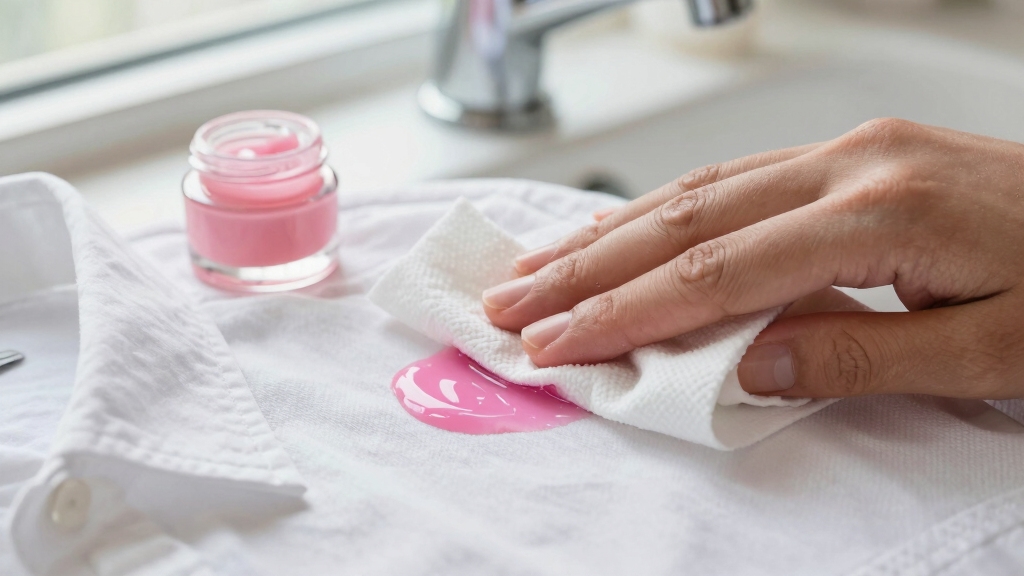
When a lipgloss stain hits your clothes, start by blotting up as much excess as you can with a clean, dry cloth or paper towel.
Avoid rubbing or applying water at this stage, as lipgloss is oil-based and can spread, worsening the stain.
Avoid rubbing or adding water initially; lipgloss’s oil base can spread and deepen the stain.
Act quickly; the longer the stain sets, the harder it becomes to remove.
Turn the garment inside out before treatment to push the stain out of the fabric fibers rather than deeper in.
Always test any cleaning method on an inconspicuous area first to avoid damage, especially on delicate fabrics.
Following these initial steps makes certain you don’t inadvertently set the stain or damage your clothing, setting a solid foundation for effective stain removal in subsequent treatments.
Using plant-based enzymes can help effectively break down the oily components in lipgloss stains during cleaning.
How To Use Makeup Removers To Break Down Lipgloss Stains?
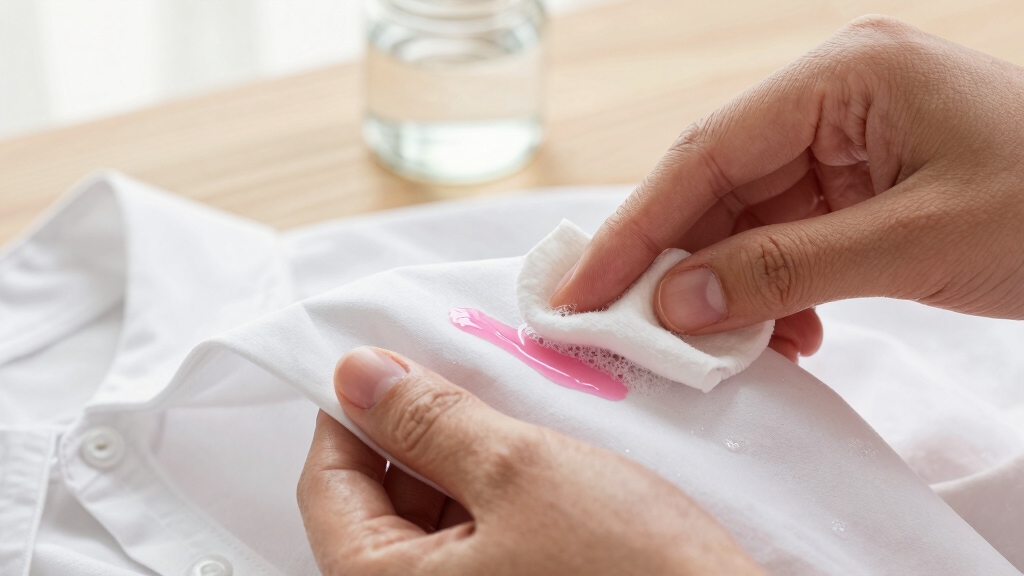
Dab an oil-free makeup remover or micellar water onto a cotton pad and press it gently onto the lipgloss stain to begin breaking down the oils without spreading them.
Use ultra-soft makeup removing rounds for a delicate touch, ensuring you blot rather than rub to avoid embedding the stain deeper into fibers.
Hold the pad on the stain for several seconds, allowing the remover to penetrate and emulsify the lipgloss oils effectively.
After treatment, rinse the stained area with cold water from the fabric’s reverse side to flush out loosened residues.
This method disrupts the oily matrix of lipgloss, preparing the fabric for subsequent cleaning steps.
Always test the remover on an inconspicuous spot first to confirm fabric compatibility and prevent damage.
Prompt and gentle blotting is key to preventing the stain from spreading or setting deeper, similar to immediate actions for ink stains on leather.
How To Remove Lipgloss Stains Using Dish Soap?
Although lipgloss stains are oil-based, you can effectively break them down by applying a grease-cutting dish soap like Dawn directly onto the affected area.
Start by dabbing excess gloss with a dry cloth to prevent spreading. Apply a small amount of dish soap onto the stain and let it soak for 10 minutes to penetrate the oils.
Next, gently agitate the area with an old toothbrush to loosen residue without damaging fibers. For deeper cleaning, soak the garment in a dish soap and water solution.
Blot with cotton balls to lift loosened oils effectively. This method suits delicate fabrics and whites, providing a milder alternative to harsher chemicals.
Always test on an inconspicuous spot first and avoid using heat until the stain is fully removed. Using dish soap is recommended over hand soap because of its strong surfactants designed to cut through grease efficiently.
How To Use Household Products To Lift Lipgloss Stains?
Did you know you can lift lipgloss stains using stuff you probably already have at home? It’s true! White vinegar and rubbing alcohol are your best friends in this situation.
Just grab a cloth, soak it in some vinegar, and gently dab it on the stain. The vinegar helps break down those oily residues, making it easier to lift the lipgloss.
Now, if you’re dealing with a stubborn stain, don’t worry! You can use rubbing alcohol for those tougher spots. Just remember to blot from the edges of the stain and work your way in.
This way, you avoid oversaturating the fabric, which could cause damage. With a little patience, you’ll have that fabric looking good as new!
Always patch test cleaning agents on an inconspicuous area first to prevent any damage to your clothing.
Vinegar For Stain Removal
Utilizing white vinegar effectively breaks down lip gloss stains by targeting the oils and pigments embedded in the fabric fibers.
To use vinegar, saturate a clean cloth or sponge with white vinegar and gently rub the stained area. This acidic solution disrupts the stain’s molecular bonds, loosening the lip gloss without damaging most fabrics.
Avoid oversaturating to prevent spreading. After agitation, rinse the fabric under cold water from the back of the stain to flush out loosened residues.
For persistent stains, repeat application, ensuring you test on an inconspicuous area first to rule out colorfastness issues.
Finally, launder the garment in cold water with mild detergent. Vinegar offers a safe, effective alternative to harsher chemicals for oil-based cosmetic stains like lip gloss. Using cold water during rinsing is crucial because hot water can set oil-based stains permanently.
Alcohol-Based Treatment
Apply rubbing alcohol carefully to tackle lip gloss stains, as its solvent properties break down the oily components effectively.
To maximize results, follow these steps:
- Test rubbing alcohol on a hidden fabric area to make sure no damage occurs.
- Blot the stain gently from the edges toward the center using a cloth saturated with alcohol; avoid soaking fabric.
- Repeat blotting until the lip gloss visibly lifts, replacing the cloth as it absorbs residue.
- Rinse the stained section with cold water from the reverse side to flush out dissolved oils.
After treatment, launder the garment in cold water with mild detergent and air dry.
Avoid heat until the stain is fully removed, as heat sets oily residues permanently.
For persistent stains, applying an enzymatic cleaner after alcohol treatment can help break down residual oils and improve removal.
How To Pretreat And Wash Lipgloss-Stained Clothes?
To effectively remove those pesky lip gloss stains, it’s super important to pretreat the affected area as soon as you can. Grab a gentle liquid detergent or even a facial cleanser—both work wonders!
Just make sure to pick a detergent that’s great at tackling grease and oil because that’ll help break down the stain without harming the fabric fibers.
Now, when it comes to washing, stick with cold water. Heat can set the stain, and we definitely don’t want that!
After washing, let your clothes air dry and take a good look at the stain. If it’s still hanging around, no worries—just repeat the treatment until it’s all gone. You’ve got this!
Using cold water helps prevent setting the stain deeper into fabric fibers, making removal easier.
Effective Pretreatment Steps
When you notice lip gloss on your clothing, start by treating the stain promptly with a gentle liquid detergent or facial cleanser. Allow it to sit for 5 to 10 minutes to break down the oils effectively.
Next, follow these precise steps to maximize removal:
- Blot excess lip gloss immediately with a clean, dry cloth to avoid spreading.
- Turn the garment inside out and rinse the back of the stain with cold water to push the lip gloss out of the fibers.
- Apply a grease-cutting dish soap directly on the stain and gently agitate with a soft brush to lift residue.
- After pretreatment, launder the item in cold water using a mild detergent, then air dry to prevent heat setting.
Act quickly and avoid rubbing to preserve fabric integrity and stain removability. Using clear, dye-free dish soap is especially effective for breaking down the oils in lip gloss stains.
Choosing Right Detergent
Selecting the right detergent materially impacts your success in removing lip gloss stains after pretreatment. You want a detergent with strong grease-cutting enzymes to break down oils effectively.
Opt for liquid detergents over powders, as liquids penetrate fabric fibers more efficiently. Avoid detergents with additives like brighteners or perfumes that could interfere with stain removal. For delicate fabrics, choose a mild detergent to prevent fiber damage.
Detergents with a simplified ingredient list and reduced irritants, such as those with plant-derived ingredients, can also be effective while being gentler on sensitive skin.
| Detergent Type | Best For | Key Features |
|---|---|---|
| Enzymatic | Stubborn lip gloss oils | Breaks down protein and oil |
| Mild | Silk, wool, delicates | Gentle, low-sudsing |
| Liquid | Most fabrics | Rapid fiber penetration |
| Heavy-duty | Durable fabrics | Strong grease-cutting agents |
Select detergents aligned with fabric type and stain severity for best results.
Washing Tips For Stains
Start by thoroughly pretreating the lip gloss stain to break down oils before laundering.
Apply a gentle liquid detergent or facial cleanser directly on the stain and let it sit for 5-10 minutes.
Follow with cold water rinsing from the back to push out the residue.
Avoid heat until the stain is fully removed.
- Blot excess lip gloss immediately; don’t rub.
- Use oil-free makeup remover or micellar water on a cotton pad to lift oils gently.
- Apply grease-cutting dish soap like Dawn, let soak 10 minutes, then agitate with a soft toothbrush.
- Launder in cold water with mild detergent; air dry and repeat treatment if needed.
This precise method guarantees peak stain removal without fabric damage.
For best results, consider applying absorbent powders such as cornstarch to help soak up residual oils before washing.
How To Care For Delicate And Non-Washable Fabrics?
Although delicate and non-washable fabrics require extra caution, you can effectively remove lip gloss stains by absorbing excess oil with baby powder or cornstarch before gently dabbing with a soapy cloth.
For delicate fabrics, absorb lip gloss oil with baby powder before gently dabbing with a mild soapy cloth.
Avoid saturating the fabric; instead, use a mild detergent diluted in warm water to minimize fiber damage. Test any solution on an inconspicuous area first to confirm colorfastness.
Blot the stain from the fabric’s reverse side to push the lip gloss out, not deeper in. Never rub vigorously, as it can distort delicate fibers.
Avoid heat exposure during drying; air dry flat to maintain fabric integrity. If stains persist, repeat the powder absorption and gentle blotting process rather than resorting to aggressive chemical treatments that risk fabric deterioration.
Frequently Asked Questions
Can Lipgloss Stains Be Removed From Upholstery or Carpets?
Yes, you can remove lipgloss stains from upholstery and carpets.
Immediately blot excess gloss with a clean cloth without rubbing.
Apply an oil-free makeup remover or a grease-cutting dish soap solution using a soft cloth or sponge.
Gently blot and rinse with cold water, avoiding oversaturation.
For stubborn stains, use white vinegar or rubbing alcohol cautiously.
Always test treatments on a hidden area first to prevent fabric damage.
Are There Specific Lipgloss Brands That Stain More Stubbornly?
Think of stubborn lip gloss stains as stubborn shadows—they cling tighter when pigments and oils are richer.
Yes, certain brands with heavy oils, waxes, or deep pigments like matte or long-wear formulas leave tougher stains.
You’ll find that glosses packed with synthetic oils resist standard removal, requiring targeted treatments.
How Long Can a Lipgloss Stain Sit Before It Becomes Permanent?
You shouldn’t let a lipgloss stain sit more than 24 hours before treating it.
After that, the oils and pigments penetrate deeper into fabric fibers, making removal markedly harder.
Ideally, address the stain immediately; within minutes is best to prevent permanent setting.
The longer it sets, especially beyond 48 hours, the higher the risk of permanent discoloration.
Acting fast with proper pretreatment is essential for successful stain removal.
Can Lipgloss Stains Be Removed From Leather or Suede Materials?
Think of lip gloss on leather or suede like an unwelcome shadow—removable but delicate. You can remove it, but you must act carefully. Blot excess gently without rubbing.
For leather, use a leather cleaner or mild soap with a damp cloth, then condition.
For suede, avoid water; instead, absorb oils with cornstarch, brush gently, and use a suede eraser.
Always test treatments on a hidden spot first to prevent damage.
Is It Safe to Use Bleach on White Clothes With Lipgloss Stains?
You can use bleach on white clothes with lipgloss stains, but cautiously.
Test a small, hidden area first to avoid fabric damage. Pre-treat the stain with detergent or dish soap to break down oils before applying diluted bleach.
Avoid using bleach on delicate fabrics or blends. Always follow with a cold water rinse and launder as usual.
Never apply bleach directly on the stain without pretreatment to prevent fabric weakening or discoloration.
Quick Action, Clean Results: Your Lipgloss Stain Solution
Lipgloss stains can seem stubborn, but acting quickly and using the right techniques makes removal efficient. Did you know that 90% of stains can be fully eliminated if treated within the first hour?
By promptly applying makeup remover or dish soap, and carefully pre-treating before washing, you markedly increase your success rate. For delicate fabrics, gentle care is essential to avoid damage.
Stay precise and consistent, and your clothes will look spotless again.