How to Get Rid of Spoiled Milk Smell in Carpet? Easy Fixes
To get rid of spoiled milk smell in your carpet, immediately blot the spill with absorbent towels without rubbing.
Apply a diluted white vinegar solution to neutralize odors, then use an enzyme-based cleaner to break down milk proteins deeply.
After cleaning, sprinkle baking soda to absorb lingering smells and vacuum thoroughly.
For persistent odors, deep cleaning and probiotic treatments help maintain freshness long term.
Further guidance offers effective techniques and preventative tips to keep your carpet odor-free.
Key Takeaways
- Blot spilled milk immediately with clean towels, avoid rubbing to prevent deeper fiber penetration and remove as much liquid as possible.
- Scrape dried milk residue gently before rinsing carpet with clean water and blotting to dilute and lift residues.
- Apply a vinegar and water solution (1:3 ratio) on the stain, let sit 5–15 minutes, then blot and repeat if necessary.
- Use enzyme cleaners to break down milk proteins, allowing 15–30 minutes dwell time, then rinse and dry thoroughly to prevent odor return.
- Sprinkle baking soda on dry carpet, leave overnight to absorb odors, then vacuum thoroughly for fresh, odor-free carpet.
Immediate Steps to Blot and Absorb Milk Spills
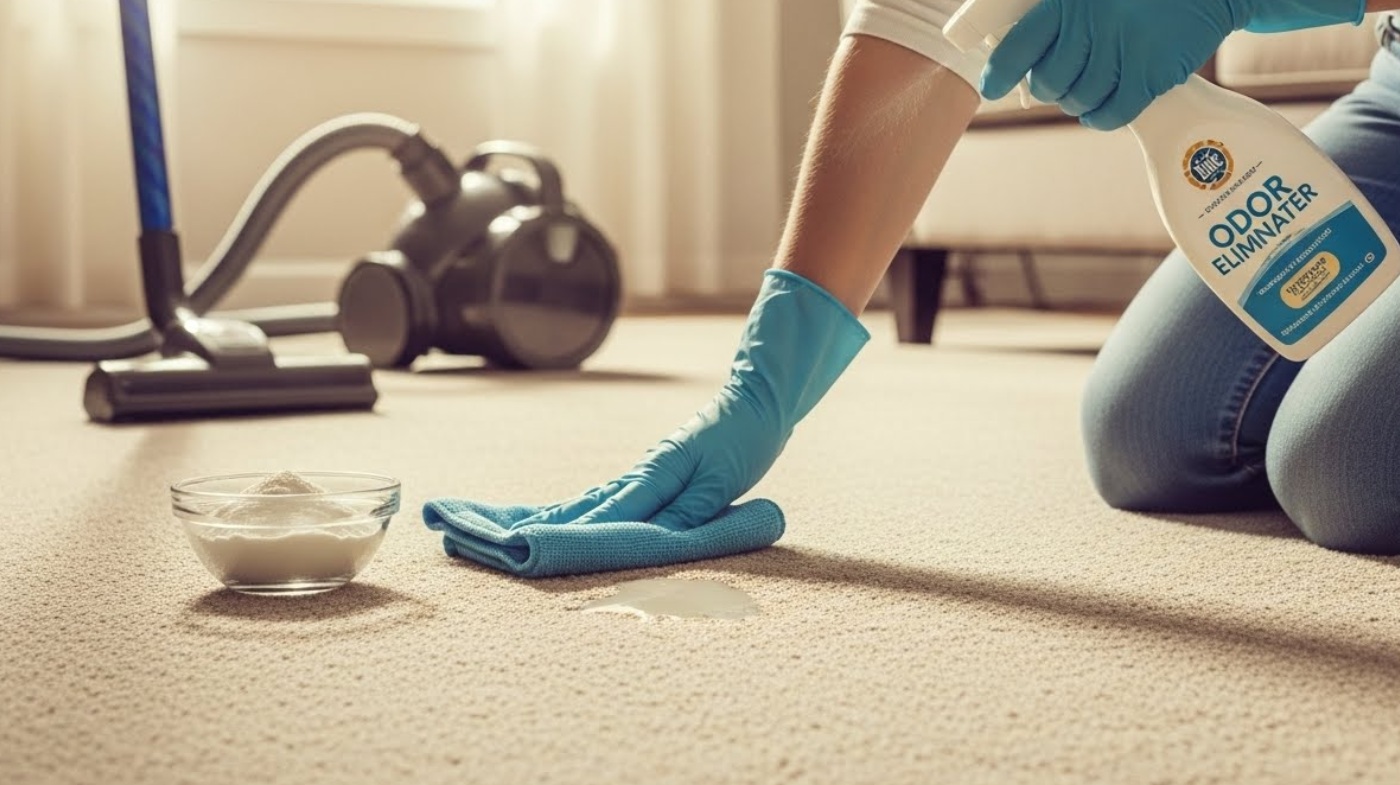
When you spill milk on your carpet, act immediately by blotting the area with paper towels or a clean cloth to absorb as much liquid as possible. Press firmly to maximize absorption; avoid rubbing, which pushes milk deeper into fibers.
Use multiple layers of paper towels if needed, and repeat blotting with fresh towels until you remove most of the liquid. Acting quickly reduces the milk’s penetration and prevents odor from setting.
Using a bio-enzymatic cleaner after blotting can help break down milk residues and neutralize odors effectively. It is also helpful to use a dry cloth or sponge to soak up excess milk to prevent the stain from worsening (Immediate Cleanup).
If the milk has dried, gently scrape the residue off using a dull knife or spoon, taking care not to damage the carpet fibers. Remove as much dried milk as possible, then vacuum loose particles promptly. These immediate steps are critical to minimizing odor and preparing the carpet for further cleaning.
Preparing a Vinegar and Water Cleaning Solution
Once you’ve blotted and removed as much milk as possible, preparing an effective cleaning solution is the next step to eliminate lingering odors.
Use distilled white vinegar with 5% acetic acid for safe, effective odor neutralization. Adjust vinegar concentration based on stain severity, and always test on a hidden carpet area to prevent discoloration. Vinegar is a versatile, eco-friendly solution known for its antibacterial and antifungal properties, which aid in removing stubborn odors and stains.
For best results, ensure thorough application and allow time for the solution to penetrate fibers fully, similar to how cleaning techniques optimize stain removal on other surfaces.
| Purpose | Vinegar to Water Ratio |
|---|---|
| Freshening carpet | 1 part vinegar : 3 parts water |
| Routine maintenance | 1 part vinegar : 1 part water |
| Minor stains | 1 part vinegar : 2 parts water |
| Strong odor/tough stains | Undiluted vinegar |
| Application tip | Test solution on carpet patch |
Prepare fresh solutions, apply evenly using a spray bottle, and blot gently after 5–15 minutes to maximize odor removal.
Applying Cleaning Solutions to Neutralize Odors
First things first, grab some vinegar and mix up a solution. You’ll want to apply it evenly over the area of the carpet that’s been affected. This step is crucial because it helps to disrupt those pesky odor-causing molecules hanging around.
Acting quickly helps prevent the smell from setting in, so be sure to blot up as much milk as possible immediately. Using white vinegar and warm water also helps neutralize the acidic components of spoiled milk and reduce lingering odors.
Once you’ve done that, it’s time to reach for an enzyme-based cleaner. This is where the magic happens! This cleaner works to break down milk proteins right at the source, so you can effectively neutralize those odors.
Now, don’t forget the final step! Rinse the area with some clean water and then blot it thoroughly. This will help remove any residues left behind and prevent any moisture damage to your carpet.
Vinegar Solution Application
How can you effectively apply a vinegar solution to neutralize spoiled milk odors in carpet?
Begin by mixing equal parts distilled white vinegar and warm water in a spray bottle. Optionally, add 10-20 drops of essential oil for scent.
Lightly mist the affected area; avoid oversaturating to protect fibers. Let the solution penetrate for 5-15 minutes. For strong odors, leave it several hours. The vinegar’s acetic acid is responsible for breaking down the odor-causing molecules and bacteria in the carpet fibers. Always ensure proper ventilation while applying cleaning solutions to avoid buildup of fumes.
Blot excess moisture with a clean white cloth; never rub. For enhanced odor removal, sprinkle baking soda before or after application to trigger a deodorizing acid-base reaction.
Repeat the process if odors persist. After drying, vacuum thoroughly to remove residues.
Always test the solution on a small area first to check colorfastness and wear gloves to prevent skin irritation. Wearing chemical resistant gloves helps protect your skin from irritants during cleaning.
Enzyme Cleaner Usage
Vinegar solutions effectively neutralize spoiled milk odors on the surface, but enzyme cleaners offer a deeper approach by breaking down the organic compounds embedded within carpet fibers.
These biological catalysts digest milk proteins and fats at the molecular level, eliminating odors and preventing bacterial regrowth. Enzymes are natural, protein-based catalysts that convert bacteria into harmless byproducts like carbon dioxide and water. Using enzyme cleaners is often safer and more effective than conventional soaps, which may leave residue causing odors in fabrics.
To apply enzyme cleaner effectively:
- Remove excess milk residue and saturate the stain evenly with the enzyme cleaner.
- Allow the cleaner to dwell as per instructions, typically 15 minutes to several hours, to enable complete enzymatic breakdown.
- Blot the area gently to absorb loosened residue; avoid rubbing to prevent spread.
Choose enzyme cleaners designed for carpets, test a small area first, and expect temporary odor intensification as enzymes work.
Rinsing and Blotting
Although enzyme cleaners break down milk residues effectively, thorough rinsing and blotting remain essential to remove dissolved particles and excess moisture from your carpet. Proper maintenance and avoiding harsh chemicals are important to protect your carpet fibers, similar to how non-abrasive cleaning protects delicate surfaces like marble.
Rinse the area gently with clean water to dilute residues, avoiding saturation. Immediately blot with a clean cloth, applying light pressure to lift liquids without spreading them. For dried spills, gently scrape crusted residue with a plastic tool before rinsing to improve cleaning effectiveness removing dried residue.
Repeat rinsing and blotting as needed, especially for older stains. After applying cleaning solutions, blot again to extract excess moisture and prevent residue buildup, which can cause odors or mildew.
| Step | Key Action |
|---|---|
| Rinse | Dilute residues with clean water |
| Blot | Absorb moisture using light pressure |
| Repeat | Alternate rinsing and blotting until dry |
This method ensures effective odor neutralization and carpet longevity.
Using Enzyme-Based Cleaners for Deep Odor Removal
When you need to eliminate the deep-seated odor of spoiled milk from your carpet, enzyme-based cleaners offer a targeted solution by breaking down the proteins and fats responsible for the smell.
These cleaners use natural enzymes that catalyze the decomposition of complex milk molecules into odorless compounds, attacking the source rather than masking it.
Many top-rated enzyme cleaners require 12 to 72 hours for the enzymes to fully work and neutralize odors effectively. Keep in mind that drying time after cleaning is important to prevent lingering odors and mold growth.
To maximize effectiveness:
- Saturate the stained area thoroughly and allow 15-30 minutes dwell time for enzyme activity.
- Gently blot the carpet to lift residues; avoid rubbing to prevent spreading.
- Rinse with cool water and dry completely using fans or dehumidifiers to prevent mold and odor recurrence.
Choose enzyme cleaners formulated specifically for proteins and carpets, and avoid mixing with soaps that deactivate enzymes.
Benefits of Probiotic Treatments on Carpet Stains
Have you ever dealt with those stubborn organic stains on your carpet? Well, let me tell you, probiotic treatments are a game changer! They work by targeting the stains with specific enzymes that break down the molecular structure of things like milk residues. Pretty impressive, right? These treatments often utilize bio-enzymatic technology, which is known for its deep stain removal and odor neutralization capabilities.
But wait, it gets better! These treatments don’t just tackle stains; they also keep odors at bay. By continuously suppressing microbial growth, they help prevent those nasty smells from creeping back in.
So, not only are you cleaning your carpet, but you’re also ensuring it stays fresh for a longer time. Plus, these products are safe for asthma and allergies, making them a great choice for sensitive households.
Plus, by promoting the growth of beneficial bacteria, you’re really investing in the cleanliness of your carpet. It’s like having a little army of good guys working to keep your space looking and smelling great. Who wouldn’t want that?
Enzyme Breakdown Mechanism
Since spoiled milk contains complex proteins, fats, and sugars, enzymes play a crucial role in breaking down these components into simpler molecules that probiotics can easily consume.
Proteases degrade proteins into peptides and amino acids, lipases dismantle fats, and amylases hydrolyze sugars, collectively preventing odor-causing fermentation.
Probiotics then metabolize these smaller molecules, effectively eliminating stains and odors.
To optimize enzyme breakdown, you should:
- Confirm thorough saturation of the affected carpet area for enzyme access.
- Allow a dwell time of 15–30 minutes to maximize enzymatic activity.
- Maintain damp conditions post-application to support probiotic survival and continued breakdown.
Using ergonomic cleaning tools can help evenly apply treatments and ensure better penetration into carpet fibers.
This mechanism not only removes visible residues but also reduces microbial populations, enhancing carpet sanitation and prolonging odor control. The enzymes and bacteria work together to break down soils, with enzymes initiating breakdown and bacteria consuming the residues, creating a collaborative cleaning process.
Long-Term Odor Control
Although traditional cleaners remove immediate stains, probiotic treatments offer long-term odor control by introducing beneficial bacteria that colonize carpet fibers.
These microbes continuously break down organic residues and odor-causing compounds, preventing the regrowth of harmful bacteria.
The sustained microbial activity maintains a balanced carpet microbiome, suppressing biofilm formation and reducing recurring odors.
You’ll benefit from continuous cleaning action without frequent chemical reapplications, as probiotics remain active after drying.
Additionally, these biodegradable, non-toxic treatments are safe for children and pets and minimize environmental impact.
They achieve this by producing bio-surfactants, natural water-based compounds that attack problematic agents and restore a healthy biological balance.
By creating a hostile environment for odor-causing microbes, probiotic treatments reduce re-soiling and the need for deep cleaning.
Incorporating probiotics ensures your carpet stays fresher longer, supporting healthier indoor air quality and effective, lasting odor control.
For effective stain and odor removal, it is important to act promptly and use gentle cleaning methods to protect carpet fibers and maintain overall integrity.
How to Use Baking Soda for Deodorizing Carpet?
When tackling spoiled milk odors in your carpet, applying baking soda correctly guarantees peak deodorizing results.
First, sprinkle baking soda liberally and evenly over the affected area using a colander or shaker for controlled distribution.
Next, gently work it into the carpet fibers with a brush or your fingertips, avoiding clumps and ensuring full coverage. This method helps the baking soda to effectively trap and neutralize odor-causing particles at the source.
Allow it to sit undisturbed for at least 30 minutes; overnight is ideal for stronger odors but don’t exceed 24 hours to prevent residue buildup.
Finally, vacuum thoroughly with slow, repeated passes to remove all powder, focusing on heavily treated spots.
Techniques for Deep Cleaning and Fiber Agitation
Baking soda tackles surface odors effectively, but deep cleaning methods are necessary to remove milk proteins and residues embedded within carpet fibers. Use enzymatic cleaners designed to break down milk fats and proteins.
Apply an equal-parts vinegar and water solution, letting it sit for several minutes to dissolve residues before blotting with cold water. Acting promptly is crucial because milk can sour rapidly, leading to more stubborn odors. Avoid hot water to prevent setting stains.
Gently agitate fibers with a soft brush after applying solutions to loosen embedded residues without damaging the pile. Press and blot rather than rub to avoid pushing milk deeper.
For thick carpets or extensive spills, consider professional-grade steam cleaning to penetrate padding and extract residues. Repeat treatments as needed, ensuring thorough rinsing and drying to prevent odor recurrence and fiber damage.
Using Natural Odor Absorbers After Cleaning
Since deep cleaning removes most residues, using natural odor absorbers helps eliminate lingering smells and restores freshness to your carpet.
Deep cleaning removes residues, and natural odor absorbers eliminate lingering smells to refresh your carpet.
To maximize odor neutralization, apply one of the following after cleaning:
- Baking Soda: Sprinkle generously over dry carpet, work into fibers, leave overnight, then vacuum. Add essential oils for enhanced scent. Baking soda is also an affordable, natural deodorizer that effectively absorbs odors from carpets and rugs.
- Vinegar Solution: Lightly spray a diluted mix (½ to 1 cup vinegar per gallon water) on the carpet. Allow it to dry fully to neutralize odors without vinegar smell.
- Enzyme Cleaners: Spray commercial enzyme cleaner on affected areas, let dry for 2–3 days to break down milk proteins, then vacuum thoroughly.
Tips for Preventing Future Spoiled Milk Smells
Although spills can happen unexpectedly, you can substantially reduce the risk of spoiled milk odors by establishing clear prevention strategies.
Designate drinking zones away from carpets, such as kitchens or dining rooms. Use tables with coasters or mats to minimize spills.
Place waterproof, washable mats under high chairs and feeding areas for added protection. Keep carpet-safe cleaning supplies and absorbent towels accessible for immediate spill response.
Train household members on quick blotting techniques and inspect carpets regularly for moisture or stains.
Vacuum carpets weekly and schedule professional deep cleanings every 6–12 months to prevent residue buildup.
Educate children and guests on spill prevention and proper cleanup procedures, reinforcing habits with visible reminders.
Frequently Asked Questions
Can Spoiled Milk Smell Cause Health Issues in My Home?
Yes, spoiled milk smell can cause health issues in your home.
The odor signals bacterial growth that releases irritants and volatile compounds, which may worsen respiratory conditions like asthma or allergies.
While it rarely causes infections through smell alone, prolonged exposure can provoke discomfort, headaches, or nausea.
Vulnerable individuals, such as infants, elderly, and immunocompromised, are especially at risk.
Promptly cleaning spills and ensuring proper ventilation helps minimize these health hazards.
How Long Does It Take for Spoiled Milk Odor to Fully Disappear?
When it comes to spoiled milk odor, patience is key. It doesn’t vanish overnight. Without cleaning, it can stick around for days to weeks as bacteria break down proteins and the smell seeps deep into fibers.
Quick action cuts this time drastically. Immediate blotting and enzyme treatments reduce persistence to hours or a day. Still, thick carpets or poor ventilation can extend it, requiring professional cleaning to fully clear the odor.
Are There Any Carpet Materials That Are More Resistant to Milk Odors?
Yes, you’ll find carpets made from triexta and solution-dyed nylon fibers are highly resistant to milk odors due to their dense, synthetic structure.
Carpets with antimicrobial treatments and moisture-blocking backings further prevent odor-causing bacteria and liquid penetration.
Look for carpets embedding odor-neutralizing agents or those labeled with proven odor-resistant technologies to guarantee better odor control after milk spills.
Natural fibers, while eco-friendly, tend to retain organic smells more.
Can Professional Carpet Cleaning Remove Spoiled Milk Smell Better?
Yes, professional carpet cleaning removes spoiled milk smell better, targets deep stains better, and eliminates bacteria better than home methods.
You’ll benefit from industrial-grade enzymatic cleaners that break down protein-based odors, high-powered extraction that reaches carpet padding, and expert technicians who pre-treat and thoroughly dry the area.
When home remedies fail, professional cleaning guarantees complete odor removal, prevents mold growth, and restores your carpet’s freshness effectively and reliably.
Is It Safe to Use Bleach for Spoiled Milk Stains on Carpet?
No, you shouldn’t use bleach on spoiled milk stains in carpet.
Bleach can damage fibers, cause discoloration, and leave harmful fumes.
It won’t effectively break down milk proteins or eliminate odors.
In fact, it might worsen them and leave toxic residues.
Instead, use enzyme-based cleaners or a vinegar solution to neutralize odors safely.
Always blot excess liquid first and avoid harsh chemicals to protect your carpet and health.
Take These Last Steps to Keep Your Carpet Fresh and Odor-Free
By acting fast and following these proven steps, you’ll nip that spoiled milk smell in the bud before it settles deep into your carpet fibers.
Combining vinegar solutions, enzyme cleaners, and baking soda creates a powerful defense against odors, while probiotic treatments and natural absorbers provide lasting freshness.
Remember, a stitch in time saves nine. Address spills promptly to keep your carpet smelling clean and fresh for the long haul.