
What Is the Best Way to Clean Quartz Countertops? Pro Tips
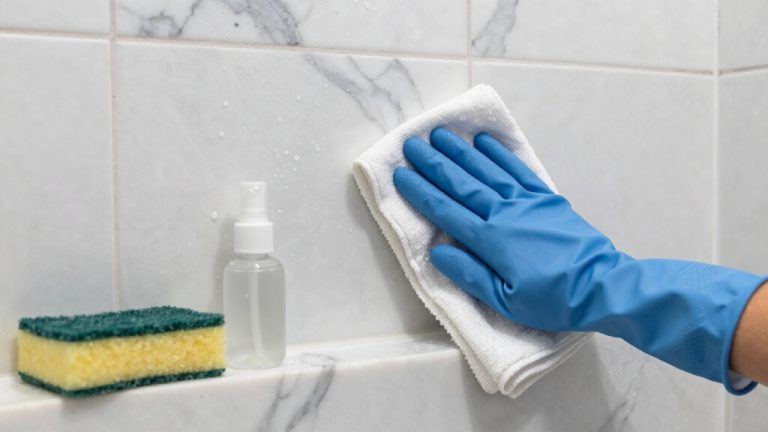
To clean your quartz countertops effectively, use a soft microfiber cloth with warm water and a mild, pH-neutral soap daily.
Wipe spills immediately to prevent staining and dry the surface completely to avoid water spots and streaks.
For stuck-on grease, try a damp, soapy cloth and rinse well. Avoid harsh chemicals and abrasive tools to protect the finish.
If you want to keep your quartz looking flawless long-term, there are extra steps and tips you can follow.
Key Takeaways
- Clean quartz countertops daily with a soft microfiber cloth and warm water or pH-balanced soap to prevent buildup and maintain shine.
- Use mild dish soap diluted in warm water and a damp microfiber cloth for grease or oil, then rinse and dry thoroughly.
- Immediately wipe spills, especially acidic ones, with a damp cloth to avoid staining and damage.
- Avoid abrasive pads, harsh chemicals, and cutting directly on quartz; use cutting boards and non-slip mats to prevent scratches.
- For stubborn stains, gently scrub with a soft nylon pad and stone-safe cleaner or baking soda paste, then rinse and dry completely.
Daily Cleaning Techniques for Quartz Countertops
Consistently wiping your quartz countertops daily with warm water and a soft microfiber cloth prevents crumbs and light spills from building up and dulling the surface.
When you notice grease or oils, add a few drops of mild dish soap diluted in warm water. Apply gently with a soft cloth, then rinse thoroughly. Avoid abrasive tools and harsh chemicals like bleach or ammonia to maintain the quartz’s non-porous surface.
Always dry and buff the surface using a dry microfiber towel to avoid streaks and restore shine. This practice extends countertop lifespan by maintaining the surface integrity.
Adopt a two-cloth system: one damp and soapy for cleaning, one dry for polishing. Wipe spills immediately, especially staining agents like coffee, to minimize discoloration risks.
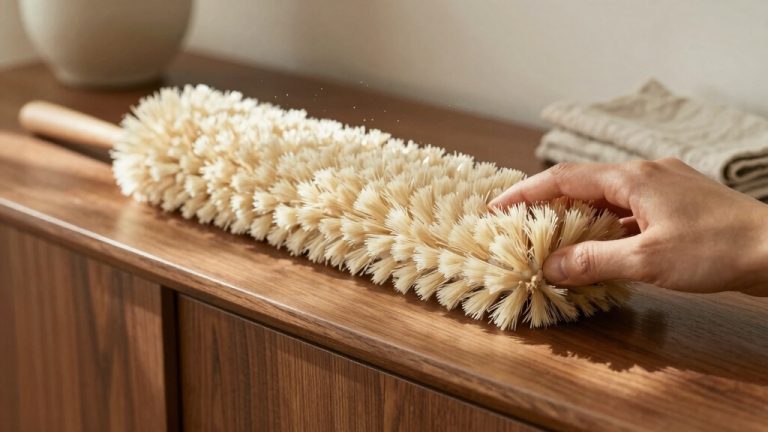
Remove loose debris first with a dry microfiber cloth or soft-bristle brush to prevent scratches.
For dried residues, soften with a warm damp cloth before gently scraping with a plastic scraper. Rinse and dry the area to maintain your quartz’s pristine condition.
Recommended Cleaning Products and Tools
Choosing the right cleaning products and tools is essential to maintain your quartz countertops’ appearance and durability.
Use commercial cleaners specifically labeled safe for quartz, like Weiman Quartz Clean & Shine or STONETECH Revitalizer, which remove grease and stains without harming the resin.
For a trusted option, consider Pristine Clean, a spray-and-wipe countertop cleaner designed specifically for quartz and other surfaces, offering a non-streaking, non-coating formula. Regularly wiping and drying the surface helps prevent mineral buildup that causes water stains and dullness.
Opt for quartz-safe cleaners like Weiman Quartz Clean & Shine to protect and maintain your countertop’s finish.
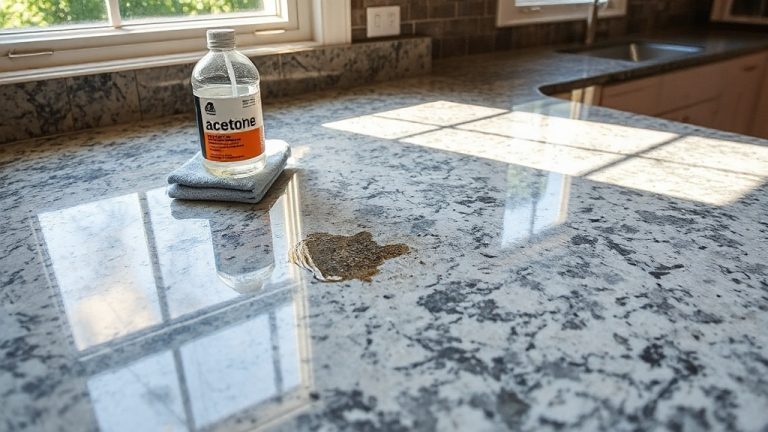
Always test new products in a hidden spot first. For everyday cleaning, dilute mild dish soap in warm water or use 70% isopropyl alcohol sparingly on sticky spots. Avoid acidic cleaners like vinegar that can dull the surface.
Use microfiber cloths for streak-free wiping and soft nylon pads for stuck-on food, steering clear of abrasive pads. Spray bottles help apply cleaners evenly, and soft-bristled brushes work well for edges.
How to Treat Stains and Spots Effectively?
Maintaining your quartz countertops goes beyond regular cleaning. You’ll need to address stains and spots promptly to keep the surface looking its best.
Start by identifying the stain type: organic, oil-based, dye/ink, mineral, or surface residue. Test cleaning methods on a hidden spot. Use warm water and gentle scraping for dried deposits. Then try mild abrasives like a baking soda paste.
For ink or dye, blot with isopropyl alcohol. Vinegar works well on mineral stains. Avoid harsh chemicals to protect the resin binder. It’s important to use a pH-neutral cleaner to maintain the integrity of your quartz countertops and prevent damage.
| Stain Type | Cleaning Method | Notes |
|---|---|---|
| Organic | Mild detergent, scrub | Fresh stains clean easily |
| Oil-based | Degreaser, dish soap | Repeat if film remains |
| Dye/Ink | Isopropyl alcohol | Blot gently, rinse afterward |
| Mineral | Diluted vinegar | Short contact, rinse thoroughly |
| Residue | Warm water, plastic scraper | Soften and lift carefully |
Preventative Measures to Protect Quartz Surfaces
To keep your quartz countertops looking pristine, it’s a good idea to always use trivets or hot pads. This way, you can shield the surface from any heat damage and prevent those pesky thermal cracks while maintaining the surface integrity of your countertops.
Plus, it’s just smart to avoid cutting directly on the quartz. Instead, grab a cutting board to stop scratches from happening and to help preserve that gorgeous finish.
These simple habits really do go a long way. They’ll extend your countertop’s durability and help maintain its polished appearance for years to come. Using surface protection films designed specifically for quartz adds an extra layer of defense against scratches, dents, and stains.
Heat Protection Tips
Protect your quartz countertops by always placing a heat-distribution barrier between hot items and the surface.
Use trivets, heat-resistant pads, or silicone mats whenever you set down hot cookware, including bakeware or appliances like air fryers. Quartz cannot dissipate heat as effectively as natural stones like granite, so taking precautions is essential to prevent damage from heat exposure heat dissipation. Additionally, some polishing creams include protective agents that can help maintain the surface integrity against minor heat stress.
Avoid placing oven-hot pans or devices with exposed heating elements directly on quartz, as even brief contact can damage the resin binder or cause discoloration.
Position heat-producing appliances so vents don’t touch the countertop, and use stands to allow airflow.
For built-in units, install heat shields beneath to divert heat away from seams. Choose high-temperature silicone or woven-fiber trivets rated above typical cooking temperatures to guarantee repeated protection.
Always consult your quartz manufacturer’s guidelines to maintain warranty coverage and keep your surfaces looking flawless. Following these manufacturer recommendations ensures optimal care and long-lasting beauty.
Scratch Prevention Strategies
Although quartz countertops are highly scratch-resistant, they aren’t completely impervious to damage. You’ll want to avoid cutting directly on the surface to prevent dulling your knives and leaving fine marks.
Always use designated cutting boards and place non-slip mats underneath to avoid sliding that could cause scratches. Failure to use non-slip mats can increase the risk of surface abrasion. Ergonomic handles and soft grips on cleaning tools help minimize accidental damage during maintenance.
Protect your quartz by using trivets or hot pads under sharp or heavy objects and avoid dragging them across the surface.
Be cautious with jewelry and footwear; remove high heels and lift bracelets instead of sliding them.
Designate specific prep zones to streamline protection efforts.
For cleaning, stick to mild dish soap with a soft sponge or microfiber cloth, avoiding abrasive pads. Promptly clean spills and use coasters to prevent stains, maintaining your quartz’s flawless finish. Using multi-functional cleaning tools can ensure safe and effective maintenance without scratching the surface.
Guidelines for Deep Cleaning and Maintenance
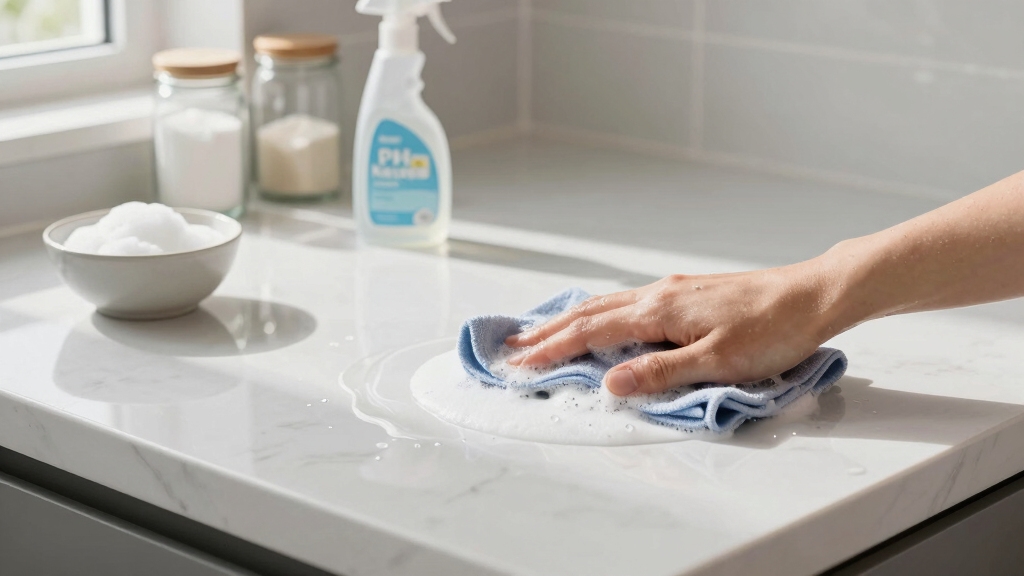
Maintain your quartz countertops by incorporating regular deep cleaning and careful maintenance into your routine.
Begin deep cleaning by clearing the surface, then mix mild detergent with warm water. Quartz countertops offer a high durability that allows for effective cleaning without damage. Using pH-neutral cleaners ensures the surface remains protected while maintaining its natural shine.
Start deep cleaning by clearing the surface and mixing mild detergent with warm water for gentle care.
Use a soft, non-abrasive pad to scrub in circular motions, rinse thoroughly, and dry with a microfiber cloth to prevent water spots.
For tough stains, apply a stone-safe cleaner or a baking soda paste, rubbing gently.
Dab isopropyl alcohol on marker stains and use ice plus a plastic scraper for gum removal.
Avoid harsh chemicals like bleach and abrasive pads with aluminum oxide.
Wipe down daily with a soft cloth and pH-balanced soap, immediately cleaning spills, especially acidic ones, to maintain shine.
Always dry your countertops completely after cleaning to protect the resin bonds and preserve their finish.
Avoiding Damage and Repair Tips for Quartz
When using your quartz countertops, taking specific precautions can prevent costly damage and extend their lifespan.
Always use trivets for hot cookware, cutting boards for food prep, and avoid harsh chemicals. Additionally, it is important to wipe spills at the earliest opportunity to prevent long-term staining and marks. Using cleaners that are pH-neutral and safe for stone surfaces helps maintain quartz’s durability.
Lift heavy objects instead of dragging to protect edges. If discoloration or heat marks appear, clean gently and consult professionals if needed.
| Damage Type | Prevention | Repair Tip |
|---|---|---|
| Heat Damage | Use trivets, cool hot items first | Mild soap + warm water cleaning |
| Scratches | Use cutting boards, lift objects | Avoid abrasive scrubbing |
| Chemical Exposure | Avoid bleach, ammonia, solvents | Use quartz-safe cleaners only |
| Stains | Wipe spills immediately | Gentle spot treatment |
Frequently Asked Questions
Can Quartz Countertops Be Cleaned With Vinegar or Lemon Juice?
You can clean quartz countertops with vinegar or lemon juice, but only if you dilute them heavily—usually half water, half vinegar—and use them sparingly.
Avoid undiluted acidic cleaners since they can dull the surface or damage the resin. Always rinse thoroughly afterward and dry with a soft cloth.
For regular cleaning, stick to mild soap and water or manufacturer-approved cleaners to keep your quartz looking its best and maintain your warranty.
Is It Safe to Use a Steam Cleaner on Quartz Surfaces?
You shouldn’t use a steam cleaner on quartz surfaces; over 70% of manufacturer warranties get voided when damage links to steam exposure.
High heat softens the resin binder, causing microfractures or discoloration over time.
If you must, spot-test cautiously with low-temperature steam, keep the nozzle moving, and avoid prolonged contact.
But honestly, stick to pH-neutral cleaners and soft cloths to protect your quartz and maintain its warranty.
How Often Should Quartz Countertops Be Professionally Polished?
You should have your quartz countertops professionally polished every 6 to 12 months, depending on usage.
If you notice dullness, minor scratches, or cloudiness, schedule a session sooner.
In high-traffic kitchens or commercial settings, consider polishing more frequently.
For light daily use, once a year might suffice.
Always avoid over-polishing to prevent wear, and opt for professionals when damage is severe or beyond simple DIY buffing.
Are Quartz Countertops Resistant to Mold and Mildew Buildup?
Yes, quartz countertops are highly resistant to mold and mildew because their nonporous, resin-bound surface prevents organisms from penetrating and colonizing.
However, you still need to keep the surface clean and dry, as leftover food, grease, or standing moisture can support surface mold growth.
Pay special attention to seams, caulk, and backsplash joints, where moisture can collect. Regular cleaning and prompt drying help maintain quartz’s mold-resistant qualities effectively.
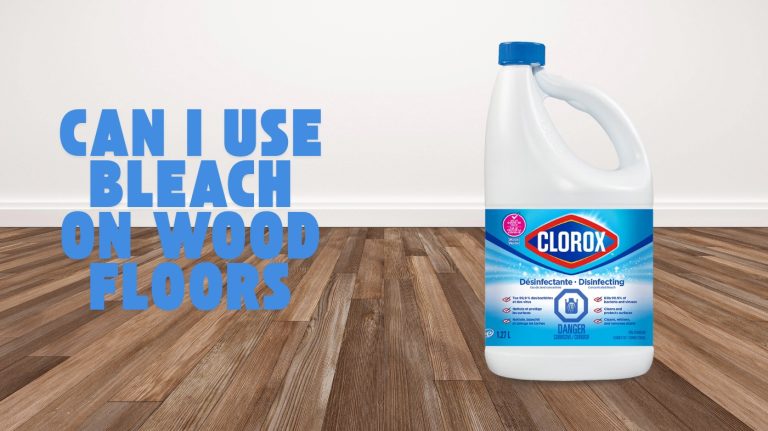
Can Quartz Countertops Be Safely Cleaned With Bleach Occasionally?
You can occasionally use bleach on quartz countertops, but only if you dilute it properly and rinse immediately to avoid damage.
Always test a small, hidden spot first to check for discoloration.
Avoid frequent or prolonged bleach use since it can dull the surface and weaken the resin.
For regular cleaning and disinfection, stick to mild soap, water, or manufacturer-approved products to keep your quartz looking pristine and protected.
Build a Simple Routine That Keeps Quartz Countertops Spotless
To keep your quartz countertops consistently clean and entrancing, commit to careful, consistent care.
Choose cleaning products cautiously, conquer stains quickly, and create clear preventative practices to protect your surfaces.
Don’t disregard deep cleaning or damage defense; doing so delivers durability and dazzling design daily.
By balancing basic maintenance with mindful measures, you’ll maintain your quartz’s quality and charm, ensuring it stays stunning and strong for years to come.