
How to Clean a Carpet Spill? Quick Tips for Perfect Results
When a carpet spill happens, act quickly by blotting the area with a clean, absorbent cloth. Never rub to avoid embedding stains.
Gather essentials like paper towels, mild detergent, white vinegar, and baking soda for odor control. Prepare a gentle cleaning solution and dab it on the stain.
Then rinse and dry thoroughly using fans or towels to prevent mold. For tough or unusual spills, specific treatments help restore your carpet’s look and freshness. Explore detailed methods to handle various stains safely and effectively.
Key Takeaways
- Act quickly by blotting the spill with a clean, absorbent cloth, pressing firmly without rubbing to avoid spreading the stain.
- Remove any solid residue gently with a dull tool before applying cleaning solutions.
- Use homemade solutions like a vinegar and dish soap mix, testing first on a hidden carpet area for color safety.
- Dry the area thoroughly using towels, fans, and dehumidifiers to prevent mold and odor development.
- Seek professional cleaning for stubborn stains, persistent odors, or chemical spills to ensure proper treatment and safety.
Immediate Actions to Take When a Spill Occurs
When a spill happens, you should immediately blot the area with a clean, absorbent cloth or white paper towel to soak up as much liquid as possible.
Apply firm pressure without rubbing or scrubbing to avoid pushing the spill deeper into the carpet fibers.
Use firm pressure when blotting to prevent the spill from embedding further into the carpet fibers.
Start blotting from the outer edges and work inward to contain the spill and prevent spreading.
Replace the cloth or paper towel as soon as it becomes saturated to maintain absorption effectiveness.
Acting within the first five minutes is vital, as quick response considerably increases your chances of completely removing the stain.
Using absorbent materials like sand or cat litter can help contain and prevent spread when dealing with larger spills.
These immediate steps minimize damage and prepare the carpet for subsequent cleaning, preserving its appearance and integrity. Always ensure proper ventilation during cleaning to avoid inhaling any potentially harmful fumes from cleaning agents or spilled substances, as toxic fumes can pose health risks.
Essential Materials Needed for Cleaning
A well-prepared cleaning session starts with assembling the right materials to tackle carpet spills effectively.
You’ll need clean white cloths or paper towels to blot without transferring color.
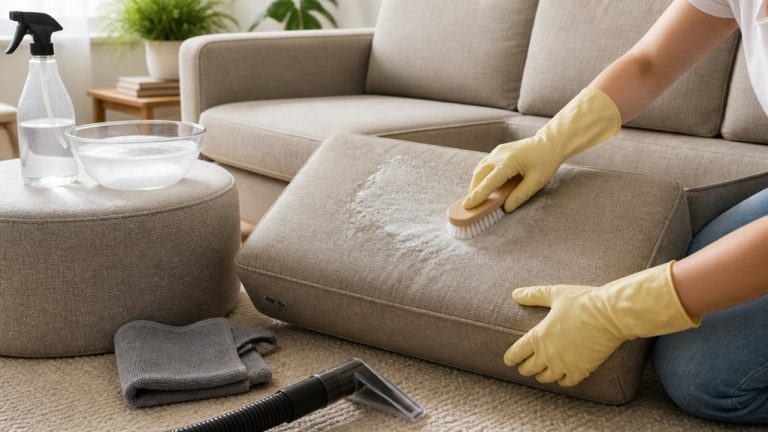
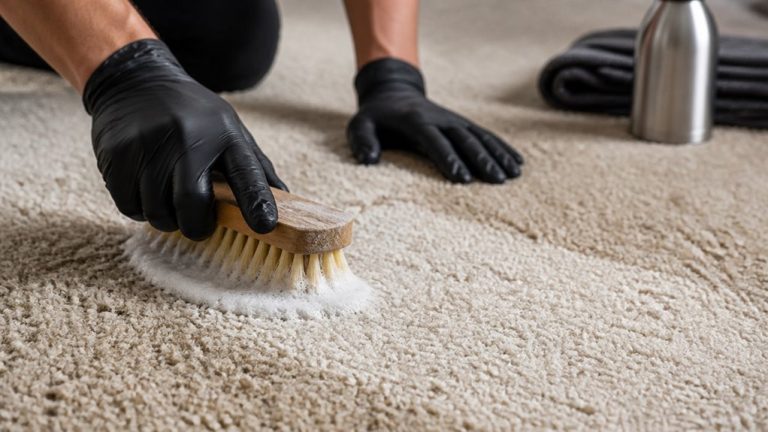
Use a spray bottle for even application of diluted cleaners, and a soft-bristled brush to gently lift stains without damaging fibers.
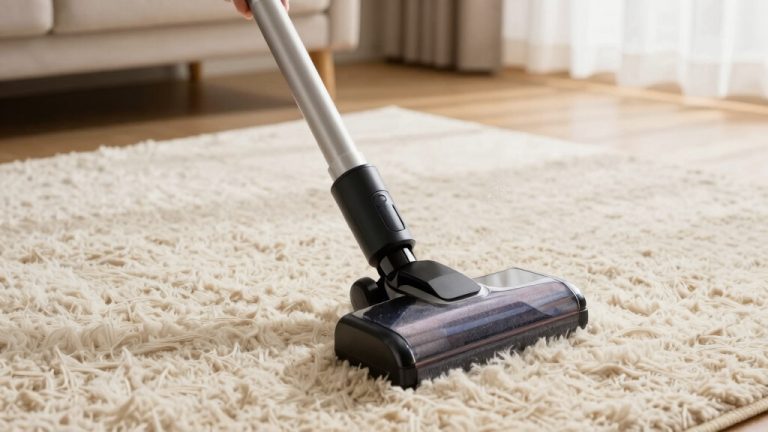
A vacuum helps remove debris before and after cleaning, while a bucket or mixing bowl is essential for preparing solutions. Regular vacuuming prevents dirt buildup that can cause stains over time.
Protect your skin with rubber gloves and ensure good ventilation to avoid inhaling fumes.
Avoid harsh chemicals like bleach; instead, choose mild, carpet-safe products.
Keep first aid supplies nearby for emergencies.
For tougher spills, have spoons or scrapers ready to remove solid residue carefully, preventing further spread or embedding into the carpet.
Preparing Effective Cleaning Solutions
Although selecting the right cleaning solution depends on the type of spill and carpet fiber, you’ll find that homemade mixtures using common ingredients like white vinegar, baking soda, hydrogen peroxide, and mild dish soap offer effective, affordable options. When preparing solutions, it is important to assess dirt severity to choose the right cleaning method.
Choosing the right homemade cleaning mix depends on your spill and carpet type but remains affordable and effective.
When preparing solutions, use distilled water to avoid mineral deposits and mix gently to reduce foam. Always test the mixture on a hidden carpet area to verify colorfastness. Additionally, using a homemade carpet cleaner with added Downy fabric softener can leave carpets feeling soft and fresh after cleaning, enhancing the overall result soft carpet finish.
- Combine white vinegar and mild dish soap with distilled water for general dirt and mild sanitizing.
- Use baking soda as a deodorizer by sprinkling it before vacuuming.
- Mix hydrogen peroxide (3%) with vinegar and dish soap for tougher stains and disinfecting.
- Prepare solutions in a large container, leaving room for stirring without spills.
Step-by-Step Spill Removal Process
When a spill happens, the first thing you want to do is carefully blot the area with a clean, dry white cloth. This helps to absorb as much liquid as possible without rubbing it in. Trust me, rubbing can make things worse! Make sure to use a white cotton towel that is bath-sized for maximum absorption.
Once you’ve blotted up as much as you can, it’s time to bring out your prepared cleaning solution. Just apply it sparingly, using gentle dabbing motions. This way, you can lift the stain without damaging the fibers of your fabric. Proper rinsing and quick drying afterward are crucial to prevent residue buildup that can attract dirt.
Immediate Spill Blotting
Since acting swiftly is essential, you should begin immediate blotting as soon as you notice a carpet spill to prevent stains from setting deep into the fibers.
Use a clean, dry, white cloth or paper towel and press gently. Avoid rubbing to prevent spreading or fiber damage. Immediate action minimizes long-term staining and odor issues.
For semi-solid spills, carefully remove excess with a dull edge first. Blot from the spill’s outer edge inward to contain it, replacing cloths often to maximize absorption.
- Grab a clean, white absorbent cloth or paper towel.
- Gently press the spill; don’t rub or scrub.
- Remove semi-solid debris carefully with a spoon before blotting.
- Blot edges moving inward, changing cloths frequently until no liquid transfers.
This method protects carpet texture and limits stain penetration effectively.
Cleaning Solution Application
After you’ve blotted up as much of the spill as possible, the next step involves carefully applying a cleaning solution tailored to the stain and carpet type.
First, pretest your chosen cleaner in an inconspicuous spot using a white cloth to ensure it won’t damage fibers or cause color loss.
Apply a small amount of solution to a dry white cloth, then gently dab the stain, working from the edges inward to prevent spreading.
Avoid scrubbing.
Let it sit for about 10 minutes, then blot with a dry cloth, pressing firmly to absorb the stain and solution.
Repeat application and blotting until no more stain transfers. It is important to work gently to avoid pile distortion.
Always use safe, carpet-appropriate cleaners and never harsh chemicals or bleach to protect your carpet’s longevity. For tough stains, consider using a non-abrasive cleaning method to prevent damage to fibers.
Techniques for Drying and Deodorizing
Although drying a carpet quickly is essential to prevent damage and mold growth, effective techniques also focus on thorough moisture removal and odor control.
Start by using a wet/dry vacuum to extract water deeply. Then lay absorbent towels on the damp area, pressing down and replacing them until dry.
Enhance airflow with multiple fans and open windows to reduce humidity and speed evaporation. After drying, deodorize by applying baking soda, letting it sit for 30 minutes before vacuuming.
Here are four key steps to dry and deodorize effectively:
- Use wet/dry vacuums and absorbent towels to remove moisture thoroughly.
- Employ fans, open windows, and dehumidifiers to accelerate drying.
- Apply moderate heat cautiously to promote evaporation.
- Deodorize with baking soda or steam cleaning for odor removal.
Regularly monitoring moisture levels with moisture meters helps ensure the carpet dries evenly and prevents mold growth.
Handling Special Types of Spills
When you encounter a chemical spill, it’s super important to neutralize acids or alkalis quickly. This helps prevent any damage to your carpet. You can use baking soda or vinegar solutions, but just be careful with how you apply them.
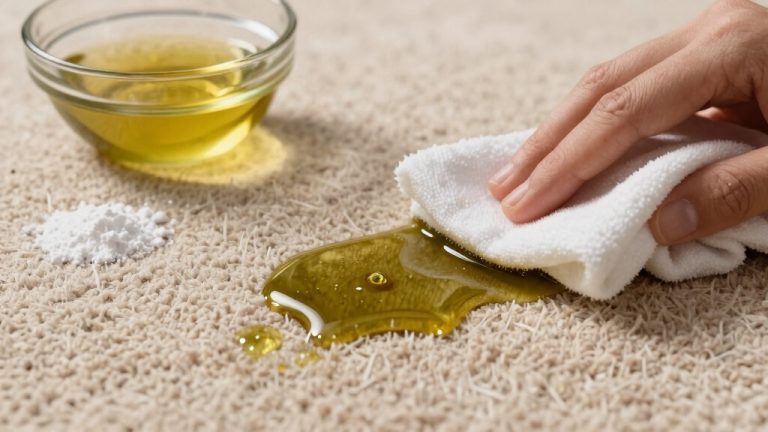
Now, if you’re dealing with stubborn stains like oil or food, the key is to act fast. Absorb what you can and gently blot the area. This way, you can minimize any permanent marks without making the situation worse. Using spot cleaning techniques with specific solutions can greatly improve stain removal effectiveness. It’s also essential to consider the surface compatibility of your cleaning agents to avoid damage.
Oh, and don’t forget to think about using specialized equipment and cleaning agents! They can really be a game changer when it comes to tackling those tough spills effectively.
Chemical Spill Cleanup
If you encounter a chemical spill on your carpet, acting swiftly and carefully is essential to prevent damage and health risks.
Start by blotting the spill with a dry, white cloth, working from the edges inward to avoid spreading. Use absorbent materials for large spills and wear gloves and eye protection. Contain the spill using absorbent materials like sand or cat litter to prevent spreading and minimize damage contain the spill. It is important to avoid oversaturating the carpet to reduce the risk of mold growth after cleaning.
- Isolate the area to prevent exposure and contain the spill with absorbent pads or spill kits.
- Consult the chemical’s safety data sheet (SDS) for specific handling and neutralization instructions.
- Avoid scrubbing; instead, gently clean with mild soap and warm water after blotting, pretesting first. After cleaning, ensure thorough drying to prevent moisture-related issues.
- For hazardous or stubborn spills, seek professional cleaning to properly neutralize chemicals and preserve carpet integrity.
Always prioritize safety and proper disposal to protect yourself and your home.
Stubborn Stain Removal
Chemical spills demand careful handling due to their potential hazards, but everyday stubborn stains like blood, pet accidents, grease, and ink require different, targeted techniques to restore your carpet effectively. For blood, blot immediately with cold water and mild detergent or a baking soda-vinegar paste; avoid rubbing and consider hydrogen peroxide cautiously. Prompt action is essential to minimize damage and ensure the best chance for stain removal.
Pet accidents need solid waste removal, enzymatic cleaners, and thorough rinsing to prevent odors. Grease responds best to absorbent powders and solvent-based cleaners applied carefully without soaking. Ink demands fast blotting and careful use of acetone, followed by rinsing. Always test solvents on hidden areas first to avoid damage.
When to Seek Professional Carpet Care?
Although you might be tempted to tackle carpet stains and odors on your own, recognizing the signs that require professional intervention guarantees the longevity and cleanliness of your carpet.
You should call in experts when:
- Stains resist all home cleaning attempts, especially dye-based or pet urine spills.
- Lingering odors persist despite thorough vacuuming and spot treatments.
- High-traffic areas show dirt buildup and flattened fibers that disrupt texture.
- You detect mold, mildew, or water damage requiring specialized extraction and drying.
Professionals offer advanced equipment and targeted solutions, preserving fibers and improving indoor air quality. Regular professional cleaning also helps prevent the buildup of dirt and allergens that can cause premature wear and health issues. They also use safe dry cleaning solvents that effectively remove tough stains and odors without damaging fabric.
Regular professional cleaning, typically every 12 to 18 months or more frequently in busy zones, prevents irreversible damage and maintains hygiene.
Knowing when to seek expert care balances your budget, lifestyle, and ensures your carpet remains both beautiful and safe.
Frequently Asked Questions
Can I Prevent Carpet Stains With a Protective Spray?
Yes, you can reduce carpet stains by using a protective spray, but don’t expect complete stain-proofing.
These sprays form a barrier that repels liquids, making spills bead up and easier to blot before they soak in.
For best results, apply the spray after professional cleaning and reapply regularly.
Keep in mind, protection wears off over time, especially in high-traffic areas, so timely spill cleanup remains essential despite spray use.
How Often Should I Deep Clean My Carpets Professionally?
You should deep clean your carpets professionally every 12 to 18 months if you have average foot traffic.
If your home is high-traffic, has pets, kids, or allergy sufferers, clean every 4 to 6 months.
For natural fiber carpets like wool, aim for every 6 to 12 months.
Regular professional cleaning removes embedded dirt, maintains carpet integrity, and extends lifespan.
Are Steam Cleaners Safe for All Carpet Types?
Steam cleaners aren’t safe for all carpets. You can use them on synthetics like nylon and polyester, which handle steam well and dry quickly.
Wool and silk need cautious, low-moisture steam cleaning to avoid damage. Avoid steam on natural fibers like sisal; they’re moisture-sensitive.
Berber carpets require careful, low-moisture steam too. Always test a hidden spot first, use proper detergents, and control moisture to protect your carpet’s fibers and colors.
What Carpet Fibers Resist Stains Best?
You’ll find that Triexta fibers resist stains best, thanks to their inherent resistance to both water- and oil-based stains without extra treatments.
Polyester comes next, naturally repelling water and resisting stains due to its hydrophobic and solution-dyed properties.
Treated nylon also offers excellent stain resistance but needs protective coatings.
Wool and untreated nylon are less effective; you’ll want to avoid them if stain resistance is your top priority.
How Do Pet Stains Differ in Cleaning Approach?
Pet stains demand more than just a quick wipe. They’re a stubborn puzzle. You’ll need enzyme-based cleaners to break down proteins and uric acid crystals that ordinary soaps can’t touch.
Blot, don’t rub, to avoid pushing stains deeper.
Generously apply cleaner and let it sit 10–15 minutes for enzymes to work.
For tough stains, repeat treatments.
Take Quick Action: Save Your Carpet from Permanent Stains
Cleaning a carpet spill might feel intimidating, but with quick action and the right tools, you can restore your carpet’s beauty effortlessly. Remember, every drop you tackle immediately saves you hours of stress later.
Like a skilled artist, you hold the power to erase the stain’s story before it unfolds. Trust your knowledge, stay calm, and your carpet will thank you with lasting freshness and charm.