
Best Way to Clean Concrete Floors: Step-by-Step Cleaning Guide
To clean concrete floors effectively, first identify if your floor is unfinished, sealed, or polished, as each needs specific care.
Sweep or vacuum debris thoroughly. Then mop with a pH-neutral cleaner using microfiber pads to protect sealants.
Avoid harsh acids, bleach, and abrasive tools to keep surfaces intact. For tough stains, pre-treat gently and rinse well.
Proper sealing afterward preserves durability. Following these steps guarantees your floor stays clean and lasts longer, with more detailed techniques to optimize care.
Key Takeaways
- Identify your concrete floor type (unfinished, sealed, or polished) to choose appropriate cleaning methods and protect the finish.
- Sweep or vacuum daily to remove dust, grit, and debris, preventing surface scratches and buildup.
- Use pH-neutral, water-based cleaners for sealed or polished concrete to avoid damage and preserve sealants.
- Mop with microfiber pads using minimal water, especially on porous floors, to prevent pooling and maintain floor integrity.
- Pre-treat stains with a baking soda paste, scrub gently, rinse thoroughly, and apply sealers or wax for long-term protection.
Identify Your Concrete Floor Type Before Cleaning
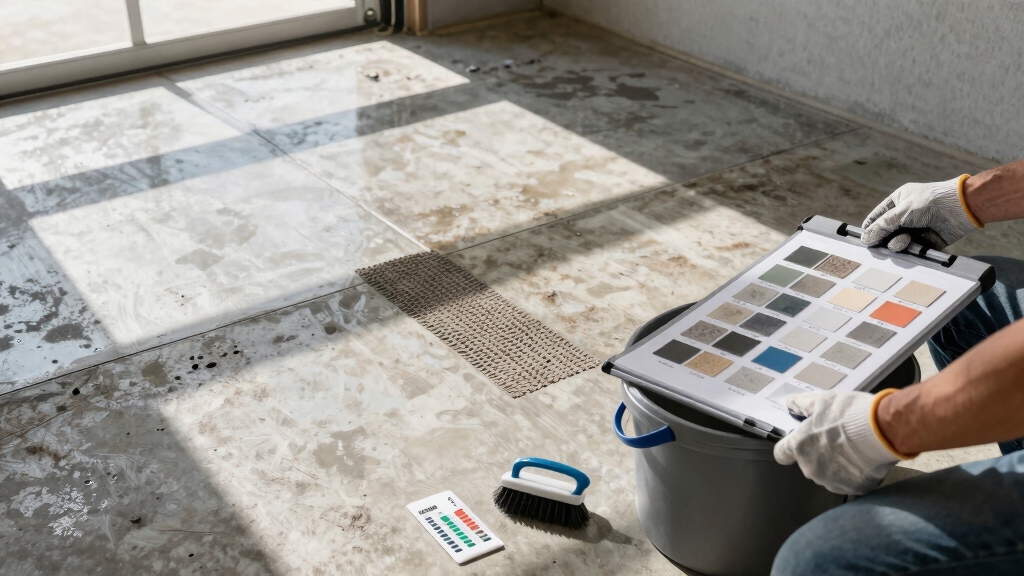
Before you begin cleaning, you need to identify your concrete floor type because each kind requires a specific method and cleaner to avoid damage.
Identifying your concrete floor type is essential before cleaning to choose the right method and avoid damage.
Unfinished concrete can handle stronger scrubbing and deeper cleaning since it lacks a protective layer.
Sealed concrete, however, demands pH-neutral products to protect the sealant from breakdown.
Polished concrete needs gentle pads and carefully controlled solutions to maintain its finish without scratching.
Avoid bleach on colored, stamped, or polished concrete, as it can cause discoloration and surface damage.
If your floor is indoors, it may have a water-based sealer that helps resist stains and moisture.
Choosing a cleaner with surface compatibility ensures powerful results without harming your concrete flooring.
Choose Cleaners for Sealed and Polished Concrete
You’ll typically want to select pH-neutral cleaners specifically formulated for sealed and polished concrete to protect their surfaces and preserve the finish.
Avoid harsh chemicals like bleach, ammonia, or acidic cleaners, which can damage sealants or discolor polished surfaces. Use non-aggressive cleaning pads and moderate solution amounts to maintain the floor’s integrity.
| Cleaner Type | pH Level | Suitable For |
|---|---|---|
| pH-Neutral Cleaner | 6-8 | Sealed & polished concrete |
| Water-Based Cleaner | Neutral | Indoor sealed floors |
| Non-Abrasive Pads | N/A | Polished surfaces |
| No-Rinse Cleaner | Neutral | Routine maintenance |
| Avoid Bleach/Acids | <7 or >8 | All sealed and polished |
Choosing the right cleaner prevents premature wear and keeps floors looking their best. Cleaners that include hardening agents and gloss enhancers help protect surfaces from daily wear and maintain long-lasting shine.
Remove Dust and Loose Debris From Concrete Floors
Start by sweeping or vacuuming your concrete floors thoroughly to remove dust and loose debris. This dry removal step is essential to prevent scratching during wet cleaning.
Begin by thoroughly sweeping or vacuuming to eliminate dust and debris, preventing scratches during wet cleaning.
Use a broom or a vacuum with a hard floor setting to capture grit, sand, and fine dust. For large areas, consider dust-controlled sweepers or industrial vacuums to reduce airborne particles and limit contaminant spread.
Remove furniture and obstacles before cleaning to access every corner effectively. Focus on loose debris first; embedded dirt requires scrubbing later.
If you have sealed or polished concrete, avoid abrasive tools that might damage the surface. Taking the time to clear dust and debris upfront guarantees your subsequent cleaning steps work more efficiently and prolong the life of your concrete floor’s finish.
For effective debris removal in tight or compact spaces, using a small wet and dry vacuum can provide powerful suction and versatility without sacrificing portability.
Best Practices for Routine Wet Cleaning of Concrete Floors
Routine wet cleaning usually keeps concrete floors looking their best and extends their lifespan. Start by mopping in manageable sections to ensure even coverage and prevent cleaning solution from drying before you remove it.
Use clean water and wring your mop thoroughly to avoid saturating porous concrete. Microfiber pads often outperform sponge mops, providing better cleaning with less water.
For sealed or polished concrete, choose pH-neutral or no-rinse cleaners to protect finishes and sealants. After mopping, allow the floor to air dry completely or wipe it dry before foot traffic resumes.
Using materials that avoid chemical leaching, such as borosilicate glass or stainless steel, can help maintain a safer and healthier environment during cleaning routines.
Pick the Right Scrubbing Tools for Your Concrete Floor
When choosing scrubbing tools for your concrete floor, consider the floor’s finish and the level of embedded dirt. Unfinished concrete can handle stiff brushes and aggressive scrubbing.
Sealed or polished floors need gentler pads to avoid damage. For heavily soiled areas, mechanical scrubbers or nylon-bristle brushes work best.
Avoid abrasive tools on sealed or colored surfaces to prevent wear or discoloration.
Focus on these tool choices:
- Stiff nylon brushes for unfinished concrete
- Soft microfiber pads for polished floors
- Mechanical scrubbers for large, dirty industrial spaces
- Avoid bleach or acidic cleaners on colored or sealed surfaces
Picking the right tools guarantees effective cleaning without compromising your floor’s integrity or appearance. Additionally, maintaining a regular cleaning routine with proper tools helps prevent buildup and preserves the floor’s long-term performance.
How to Use Pressure Washers Safely?
Before you dive into using a pressure washer, it’s super important to know the right pressure settings for your specific type of concrete. You definitely don’t want to end up causing any surface damage!
And hey, don’t forget to prep the area first. Give it a good sweep or vacuum to get rid of any loose debris. This little step can really help prevent those annoying scratches.
Using a pressure washer with an optimal PSI and GPM balance ensures effective cleaning without damaging the concrete surface.
Proper Pressure Settings
Frequently, pressure washers provide an efficient way to deep clean concrete floors, but using the correct pressure settings is essential to avoid surface damage.
You want to adjust pressure based on floor type: unfinished concrete can handle higher PSI, while sealed or polished surfaces require gentler settings.
Start at a lower pressure and increase gradually, watching for surface effects.
Keep these points in mind:
Use 1,500–3,000 PSI for heavy grime on durable concrete.
For sealed or polished floors, stay below 1,500 PSI to protect the finish.
Maintain a consistent spray distance to avoid etching or chipping.
Avoid narrow nozzles that concentrate pressure too intensely.
Using high-pressure steam cleaning can also complement pressure washing to remove stubborn grime without damaging the surface.
Surface Preparation Steps
Adjusting pressure settings is just one part of preparing your concrete floor for cleaning with a pressure washer.
First, clear the area by removing furniture and loose items to avoid damage and guarantee full access.
Next, sweep or vacuum thoroughly to eliminate dust and grit that could scratch the surface during washing.
Identify your floor type: unfinished, sealed, or polished concrete. This helps choose appropriate cleaners and avoids harsh chemicals that can damage finishes.
Before using the pressure washer, test a small, inconspicuous spot to confirm the settings won’t harm the concrete.
Always wear protective gear and keep the nozzle at a consistent distance to prevent etching.
Finally, plan your rinsing to avoid water pooling, especially on porous concrete, to maintain floor integrity.
Avoid using acidic cleaners like vinegar or CLR on concrete frequently to prevent surface erosion.
How to Treat and Remove Common Concrete Stains?
Tackle common concrete stains promptly by pre-treating them before general cleaning.
Start by dry-removing loose debris to avoid embedding dirt during scrubbing. For stubborn stains like oil or grease, apply a paste made from baking soda, warm water, and dish soap.
Let it sit for 20–30 minutes, then scrub with a stiff nylon brush. Avoid acidic cleaners like vinegar on sealed or polished concrete to prevent damage.
Key stain treatment tips include:
Use pH-neutral cleaners for sealed floors to protect the finish.
Scrub gently on polished concrete with non-aggressive pads.
Rinse thoroughly to remove residue and prevent staining.
Repeat treatment for deeply embedded grime if necessary.
This method guarantees effective stain removal without compromising your concrete floor’s integrity. For deep cleaning of masonry surfaces, consider using acid-free concentrates that preserve material integrity while removing stains effectively.
Protect Your Concrete Floor With Sealers and Waxes
To keep your concrete floor looking its best and extend its lifespan, apply a quality sealer or wax after cleaning. Sealers protect your floor by resisting water, dirt, and stains while enhancing color and sheen.
Applying a quality sealer or wax after cleaning preserves and enhances your concrete floor’s appearance and durability.
For indoor floors, opt for water-based sealers; they’re effective and safe for your finish. Apply sealers evenly, following the manufacturer’s instructions. Allow adequate drying time before foot traffic resumes.
Wax can add an extra protective layer on sealed concrete, guarding against minor wear and stubborn stains. Avoid cleaners with ammonia, bleach, or acids, as they can damage sealants.
Regularly sweeping and scrubbing will reduce abrasive debris that wears down the surface. By consistently sealing and waxing, you maintain both the appearance and durability of your concrete floor. Using pH-neutral cleaners helps preserve sealers and prevents surface damage during routine maintenance.
Maintain Your Concrete Floor Long-Term
Consistently maintaining your concrete floor guarantees it stays durable and visually appealing over time. To prolong its lifespan, you need to adopt a regular care routine tailored to your floor type and finish. Focus on preventing damage and managing dirt buildup efficiently.
Keep these key practices in mind:
Sweep or vacuum daily to remove loose grit and prevent scratches.
Use pH-neutral cleaners on sealed concrete to protect the sealant.
Mop with microfiber pads and avoid excess water on porous surfaces.
Reapply water-based sealers or floor wax periodically for added protection.
Frequently Asked Questions
Can Concrete Floors Be Cleaned With Steam Cleaners?
Yes, you can clean concrete floors with steam cleaners, but you should be cautious.
Steam works well on unfinished or sealed concrete to loosen dirt without harsh chemicals.
However, avoid using steam on polished or delicate sealed concrete, as excess moisture and heat might damage the finish or sealant.
Always test a small area first, control water use to prevent saturation, and follow up with thorough drying to protect your floor.
How Often Should Concrete Floors Be Resealed?
Think of resealing your concrete floors like revitalizing a coat of paint on a well-loved fence.
You should reseal every 2 to 3 years, but high-traffic areas might need it more often.
Keep an eye out for dull spots, stains, or water absorption as signs it’s time.
Regular cleaning helps extend sealant life, but don’t wait too long.
Resealing protects your floor’s durability and appearance, saving you from costly repairs down the road.
Are Homemade Cleaners Safe for All Concrete Finishes?
Homemade cleaners aren’t safe for all concrete finishes. You should avoid acidic or abrasive ingredients on sealed, polished, or colored concrete because they can damage the surface or cause discoloration.
For unfinished concrete, stronger DIY solutions like baking soda paste work better. Always test a small area first. If your floor is sealed or polished, stick to pH-neutral, gentle cleaners to protect the finish and avoid costly damage.
What Is the Best Way to Remove Paint From Concrete?
Want to remove paint from concrete without damaging it? Start by scraping off excess paint with a putty knife or wire brush.
Then, apply a paint stripper formulated for concrete, letting it sit as directed.
Scrub the area with a stiff nylon brush, rinse thoroughly with water, and repeat if necessary.
Always test the stripper on a small spot first to avoid discoloration, especially on sealed or polished surfaces.
Can Concrete Floor Cleaning Damage Underfloor Heating Systems?
Yes, concrete floor cleaning can damage underfloor heating systems if you use excessive water or harsh chemicals.
You need to avoid over-saturating the concrete, as moisture might seep through and harm heating elements below.
Also, steer clear of aggressive scrubbing and acidic cleaners that could compromise the floor’s sealant, affecting the heating system’s efficiency.
Always use controlled water amounts and gentle, pH-neutral products to protect both your floor and heating.
Concrete Floor Cleaning Tips for Long-Lasting Durability and Shine
You’ve learned to identify your concrete floor type, choose the right cleaners, and remove debris efficiently.
You know when to scrub, pressure wash, and tackle stubborn stains.
You’ve seen how sealers and waxes protect and how routine care maintains long-term durability.
By following these steps, you not only clean but preserve your concrete’s strength and beauty.
So, grab your tools, get started, and enjoy a floor that lasts and shines.