How to Clean Granite Steps: Best Cleaning Methods
Start by sweeping your granite steps to remove dirt and weeds, working from top to bottom on a dry surface.
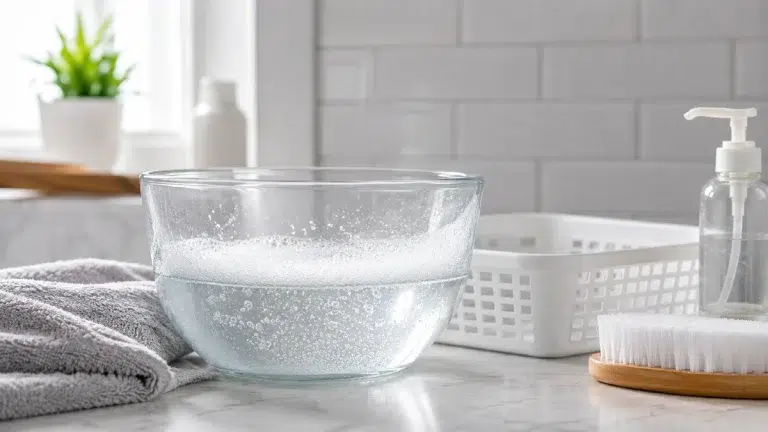
Use a pH-neutral cleaner or mild soap diluted in water, applying just enough liquid to dampen the stone.
Gently scrub with soft brushes or cloths, then rinse thoroughly and dry completely to avoid water spots.
For stains, use appropriate poultices or stone-safe rust removers.
Following these steps guarantees lasting protection and shine, with more tips available to keep your granite flawless.
Key Takeaways
- Sweep or blow off loose dirt and debris from granite steps before cleaning to avoid scratching the surface.
- Use pH-neutral or stone-safe cleaners, avoiding acidic or abrasive products that can damage granite.
- Gently scrub with soft brushes or sponges using diluted mild dish soap or granite cleaner in circular motions.
- Rinse thoroughly with clean water, working top to bottom, and dry completely with microfiber cloths to prevent water spots.
- Apply a granite sealer after cleaning and reseal every 1–3 years to protect steps from stains and wear.
Prepare Granite Steps for Cleaning

Before you begin washing your granite steps, start by thoroughly preparing the surface to guarantee effective cleaning.
First, sweep or use a blower to remove loose dirt, leaves, and debris. This ensures you don’t trap dust when water is added.
Remove any weeds growing in joints or around the edges to prevent interference during cleaning.
Always work on a dry surface to avoid turning dirt into abrasive mud that can damage the stone.
Begin cleaning from the top step and progress downward so runoff doesn’t soil cleaned areas.
Divide the steps into small sections to maintain control and prevent cleaner from drying prematurely on the granite.
This preparation sets the foundation for a safe and efficient cleaning process that preserves your granite’s integrity.
Using a pH-neutral cleaner during preparation helps protect the stone’s sealant and prevents etching for long-lasting durability.
Choose Safe Cleaners for Granite Steps
When selecting a cleaner for your granite steps, choose products that are pH-neutral or specifically formulated for stone to avoid damaging the surface.
Avoid acidic or abrasive cleaners, which can etch or dull the granite. Mild dish soap diluted in warm water also works well for routine cleaning.
Use only enough liquid to dampen the surface to prevent residue buildup.
For deeper stains, consider using a non-acidic poultice designed to draw out embedded marks without harming the stone finish.
| Cleaner Type | pH Level | Use Case |
|---|---|---|
| pH-neutral stone | ~7 (neutral) | Safe for regular washing |
| Mild dish soap | ~7 (neutral) | General everyday cleaning |
| Acidic cleaners | <7 (acidic) | Avoid – damages granite |
Choose safe cleaners to maintain your granite’s natural beauty and durability.
Use the Right Tools and Techniques
Choose soft, non-abrasive tools like nylon brushes, soft sponges, or microfiber cloths to clean your granite steps effectively without causing damage.
Use gentle, non-abrasive tools such as nylon brushes or microfiber cloths to safely clean granite steps.
Begin by sweeping or blowing off loose debris to prevent scratching during cleaning. Work in small sections from top to bottom to avoid dirty water running over cleaned areas.
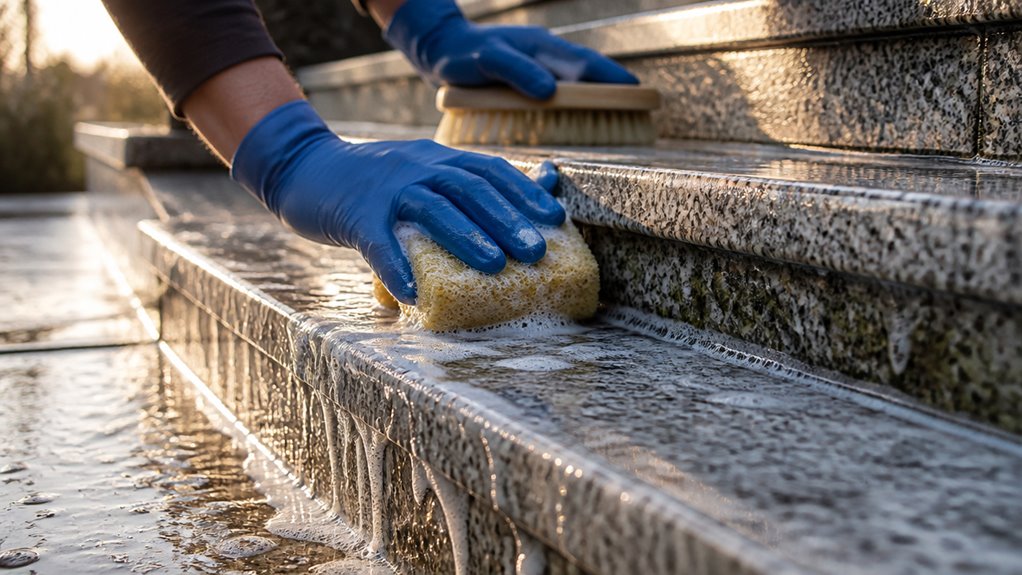
Apply a pH-neutral cleaner or mild dish soap diluted in warm water, using just enough liquid to dampen the surface. Gently scrub with circular motions, focusing on corners, risers, and grout lines where dirt gathers.
Avoid aggressive scrubbing or abrasive tools like wire brushes that can scratch the stone. After cleaning, rinse thoroughly with water to remove residues.
Then dry completely with microfiber cloths to prevent water spots. This method preserves your granite’s integrity and appearance efficiently.
To maintain protection and reduce moisture absorption, it is important to apply a proper granite sealing regularly.
Remove Stains From Granite Steps
Tackle stains on your granite steps by identifying their type and selecting the appropriate treatment. Different stains require specific approaches to effectively lift them without damaging the surface.
Here’s how to address common granite stains:
- Oil-Based Stains: Mix baking soda with water to form a paste. Apply it to the stain, cover with plastic wrap, and let it sit for about 24 hours before gently removing.
- Organic Stains (coffee, tea): Use a baking soda and hydrogen peroxide poultice. Cover and allow the mixture to penetrate for a day.
- Rust or Metal Stains: These require specialized rust removers designed for stone. Test on a small area first.
To prevent future rust stains on your granite, regularly seal the surface with a stone-specific sealer every 6 to 12 months and clean spills promptly.
Rinse and Dry to Remove Residue
Always rinse granite steps thoroughly with clean water or a gentle hose spray immediately after scrubbing to remove all traces of soap and cleaning solution. Soap residue attracts dirt and leaves a dull film if not fully washed away.
Work from the top step downward to prevent dirty water from running over clean surfaces. Avoid oversaturating the stone; use just enough water to flush away cleaner and debris.
After rinsing, check carefully for any remaining suds or streaks and repeat rinsing if necessary. Once rinsed, dry the steps completely with microfiber cloths or absorbent towels to prevent water spots and mineral deposits.
For large stair runs, use a squeegee to remove excess water before drying. Make certain no standing water remains to maintain your granite’s pristine appearance.
When choosing cleaning products, avoid those with abrasive ingredients or unsuitable pH levels that can damage natural stone surfaces like granite, ensuring the chemical compatibility of your cleaner.
Maintain and Protect Your Granite Steps
Once your granite steps are thoroughly rinsed and dried, maintaining their appearance requires regular care and protection.
Proper care and protection are essential to keep your granite steps looking their best over time.
To preserve their beauty and durability, you need to adopt consistent practices:
- Seal the surface: Apply a high-quality granite sealer after cleaning to protect against stains and water penetration. Reseal every 1 to 3 years depending on foot traffic and granite porosity.
- Routine maintenance: Sweep or dust frequently. Clean spills immediately and wash lightly with a pH-neutral cleaner to prevent dirt buildup without damaging the stone.
- Avoid harsh chemicals: Stay away from acidic cleaners, bleach, and abrasive tools. These can etch or erode the granite’s surface and strip sealants.
Proper sealing creates a protective barrier that preserves the granite’s integrity and prevents water absorption.
Following these steps will keep your granite steps looking pristine and extend their lifespan effectively.
Frequently Asked Questions
Can I Use Vinegar or Lemon Juice on Granite Steps?
You shouldn’t use vinegar or lemon juice on granite steps. Both are acidic and can etch or dull the stone’s surface over time.
Instead, stick to pH-neutral cleaners or mild dish soap mixed with warm water to protect your granite. Using acidic substances risks damaging the natural finish and making your steps more vulnerable to stains and wear.
Always choose gentle, granite-safe cleaning methods for the best care.
How Do I Prevent Moss Growth on Granite Steps?
To keep moss from creeping like a silent shadow on your granite steps, you need consistent care.
Sweep regularly to remove debris and moisture, since dampness encourages moss.
Secure good drainage and sunlight exposure, trimming nearby plants that block light.
Apply a granite-safe moss inhibitor or a diluted mixture of water and mild dish soap to disrupt growth.
Avoid harsh chemicals as they can damage your stone’s surface and sealant.
Is It Safe to Use a Pressure Washer on Granite Steps?
You can use a pressure washer on granite steps, but cautiously. Some experts allow it with a gentle, back-and-forth motion to avoid damage, while others warn it may erode the stone or strip sealant.
If you choose to pressure wash, keep the pressure low and avoid concentrated streams. Always test a small area first and follow up with resealing to protect the granite’s surface and prevent future deterioration.
What Is the Best Way to Fix Chips or Cracks in Granite Steps?
Carefully correct chips or cracks by cleaning the damaged area thoroughly first.
Then, choose a color-matched epoxy or resin filler designed for granite repair.
Apply the adhesive with precision, pressing it into the crevice and smoothing the surface.
Let it cure fully before gently sanding any excess.
Finally, polish the patch to blend seamlessly with the original stone.
If the damage is severe, consider consulting a professional for lasting restoration.
How Long Should I Wait to Walk on Steps After Sealing?
You should wait at least 24 to 48 hours before walking on granite steps after sealing. This allows the sealant to fully cure and bond with the stone, ensuring maximum protection and durability.
Avoid heavy traffic or placing objects on the surface during this time. Check the manufacturer’s instructions for specific cure times, as they can vary. Proper curing prevents premature wear and helps maintain the seal’s effectiveness longer.
Keep Granite Steps Clean, Strong, and Beautiful
By following these steps, you’ll keep your granite steps shining like a polished gem.
Remember, treating your granite with gentle cleaners and the right tools protects its natural beauty and durability.
Regular maintenance is your key to preventing stains and damage, turning your steps into a lasting masterpiece.
With consistent care, your granite will stay strong and stunning, welcoming everyone with timeless elegance.