How to Get Oil Pastel Out of Carpet: Simple Steps That Work
Start by gently lifting loose oil pastel particles with tweezers or a dull spoon to avoid embedding pigment deeper.
Apply ice in a sealed bag for 10–15 minutes to harden the residue, making it easier to scrape off with a blunt tool using short upward strokes.
Vacuum afterward to remove debris. Dab remaining stains lightly with a dry-cleaning solvent, avoiding saturation.
If stubborn, repeat freeze-and-scrape cycles or test mild solvents carefully. Further guidance covers advanced stain removal strategies.
Key Takeaways
- Gently lift loose oil pastel particles with tweezers or a dull spoon without rubbing to avoid embedding pigment deeper.
- Harden waxy residue by applying ice for 10–15 minutes to make it brittle and easier to remove.
- Scrape hardened pastel with a dull knife or plastic scraper using upward strokes, then vacuum loose fragments.
- Dab remaining stains with a small amount of dry-cleaning solvent, avoiding fiber saturation and scrubbing.
- Repeat freezing and scraping cycles or seek professional cleaning for persistent or deep oil pastel stains.
Remove Loose Oil Pastel From Carpet Surface Safely

Before you begin any cleaning, carefully lift loose oil pastel particles from the carpet surface using tweezers or a dull spoon. This prevents embedding the pigment deeper into the fibers.
Work methodically, picking up as much material as possible without rubbing or pressing. This risks grinding pigment into the pile.
Wipe your tool between passes to avoid transferring pigment back onto clean areas. After removing larger flakes, vacuum the surface to capture remaining loose particles.
This controlled approach minimizes spreading and sets the stage for effective subsequent treatments. Avoid any agitation that could embed pastel deeper, as this complicates removal and may damage fibers.
Maintaining precision during this initial step is vital for preserving carpet integrity and optimizing the success of later stain-removal processes. Additionally, using absorbent powders like cornstarch can help to lift residual oil from the fibers before deeper cleaning.
Harden Pastel Residue With Ice for Easier Removal
Once you’ve carefully lifted and vacuumed the loose oil pastel particles, you’ll want to firm up any remaining waxy residue to make removal more manageable.
Apply a sealed bag of ice directly onto the stained area, ensuring full contact with the carpet fibers. Maintain the ice in place for 10 to 15 minutes to thoroughly harden the waxy pastel residue.
This freezing process makes the residue brittle and less prone to smearing, facilitating subsequent removal steps. Importantly, perform this chilling before using any liquid cleaners to prevent embedding the stain further.
Using proper carpet cleaning preparation techniques like this can significantly improve stain removal effectiveness.
Scrape Off Hardened Oil Pastel Without Spreading Stain
Although the oil pastel residue has hardened, you’ll need to carefully scrape it off using a dull knife, plastic scraper, or blunt spoon to prevent further spreading. Use gentle, controlled motions to lift the hardened material without grinding it deeper into the carpet fibers.
Follow these steps for effective removal:
- Work in short, upward strokes to break and lift the residue without pushing it sideways, which can spread the stain.
- Remove only the surface layer first, then vacuum the loose fragments to avoid embedding pigment further.
- Stop scraping as soon as a thin colored film remains to prevent damage to carpet fibers and prepare for subsequent stain treatment.
This precise scraping method minimizes spreading and preserves carpet integrity before solvent application. For best results, avoid rubbing to prevent pushing the stain deeper into the carpet fibers.
Use Solvents to Treat Remaining Oil Pastel Stains
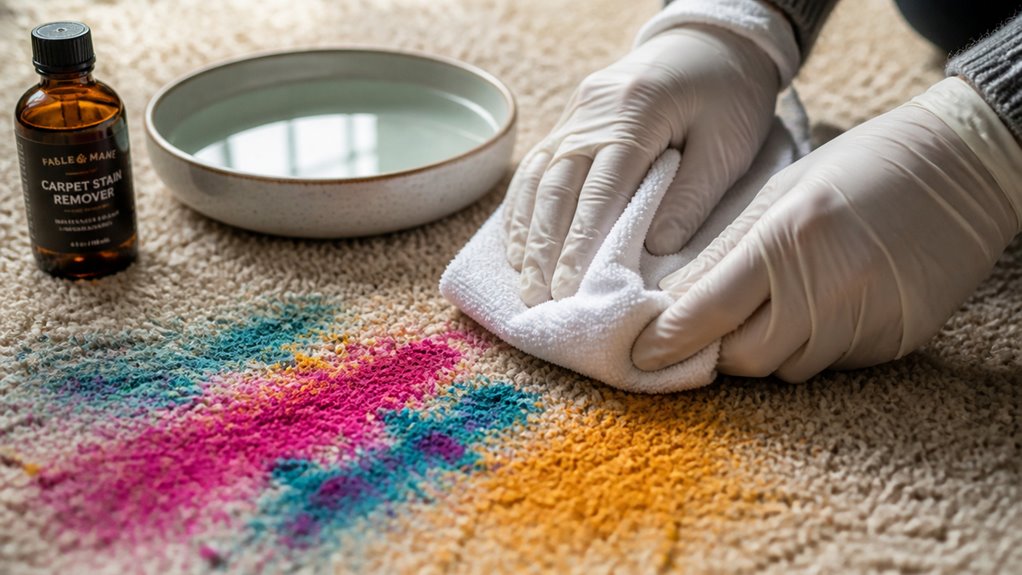
Apply a small amount of commercial dry-cleaning solvent directly to the remaining oil pastel stain. Carefully dab rather than scrub to transfer pigment onto an absorbent cloth without damaging the carpet backing.
Use minimal solvent to avoid fiber saturation and potential discoloration. For persistent dye residues, a diluted rubbing-alcohol solution can be used cautiously. After solvent application, blot with a clean cloth to lift loosened pigment. Ensuring proper ventilation during and after application helps speed drying and reduces inhalation risks.
| Solvent Type | Application Tip |
|---|---|
| Dry-cleaning solvent | Dab gently, avoid scrubbing |
| Rubbing alcohol solution | Use diluted, test first |
| Grease-cutting spot cleaner | Apply sparingly if recommended |
| Absorbent cloth | Change frequently for efficiency |
This method targets residual oil pastel while preserving carpet integrity.
Advanced Steps for Stubborn Oil Pastel Stains
When standard solvent treatments and surface scraping don’t fully remove oil pastel stains, you’ll need to escalate your approach with more intensive cleaning methods. Follow these steps carefully:
- Freeze and Scrape: Apply ice to harden the waxy residue for 10-15 minutes. Use a dull scraper to lift brittle fragments, working upward to avoid spreading. Vacuum debris after each pass.
- Spot Treat: Dab the remaining stain with a dry-cleaning solvent sparingly. Avoid scrubbing to prevent fiber damage. For residual dye, use diluted rubbing alcohol or a grease-cutting cleaner.
- Machine Cleaning and Professional Help: Test carpet-cleaning machines on a hidden area before use. Avoid steam or heat unless specified for wax removal. Persistent or deep stains may require multiple treatments or professional cleaning to fully restore the carpet.
In all cases, it is important to check carpet fiber type before proceeding with any treatment to avoid damage or discoloration.
Frequently Asked Questions
Can Oil Pastel Stains Damage Carpet Fibers Permanently?
Oil pastel stains can act like stubborn anchors, embedding themselves deep within your carpet fibers.
While the wax and pigment don’t usually cause outright fiber damage, they can cause discoloration and stiffness if left untreated.
You’ll need precise, careful removal methods to avoid pushing the stain deeper or harming the pile.
If neglected, the pastel can permanently alter your carpet’s appearance, so prompt and professional treatment is essential to preserve fiber integrity.
Is It Safe to Use Household Cleaners Instead of Solvents?
You shouldn’t rely solely on household cleaners instead of solvents for oil pastel stains because they often lack the grease-cutting power necessary for effective removal.
Household cleaners might spread the stain or damage carpet backing if used improperly.
Instead, use commercial dry-cleaning solvents or diluted rubbing alcohol for targeted treatment. Always test any cleaner in an inconspicuous spot first.
Avoid scrubbing to prevent fiber damage or stain spread.
How Long Does It Take for Carpet to Fully Dry After Cleaning?
Think of your carpet as a sponge slowly releasing water into the air.
After cleaning, it typically takes 6 to 12 hours for your carpet to fully dry, depending on factors like humidity, airflow, and carpet thickness.
To speed drying, increase ventilation with fans or open windows.
Avoid walking on the area until it’s completely dry to prevent dirt or damage.
This ensures the cleaning process is effective and your carpet maintains its integrity.
Can Pets or Children Be Around During the Cleaning Process?
You shouldn’t allow pets or children near the carpet during cleaning. The solvents and cleaning agents used can be toxic or irritating if ingested or inhaled.
Additionally, wet carpet fibers may cause slips or skin irritation. Keep the area well-ventilated and restrict access until the carpet is fully dry and free of residue.
This precaution guarantees safety and prevents accidental exposure to chemicals or re-soiling the treated area.
Are There Specific Carpet Types More Prone to Oil Pastel Stains?
Yes, carpets with natural fibers like wool or silk are more prone to oil pastel stains because their open texture absorbs oils quickly.
Synthetic fibers like nylon or polyester resist oil better but aren’t immune.
You’ll find that plush or high-pile carpets trap pastel deeper, complicating removal.
When dealing with delicate or absorbent carpet types, you should act swiftly and carefully to prevent the pastel from embedding itself and causing permanent discoloration.
Can Ice Alone Remove Oil Pastel from Carpet?
Now that you’ve tackled the oil pastel stain step-by-step, you might wonder if ice alone can fully remove it.
While freezing solidifies the pastel for easier scraping, it doesn’t eliminate residue embedded in carpet fibers.
Combining mechanical removal with appropriate solvents is essential for complete stain lift.
By following these precise, layered methods, you guarantee effective cleanup without damaging your carpet’s texture or color.
This confirms that a multi-step approach truly works best.