Why Upholstery Cleaning Is Important: Key Benefits Explained
You use your upholstery daily, but without regular deep cleaning, it traps dust mites, pet dander, bacteria, and odors that worsen indoor air quality.
These issues can trigger allergies or respiratory problems.
Professional cleaning removes these hidden contaminants and prevents bacterial growth.
It also extends your furniture’s lifespan while keeping fabrics fresh and vibrant.
By maintaining your upholstery properly, you protect both your health and investment.
Discover how targeted cleaning methods can transform your home environment and furniture care.
Key Takeaways
- Upholstery cleaning removes trapped allergens like dust mites, pet dander, and pollen, reducing respiratory irritation and allergy symptoms.
- Deep cleaning eliminates bacteria, odors, and organic residues, preventing health risks and unpleasant smells.
- Regular maintenance improves indoor air quality by minimizing airborne particles released from cushions and fabric.
- Professional cleaning preserves fabric integrity, extends furniture lifespan, and maintains a fresh, attractive appearance.
- Using HEPA vacuums, steam, and enzymatic cleaners ensures thorough sanitation without harsh chemicals, promoting a healthier home environment.
How Upholstery Traps Allergens and Affects Your Health?

Because upholstery fibers and padding easily trap dust mites, pet dander, pollen, and other allergens, your furniture can become a significant source of indoor airborne irritants.
Upholstery fibers and padding trap allergens, turning furniture into a key source of indoor airborne irritants.
These hidden particles settle deep within fabric and cushioning, creating a reservoir that continually releases allergens back into the air whenever you sit or move cushions.
Exposure to dust mites and pet dander can irritate your lungs and mucous membranes, aggravating asthma, eczema, and respiratory discomfort.
Bacteria and airborne contaminants also thrive in soft furnishings, intensifying health risks.
By understanding how upholstery harbors these microscopic threats, you can appreciate the urgency of addressing allergen buildup.
Taking this seriously helps protect your family’s respiratory health and supports a cleaner, safer indoor environment where allergens don’t silently compromise the air you breathe.
Prompt professional cleaning can effectively remove these pollutants and prevent long-term health issues by targeting deep contaminants in upholstery.
How Regular Cleaning Protects Upholstery and Extends Life?
Regularly cleaning your upholstery not only enhances its appearance but also plays a crucial role in preserving the fabric’s integrity and durability.
Dirt, dust, and grit embedded in fibers act like abrasives, gradually wearing down the material and weakening its structure.
By removing these contaminants consistently, you prevent deep buildup that becomes harder to eliminate over time, protecting the texture and color of your furniture.
Routine cleaning slows deterioration, extending the life of your investment and saving you from premature replacement costs.
Professional care, combined with regular maintenance, guarantees your upholstery remains resilient, fresh, and attractive for years.
Taking these steps preserves both the look and strength of your furniture, making your living space more comfortable and economically sustainable.
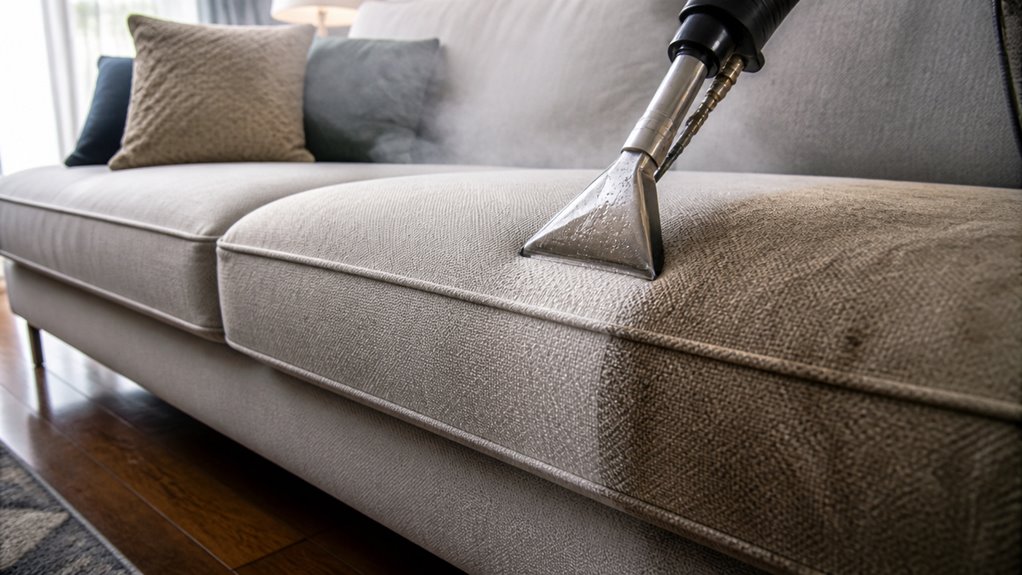
Using commercial upholstery cleaner machines with powerful extraction and specialized tools can significantly improve cleaning effectiveness and fabric longevity.
How Cleaning Upholstery Improves Indoor Air Quality?
Did you know that your upholstery can actually trap a bunch of allergens? Things like dust mites, pet dander, and pollen love to settle in those fibers. The problem is, they can easily get kicked up into the air we breathe.
That’s where regular professional cleaning comes in handy! Techniques like HEPA vacuuming and steam treatments do wonders for reducing those pesky airborne particles.
When you take the time to tackle these hidden contaminants, you’re not just cleaning up; you’re creating a healthier environment for everyone at home.
Ultimately, this means better respiratory health for you and your loved ones. So, it’s definitely worth considering!
Using devices with built-in HEPA filtration can effectively trap particles down to 0.3 microns, enhancing indoor air quality even further.
Allergen Reduction Benefits
When upholstery traps dust mites, pet dander, pollen, and other allergens within its fibers, these particles can easily become airborne again during everyday use. This degrades your indoor air quality.
Regular upholstery cleaning removes this buildup, reducing your exposure to irritants that can aggravate allergies, asthma, and respiratory issues. By eliminating these hidden allergens, you create a healthier environment that supports easier breathing and overall wellness.
Proper cleaning techniques, including the use of enzymatic cleaners, help ensure thorough removal of organic residues that can worsen allergen presence.
| Allergen Type | Common Sources | Health Impact |
|---|---|---|
| Dust Mites | Bedding, upholstery | Lung irritation, asthma |
| Pet Dander | Pets’ fur and skin | Allergic reactions |
| Pollen | Outdoor air, open windows | Nasal congestion, sneezing |
Investing in professional cleaning guarantees these allergens don’t compromise your indoor air quality or your family’s health.
Airborne Particle Control
Beyond reducing allergens, cleaning upholstery plays a significant role in controlling airborne particles that affect indoor air quality. Your upholstered furniture traps dust, pollen, pet dander, and other microscopic particles that would otherwise circulate freely in your living space.
As you sit or move cushions, these contaminants become airborne, irritating your respiratory system. By regularly cleaning upholstery, you minimize this release, directly improving the air you breathe.
Removing embedded dust and debris reduces the particle load in your home, preventing respiratory irritation and promoting a healthier environment. This proactive control of airborne particles enhances comfort and supports long-term wellness, especially for those with allergies or asthma.
Keeping upholstery clean is a powerful, often overlooked step toward fresher, safer indoor air quality. Using HEPA filtration vacuums during cleaning can further reduce allergens and improve the effectiveness of your efforts.
Professional Cleaning Methods
Although routine vacuuming can reduce surface dust, professional cleaning methods provide a deeper, more effective solution for improving indoor air quality through upholstery care.
When you choose expert cleaning, you remove allergens, bacteria, and dust mites embedded deep in fibers that regular cleaning misses.
This reduces airborne irritants and promotes a healthier environment.
Key professional techniques include:
HEPA vacuuming to capture fine particles and allergens.
Steam cleaning to eliminate bacteria and dust mites.
Hot water extraction for deep fabric cleansing.
Use of hypoallergenic cleaning agents to avoid chemical residues.
Targeted stain and odor removal to prevent lingering contaminants.
Using enzyme-based cleaners in professional upholstery care can effectively break down organic stains and odors, providing deeper sanitation beyond surface cleaning.
How Deep Upholstery Cleaning Removes Odors and Freshens Fabric?
If you want your upholstery to truly smell fresh and inviting, deep cleaning is essential. It targets the root causes of odors trapped within the fabric layers. Unlike surface cleaning, it removes odor-causing bacteria, pet dander, and spills embedded deep in fibers. This eliminates stale smells rather than masking them. This process revitalizes your furniture, improving both scent and fabric freshness. To maintain these results, regular vacuuming and prompt spill treatment are recommended to prevent dirt buildup and reduce the need for frequent deep cleaning with mild cleaning solutions.
| Odor Source | Deep Cleaning Benefit |
|---|---|
| Pet odors | Eliminates bacteria buildup |
| Food and drink spills | Removes trapped residues |
| Sweat and body oils | Cleans deep fabric layers |
| General dust and grime | Neutralizes lingering smells |
Best Cleaning Methods to Remove Upholstery Allergens and Bacteria
To keep your home healthy and improve your indoor air quality, it’s essential to use cleaning methods that really dig deep into upholstery. You want to target those pesky allergens and bacteria lurking in the fibers.
One of the most effective techniques is HEPA vacuuming. It’s great at capturing dust mites, pet dander, and other allergens that can affect your health. Then there’s steam cleaning, which not only cleans but also sanitizes, helping to eliminate harmful microbes. Steam cleaning offers chemical-free deep cleaning that refreshes furniture without harsh detergents.
Effective Allergen Removal
When you want to effectively remove allergens and bacteria from upholstery, choosing the right cleaning methods is essential to maintaining a healthy indoor environment.
Allergens like dust mites, pet dander, and pollen embed deeply in fabric fibers and padding. To truly reduce these irritants, you need proven techniques that reach beneath the surface, not just mask symptoms.
Here are five key strategies to prioritize:
- Use HEPA-filter vacuums to capture fine allergens without releasing them back into the air.
- Apply steam cleaning to penetrate and sanitize upholstery fibers.
- Schedule regular professional cleanings for thorough allergen removal.
- Opt for hypoallergenic cleaning solutions that minimize chemical residues.
- Maintain routine vacuuming and spot cleaning to prevent buildup.
Using enzyme-based cleaners with bio-enzymatic formulas can further enhance allergen and bacteria removal by breaking down organic residues at the source.
Following these methods guarantees your upholstery supports cleaner air and reduces allergy triggers effectively.
Bacteria Elimination Techniques
Although allergens demand significant attention, eliminating bacteria from upholstery requires equally rigorous cleaning methods to guarantee a truly healthy living space.
You’ll want to use steam cleaning, which penetrates deep into fabric fibers, killing bacteria and breaking down contaminants without harsh chemicals.
HEPA-filter vacuums excel at extracting dust, dander, and microbial particles trapped in padding and seams, reducing airborne irritants effectively.
For stubborn bacteria, professional-grade antimicrobial treatments can be applied to inhibit regrowth.
Regular maintenance every six months helps prevent bacterial buildup that can aggravate respiratory issues and cause odors.
By combining these techniques, you not only protect your family’s health but also extend your furniture’s lifespan.
Don’t underestimate the power of expert cleaning to create a cleaner, safer, and fresher home environment.
Using enzyme-based cleaners can further enhance the removal of organic stains and odors, contributing to a more thorough upholstery cleaning process.
Why Professional Upholstery Cleaning Beats DIY?
Since upholstery cleaning involves removing deeply embedded allergens, bacteria, and dirt without damaging delicate fabrics, professional services provide expertise and advanced equipment that DIY methods often lack.
When you hire pros, you benefit from:
Specialized tools like HEPA vacuums and steam cleaners that penetrate fibers deeply.
Tailored cleaning solutions matched to your fabric type, preventing damage.
Thorough stain and odor removal that DIY products can’t achieve.
Faster drying times that reduce mold and mildew risks.
Expert knowledge ensuring effective allergen and bacteria elimination without wear.
How Routine Upholstery Cleaning Reduces Germs and Allergens?
Professional cleaning delivers unmatched effectiveness in removing embedded dirt and allergens, but maintaining that cleanliness requires regular care.
When you routinely clean your upholstery, you actively reduce the buildup of dust mites, pet dander, pollen, and bacteria that settle deep within fabric fibers.
These hidden contaminants can aggravate respiratory issues and trigger allergies if left unchecked.
By regularly vacuuming with a HEPA filter and scheduling periodic steam cleanings, you curb the circulation of airborne irritants and microbes that thrive in soft furnishings.
This ongoing maintenance supports healthier indoor air quality and lowers your exposure to allergens and germs.
In doing so, you not only protect your family’s well-being but also create a safer, more sanitary living environment that actively combats respiratory discomfort and allergy flare-ups.
How Regular Upholstery Care Enhances Appearance and Comfort?
Regularly caring for your upholstery dramatically improves both its appearance and your comfort. When you stay consistent with cleaning and maintenance, you preserve the fabric’s texture, color, and overall freshness.
Consistent upholstery care enhances appearance and comfort by preserving fabric texture, color, and freshness.
This not only makes your furniture look inviting but also enhances your everyday experience by eliminating irritants and odors that can detract from comfort. Consider these key benefits:
Restores brightness and removes dullness caused by dust and grime.
Prevents stains from setting, keeping fabrics looking new.
Reduces trapped odors from pets, spills, and everyday use.
Minimizes allergens and bacteria that can cause discomfort.
Extends the life of your investment by protecting fibers from wear.
Frequently Asked Questions
How Often Should I Clean Upholstery in a Home Without Pets or Allergies?
You should clean your upholstery every 12 to 18 months if you don’t have pets or allergies. This frequency helps prevent dust, dirt, and bacteria buildup without overdoing it.
Regular maintenance keeps fabric fresh, preserves texture, and extends furniture life. If you notice stains or odors sooner, spot clean promptly.
For best results, schedule professional deep cleaning annually to maintain a healthy, attractive home environment effortlessly.
Can Upholstery Cleaning Damage Delicate Fabrics or Colors?
Yes, improper upholstery cleaning can damage delicate fabrics or colors, but you don’t have to worry if you take the right steps.
Always test a small, hidden area first and use gentle, fabric-specific cleaners.
Avoid harsh chemicals or excessive moisture that can cause fading, shrinking, or warping.
Hiring a professional who understands fabric types guarantees your upholstery stays vibrant and intact.
With care, cleaning actually preserves your investment rather than harms it.
What Is the Average Cost of Professional Upholstery Cleaning Services?
You can expect to pay between $100 and $300 for professional upholstery cleaning services, depending on your furniture’s size, fabric type, and the service complexity.
Some companies charge per piece, while others offer hourly rates, usually around $50 to $100 an hour.
Choosing a reputable cleaner guarantees they use appropriate methods that protect delicate fabrics and colors. This makes the investment worthwhile for maintaining your upholstery’s appearance and longevity.
Are There Eco-Friendly Upholstery Cleaning Products That Actually Work?
Absolutely, eco-friendly upholstery cleaning products can truly work wonders, like a gentle rain washing away dust without harming the earth.
You’ll find plant-based solutions and natural enzymes that break down dirt, allergens, and odors effectively.
Look for certifications like Green Seal or EPA Safer Choice; they guarantee safety and performance.
Using these products, you protect your family and furniture while keeping your indoor air fresh and your home healthier.
How Long Does Upholstery Take to Dry After a Deep Cleaning?
After a deep upholstery cleaning, expect your furniture to take anywhere from 4 to 12 hours to dry completely.
The exact time depends on fabric type, cleaning method, humidity, and airflow.
To speed drying, you can increase ventilation with fans or open windows.
Avoid using the furniture until it’s fully dry to prevent mildew and odor buildup.
Proper drying guarantees your upholstery stays fresh and extends its lifespan effectively.
The Bottom Line on Keeping Upholstery Clean and Healthy
You’ll protect your health, preserve your furniture, and improve your home’s air quality by cleaning your upholstery regularly.
You’ll remove allergens, eliminate odors, and reduce germs with deep, expert techniques.
You’ll boost comfort, enhance appearance, and extend the life of your fabrics with routine care.
Don’t settle for less; choose professional cleaning to achieve thorough, lasting results that DIY methods can’t match.
Your home and well-being deserve nothing less.