
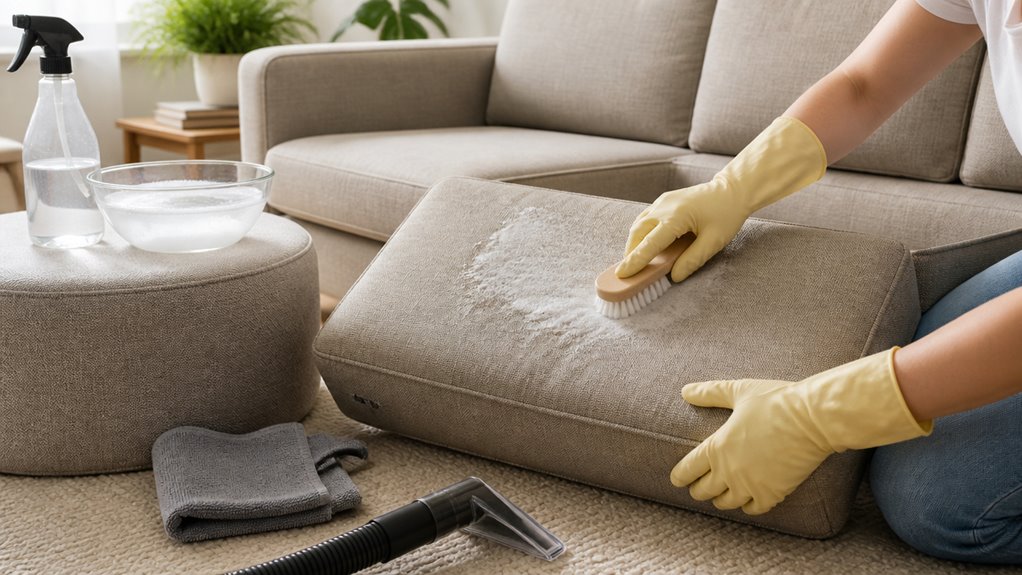
How to Clean a Sofa Without a Steam Cleaner: DIY Tips
To clean your sofa without a steam cleaner, first vacuum thoroughly to remove loose dirt. Check the care label for fabric-specific instructions.
Test mild solutions like diluted dish soap or a vinegar-water mix on a hidden spot. Gently blot stains with a microfiber cloth.
Use enzyme cleaners for tough organic stains and sprinkle baking soda to absorb odors without soaking the fabric. Let your sofa air-dry completely.
Finally, fluff cushions to restore shape. Follow these steps to keep your sofa fresh and well-maintained with ease.
Key Takeaways
- Vacuum the entire sofa thoroughly, including seams and cushions, to remove loose dirt and debris before cleaning.
- Test a mild cleaning solution like diluted dish soap on a hidden spot to check for fabric reaction.
- Gently clean fabric with a damp microfiber cloth using circular motions without soaking the material.
- Use a vinegar-water spray or baking soda paste for stains, letting it sit before gently blotting or wiping.
- Air-dry sofa completely with good airflow and avoid use until fully dry to prevent odors and fabric damage.
Prepare and Inspect Your Sofa Before Cleaning

Before you begin cleaning your sofa, make sure to thoroughly vacuum every part of it, including seams, cushions, arms, and underneath cushions. This removes loose dirt, hair, and crumbs.
Thoroughly vacuum all sofa areas to remove dirt, hair, and crumbs before cleaning.
Next, check your sofa’s care label for specific fabric instructions. This helps you avoid damage from unsuitable cleaning methods.
Always test any cleaner on a hidden spot first to spot potential discoloration or fabric weakening. Use gentle tools like a microfiber cloth, soft brush, or upholstery vacuum attachment to protect the fabric’s integrity.
Avoid soaking the fabric since excess moisture can cause odors or slow drying. These preparatory steps guarantee you clean effectively while preserving your sofa’s condition.
Regularly rotating and fluffing cushions also helps maintain the sofa’s shape and prolong fabric life, as recommended in Preparation & Regular Maintenance.
Clean Your Sofa Gently by Hand: No Steam Needed
First things first, let’s get your sofa ready for a little TLC. Start by giving it a good vacuum to pick up all that dust and debris. Oh, and before you dive into cleaning, make sure to test any cleaner you plan to use on a hidden spot. We don’t want any surprises, right?
When it comes to cleaning solutions, stick with mild options like diluted dish soap or vinegar. Just grab a microfiber cloth and gently apply the cleaner—no need to soak the fabric. We want to treat your sofa with care!
For tough stains like urine, consider using an enzyme cleaner that breaks down the stain at a molecular level without harsh scrubbing.
Once you’re done cleaning, let your sofa air-dry completely. It’s important! And to keep it looking fresh and extend its life, make regular vacuuming a part of your routine. Easy peasy!
Prepare And Test Fabric
When you clean your sofa gently by hand, preparing and testing the fabric first guarantees you avoid damage and discoloration.
Start by vacuuming the entire sofa thoroughly, including seams and under cushions, to remove loose dirt.
Locate a hidden spot, like the underside or back, and apply a small amount of your cleaning solution to test for any adverse reactions.
Always check the sofa’s care label for fabric-specific instructions.
Use only soft tools such as microfiber cloths or soft brushes to prevent wear.
Avoid soaking the fabric to prevent odors and slow drying.
For best results, follow the recommended cleaning methods based on the sofa’s cleaning codes to protect fabric integrity.
Use Mild Cleaning Solutions
A small amount of mild dish soap or laundry detergent mixed with warm water creates an effective, gentle cleaning solution for your sofa.
First, dampen a microfiber cloth with the mixture, ensuring it’s not soaking wet to avoid saturating the fabric.
Gently clean your sofa in small circular motions, focusing on one section at a time.
Avoid aggressive scrubbing to prevent fiber damage.
Afterward, take a second cloth moistened with clean water to wipe away any soap residue.
This step prevents buildup that can attract dirt later.
Always test this solution on a hidden spot first to check for any discoloration or fabric reaction.
Using mild solutions this way lets you refresh your upholstery safely without the need for a steam cleaner.
For best results, always check your sofa’s cleaning code before applying any cleaning solution to avoid damage.
Air-Dry And Maintain
Once you’ve thoroughly cleaned your sofa with mild solutions, focus on air-drying to prevent moisture buildup that can cause odors or fabric damage. Proper drying preserves fabric integrity and reduces the risk of mold or unpleasant smells.
To ensure effective drying and maintain your sofa’s condition, follow these steps:
Open windows or use a fan to increase airflow around the sofa.
Keep the sofa unused until completely dry to avoid re-soiling and odor accumulation.
Fluff and rotate cushions regularly during drying to expose all surfaces.
Vacuum the sofa after drying to remove any loosened dirt or cleaning residue.
Consistent air-drying and maintenance extend your sofa’s lifespan, keeping it fresh without relying on steam cleaners. For gentle cleaning, use soft-bristle attachments on your vacuum to minimize fabric disturbance.
Use Vinegar to Remove Tough Sofa Stains
Got some tough stains on your sofa? No worries! Start by mixing equal parts of white vinegar and water. This gentle spray is perfect for treating those stubborn stains without soaking the fabric. Just a quick spritz should do the trick!
Now, if you’re dealing with particularly stubborn spots, try making a paste. Just mix vinegar with baking soda, apply it carefully to the stain, and let it sit for a bit. After it’s had some time to work its magic, grab a brush or sponge and scrub gently. Remember, always test this in a hidden area first to make sure it won’t harm your upholstery. You want to keep your sofa looking great, right? So go easy with those motions!
For persistent buildup, consider that enzyme sprays can effectively target organic residues without damaging fabric.
Vinegar And Water Mix
Mix equal parts white vinegar and water to create an effective, gentle solution for tackling tough sofa stains. This blend acts as a mild, natural cleaner that breaks down grime without harsh chemicals.
Before applying, always test the mixture on a hidden fabric area to avoid discoloration. Lightly mist the stained spot—don’t soak it—and let it sit for 5 to 10 minutes. Then, wipe gently with a microfiber cloth to lift the stain.
This method works well on many upholstery types but avoid over-wetting to prevent odor or damage.
- Combine vinegar and water in a spray bottle for easy application.
- Apply solution sparingly to stained areas only.
- Allow the mixture to penetrate briefly before wiping.
- Use a soft cloth to gently blot, not rub, the fabric.
Always check the sofa’s fabric cleaning code before using this solution to ensure compatibility and prevent damage.
Spot Treatment Paste
If the vinegar and water solution doesn’t fully lift stubborn stains, you can create a thicker paste by combining white vinegar with baking soda. This paste acts as a gentle abrasive that breaks down tough marks without damaging fabric fibers.
Apply the paste directly on the stain, let it sit for 10 to 15 minutes, then gently wipe away with a damp cloth. Avoid soaking the area to prevent fabric damage. For best results, always test all solutions on a hidden area before full application.
| Ingredient | Purpose | Application Tip |
|---|---|---|
| White Vinegar | Stain breakdown | Mix with baking soda to form paste |
| Baking Soda | Abrasive and deodorizer | Helps lift stain and neutralize odors |
| Microfiber Cloth | Gentle removal | Use damp cloth to wipe paste residue |
This method targets persistent stains precisely and effectively.
Gentle Scrubbing Tips
Apply gentle scrubbing when using vinegar to tackle tough sofa stains, ensuring you avoid fabric damage. Start by mixing equal parts white vinegar and water, then lightly mist the stained area.
Use a soft brush or microfiber cloth to work the solution into the fabric with small, circular motions. Avoid saturating the upholstery to prevent moisture buildup and potential odor.
Test the vinegar solution on a hidden spot first for colorfastness. Apply scrubbing pressure evenly and gently to protect fibers.
Let the vinegar sit 5 to 10 minutes before wiping off. For stubborn spots, use a vinegar and baking soda paste, scrubbing softly after 10 to 15 minutes.
This method removes stains effectively without harsh chemicals or steam cleaning. Regular washing of microfiber slipcovers maintains softness, appearance, and longevity.
Remove Sofa Odors Naturally Without Over-Wetting
Sprinkle baking soda evenly over your sofa to absorb unwanted odors without soaking the fabric. Leave it on for 15 to 30 minutes, or longer for stronger smells, allowing the powder to neutralize odors naturally.
Avoid over-wetting by steering clear of liquid deodorizing solutions that saturate the upholstery. Dampness can trap smells and slow drying. After the baking soda has done its job, vacuum thoroughly using an upholstery attachment to remove all residue and lift the fibers.
For a light refresh, consider misting a vodka-and-water solution sparingly. Ensure the fabric dries quickly without staining. Always prioritize dry methods first, as they prevent moisture-related issues and maintain your sofa’s freshness without risking damage or mildew growth.
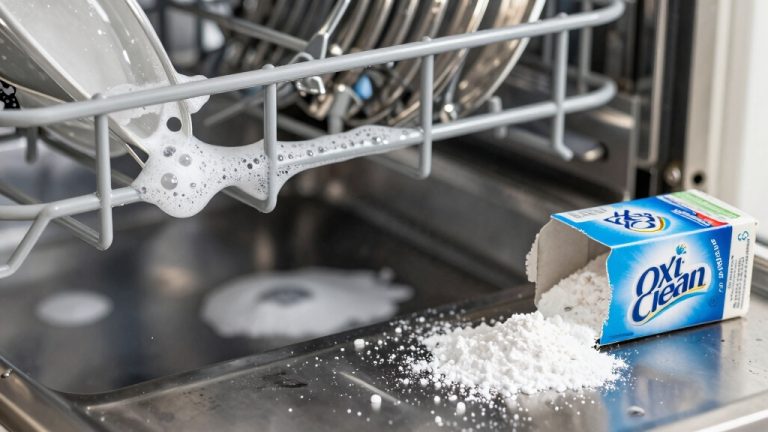
Using powders with enzymatic or oxidizing neutralizers can enhance odor elimination effectively without moisture.
Spot-Clean Specific Sofa Stains Like a Pro
Once odors are managed, focusing on specific stains will keep your sofa looking its best.
Start by vacuuming to remove loose debris, then test any cleaner on a hidden spot to avoid damage.
Begin with vacuuming to clear debris, then always spot-test cleaners to protect your sofa from damage.
Treat stains by working from the outside toward the center to prevent spreading.
Use enzyme cleaners for organic stains, mild soap solutions for general grime, and vinegar-baking soda paste for stubborn marks.
Always blot gently instead of rubbing.
- Vacuum the entire sofa before spot cleaning
- Work from stain edges to center to control spreading
- Choose cleaners based on stain type: enzyme, mild soap, or vinegar paste
- Blot gently with a microfiber cloth; avoid scrubbing hard
This methodical approach helps you handle sofa stains effectively without a steam cleaner.
Dry and Maintain Your Sofa to Keep It Fresh
Promoting thorough drying after cleaning is essential to prevent odors and fabric damage.
Open windows or use a fan to increase airflow and speed up drying.
Avoid sitting on or using the sofa until it’s completely dry to reduce re-soiling and mildew risk.
Once dry, fluff cushions to restore shape and vacuum again to lift fibers and clear residual dirt or cleaning agents.
If your sofa has removable covers, wash both sides and the hidden areas underneath regularly.
For ongoing maintenance, vacuum frequently and address spills promptly with spot cleaning.
This routine reduces the need for deep cleaning and preserves fabric integrity.
Consistent drying and upkeep keep your sofa fresh, extending its life and maintaining a clean, inviting appearance.
Frequently Asked Questions
Can I Use a Hairdryer to Speed up Sofa Drying?
Yes, you can use a hairdryer to speed up sofa drying, but be cautious.
Use the lowest heat setting and keep the dryer moving to avoid overheating or damaging the fabric.
Hold it several inches away to prevent scorching. Overheating can weaken fibers or cause discoloration.
For best results, combine gentle air drying with open windows or a fan to maintain airflow.
This ensures the sofa dries thoroughly without harm.
How Often Should I Deep Clean My Sofa Without Steam?
Think of your sofa as a silent witness to daily life. It deserves a deep clean every six to twelve months.
You should vacuum regularly and spot-clean spills promptly, but a thorough clean twice a year keeps dirt, odors, and allergens at bay.
If you have pets or kids, consider deep cleaning every four months. This methodical approach preserves your fabric’s integrity and maintains a fresh, inviting space without relying on steam.
Are There Specific Cleaners Safe for Leather Sofas Without Steam?
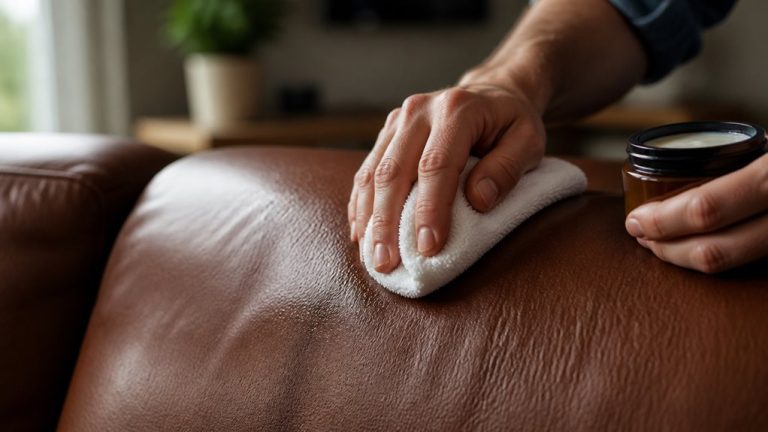
Yes, you can safely clean leather sofas without steam by using a pH-balanced leather cleaner or a mild solution of diluted dish soap and water.
Always test any cleaner on a hidden spot first. Apply with a soft cloth, gently wiping the surface without soaking it.
After cleaning, condition the leather with a dedicated leather conditioner to maintain suppleness and prevent drying or cracking.
Avoid harsh chemicals or abrasive tools.
Can Essential Oils Be Added to Homemade Upholstery Cleaners?
Yes, you can add essential oils to homemade upholstery cleaners for a pleasant scent and mild antibacterial properties.
However, always use just a few drops to avoid fabric damage or staining. Test the mixture on a hidden spot first to make certain no discoloration occurs.
Avoid oils that may leave oily residues or react poorly with your fabric. Stick to gentle oils like lavender or tea tree for safe, effective use.
Is It Necessary to Remove Pet Hair Before Cleaning the Sofa?
Think of pet hair as a thick fog over your sofa. It blocks your cleaning efforts. Yes, you absolutely need to remove pet hair before cleaning.
Vacuum every nook and cranny thoroughly to lift loose fur, crumbs, and dirt. This prepares the fabric, preventing hair from embedding deeper during cleaning.
It also ensures your detergent or deodorizer can work effectively. Skipping this step leaves behind residue and reduces the overall cleanliness and freshness.
Easy Sofa Cleaning Methods Without Professional Equipment
You might think cleaning a sofa without a steam cleaner sounds tricky, but as you’ve seen, it’s surprisingly simple.
By prepping carefully, using gentle hand methods, and tackling stains with vinegar, you’ll avoid over-wetting and keep odors at bay.
Coincidentally, the steps that protect your sofa also make the process easier and more effective.
Stick to these methods, and your sofa will stay fresh and inviting—no steam required.
One Comment