
Best Way to Clean Vomit: Fast & Easy Stain Removal Guide
Before cleaning vomit, protect yourself with gloves, apron, mask, goggles, and shoe covers.
Cover the spill with absorbents and let it solidify fully.
Scoop up solids carefully, seal waste in a plastic bag, and clear the area for two hours.
Wash surfaces with hot water and detergent, then disinfect thoroughly.
Dispose of contaminated items properly and air dry the space to prevent germs and odors.
For a complete, safe cleanup, follow each step precisely to restore hygiene effectively.
Key Takeaways
- Wear disposable gloves, apron, mask, goggles, and shoe covers before starting vomit cleanup to protect yourself from germs and contamination.
- Cover vomit with absorbent materials and allow it to solidify fully before carefully scooping it into a sealed plastic bag.
- Isolate the spill area for two hours, clear nearby people, and sanitize all surfaces within a 10-foot radius thoroughly.
- Clean hard surfaces with detergent and hot water using disposable cloths; for carpets, blot immediately, use enzymatic cleaner, and steam clean if possible.
- Dispose of all contaminated materials in sealed bags, wash hands thoroughly with soap and water, and allow the area to air dry completely.
Personal Protection Before Vomit Cleanup

Wearing the right protective gear before you start cleaning vomit is essential to make certain contamination and exposure to harmful pathogens are prevented.
Wearing proper protective gear before cleaning vomit is crucial to prevent contamination and harmful pathogen exposure.
First, put on disposable rubber gloves to shield your hands and a plastic apron to protect your clothes.
Add a mask and goggles to guard your face and eyes from splashes.
Don shoe covers to keep your footwear clean.
If any gear becomes contaminated during cleanup, change it immediately to avoid spreading germs.
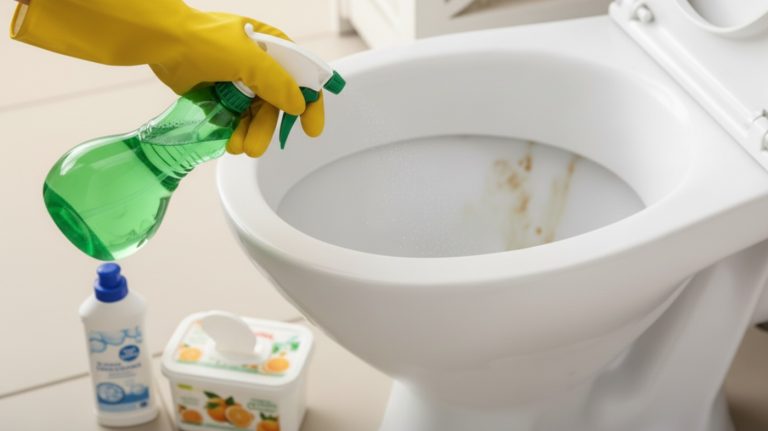
For toilet cleaning, household rubber gloves work well.
After finishing, remove the apron first, followed by gloves, goggles, and the mask, taking care not to touch your skin.
Finally, wash your hands thoroughly with soap and water multiple times to make certain all pathogens are removed before resuming other tasks.
Using proper cleaning solutions and techniques is also important to effectively sanitize surfaces and prevent cross-contamination.
Safe Vomit Removal Techniques
Before you begin removing vomit, make sure the area is properly prepared to prevent the spread of contaminants.
Start by covering the vomit with absorbent materials like paper towels, absorbent powder, or cat litter to soak up liquids.
Let it solidify completely before proceeding.
Then, use a plastic dustpan or scraper to carefully scoop the solidified material.
Place this waste directly into a sealed plastic bag for disposal.
Follow these steps:
- Cover and allow the vomit to solidify fully.
- Scoop or scrape the solid mass using disposable tools.
- Seal and dispose of waste in plastic bags immediately.
This method minimizes airborne particles and limits contamination, ensuring a safer cleanup process.
For thorough odor removal after cleanup, using an enzymatic cleaner is highly recommended to break down organic stains and neutralize odors effectively.
Isolating and Sanitizing the Vomit Spill Area
Once you’ve safely removed the solidified vomit, focus on isolating the spill area to prevent contaminant spread.
Clear a 25-foot radius, removing anyone nearby and instructing hand washing. Isolate the area for two hours to settle airborne particles.
Sanitize everything within a 10-foot circle, including frequently touched surfaces like door handles and taps.
Proper ventilation and ensuring the area is dry afterward are crucial to prevent mold growth from moisture left behind.
| Action | Emotional Impact |
|---|---|
| Isolate spill area | Sense of control |
| Remove bystanders | Safety reassurance |
| Wait two hours | Patience for cleanliness |
| Sanitize nearby surfaces | Confidence in hygiene |
| Instruct hand washing | Empowerment and care |
Following these steps methodically helps contain germs effectively. This reduces infection risks and restores a safe environment.
Cleaning and Disinfecting Surfaces After Vomit Spills
After isolating the spill area, you’ll want to thoroughly clean all affected surfaces using detergent, hot water, and disposable cloths or paper towels. This step removes organic matter and prepares the area for disinfection.
Follow these steps:
- Wash hard surfaces vigorously with detergent and hot water, using disposable cloths to avoid cross-contamination.
- For carpets or soft furnishings, apply hot water and detergent or carpet shampoo. Steam clean at 170°F for five minutes if possible.
- Machine-wash contaminated fabrics on the longest, hottest cycle with detergent to guarantee thorough cleaning.
Always use disposable materials and avoid reusing cloths to prevent spreading germs. After cleaning, allow surfaces to dry before moving on to disinfection.
This methodical approach guarantees a hygienic environment and reduces infection risks following vomit spills. For carpets, blot the spill immediately with a clean, dry white cloth to absorb as much liquid as possible before applying cleaning solutions.
Disposal and Final Steps After Vomit Cleanup
Wrap up the cleanup by carefully disposing of all contaminated materials and protective gear in sealed plastic bags to prevent any risk of cross-contamination.
Make sure to include used gloves, aprons, cloths, and paper towels. After sealing, discard bags according to local waste regulations.
Next, allow the disinfected area to air dry completely to maximize germ elimination. Avoid using hand sanitizers, as soap and water are more effective against vomit-related pathogens like norovirus.
Remove your protective gear methodically: apron first, then gloves, goggles, and mask. Wash your hands thoroughly multiple times with soap and warm water.
Finally, inspect the area to confirm no residue or odors remain. For severe contamination or persistent smells, consider professional cleaning services to guarantee complete sanitization.
Using a hospital-grade disinfectant can help ensure thorough elimination of viruses and bacteria in heavily contaminated areas.
Frequently Asked Questions
How Soon Can the Cleaned Area Be Used Again Safely?
You can safely use the cleaned area after it’s been isolated for at least two hours to let airborne particles settle.
Once you’ve disinfected every surface within a 25-foot radius and allowed them to air dry following the second disinfectant application, the area is ready.
Make sure you’ve thoroughly washed your hands multiple times with soap and water before re-entering.
Avoid relying on hand sanitizers, as they aren’t effective against certain pathogens like norovirus.
What Are the Best Natural Alternatives to Bleach for Vomit Cleanup?
You can use white vinegar or hydrogen peroxide as natural alternatives to bleach for vomit cleanup.
Dilute vinegar with water (1:1) and apply it to the area, letting it sit for several minutes before scrubbing.
Hydrogen peroxide works similarly but test on fabrics first.
Baking soda helps absorb odors and moisture; sprinkle it on, then vacuum after drying.
Always follow thorough cleaning with soap and hot water to guarantee hygiene.
Can Pets Be Exposed to Vomit Cleaning Chemicals Safely?
You shouldn’t expose pets to vomit cleaning chemicals directly, as many disinfectants like bleach or strong EPA-registered sprays can be harmful if ingested or inhaled.
Always isolate the cleaning area, keeping pets at least 25 feet away during and after cleaning.
Ventilate the space well and wait for surfaces to fully dry before letting pets return.
Use pet-safe cleaners when possible, and consult your vet if you suspect exposure to harsh chemicals.
How to Prevent Vomiting Contamination in Shared Living Spaces?
You prevent vomiting contamination by isolating the area promptly, sanitizing surfaces thoroughly, and enforcing strict hand hygiene.
Remove people from a 25-foot radius. Clean all touched surfaces with detergent and bleach, and air out the space for two hours.
Disinfect soft furnishings and wash contaminated fabrics hot and long. Discard contaminated materials safely and document your process.
Consistent vigilance, methodical cleaning, and strict hygiene keep shared spaces safe.
What to Do if Someone Inhales Vomit Aerosol During Cleanup?
If someone inhales vomit aerosol, have them move to fresh air immediately and monitor for coughing, difficulty breathing, or irritation.
Encourage slow, deep breaths and keep them calm.
If symptoms worsen or last beyond a few minutes, seek medical attention promptly.
Make sure they wash their hands thoroughly with soap and water.
Disinfect the area thoroughly to prevent further exposure.
Use protective gear yourself to avoid inhaling aerosols during cleanup.
Thorough Cleanup Means Better Health Protection
Remember, vomiting can spread germs quickly. Did you know that norovirus, a common cause of vomiting, can survive on surfaces for up to two weeks?
That’s why wearing gloves and a mask before you start cleanup is essential. Methodically isolate the area, use proper disinfectants, and dispose of waste safely.
Following these steps not only protects your health but also prevents illness from spreading. Stay thorough and hygienic every time you clean up vomit.