How Do You Get Blood Out of Cotton Sheets: Step-by-Step Tips
To get blood out of cotton sheets, start by rinsing the stain immediately with cold water from the back to prevent setting. Gently blot, avoid rubbing, then apply enzyme detergent or a cold water and salt paste to break down proteins.
For dried stains, soak the sheets in cold water with enzyme detergent for several hours, repeating as needed. Avoid heat until the stain is gone to prevent permanent setting. There’s more to effective stain removal if you want to get the best results.
Key Takeaways
- Rinse fresh blood stains immediately under cold running water from the back of the fabric to prevent setting.
- Apply enzyme-based detergent or a cold water and salt paste to break down blood proteins before washing.
- Soak cotton sheets in cold water with enzyme detergent for at least 15 minutes or overnight for tough stains.
- Avoid hot water or heat drying until stains are fully removed to prevent permanent setting of blood proteins.
- Use hydrogen peroxide cautiously on color-safe fabrics, testing first on a hidden area, then rinse thoroughly after treatment.
How to Treat Fresh Blood Stains on Cotton Sheets?

When you notice fresh blood on your cotton sheets, start by rinsing the stain under cold running water, ideally from the back to push the blood out of the fibers.
Avoid hot water, as it can set the stain. Next, gently blot the area with a clean white cloth or paper towel to lift excess blood without rubbing it deeper.
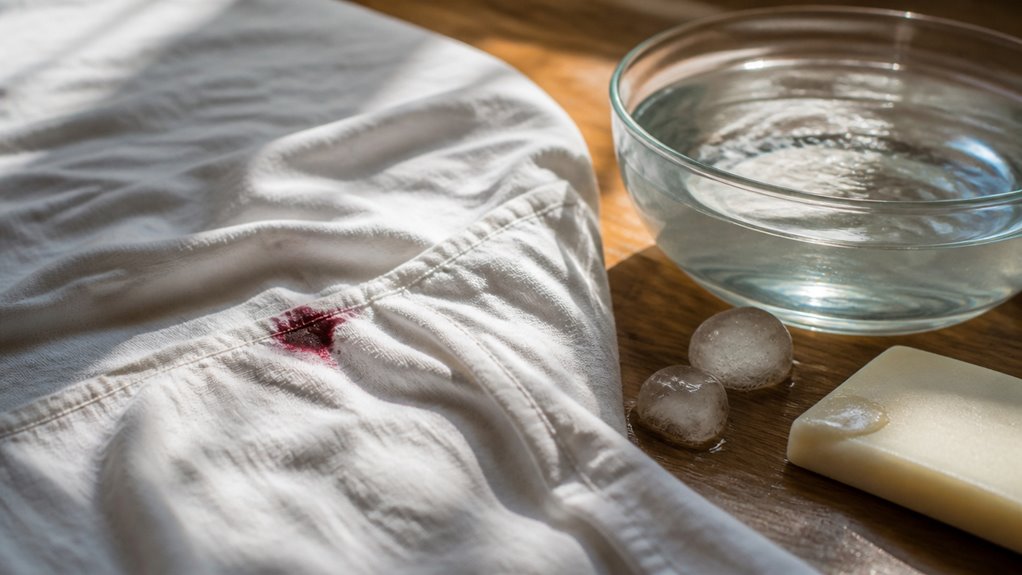
Apply a cold water and salt paste or rub bar soap directly on the stain to break down proteins. You can also use hydrogen peroxide carefully on color-safe fabrics, letting it fizz before rinsing.
After pre-treating, wash the sheet in cold water with enzyme laundry detergent. Acting quickly and avoiding heat guarantees the best chance of fully removing fresh blood stains.
Blotting gently with cold water helps prevent hemoglobin coagulation, which can cause the stain to set deeper into the fibers.
Cold Water Soaking for Dried Blood Stains
You’ll often find that soaking dried blood stains in cold water is the most effective initial step to loosen and lift the stubborn residue from cotton sheets.
Soaking dried blood stains in cold water is a key first step to effectively loosen and lift residue from cotton sheets.
Before soaking, gently scrape off any loose dried blood to avoid spreading it. Submerge the stained area fully in cold water, allowing it to soak for at least 15 minutes.
For tougher stains, consider extending soaking time to several hours or overnight. Using cold water prevents the blood proteins from setting deeper into the fibers, making it easier to remove later.
Adding an enzyme-based detergent to the soak can further break down the blood’s protein structure. After soaking, gently rub the fabric to encourage stain release before proceeding with further cleaning steps.
Repeat soaking if necessary, avoiding heat at this stage. Ensuring proper ventilation during drying helps prevent microbial growth and odors.
Why Cold Water Is Key for Removing Blood From Cotton Sheets?
Why does cold water play such a critical role in removing blood from cotton sheets?
Cold water prevents blood proteins from setting into the fabric fibers, which hot water can cause, making stains permanent.
You should rinse fresh blood stains immediately under cold running water, ideally from the back of the stain, to push blood out rather than embedding it further.
Cold water soaking is essential for both fresh and dried stains, as it loosens blood without fixing it.
Using cold water throughout washing and pre-treatment avoids heat that would set the stain irreversibly.
For stubborn stains, combining cold water with gentle blotting techniques and safe cleaning solutions can improve removal success, especially on delicate fabrics like cotton that require specific care.
How Enzyme Detergents Help Remove Blood Stains on Cotton Sheets?
Cold water plays a vital role in preventing blood stains from setting.
However, removing dried or stubborn blood requires more than just water alone.
Enzyme detergents target the proteins in blood, breaking them down efficiently.
When you soak your cotton sheets in cold water mixed with enzyme detergent, the enzymes digest the blood proteins, loosening the stain from the fabric fibers.
This method works best for older, set-in stains and improves overall stain removal.
Steam cleaning can also be used as a complementary method to sanitize and deeply penetrate fabric fibers, enhancing stain and odor removal through high-temperature steam.
| Step | Action | Effect |
|---|---|---|
| 1. Rinse | Cold water flush | Prevents setting |
| 2. Apply enzyme | Soak or pre-treat | Breaks down proteins |
| 3. Agitate | Gentle scrubbing | Loosens stain |
| 4. Rinse again | Cold water rinse | Removes residual blood |
| 5. Repeat if needed | Additional soak | Tackles stubborn stains |
Safely Using Hydrogen Peroxide on Cotton Sheets
Although hydrogen peroxide is a powerful stain remover for blood on cotton sheets, you must use it carefully to avoid fabric damage or discoloration.
Test a small, hidden area first to make certain it won’t bleach or weaken the fabric.
Apply a small amount directly on the stain and let it fizz for a few minutes.
Avoid saturating the fabric to prevent weakening fibers.
After fizzing, rinse thoroughly with cold water from the back of the stain to push blood out.
Repeat if necessary, but don’t leave hydrogen peroxide on the fabric too long.
Always wash the sheets in cold water afterward, and avoid heat until the stain is fully gone to prevent setting it permanently.
Using hydrogen peroxide this way keeps your cotton sheets safe and stain-free.
For stubborn stains, be sure to test on a hidden spot before applying hydrogen peroxide extensively to avoid damage.
Natural Spot Treatments for Blood Stains on Cotton Sheets
Got a pesky blood stain on your cotton sheets? No worries!
You can easily tackle it with some natural spot treatments. Vinegar and lemon juice are fantastic options—they help break down the proteins in blood, making it easier to lift the stain.
And here’s a little tip: try making a baking soda paste to use alongside those liquids. It adds a bit of gentle abrasion, which helps lift the stains without any harsh chemicals.
Remember to always blot the stain gently rather than rubbing to avoid spreading or embedding the blood further into the fabric.
Vinegar And Lemon Juice
When tackling blood stains on cotton sheets, vinegar and lemon juice come in handy as natural spot treatments. Both contain mild acids that help break down the blood proteins, making stain removal easier.
To use, apply white vinegar or fresh lemon juice directly onto the stain. Let it sit for about 10 minutes to penetrate the fabric but avoid prolonged exposure to prevent fabric damage.
Afterward, gently blot with a clean cloth and rinse thoroughly with cold water, always from the back of the stain to push blood out. Repeat if necessary before washing.
These natural acids are effective on fresh stains and offer a safer alternative to harsher chemicals, especially for color-safe cotton sheets. Avoid heat until the stain is fully removed to prevent setting.
For delicate fabrics, it is important to test treatments on a hidden area first to avoid damage or discoloration.
Baking Soda Paste Benefits
Mixing baking soda into a paste creates a powerful natural spot treatment that lifts blood stains from cotton sheets effectively. You simply combine baking soda with a little cold water, apply it directly to the stain, and let it sit for about 30 minutes before rinsing. This method gently breaks down the proteins in blood without harming your fabric.
| Benefit | How It Works | Usage Tip |
|---|---|---|
| Non-toxic | Safe for skin and sheets | Use on fresh or dried stains |
| Mild abrasive | Helps lift stain particles | Avoid vigorous scrubbing |
| Odor neutralizer | Removes blood smell | Rinse thoroughly afterward |
| Easily available | Common household item | Mix fresh paste before use |
| Cost-effective | Inexpensive and efficient | Combine with cold water only |
Baking soda paste is a reliable step before washing your cotton sheets.
Scraping and Pre-Treating Stubborn Blood Stains
Start by gently scraping off any dried blood from the cotton sheet to remove loose residue without damaging the fabric. Use a dull edge, like a spoon, to avoid pushing the stain deeper.
Next, soak the stained area in cold water to loosen the blood proteins. For stubborn stains, apply an enzyme-based detergent directly, as enzymes break down blood’s protein structure effectively.
Alternatively, you can use hydrogen peroxide cautiously on color-safe sheets to fizz and lift the stain. Other practical pre-treatments include rubbing bar soap or applying a cold water and salt paste.
Let the pre-treatment sit for 15 minutes to several hours depending on stain severity. Avoid heat during this phase to prevent setting the stain further.
Repeat these steps as necessary before moving on to washing.
Ensuring proper ventilation during treatment helps prevent mold and promotes faster drying.
Washing Cotton Sheets After Blood Stain Removal
Wash cotton sheets in cold water immediately after pre-treatment to prevent blood stains from setting. Cold water preserves your efforts to remove the blood and keeps the stain from embedding deeper into the fibers.
Use an enzyme-based detergent during the wash cycle to break down any remaining protein in the stain effectively. Avoid using any heat at this stage, as it can make the stain permanent.
Keep these tips in mind when washing:
Use cold water exclusively to protect the fabric and stains. Choose enzyme detergents to target protein-based stains like blood. Repeat the washing process if the stain persists before drying.
Following these steps guarantees the best chance of removing blood without damaging your cotton sheets. For persistent stains, consider using enzyme cleaners as they digest proteins and help eliminate residues effectively.
Why You Should Avoid Heat Until Stains Are Gone?
After pre-treating your cotton sheets and washing them in cold water, resist the urge to use heat during drying.
Heat causes blood proteins to coagulate and bind tightly to the cotton fibers, permanently setting the stain.
Once set, the stain becomes nearly impossible to remove with standard cleaning methods.
Instead, air dry your sheets if any stain remains after washing.
This cautious approach allows you to repeat stain removal treatments without locking in the blood.
Avoid using hot water or the dryer until you confirm the stain is fully gone.
Patience here saves you from frustrating, irreversible stains.
Proper drying and avoiding excess moisture are essential to prevent mold growth and further damage to your sheets.
Repeating Treatments and When to Try Ammonia Solutions
Although repeated treatments can be time-consuming, you’ll often need to apply stain removal methods multiple times to fully lift blood from cotton sheets.
Stubborn stains rarely disappear after a single attempt, so patience and persistence are key. When conventional methods like cold water soaking and enzyme detergents don’t do the trick, consider trying a dilute ammonia solution, but only after testing a small hidden area for colorfastness.
Here’s what to keep in mind:
Repeat soaking and scrubbing cycles without drying in between to avoid setting the stain.
Use a mix of detergent and ammonia as a last resort to break down tough proteins.
Always rinse thoroughly after ammonia treatment to prevent fabric damage.
This methodical approach maximizes your chances of restoring your sheets without causing harm.
Frequently Asked Questions
Can Blood Stains Be Removed From Colored Cotton Sheets Without Fading?
Yes, you can remove blood stains from colored cotton sheets without fading by using color-safe methods.
Apply hydrogen peroxide cautiously, testing a small area first. Use cold water throughout to avoid setting stains or fading colors.
Enzyme-based detergents work well to break down blood proteins without harsh effects.
Avoid bleach and heat until the stain is fully gone. Repeat treatments as needed, then air dry to protect fabric colors.
How Long Can Blood Stains Sit Before Removal Becomes Impossible?
Imagine a telegram arriving late.
Blood stains become harder to remove the longer they sit. You should treat them within hours for the best chance.
After 24 hours, dried blood begins to set deeply into cotton fibers, making removal tough but not impossible. If you wait days or weeks, it’s much harder, often requiring repeated soaking and enzyme treatments.
Are Commercial Stain Removers Better Than Home Remedies for Blood on Cotton?
Commercial stain removers often outperform home remedies because they contain enzymes specifically designed to break down protein-based stains like blood.
While home treatments like hydrogen peroxide and salt paste can work well on fresh stains, commercial products provide consistent results, especially on older or stubborn blood marks.
You’ll still need to act quickly and follow instructions carefully.
Using a quality stain remover usually speeds up the process and improves stain removal success on cotton sheets.
Can Blood Stains on Cotton Sheets Cause Fabric Damage Over Time?
Blood stains on cotton sheets won’t eat away the fabric like acid, but they can cause damage over time if left untreated.
The proteins in blood can weaken fibers, making them brittle and prone to tearing.
If you don’t act quickly, the stain sets and becomes harder to remove, increasing wear from repeated scrubbing.
Is It Safe to Use Bleach on Cotton Sheets With Blood Stains?
You can use bleach on cotton sheets with blood stains, but you need to be cautious.
Avoid chlorine bleach on colored sheets since it can cause fading or damage.
Instead, use oxygen bleach, which is safer for cotton and effective at removing stains.
Always test on a small area first.
How to Remove Dried Blood From Cotton Sheets
When blood stains invade your cotton sheets, don’t panic; treat them like unwelcome shadows. Act quickly with cold water to stop the stain from setting.
Then deploy enzyme detergents as your stain-fighting allies. Avoid heat like a wildfire until the blood’s gone.
If stubborn spots linger, gently scrape and pre-treat, repeating as needed. With patience and precision, your sheets will soon be as fresh as a clean canvas, ready to welcome restful nights once more.