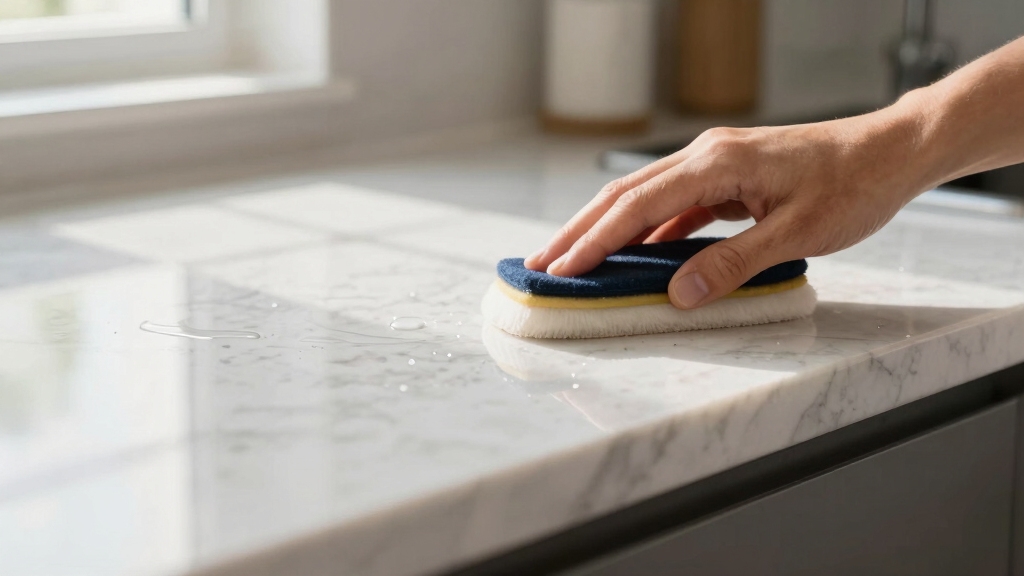
How Do You Shine Quartz Countertops: Easy Tips for a Like-New Finish
To shine your quartz countertops, use a soft microfiber cloth with a mild, pH-balanced, non-oil-based dish soap to gently lift dirt without dulling the resin surface.
Clean section-by-section, then thoroughly dry to prevent water spots. For added brilliance, apply a quartz-safe polish in small areas, buffing with a clean cloth in circular motions.
Avoid harsh chemicals, abrasive pads, and prolonged heat or sunlight. Keeping these habits guarantees a radiant surface; exploring further reveals advanced polish and care techniques.
Key Takeaways
- Clean quartz countertops daily with a soft microfiber cloth and mild, pH-neutral, non-oil-based soap to prevent dulling.
- Dry countertops thoroughly after cleaning to protect resin bonds and avoid water spots that reduce shine.
- Apply a pH-balanced quartz polish in small sections, using gentle circular motions, then buff with a clean microfiber cloth.
- Avoid harsh chemicals, abrasive pads, and prolonged heat or sunlight exposure to maintain the countertop’s natural gloss.
- Use coasters and trivets to prevent stains and heat damage that can dull and weaken the quartz surface.
How To Clean Quartz Countertops Daily For Shine?

Consistently maintaining the shine of your quartz countertops starts with a simple daily cleaning routine.
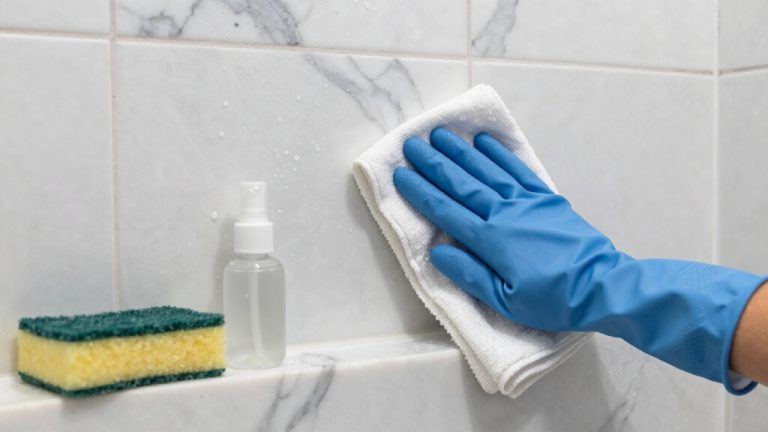
Use a soft cloth dampened with mild dish soap and warm water to gently wipe the surface. This will remove dust and light residues without harming the finish.
Avoid oil-based soaps, which can leave a dull film. For a natural boost, prepare a spray by mixing one-quarter vinegar with three-quarters water.
Mist small sections and wipe promptly to prevent streaks. Microfiber cloths excel here; they lift dirt effectively and enhance shine without scratching.
Focus on systematic, section-by-section cleaning to guarantee even coverage. By adopting this precise, consistent approach, you’ll preserve your quartz’s radiant luster and keep your kitchen looking sleek and polished every day.
Always dry countertops completely after cleaning to protect resin bonds and prevent water spots.
Choosing Soaps And Cloths For Quartz Countertop Cleaning
Selecting the right soaps and cloths plays a crucial role in maintaining the pristine shine of your quartz countertops.
You should opt for mild, non-oil-based dish soaps to avoid dulling the surface. These gentle cleansers effectively remove daily grime without compromising the resin binding that gives quartz its brilliance.
Pair your soap with a soft, microfiber cloth, which excels at lifting dirt and polishing without scratching.
Avoid abrasive sponges or rough fabrics, as they can mar the smooth finish.
Using microfiber cloths also helps prevent streaks, ensuring an even, lustrous glow.
For the best results, consider using products with pH-neutral formulations to protect your quartz’s surface and prolong its shine.
Using Vinegar-Based Cleaners Safely On Quartz Countertops
How can you use vinegar-based cleaners on quartz countertops without risking damage?
Vinegar’s acidity can harm the resin in quartz, so you need to dilute it properly and use it sparingly.
Because vinegar’s acidity can damage quartz resin, always dilute it and use sparingly for safe cleaning.
Mix one-quarter vinegar with three-quarters water to create a safe cleaning solution.
Apply it lightly, then promptly wipe it off to avoid prolonged contact.
Keep these key points in mind:
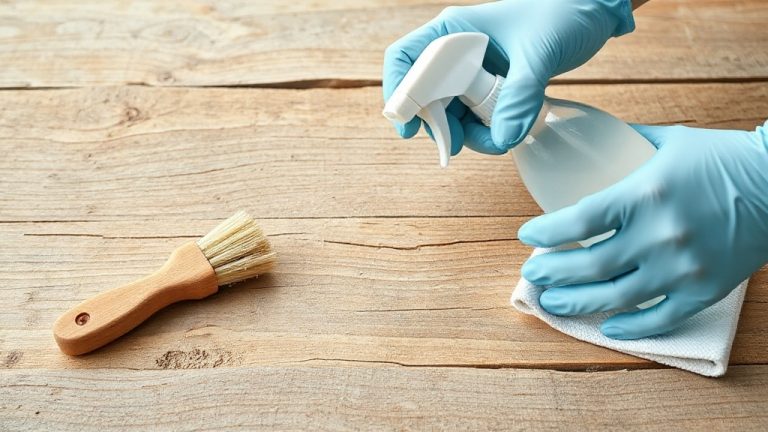
Use a spray bottle for even, controlled application.
Wipe in small sections to prevent buildup.
Avoid letting vinegar sit on the surface for more than a minute.
Always follow with a rinse using mild dish soap and water.
Since quartz is non-porous, it does not require sealing, so gentle cleaning is sufficient to maintain its appearance.
Removing Stains And Deep Cleaning Quartz Countertops
After carefully using vinegar-based cleaners in diluted form to maintain your quartz countertops, you might encounter stubborn stains or buildup that require more thorough attention.
For these, start by rinsing your countertop with water and a sponge to remove loose debris.
Apply a pH-balanced stone cleaner directly to the affected areas, letting it sit for about a minute to break down residue.
Gently rub with a soft cloth, avoiding abrasive tools that could dull the surface.
For persistent spots, carefully use a plastic putty knife to lift debris without scratching.
Remember, quartz’s non-porous nature prevents deep absorption, making stain removal manageable.
After treatment, thoroughly rinse and dry the surface with a microfiber cloth to restore its pristine, polished appearance.
Be sure to avoid harsh chemicals that can damage the resin and dull the quartz finish.
Best Polishing Products To Restore Quartz Countertop Shine
Restore your quartz countertop’s brilliance by choosing specialized polishing products designed to enhance its natural shine while providing deep cleaning.
When selecting the right product, focus on formulations that are pH-balanced, safe for food prep areas, and specifically crafted for quartz surfaces. These products remove grease and soils effectively without harming the resin binding your countertop.
Consider these top options to restore and maintain shine:
Granite Gold Quartz Cleaner and Stonetech: formulated exclusively for quartz, ensuring safe and effective polishing.
Granite Gold Quartz Clean & Shine: combines cleaning and polishing for a seamless shine.
Simple Green Granite & Stone Polish: delivers a streak-free, luminous finish.
Isopropyl-alcohol solution: targets tough spots post-cleaning without damaging quartz.
Using these products keeps your quartz countertop gleaming with minimal effort. It is important to avoid cleaners with unsuitable pH levels to preserve quartzite’s natural luster and protective sealant.
How To Polish Quartz Countertops Step-By-Step?
Before you dive into polishing your quartz countertops, it’s super important to give them a good clean. You want to make sure they’re not just clean, but also completely dry. This helps the polish stick just right and ensures an even finish.
Once you’re all set, take your time and work in small sections. Use gentle, circular motions to apply the polish. It’s all about enhancing that beautiful natural luster of the surface!
And don’t forget the final touch! Grab a clean microfiber cloth and buff each area to reveal that smooth, shining finish. You’ll love the way it looks!
For the best results, use a pH-neutral cleaner to protect the quartz surface and preserve its shine during cleaning.
Polishing Preparation Steps
When preparing to polish your quartz countertops, start by thoroughly cleaning the surface with a mild, non-oil-based soap and warm water. This removes any dirt, grease, or residue, ensuring the polish adheres properly and delivers a flawless shine.
After cleaning, dry the countertop completely using a clean microfiber cloth to avoid streaks or water spots.
Inspect the surface for any stubborn stains or debris, and address them with a gentle stone cleaner if necessary.
Before you begin polishing, gather your tools and set up your workspace for easy access.
Use a soft microfiber cloth for cleaning and drying.
Avoid abrasive scrubbing pads to prevent scratches.
Clear the countertop of all items and debris.
Make sure the surface is cool and out of direct sunlight for best results.
For best results, use a pH-neutral cleaner to protect the quartz surface and maintain its natural shine.
Effective Polishing Techniques
Begin polishing your quartz countertops by dividing the surface into manageable two-by-two-foot sections. This approach guarantees even coverage and prevents missed spots.
Apply a light, even coating of your chosen polish to each section using gentle, circular motions with consistent pressure. Work methodically to maintain uniformity.
Once the polish sets briefly, buff the area with a clean microfiber cloth, again using circular motions and medium pressure to lift residues and enhance shine.
Replace the cloth frequently to avoid streaking and achieve a flawless finish. This careful technique not only restores your quartz’s natural luster but also protects its surface.
For best results, use polishing pads with a wide grit spectrum to ensure a thorough and effective finish.
Cleaning Products And Habits To Avoid On Quartz Countertops
Although quartz countertops are durable, you shouldn’t use harsh chemical cleaners like bleach, oven sprays, or limescale removers, as they can damage the resin binding and discolor the surface.
To keep your quartz looking pristine, avoid these common pitfalls that compromise its appearance and longevity:
Using oil-based soaps that dull the countertop’s natural shine.
Applying abrasive cleaners or scrubbing pads that scratch the smooth surface.
Mixing acetone with bleach or vinegar, which etches quartz surfaces.
Exposing countertops to harsh chemicals that break down resin and cause discoloration.
Additionally, avoid using multi-surface cleaners like Formula 409 containing harsh ingredients that can degrade natural stone surfaces.
How Sunlight And Heat Damage Quartz Countertops?
Hey there! Just a heads up—if your quartz countertops are exposed to UV rays for too long, it can really weaken the resin that holds everything together. This might lead to fading and discoloration, which nobody wants, right?
And let’s not forget about heat. Excessive temperatures can compromise the integrity of your quartz. Over time, you might notice some warping or even dullness. So, it’s super important to protect your surfaces from direct sunlight and high heat to keep them looking brilliant and lasting longer! Avoid using harsh chemicals like quaternary ammonium compounds that can degrade countertop surfaces.
UV Rays Impact
When quartz countertops receive prolonged exposure to direct sunlight, the UV rays and heat can gradually weaken the resin that binds the quartz minerals together.
This degradation diminishes the structural integrity and the vibrant colors you love.
Over time, the surface may start to lose its gloss and look faded or dull, undermining the elegant finish.
To protect your countertops, consider these steps:
Limit direct sunlight exposure by using window treatments or blinds.
Avoid placing countertops where sunlight beams for extended periods.
Use protective covers or mats when possible.
Regularly inspect for signs of discoloration or resin breakdown.
Heat Effects
Beyond the harmful effects of UV rays, heat itself plays a significant role in damaging quartz countertops.
When exposed to direct sunlight or high temperatures, the resin binding the quartz minerals can weaken, causing discoloration and fading.
You’ll notice that prolonged heat exposure dulls the surface, diminishing its natural shine and vibrancy.
To protect your countertops, avoid placing hot pots or pans directly on the surface; always use trivets or heat pads.
Additionally, consider installing blinds or shades to limit sunlight exposure, especially in areas with intense sun.
By managing heat contact and sunlight, you preserve the countertop’s integrity and maintain its polished, radiant appearance for years.
Taking these steps guarantees your quartz countertop remains a stunning centerpiece in your space.
Tips To Protect And Maintain Quartz Countertop Shine
Although quartz countertops are durable and non-porous, maintaining their shining appearance requires consistent care and thoughtful protection.
Quartz countertops offer lasting durability but need regular care to keep their radiant shine intact.
To keep your quartz surfaces gleaming, you need to be proactive in daily upkeep and mindful of environmental factors that can dull or damage the finish.
Consider these essential tips:
Use mild, non-oil-based soaps and microfiber cloths for daily cleaning to preserve shine without scratching.
Avoid harsh chemicals, abrasive pads, and prolonged direct sunlight, which degrade the resin and discolor quartz.
Apply polish in small sections with gentle circular motions, then buff with a clean cloth for an even, radiant finish.
Protect countertops with coasters and trivets to prevent heat damage and stains from spills.
Frequently Asked Questions
Can Quartz Countertops Be Repaired if Scratched or Chipped?
Yes, you can repair quartz countertops if they’re scratched or chipped.
Minor scratches can often be buffed out with a polishing compound and a microfiber cloth.
For deeper chips, you might need a professional repair kit or expert help using resin fillers that match your countertop color.
Acting quickly and avoiding harsh chemicals will preserve the surface’s integrity and shine.
This ensures your quartz stays beautiful and functional for years to come.
How Often Should Quartz Countertops Be Professionally Polished?
Think of your quartz countertop like a finely tuned instrument. It needs occasional professional tuning to keep its flawless performance. You should have it professionally polished once every 1 to 2 years, depending on daily use and exposure.
This periodic care restores its vibrant shine and protects the resin binding. Meanwhile, maintain daily cleaning and gentle polishing at home to keep it looking its best between professional treatments.
Are There Any DIY Sealants Recommended for Quartz Countertops?
You don’t need DIY sealants for quartz countertops because quartz is non-porous and naturally resists stains and moisture.
Applying sealants can actually damage the resin binding and alter the surface finish.
Instead, maintain your quartz with pH-balanced cleaners and specialized quartz polishes designed to enhance shine without compromising protection.
Focus on gentle cleaning and proper care rather than sealing to keep your countertops looking flawless and durable over time.
Can Quartz Countertops Withstand Acidic Food Spills Like Lemon Juice?
Think of quartz countertops as a fortress, resilient against many attacks, including acidic food spills like lemon juice.
You can confidently handle occasional drops without worrying about permanent stains or etching because quartz’s non-porous surface resists absorption.
However, you should clean spills promptly with mild soap and water to maintain its pristine look.
Avoid harsh chemicals that might weaken the resin binding, preserving your countertop’s strength and beauty over time.
What Is the Best Method to Prevent Quartz Countertop Discoloration?
To prevent quartz countertop discoloration, you should avoid prolonged direct sunlight by using blinds and positioning countertops away from intense UV exposure.
Always use coasters and trivets to protect from heat damage.
Clean spills promptly with pH-balanced, non-oil-based cleaners, and never use harsh chemicals or abrasive pads.
Regularly wipe surfaces with a mild dish soap solution and a microfiber cloth to maintain the quartz’s vibrant, lasting finish and prevent dulling or staining.
Simple Maintenance Helps Quartz Countertops Retain Their Lasting Shine
To keep your quartz countertops gleaming like a polished gem, you need consistent care and the right products.
Avoid harsh cleaners and heat exposure, and treat stains promptly to preserve their natural brilliance.
Think of your countertops as a delicate canvas. Nurture them with gentle cleaning and thoughtful maintenance, and they’ll continue to shine beautifully.
They enhance your space with timeless elegance. Your attention guarantees they remain a radiant centerpiece for years to come.