How to Clean Grout in Marble Floors
To clean grout in your marble floors, use a pH-neutral cleaner made specifically for natural stone to avoid etching or dulling.
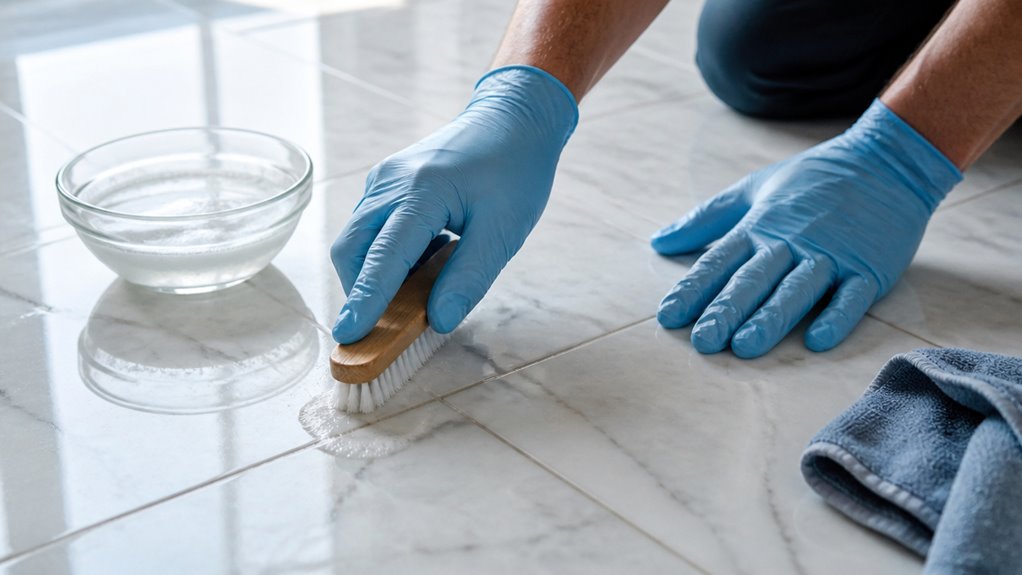
Start by sweeping or vacuuming to remove loose dirt. Then apply the cleaner with a soft-bristle brush, gently scrubbing grout lines.
Rinse thoroughly with warm water and dry immediately with a microfiber towel to prevent water spots.
Avoid acidic or abrasive products that damage marble. Following these steps protects your floors and makes grout care simpler over time.
Key Takeaways
- Use a pH-neutral cleaner specifically designed for marble to avoid etching or dulling grout and stone surfaces.
- Gently scrub grout with a soft-bristle nylon brush or marble-safe grout brush using light, controlled motions.
- Rinse grout thoroughly with clean warm water and immediately dry with a microfiber towel to prevent water spots.
- Avoid acidic, bleach-based, or abrasive cleaners and scrubbers that can damage marble and grout edges.
- Seal grout regularly to protect against dirt, stains, and moisture, simplifying cleaning and extending grout lifespan.
Why Marble Floor Grout Needs Special Care?

Because marble is a delicate natural stone, its grout requires special care to prevent damage and maintain its appearance.
Marble’s sensitivity to acids and abrasives means you can’t use typical grout cleaners without risking etching or dulling the surface.
You’ll need to avoid acidic substances like vinegar or lemon and harsh chemicals such as bleach, which harm both grout and stone.
Instead, stick to pH-neutral cleaners designed specifically for stone to keep grout effective and marble protected.
Using improper cleaning methods or strong scrubbing tools can scratch or wear down the grout and marble edges.
Regular use of pH-neutral stone cleaners and gentle tools helps maintain both grout and marble integrity over time.
How to Prepare Your Marble Floor Before Cleaning Marble Grout?
Before you dive into cleaning your marble grout, it’s a good idea to start by removing any loose dirt. Just give your floor a gentle sweep or use a vacuum to get rid of debris. This helps prevent any scratches on the surface, which is super important.
Next up, you’ll want to pick a cleaner that’s pH-neutral and specifically made for marble. This is key because it protects both the grout and the stone, keeping everything looking great.
And don’t forget to gather some soft-bristle brushes and microfiber cloths. These tools will help ensure you can scrub safely and effectively without risking any damage to your beautiful floor. Happy cleaning!
For daily maintenance, consider using a pH-neutral, residue-free cleaner to preserve the natural shine and prevent dulling of your marble floor.
Remove Loose Dirt
Start by sweeping or vacuuming your marble floor thoroughly to pick up loose dirt and grit. This step prevents abrasive particles from scratching the marble or embedding further into grout lines during cleaning.
Use a soft-bristle broom or a vacuum cleaner with a floor-brush attachment to avoid damaging the stone surface. Pay close attention to corners and edges where debris tends to accumulate.
Removing loose dirt before any wet cleaning makes certain you don’t grind soil into the grout or marble. It also improves the effectiveness of your subsequent grout cleaning by allowing better contact between the cleaning solution and the grout.
Taking this preparatory step carefully sets the foundation for a safe, efficient grout cleaning process that protects your marble floor’s integrity. For best results, use a pH-neutral cleaner formulated specifically for natural stone to avoid damage during the cleaning process.
Choose Safe Cleaner
How do you guarantee your marble grout stays pristine without damage? Choose a cleaner that’s safe for natural stone.
Always use a pH-neutral stone cleaner, designed specifically for marble. Avoid acidic substances like vinegar or lemon, as they etch and dull marble surfaces.
Steer clear of bleach and harsh all-purpose cleaners; they can harm both marble and grout. For heavy cleaning, mild alkaline cleaners may be used cautiously, but pH-neutral remains best for routine care.
Always check product labels or data sheets to confirm pH neutrality and marble safety. Selecting the right cleaner protects your marble’s finish while effectively lifting dirt from grout lines, setting a solid foundation for successful cleaning without compromising your floor’s integrity.
Additionally, opting for acid-free cleaners ensures your marble and grout are shielded from etching and dulling caused by harsh chemicals.
Gather Proper Tools
Choosing the right cleaner sets the stage, but to protect your marble grout effectively, you need the proper tools at hand. Before you start, gather these essentials to guarantee safe and efficient cleaning:
- Soft-bristle nylon brush or a marble-safe grout brush for gentle scrubbing
- Microfiber cloths and mop for applying cleaner and wiping surfaces
- A vacuum or broom to remove loose dirt and grit beforehand
- A spray bottle for evenly applying your pH-neutral cleaner
- A microfiber towel to dry the floor and prevent water spots
Avoid abrasive pads or metal brushes that can scratch marble or grout. Using these tools with controlled, light scrubbing motions helps maintain your marble’s natural beauty while thoroughly cleaning grout lines. It is also important to use pH-balanced cleaners to avoid damage to the marble over time.
Essential Tools for Cleaning Marble Grout Safely
When it comes to cleaning marble grout, it’s important to choose the right tools. You’ll want to grab some soft-bristle nylon brushes or a dedicated grout brush. These are perfect for getting in there without risking any damage to your marble.
And don’t forget to pair those brushes with microfiber cloths! They’re great for gently lifting dirt while keeping the surface scratch-free. Just remember to scrub with light, controlled motions. This way, you’ll protect both the grout and the beautiful marble underneath.
Always use pH-neutral cleaners to avoid damaging the delicate marble surface.
Recommended Cleaning Brushes
Grab a soft-bristle nylon brush or a microfiber cloth to clean marble grout without risking scratches or damage. Choosing the right brush helps you maintain grout integrity while effectively removing dirt.
Avoid abrasive or metal-bristle brushes that can harm marble surfaces. Here’s what to take into account:
Soft-bristle nylon brushes for gentle but effective scrubbing. Microfiber cloths for light cleaning and rinsing. Dedicated grout brushes designed for narrow grout lines. Old toothbrushes as a handy, gentle alternative.
Avoid wire or stiff-bristle brushes that scratch stone and grout. Using light, controlled strokes with these tools ensures thorough cleaning without damaging your marble floor.
Keep your brushes clean and replace them if bristles become worn or stiff to maintain safe and efficient grout care. Regular maintenance with gentle scrubbing tools helps prevent buildup and preserve marble grout quality.
Safe Cloth Materials
When cleaning marble grout, it’s important to rely on cloth materials that won’t scratch or leave residue behind.
Microfiber cloths are your best choice because they’re soft, non-abrasive, and trap dirt effectively without damaging the stone or grout.
Avoid rough fabrics, abrasive sponges, or cotton towels, as they can leave fibers or cause subtle scratches on marble surfaces.
Use a clean microfiber cloth to apply your pH-neutral cleaner gently and another to rinse and dry the area afterward.
In addition, microfiber mops work well for larger floor sections, allowing controlled application and removal of cleaning solutions.
Sticking to these safe cloth materials helps protect your marble grout’s integrity and maintains its polished appearance without introducing contaminants or damage.
For best results, always choose a pH-neutral cleaner specifically formulated to preserve sensitive marble finishes and prevent discoloration.
Proper Scrubbing Techniques
Mastering proper scrubbing techniques is key to preserving the beauty and longevity of your marble grout. To clean effectively without damage, start by removing loose debris with a vacuum or broom.
Then, use gentle tools and controlled motions to avoid scratching. Choose a soft-bristle nylon brush, microfiber cloth, or a marble-safe grout brush.
Avoid abrasive pads or metal bristles that can harm marble. Apply a pH-neutral cleaner diluted per instructions.
Scrub grout lines lightly in small sections, rinsing frequently. Dry with a microfiber towel to prevent water spots and residue.
Following these steps guarantees safe, thorough cleaning while protecting your marble’s delicate surface and grout integrity. Additionally, regular maintenance using pH-neutral cleaners helps preserve the marble and grout from damage over time.
How to Choose a pH-Neutral Cleaner for Marble Grout?
Because marble is sensitive to acidic and harsh chemicals, you’ll need to select a cleaner explicitly labeled as pH-neutral to protect your grout and stone.
Look for products designed for natural stone that specify pH neutrality on the label or technical sheet.
Avoid vinegar, lemon-based, bleach, or harsh all-purpose cleaners, as they can etch or discolor marble.
Mild alkaline cleaners might be tempting for tough stains but stick to pH-neutral for routine care.
Regular use of a pH-balanced cleaner helps preserve sealants and maintain the stone’s natural luster.
| Feature | Why It Matters | What to Avoid |
|---|---|---|
| pH Neutrality | Prevents etching and dulling | Acidic or alkaline cleaners |
| Stone-Safe Label | Ensures compatibility with marble | Generic multi-surface cleaners |
| Dilution Guidance | Avoids over-concentration | Using undiluted products |
Choosing carefully helps maintain your marble’s beauty and grout integrity.
How to Clean Marble Grout Step-by-Step?
To get started, mix a pH-neutral cleaner with some warm water. Just be sure to follow the product’s instructions closely—that part is really important!
Once you’ve got your solution ready, apply it to the grout lines.
Now, here’s the key: use a soft-bristle brush to gently scrub. You want to be careful here to avoid damaging the marble.
After you’ve scrubbed, make sure to rinse everything thoroughly.
Finally, don’t forget to dry the surface; this will help prevent any pesky water spots or residue buildup.
Preparing Cleaning Solution
Mixing the right cleaning solution is essential for protecting your marble grout while effectively removing dirt. Use a pH-neutral stone cleaner specifically formulated for marble to avoid etching or dulling the surface.
Follow the product label’s dilution instructions carefully to maintain safety and effectiveness. Avoid acidic or bleach-based cleaners, as these can damage your marble. Here’s how to prepare your cleaning solution:
Choose a marble-safe, pH-neutral cleaner explicitly labeled for stone. Dilute the cleaner in warm water according to the directions.
Use a spray bottle or bucket for easy application. Avoid mixing homemade acidic solutions like vinegar or lemon juice. Test the solution on a small, inconspicuous area before full use.
Properly preparing your cleaning solution sets the foundation for safe and effective grout cleaning.
Applying And Scrubbing Grout
Once your pH-neutral cleaning solution is ready, apply it directly onto the grout lines using a microfiber cloth, mop, or spray bottle.
Allow it to sit for 3–10 minutes to loosen embedded dirt without letting it dry.
Next, take a soft-bristle nylon brush or a marble-safe grout brush and gently scrub the grout lines with light, controlled motions.
Avoid heavy pressure to prevent damage to both grout and marble.
Focus on short sections at a time to maintain effective cleaning.
For tight grout lines, an old toothbrush works well.
Steer clear of abrasive pads or metal bristles, as they can scratch your marble flooring.
This careful scrubbing will lift grime while preserving the delicate stone beneath.
Rinsing And Drying Surface
After scrubbing, you’ll want to rinse the grout lines thoroughly to remove loosened dirt and cleaning residue.
Use clean, warm water and a microfiber mop or cloth to avoid scratching the marble.
Make sure no cleaner remains, as residue can dull the stone’s surface.
Next, dry the area promptly to prevent water spots and discoloration.
To rinse and dry properly:
Rinse grout lines with clean water in small sections.
Use a damp microfiber cloth or mop for gentle wiping.
Avoid flooding the floor to prevent grout damage.
Dry the surface immediately with a soft microfiber towel.
Check for any remaining residue and repeat rinsing if needed.
This careful rinsing and drying keeps your marble grout clean and protected.
Why Skipping Harsh Chemicals Saves Your Marble and Grout?
Because marble is a sensitive natural stone, using harsh chemicals like acidic cleaners or bleach can quickly damage both the stone and grout.
These substances cause etching, dullness, and weaken grout integrity, leading to costly repairs.
Instead, you should choose pH-neutral stone cleaners designed for marble.
They gently lift dirt without compromising the surface or grout lines.
Avoid abrasive tools and strong chemicals that strip sealers or scratch marble.
By skipping harsh cleaners, you preserve your floor’s natural shine and grout durability.
This approach also reduces the risk of discoloration and surface degradation, ensuring long-term protection.
Using correct products and techniques keeps your marble floor pristine and extends its lifespan while maintaining grout strength.
How to Handle Stubborn Stains on Marble Grout?
Although routine cleaning removes most dirt, stubborn stains can still cling to marble grout, requiring careful attention. When tackling these tough spots, avoid harsh chemicals that can damage your marble. Instead, try gentle, marble-safe methods to lift stains without risk.
Apply a baking soda paste gently with a soft brush to break down grime. Use hydrogen peroxide cautiously on light-colored grout, testing first in a hidden area. Avoid acidic or bleach-based cleaners that etch and dull marble surfaces.
Employ a soft nylon brush or an old toothbrush to scrub without scratching. Limit water exposure and rinse thoroughly to prevent discoloration or residue buildup.
These careful steps help you restore grout cleanliness while preserving your marble’s natural beauty.
How to Dry Marble Floors to Prevent Water Spots on Grout?
Consistently drying your marble floors promptly after cleaning prevents water spots from forming on grout and stone surfaces.
After rinsing, use a clean microfiber towel or mop to absorb excess moisture immediately. Avoid air-drying, as lingering water can leave mineral deposits that dull the marble and discolor grout.
Work in small sections to make certain no area stays wet for long. If needed, replace towels frequently to maintain effective drying.
For tight grout lines, gently pat with a dry cloth to remove trapped water. Proper drying not only preserves the appearance but also prevents residue buildup that attracts dirt.
How Sealing Marble and Grout Makes Cleaning Easier?
When you seal marble and grout, you create a protective barrier that repels dirt, stains, and moisture. This makes routine cleaning faster and more effective.
This barrier prevents soils from penetrating deeply, so you spend less time scrubbing and worrying about discoloration. Sealing also preserves the natural shine of your marble by reducing etching risks from spills.
Here’s how sealing helps you maintain marble grout more easily:
- Limits absorption of dirt and liquids into porous grout
- Reduces staining from common household spills
- Allows you to clean with gentle, pH-neutral products without heavy scrubbing
- Extends the life of grout by minimizing moisture damage
- Supports less frequent deep cleaning and resealing intervals
Regular sealing keeps your marble floors looking pristine while simplifying your cleaning routine.
Daily Habits to Prevent Marble Grout Buildup
Regularly sweeping or dust mopping your marble floors removes loose debris before it can settle into grout lines. This helps prevent buildup and discoloration.
You should clean spills promptly to stop pigments and dirt from embedding in grout. Always use pH-neutral, marble-safe cleaners to maintain grout integrity without causing etching or dullness.
After cleaning, dry the floor thoroughly to avoid water spots and residue accumulation. Avoid harsh household cleaners, vinegar, or abrasive scrubbers, as they can damage both marble and grout.
Maintaining sealed grout helps reduce dirt penetration, so re-seal periodically, especially in high-traffic areas. By incorporating these daily habits, you’ll minimize stubborn stains and keep your marble grout cleaner longer. This will reduce the need for aggressive scrubbing or harsh chemicals.
Frequently Asked Questions
Can I Use Steam Cleaning Machines Regularly on Marble Grout?
You shouldn’t use steam cleaning machines regularly on marble grout.
While steam can help loosen deep soil, excessive heat and moisture risk damaging natural stone and grout, causing discoloration or weakening the sealant.
If you do try steam, keep heat brief and avoid concentrating it in one spot.
Instead, stick to pH-neutral cleaners and gentle scrubbing for routine maintenance to protect your marble floors and grout long-term.
How Often Should Marble Grout Be Professionally Deep-Cleaned?
You don’t need to call in a grout-cleaning SWAT team every month.
Professional deep cleaning every 1 to 2 years usually does the trick.
If you picture your marble grout throwing a wild party with dirt and stains, that’s when the pros step in to crash it.
Between those visits, stick to gentle, regular maintenance.
Overdoing it can wear down your precious stone.
Are There Natural Alternatives to Commercial pH-Neutral Cleaners?
You can try a baking soda paste as a natural alternative for mild grout stains, mixing it with water to form a gentle scrub.
However, avoid acidic substances like vinegar or lemon, which can damage marble.
Hydrogen peroxide may work cautiously on light-colored marble but always test first.
Can Marble Grout Be Color-Sealed or Stained for Aesthetics?
Yes, you can color-seal or stain marble grout to enhance aesthetics, protect it from stains, and unify your floor’s look.
Choose a marble-safe, breathable grout sealer or stain designed for natural stone, avoiding anything acidic or harsh.
Apply carefully with a small brush or applicator, allowing proper drying time.
Regular reapplication maintains color and protection, letting you customize grout appearance while preserving marble’s delicate surface and preventing damage.
What Should I Do if Marble Grout Becomes Cracked or Damaged?
If your marble grout cracks or gets damaged, you should address it promptly to prevent moisture intrusion and further harm.
Remove the damaged grout carefully with a grout saw or scraper, avoiding marble scratches.
Then, apply a high-quality, marble-safe grout repair product or epoxy designed for natural stone.
After it cures, reseal the grout to maintain protection.
If unsure, consult a professional to make certain proper materials and techniques are used.
The Bottom Line on Proper Marble Floor and Grout Cleaning
Did you know that 90% of marble floor damage comes from improper grout cleaning? Taking special care with pH-neutral cleaners and gentle tools preserves your marble’s natural beauty.
It also extends its lifespan. By following the right steps and sealing your grout, you effectively prevent stains and water spots.
With consistent daily habits, you’ll keep your marble floors looking pristine for years, saving time, money, and effort in the long run.