
How to Mop a Floor With Bleach: A Step-by-Step Guide
To mop a floor with bleach, first verify your surface is hard and non-porous. Mix 5 tablespoons of regular, unscented bleach per gallon of water.
Clear the area and mop small sections, keeping the floor damp but not soaked. Allow it to air dry and rinse if needed.
Always wear gloves, ventilate the area, and never mix bleach with other cleaners. For detailed steps and safety tips, continue exploring the guidelines available.
Key Takeaways
- Use regular, unscented household bleach diluted with 5 tablespoons per gallon of water for effective disinfection on hard, non-porous floors.
- Clear the area of furniture and debris, ensuring good ventilation and safety by removing flammable materials before mopping.
- Mop small sections, keeping the floor visibly wet for the recommended contact time, then allow it to air dry.
- Rinse the floor with clean water after mopping if necessary to remove any bleach residue.
- Wear gloves and eye protection, and never mix bleach with other cleaners to avoid dangerous reactions.
Choosing the Right Bleach & Dilution

When you’re ready to mop your floor with bleach, it’s essential to choose the right type and dilution. Use regular, unscented household bleach with sodium hypochlorite in the 5% to 9% range.
For effective disinfection, follow the CDC’s guidance: mix 5 tablespoons (1/3 cup) of bleach per gallon of room-temperature water. If you need a stronger solution, use 1 cup of bleach per gallon for specific situations.
Always prioritize the product label over general guidelines. Remember, bleach works best on hard, non-porous floors.
Prioritize the product label for safe use, as bleach is most effective on hard, non-porous surfaces.
Before mopping, clear debris and clean the floor with soap and warm water.
Maintain good ventilation during the process to keep the air fresh and safe.
Ensure you allow at least a 10-minute contact time for the bleach solution to effectively disinfect the surface.
Is Your Floor Safe for Bleach?
Before you reach for that bleach, it’s a good idea to check if your floor can handle it. Hard, non-porous surfaces like tile or concrete usually do just fine.
But if your flooring is made of a porous material, be careful! It can soak up the bleach, which might lead to damage.
And hey, don’t forget to look at the manufacturer’s guidelines. They know their product best! Following their advice will help ensure your floors stay safe and sound.
For hardwood floors, opt for neutral pH cleaners to protect the finish and avoid dulling or damage.
Hard Surface Compatibility
Determining whether your floor is safe for bleach is essential for effective cleaning without damage. Bleach works best on hard, non-porous surfaces like tile, concrete, and certain vinyl floors.
However, avoid using it on unsealed or unfinished hardwood, laminate, and marble, as it can dull or damage these materials. If you’re unsure about compatibility, test a small, hidden area first.
Always prioritize manufacturer instructions over general advice. Remember that porous flooring materials may absorb bleach, leading to discoloration or damage.
Porous Material Risks
Using bleach on porous materials can lead to significant risks, as these surfaces may absorb the liquid, resulting in discoloration or damage.
If you have unsealed hardwood, laminate, or marble floors, bleach can dull finishes and compromise their appearance.
Always test a small, hidden area first to check compatibility before applying bleach more broadly.
If you’re unsure about your floor’s material, it’s safer to avoid bleach altogether.
Consider using a gentle cleaner specifically designed for porous surfaces to maintain their integrity.
Remember, protecting your floors is just as important as cleaning them.
Prioritize manufacturer guidelines to guarantee you’re using the right products for your specific flooring type.
Bleach shifts the pH of wood from neutral to alkaline, which can further damage wood fibers and finishes, increasing the risk of porosity and discoloration.
Manufacturer Guidelines Priority
When evaluating whether your floor is safe for bleach, it’s crucial to prioritize manufacturer guidelines over general cleaning advice.
Check the specific recommendations for your flooring type, as some materials can be damaged.
For instance, hard, non-porous surfaces like tile and concrete are typically safe, while unsealed hardwood, laminate, and marble may suffer discoloration or dullness.
Always test a small, hidden area before applying bleach broadly.
Additionally, follow dilution instructions on the product label, as they often take precedence over generic charts.
If in doubt, consult the manufacturer’s guidelines to verify your cleaning process is effective and safe.
Note that using cleaners with harsh chemicals on surfaces not designed for them, such as quartz countertops, can cause damage due to their chemical compatibility.
Preparing Your Space for Mopping
Before you dive into mopping, it’s a good idea to clear the area of any furniture and debris. This little step ensures you have a smooth cleaning process without any distractions.
Next up, gather your supplies. You’ll need a plastic bucket, a mop, some clean water, and don’t forget your protective gear!
Getting everything ready beforehand sets you up for effective—and safe—mopping, especially if you’re using bleach. Always follow safety precautions to avoid hazardous situations when handling strong cleaning agents.
Clear The Area
Start by removing furniture and other items from the floor to create a clear workspace for mopping. This step guarantees you can reach all areas effectively.
Next, check for any debris or loose dirt, as these can interfere with the cleaning process. It’s also wise to clean the floor with soap and water before applying the bleach solution.
| Task | Importance |
|---|---|
| Remove furniture | Allows full access |
| Clear debris | Prevents interference |
| Clean first | Enhances disinfection |
| Ascertain ventilation | Reduces bleach fumes |
Ensure the area is free from any flammable materials to maintain safety during cleaning.
With the area prepared, you’re ready for the next steps. Make certain the space is well-ventilated to keep it safe and effective during mopping.
Gather Necessary Supplies
With the area cleared and ready for cleaning, it’s time to gather the necessary supplies for mopping.
Start with a plastic bucket for mixing your bleach solution. You’ll need regular, unscented household bleach, confirming it’s suitable for your floor type.
Don’t forget to grab a mop, preferably one that can wring out excess liquid easily.
You should also have clean water for rinsing and diluting the bleach.
Protective gear, like gloves and eye protection, is essential for safety.
Finally, verify you’re in a well-ventilated space, opening windows or doors to allow fresh air in.
Having all your supplies ready will make the mopping process smoother and more effective.
Be aware that hazardous fumes can be released when using bleach, so ensure proper ventilation throughout the cleaning process.
How to Mop Floors With Bleach: a Step-By-Step Guide?
Mopping floors with bleach can effectively disinfect and sanitize hard surfaces, ensuring a clean environment.
Start by mixing your bleach solution according to the label instructions, using room-temperature water.
Clear the floor of debris and clean it with soap and warm water before rinsing.
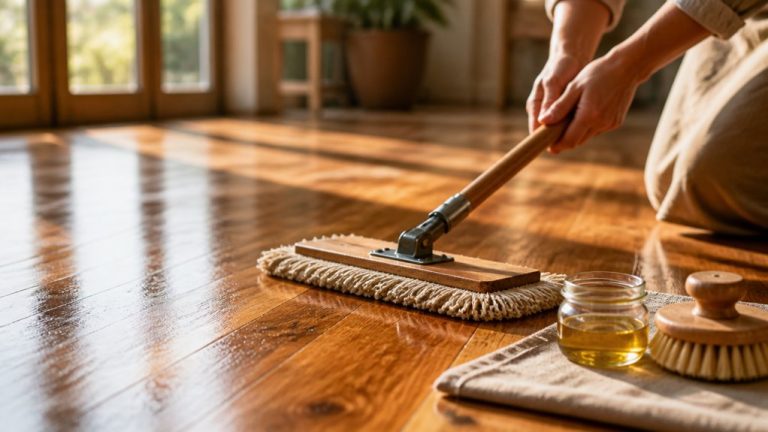
Wring your mop well to keep the floor damp, not soaked.
Mop a small section at a time, ensuring the surface stays visibly wet for the required contact time.
After mopping, allow the floor to air dry.
If needed, rinse the floor with clean water to remove any residue.
Finally, empty and rinse your bucket and store the bleach securely.
Always follow product guidelines for best results, and consider preventive measures to maintain floor cleanliness over time.
Follow These Essential Safety Precautions
When using bleach to mop your floors, it’s crucial to prioritize safety to prevent accidents and health risks. Always wear gloves and consider eye protection, especially if the label recommends it.
Never mix bleach with ammonia, acids, or other cleaners, as this can produce harmful gases. Work in a well-ventilated area by opening windows or doors to avoid inhaling vapors.
Keep bleach away from your skin, eyes, clothing, and out of reach of children and pets. If you spill any solution, clean it up immediately.
After handling bleach, wash your hands thoroughly and confirm any contaminated clothing is cleaned before reuse.
These precautions will help you use bleach safely and effectively. Additionally, be aware that mixing bleach with ammonia produces dangerous toxic gases that pose serious health risks.
How to Rinse, Clean Up, and Store Bleach Properly?
After you’ve finished mopping with bleach, it’s essential to properly rinse and clean up to guarantee safety and maintain your cleaning tools.
Start by emptying the mop bucket and rinsing it thoroughly with clean water. If the floor surface is sensitive, rinse it with clean water to remove any bleach residue.
Empty the mop bucket and rinse it well with clean water, especially if the floor is sensitive.
Store your bleach tightly closed in a cool, dry place, away from incompatible chemicals. Always use freshly prepared bleach solutions, as their disinfecting strength diminishes over time.
Finally, follow local disposal rules and product-label instructions for any leftover solution. This safeguards safety and prolongs the lifespan of your cleaning supplies.
Proper cleanup protects both you and your home.
Frequently Asked Questions
Can Bleach Be Used on All Types of Flooring?
No, bleach can’t be used on all types of flooring.
It’s effective on hard, non-porous surfaces like tile and concrete, but it can damage unsealed hardwood, laminate, and marble.
Always test a small area first to check compatibility.
If you’re unsure about your flooring, consult the manufacturer’s instructions.
How Often Should I Mop With Bleach?
You should mop with bleach about once a month, depending on foot traffic and spills.
If you notice stains or strong odors, consider mopping more frequently.
Always start with a clean surface and allow the bleach solution to sit for the recommended time for effective disinfection.
Make sure to ventilate the area well and wear protective gear.
Adjust your schedule based on how often your floors need deep cleaning.
What Should I Do if Bleach Spills?
If bleach spills, act quickly to minimize the impact of the mischievous liquid.
First, don your protective gear. Absorb the spill with paper towels or a cloth, gently pressing to soak it up.
Once absorbed, clean the area with soap and water to neutralize the bleach. Rinse thoroughly with clean water, and guarantee good ventilation to disperse any lingering fumes.
Finally, responsibly dispose of the used materials, keeping safety a top priority.
Can I Use Bleach for Other Cleaning Purposes?
Yes, you can use bleach for various cleaning purposes, but stick to hard, non-porous surfaces.
It effectively disinfects bathrooms, kitchens, and laundry items.
Always dilute it according to the label’s instructions.
Never mix it with other cleaners to avoid dangerous fumes.
Test compatibility on a small area first, especially on sensitive surfaces.
After using, verify proper ventilation, wear gloves, and store bleach safely, away from children and pets.
How Long Does a Bleach Solution Remain Effective?
A bleach solution typically remains effective for 24 hours. After that, its disinfecting strength diminishes considerably.
To guarantee you’re using a potent solution, mix only what you need. If you’re unsure about its effectiveness, always prepare a fresh batch.
Remember, using old solutions can compromise your cleaning efforts.
Final Thoughts on Mopping Floors With Bleach Safely
In the end, mopping with bleach might seem like a quick fix for a spotless floor.
But don’t forget the irony: you could end up creating more mess than you started with.
By following the guidelines for safety and proper dilution, you’ve taken the first step toward a cleaner home.
Just remember, a sparkling floor isn’t worth risking your health.
So, mop wisely and maybe save the bleach for your laundry instead!