
How to Get Rid of Spoiled Milk Smell in Car: Cleaning Guide
To get rid of spoiled milk smell in your car, act quickly by blotting spills firmly without rubbing and removing the milk container immediately.
Clean removable mats and seat covers per instructions, and treat fixed upholstery with stain remover and enzyme cleaner to break down residues.
Sprinkle baking soda generously to absorb odors, then vacuum after several hours.
Increase airflow and dry thoroughly with fans or sunlight to prevent mold.
If odors linger, consider professional detailing options. More detailed steps can help guarantee complete odor removal.
Key Takeaways
- Blot spilled milk immediately with absorbent towels, avoiding rubbing to prevent deeper fabric penetration and odor spread.
- Sprinkle baking soda on dried milk stains, let sit overnight, then vacuum to absorb and remove sour odors.
- Apply a vinegar-water solution to affected areas, let sit 4-5 hours, then use enzyme cleaner to break down milk proteins.
- Dry upholstery thoroughly using fans, open windows, and sunlight to prevent mold and reduce lingering smells.
- Seek professional cleaning if sour odors persist, as they use specialized equipment like steam cleaners and ozone neutralizers.
Act Fast to Soak Up and Remove Milk Spills

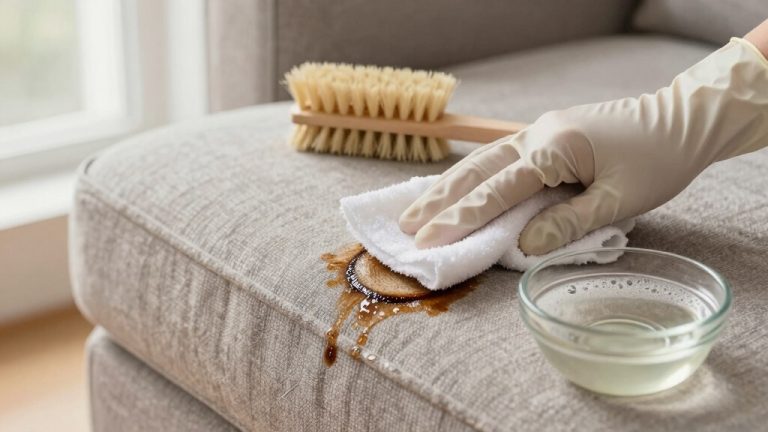
When milk spills in your car, act quickly to blot up the liquid. You want to avoid rubbing, which can push the milk deeper into the fibers.
Use paper towels, microfiber cloths, or absorbent towels to soak up as much liquid as possible. Press firmly to absorb the milk and replace towels as they saturate.
For dried residues, gently scrape with a plastic tool to remove crusted material before deeper cleaning.
Immediately remove the milk container to prevent further contamination and odor spread. Rapid removal minimizes penetration and bacterial growth, reducing spoilage smell risk.
This prompt, methodical approach is essential for efficient spill management and sets the foundation for subsequent odor treatment steps. Using an enzymatic cleaner after blotting can effectively break down organic residues and neutralize lingering odors.
Clean Removable and Fixed Car Upholstery and Mats After Milk Spills
After quickly removing excess milk from your car’s interior, focus on cleaning both removable and fixed upholstery and mats to prevent lingering odors.
Remove washable mats and seat covers, then launder them per manufacturer instructions or wash manually if rubber-backed.
For fixed upholstery, apply stain remover and use a suitable cleaner. Enzyme-based products work well to break down milk residue.
Always blot and rinse thoroughly. Dry all items completely to inhibit bacterial growth.
Use a towel to absorb excess water from both sides before air drying to ensure complete drying.
| Action | Result |
|---|---|
| Removing mats | Easier thorough cleaning |
| Washing covers | Removes milk residue |
| Treating fixed items | Prevents odor development |
| Complete drying | Stops bacterial growth |
This systematic approach guarantees effective odor control and avoids deeper contamination.
Use Baking Soda to Neutralize Spoiled Milk Odor
Sprinkle baking soda generously over the dried milk spill to absorb and neutralize the sour odor effectively.
Work the powder into the upholstery or carpet fibers using a soft brush or cloth to enhance contact with odor-causing residues.
Leave the baking soda in place overnight or for up to three to four days to maximize deodorizing action.
After the dwell time, vacuum thoroughly to remove all powder and trapped particles.
If the sour smell persists, repeat the application to guarantee complete neutralization.
Baking soda’s alkaline properties counteract the acidic components of spoiled milk, reducing odor molecules efficiently.
This method is safe for most car interiors and serves as a critical step before any wet cleaning or further odor treatment.
For best results, ensure the area is allowed to air dry completely to prevent moisture buildup and bacterial growth, as recommended for proper drying techniques.
Use Vinegar and Enzyme Cleaners to Remove Milk Odors
Although baking soda effectively neutralizes odors, vinegar and enzyme cleaners provide a deeper solution by breaking down the organic compounds in spoiled milk.
Mix one part white vinegar with four parts water in a spray bottle. Saturate the affected area and let it sit for four to five hours to penetrate fibers and neutralize bacteria.
Afterward, blot the area dry to remove moisture.
Apply an enzyme cleaner specifically designed for organic residues on upholstery and carpets. Follow product instructions, typically allowing 10–15 minutes dwell time, to ensure enzymes digest milk proteins and fats thoroughly.
After treatment, rinse or blot the surface to eliminate chemical residues and prevent lingering odors.
This method targets the root cause of the smell, guaranteeing a more complete and lasting deodorization.
For best results, keep the area damp during enzyme treatment, as enzymes require moisture to work effectively.
Dry, Ventilate, and Call Professionals If Needed
Once you’ve treated the area with vinegar and enzyme cleaners, focus on thoroughly drying and ventilating the car interior to prevent moisture buildup and lingering odors.
Open all windows and doors to increase airflow, and use fans if possible to accelerate drying.
Increase airflow by opening windows and doors, and use fans to speed up drying.
Remove floor mats and upholstery, placing them in direct sunlight to aid evaporation and odor reduction.
Aim for at least 12 hours of drying time to guarantee complete moisture removal.
Using fans and dehumidifiers can speed drying and reduce the risk of mold growth.
If you detect persistent sour smells despite your efforts, consider professional detailing services.
Experts employ advanced equipment like steam cleaners, carpet extractors, and ozone-based odor neutralizers that penetrate deep into fibers.
Acting promptly and relying on professional intervention when needed will eliminate residual contamination and restore your car’s fresh interior environment efficiently.
Frequently Asked Questions
Can Spoiled Milk Damage Car Electronics or Wiring?
Yes, spoiled milk can damage your car electronics or wiring if it seeps into electrical components.
Milk’s moisture and acidity promote corrosion, short circuits, and malfunction. You should immediately clean spills near electronics using absorbent towels and avoid rubbing.
If milk has penetrated wiring or control modules, have a professional inspect and repair them promptly to prevent long-term damage. This ensures your vehicle’s electrical system functions safely and reliably.
Is It Safe to Use Essential Oils to Mask Milk Odor?
You can safely use essential oils to mask milk odor, but they won’t eliminate the source.
Apply diluted oils sparingly on cloth or cotton balls placed in the car, avoiding direct contact with upholstery to prevent staining or damage.
Remember, essential oils only cover smells temporarily; thorough cleaning and odor neutralization are necessary for permanent removal.
Always test a small area first to make certain no adverse reactions with your car’s materials.
How Long Does Spoiled Milk Odor Typically Last Without Treatment?
When you leave spoiled milk odor untreated, it can stick around for days or even weeks, depending on temperature and ventilation.
It’s a stubborn stain on your car’s freshness. The smell penetrates fabrics and fibers, making it tough to shake.
Without prompt cleaning, the odor molecules embed themselves deeper, prolonging the issue.
To nip it in the bud, you’ll need targeted cleaning and odor neutralization techniques.
Otherwise, that sour scent lingers.
Will Leaving Windows Open Overnight Prevent Milk Smell Buildup?
Leaving your windows open overnight helps ventilate the car, reducing moisture and airborne odor particles. This can slow milk smell buildup.
However, ventilation alone won’t eliminate the source or deeply embedded residues. You’ll still need to clean affected areas thoroughly and use odor absorbers or enzymatic treatments to fully prevent smell persistence.
Open windows support drying and odor dissipation but don’t replace proper spill cleanup and deodorizing methods for milk smell control.
Can Pets Be Affected by Spoiled Milk Odors in the Car?
Yes, pets can be affected by spoiled milk odors in your car, as about 70% of animals have a more sensitive sense of smell than humans.
These odors can cause discomfort, nausea, or stress for your pets. To protect them, promptly clean spills using enzyme cleaners and ventilate the cabin thoroughly.
Avoid letting pets ride until the smell is fully eliminated to guarantee their well-being and comfort during travel.
How to Clean a Car After Spilling Milk
You’d think a little spilled milk would just dry up and disappear, but sadly, your car’s nose knows better.
Acting fast, cleaning thoroughly, and using baking soda or enzyme cleaners aren’t just suggestions; they’re your best defense against that stubborn sour stench.
If all else fails, don’t hesitate to call in the pros. After all, your car deserves more than just a sniff test; it deserves a fresh start.