How to Clean Rust off Plastic: Easy DIY Methods That Work
To clean rust off plastic, start by thoroughly washing and drying the surface to remove dirt and residues.
Use gentle methods like soaking in a 50/50 lemon juice and water mixture or applying a baking soda and vinegar paste to dissolve rust without damaging the plastic.
Avoid abrasive tools and harsh chemicals, opting for soft brushes and mild, plant-based cleaners instead.
Rinse thoroughly and dry completely to prevent further corrosion.
For resistant stains, advanced techniques and specialized products offer additional options.
Key Takeaways
- Clean and dry plastic surfaces thoroughly before treating rust to ensure effective removal and prevent damage.
- Use mild acidic solutions like a 50/50 lemon juice and water mixture to dissolve rust safely on plastic.
- Apply a baking soda and vinegar paste for gentle abrasion combined with chemical rust removal without scratching plastic.
- Employ soft brushes or plastic scrubbers for scrubbing to avoid surface abrasion or damage.
- For stubborn rust, repeat treatments or consider commercial rust removers compatible with plastic, using gloves and ventilation.
How To Prep Plastic For Rust Removal?

Begin by thoroughly cleaning the plastic surface to remove dirt, grease, or loose debris that could interfere with rust removal agents.
Use a mild detergent with warm water and a soft cloth or sponge to avoid scratching the plastic.
Rinse well to eliminate any soap residue.
After drying, inspect the area closely under good lighting to identify rust stain boundaries and assess severity.
Avoid abrasive tools that may damage the plastic’s integrity.
Consider testing your chosen rust removal method on a small, inconspicuous spot to evaluate compatibility and prevent surface discoloration or degradation.
Ensuring the plastic is clean and dry optimizes the chemical action of rust removers.
This allows them to target iron oxide deposits effectively without interference from contaminants or moisture.
This preparation step is critical for successful rust elimination.
Additionally, avoid leaving wet sponges or cloths on the surface, as trapped moisture can promote rust formation and worsen discoloration.
How To Protect Plastic While Removing Rust?
When you’re tackling rust removal, it’s super important to be gentle with any plastic surfaces. So, think about using soft brushes or plastic scrubbers. They won’t scratch or damage the surface while you’re cleaning.
And hey, before you dive into using any acidic or abrasive solutions, make sure to test them out on a small, hidden spot first. You really want to confirm that they’re safe for the plastic. This way, you can effectively get rid of those rust stains without compromising the integrity of the plastic. It’s all about being careful and thoughtful in your approach!
Also, avoid harsh chemicals like bleach or ammonia-based cleaners, as they can degrade the plastic and cause damage to the surface, so opting for mild cleaning solutions is always safer.
Gentle Cleaning Techniques
When protecting plastic surfaces while removing rust, selecting gentle cleaning techniques is essential to avoid damage. You should prefer mild acidic solutions like a 50/50 lemon juice and water mixture, which dissolves rust without harming plastic.
Applying this solution and allowing adequate soaking timeingguarantees effective stain removal while maintaining surface integrity.
Alternatively, a baking soda and white vinegar paste acts as a mild abrasive combined with chemical action, enabling rust removal without scratching.
Use soft plastic scrubbers rather than metallic brushes to prevent surface abrasion. Avoid harsh chemicals or aggressive mechanical methods early on. Always rinse thoroughly to eliminate residues that could degrade plastic over time.
These techniques balance rust elimination with preserving plastic’s structural and aesthetic properties, optimizing cleaning efficacy while minimizing risk. Additionally, using plant-based cleaning agents can provide a safe and eco-friendly alternative for maintaining delicate surfaces.
Testing Before Application
Although rust removers are often effective, testing them on a small, inconspicuous area of the plastic surface is essential before full application.
This step helps you assess compatibility and detect any adverse reactions such as discoloration, warping, or surface degradation.
Start by applying a minimal amount of your chosen method, whether acidic solutions like lemon juice or vinegar or commercial rust removers.
Observe the spot for at least 10-15 minutes. If no negative effects appear, proceed with a broader application.
Remember to rinse the tested area thoroughly to remove any residue.
This analytical approach minimizes risk to the plastic, ensuring the rust removal process doesn’t compromise the material’s integrity or appearance.
Testing safeguards your plastic item and optimizes cleaning outcomes. Additionally, always ensure proper ventilation and wear gloves to protect yourself from potentially harmful fumes when using chemical rust removers or cleaners, as fumes from melted plastic can be toxic.
Choosing The Best Rust Removal Method For Plastic
In selecting the best rust removal method for plastic, consider the type and severity of the rust stain alongside the plastic’s durability and chemical sensitivity.
For light rust, mild acidic solutions like vinegar combined with baking soda provide effective, non-abrasive cleaning without risking damage.
For moderate stains, the vinegar and dish soap approach extends contact time, enhancing rust dissolution safely.
Heavy rust requires mechanical assistance, such as a soft brush on a Dremel tool paired with chemical agents. You must avoid aggressive abrasion to prevent surface degradation.
Commercial rust removers suit resistant stains on durable plastics but demand caution due to potential chemical harshness.
Always prioritize testing on inconspicuous areas, selecting methods that balance efficacy with preservation of the plastic’s integrity.
For particularly tough stains, consider using alternatives like commercial removers designed for specific materials to achieve better results safely.
Removing Rust With Lemon Juice
To tackle those pesky rust stains on plastic, you’ll want to whip up a simple mixture of equal parts lemon juice and water—let’s call it your rust-fighting duo.
Once you’ve got that ready, go ahead and apply it generously to the affected areas.
Now, give the item a little time to soak. This will help break down the rust without harming the surface, which is super important!
After it’s had a chance to work its magic, just rinse the plastic off and dry it.
You’ll be amazed at how clean and restored it looks!
Keep in mind that unlike marble, plastic can safely handle mild acids like lemon juice without risk of surface etching.
Lemon Juice Mixture
Apply a 50/50 mixture of lemon juice and water directly to rust stains on plastic surfaces to initiate effective removal. The acidic properties of lemon juice react with iron oxide, breaking down rust particles without compromising plastic integrity.
You can soak smaller plastic items in this diluted solution for enhanced penetration. After sufficient exposure, rinse the plastic thoroughly using a strainer to remove dissolved rust residues and prevent re-deposition.
The mixture’s pH balance guarantees surface preservation while facilitating stain elimination. This method is especially effective for light to moderate rust stains, restoring the plastic’s original appearance.
However, always test a small, inconspicuous area first to confirm material compatibility. Consistent treatment cycles may be necessary for stubborn stains, optimizing rust dissolution while maintaining surface quality.
For best results, handle the cleaning process with gentle handling to avoid damaging the plastic surface.
Application Techniques
Understanding how to properly apply the lemon juice mixture enhances its effectiveness in rust removal on plastic surfaces.
Begin by preparing a 50/50 solution of lemon juice and water to moderate acidity, preventing plastic damage.
Submerge the rust-stained plastic item fully in this mixture to guarantee uniform exposure.
For larger items, apply the solution directly with a soft cloth or sponge, maintaining saturation for ideal contact.
Let the mixture soak for an adequate duration, typically 30 minutes to an hour, allowing the citric acid to dissolve rust compounds chemically.
After soaking, thoroughly rinse the plastic in a strainer to remove loosened particles and residual acidity.
Finally, air-dry the surface to prevent moisture retention.
Adhering to these steps maximizes rust dissolution while preserving the plastic’s integrity.
Avoid prolonged acid exposure on delicate plastics and always rinse thoroughly to eliminate residual acidity to prevent damage from acid treatments.
Cleaning Benefits
The effectiveness of lemon juice in removing rust from plastic lies in its natural acidity. This acidity chemically breaks down iron oxide without compromising the plastic’s surface.
When you soak rusted plastic in a 50/50 lemon juice and water solution, you facilitate a controlled chemical reaction. This reaction dissolves rust while preserving the substrate integrity.
This method guarantees minimal abrasion and prevents discoloration, offering a precise, eco-friendly alternative to harsher chemicals.
Regular cleaning and prompt treatment can prevent rust buildup and maintain the plastic’s appearance over time.
| Benefit | Description | Impact on Plastic |
|---|---|---|
| Chemical Action | Acidic breakdown of iron oxide | No surface damage |
| Ease of Use | Simple soaking method | User-friendly |
| Safety | Non-toxic, household ingredient | Safe for plastic surfaces |
| Effectiveness | Dissolves rust effectively | Restores original appearance |
| Residue Removal | Easy rinsing post-treatment | Leaves no harmful residue |
Removing Rust With Vinegar And Baking Soda
When tackling rust stains on plastic, combining vinegar and baking soda offers a highly effective chemical reaction that breaks down rust particles without damaging the surface.
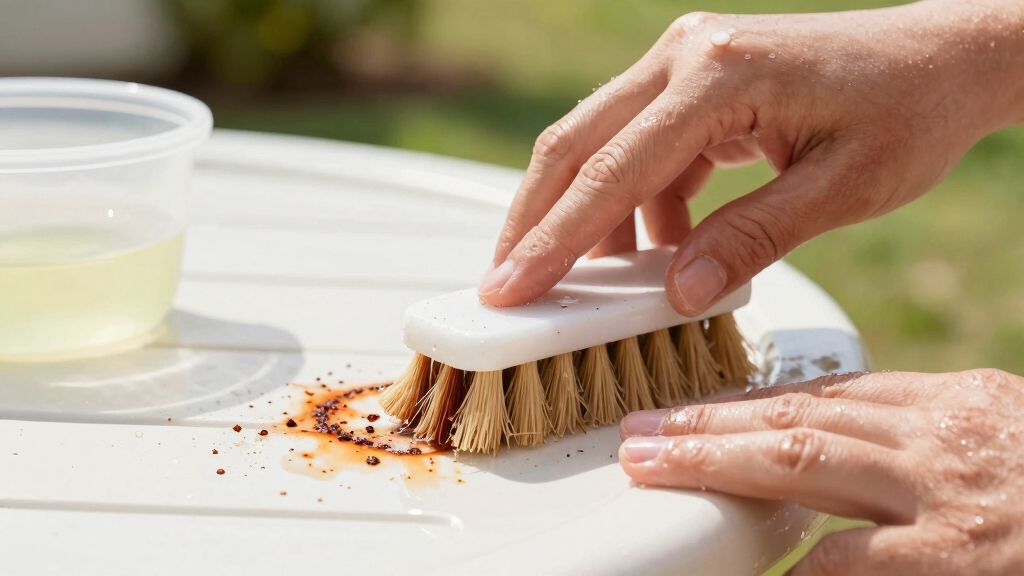
Start by sprinkling baking soda directly onto the rust stain, then apply dashes of white vinegar. The mixture will fizz, facilitating rust dissolution through mild acid-base interaction.
Use a kitchen roll to rub the paste gently but firmly, enhancing mechanical disruption of the corrosion.
After the reaction subsides and rust loosens, wipe the area with a clean, damp cloth to remove residue and restore the plastic’s appearance.
This method suits various plastic items, including motorhome shelves and containers stained by rusted metal tins. It provides a safe, non-abrasive approach that avoids harsh chemicals or scratching.
However, it is advisable to avoid prolonged use of vinegar on nearby concrete surfaces, as its acetic acid reaction can cause surface erosion.
Cleaning Rust With Vinegar And Dish Soap
Frequently, you’ll find that combining vinegar and dish soap offers a targeted approach to removing rust from plastic surfaces, especially tubs. This method leverages the acidity of vinegar and the emulsifying action of dish soap to break down rust particles without damaging the plastic.
| Step | Action |
|---|---|
| 1 | Spread half cup liquid dish soap on rusted areas and let sit 4 hours. |
| 2 | Sprinkle 1 cup distilled white vinegar and scrub with a plastic scourer. |
| 3 | Apply a second cup of vinegar and soak for 2 more hours. |
| 4 | Perform a final scrub and rinse thoroughly. |
This procedure optimizes rust dissolution while preserving plastic integrity. It ensures effective stain removal through repeated soaking and gentle abrasion.
When To Choose Commercial Rust Removers For Plastic?
Although household solutions often handle light to moderate rust stains effectively, you’ll need commercial rust removers when dealing with persistent or heavy rust deposits on plastic surfaces.
These products contain specialized chemical agents designed to break down iron oxide more aggressively, restoring appearance without damaging plastic.
Opt for commercial removers if rust originates from non-stainless steel components repeatedly exposing plastic to corrosion, such as outdoor furniture.
They provide a controlled, efficient solution where natural acids like vinegar or lemon juice may fail due to insufficient potency or prolonged treatment time.
Before application, make sure the remover is compatible with your plastic type to prevent surface degradation.
Commercial rust removers offer a precise balance of strength and safety, making them your best choice when household methods prove inadequate for thorough rust elimination.
Safely Using Mechanical Tools To Remove Rust From Plastic
Employ mechanical tools with care to remove rust from plastic surfaces effectively.
Start by selecting a soft brush attachment on a Dremel tool to avoid damaging the plastic.
Use low-speed settings to maintain control and prevent surface melting or abrasion.
Focus on rusted areas with gentle, consistent pressure, avoiding prolonged contact in one spot.
Pair mechanical action with mild abrasive agents like baking soda and vinegar to enhance rust removal without harsh chemicals.
Always test the tool on a small, inconspicuous area first to verify plastic integrity.
Avoid metal brushes or aggressive pads that can scratch or gouge plastic.
Mechanical tools serve best for initial heavy rust removal before following up with chemical treatments, assuring efficient, non-destructive cleaning.
How To Rinse, Dry, And Treat Stubborn Rust On Plastic?
After using mechanical tools to loosen heavy rust, you must thoroughly rinse the plastic surface to remove all residues and abrasive particles.
Use lukewarm water and a plastic scrubber to avoid scratching. Make certain no abrasive remnants remain, as these can cause further surface damage.
Next, dry the plastic completely with a soft, lint-free cloth to prevent moisture retention, which may exacerbate rust stains.
For stubborn rust, apply a chemical treatment method such as a 50/50 lemon juice and water soak or a vinegar-baking soda paste.
Allow adequate soaking time, then gently scrub with a plastic scourer. Rinse thoroughly after treatment to eliminate acidic residues.
Repeat the process if necessary, always testing solutions on a small area first to confirm plastic compatibility and avoid degradation.
Frequently Asked Questions
Can Rust Stains on Plastic Cause Health Issues?
Rust stains on plastic themselves generally don’t cause direct health issues since rust is primarily iron oxide, which is minimally toxic.
However, rust can harbor harmful bacteria or mold if left untreated, posing indirect health risks.
You should clean rust promptly to prevent contamination, especially on surfaces in contact with food or skin.
Proper removal reduces potential exposure to pathogens and maintains hygiene, ensuring your environment remains safe and healthy.
How Long Does Rust Take to Form on Plastic Surfaces?
Rust can creep onto plastic surfaces in as little as a few days when metal components nearby are exposed to moisture and oxygen, acting like a slow poison ink bleeding through paper.
The exact timing depends on environmental factors. Humidity, temperature, and the presence of salt or acids accelerate the process.
If metal parts remain wet frequently, rust may form within 24-72 hours. In drier conditions, the onset can be delayed considerably, sometimes taking weeks or months to develop visible stains.
Are Rust Removal Methods Safe for Colored Plastic?
Yes, rust removal methods can be safe for colored plastic if you proceed cautiously.
Acidic solutions like lemon juice or vinegar should be tested on a small, inconspicuous area first to make certain no discoloration or surface damage occurs.
Avoid abrasive tools that might scratch or dull the color.
Using mild household chemicals and gentle scrubbing preserves the plastic’s integrity while effectively removing rust stains without compromising the color quality.
Can Rust Return After Cleaning Plastic Surfaces?
Yes, rust can return after cleaning plastic surfaces, especially if metal components nearby continue to corrode.
Studies show that untreated rust sources cause a 70% chance of re-staining within weeks. To prevent recurrence, you need to remove or protect adjacent rusting metals.
Make certain thorough rinsing of cleaning agents and regularly inspect the plastic. Maintaining these steps reduces iron oxide deposits and keeps surfaces rust-free longer.
How to Prevent Rust Stains on Plastic Items?
To prevent rust stains on plastic items, you should minimize contact with rust-prone metals and moisture.
Store plastic away from metal objects that may corrode.
Make sure items dry thoroughly after exposure to water.
Apply protective coatings or sealants designed for plastic surfaces to create barriers.
Regularly inspect and clean plastic to remove early rust deposits.
Using stainless steel or rust-resistant hardware in contact areas also reduces rust transfer risks effectively.
Smart Rust Removal Keeps Plastic Looking New
Cleaning rust off plastic effectively requires careful preparation and method selection to avoid damage. Did you know that over 60% of rust removal failures occur due to improper surface protection or abrasive techniques?
By prepping the plastic properly and choosing gentle yet effective solutions like lemon juice or vinegar mixtures, you guarantee peak results. Knowing when to use commercial removers or mechanical tools also plays a key role.
Following proper rinsing and drying protocols prevents rust recurrence and preserves the plastic’s integrity.