How to Clean Le Creuset Kettle: Easy Step-by-Step Guide
To clean your Le Creuset kettle, first empty and rinse it with hot water to loosen debris, avoiding the heating element.
Use a gentle descaler or mix baking soda with vinegar or lemon juice. Then boil and let sit to break down limescale.
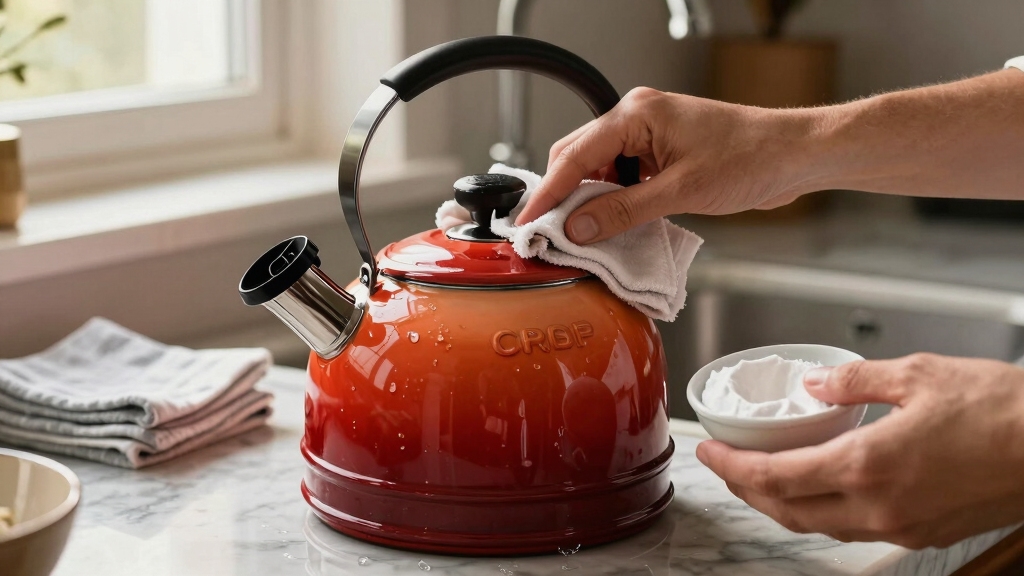
Gently scrub with a non-metallic sponge, rinse thoroughly, and dry immediately with a soft towel.
Store with the lid off to prevent moisture buildup. Keeping to these steps preserves enamel and efficiency.
Explore more detailed tips to maintain your kettle’s condition.
Key Takeaways
- Remove labels, rinse kettle with hot water, and boil clean water initially to flush out manufacturing residues before first use.
- Use gentle descalers or natural mixtures like baking soda with vinegar or lemon juice to break down limescale safely.
- Scrub interior gently using non-metallic sponges or soft cloths to avoid scratching or damaging the enamel coating.
- Rinse thoroughly with cold water after cleaning to remove all residues and prevent lingering odors or tastes.
- Dry kettle immediately after cleaning, store with lid off, and avoid leaving water inside to prevent limescale buildup.
Why Limescale Forms and Why It Matters for Your Le Creuset Kettle?

Although you may not notice it immediately, limescale forms inside your Le Creuset kettle whenever hard water is boiled.
This mineral buildup is primarily composed of calcium carbonate. Heating causes dissolved minerals to precipitate and adhere to the kettle’s interior surfaces.
Over time, these deposits accumulate, reducing heating efficiency by insulating the water from the heat source. This can extend boiling time.
Additionally, limescale can cause discoloration and create rough patches that harbor bacteria or affect taste.
If left untreated, this buildup may damage the kettle’s enamel coating, leading to permanent stains or degradation.
Understanding why limescale forms helps you recognize the importance of regular maintenance to preserve your kettle’s performance, appearance, and longevity.
Prompt cleaning prevents microbial growth and helps maintain a safe and clean water environment inside your kettle.
How to Prepare Your Le Creuset Kettle for Cleaning?
Before you begin cleaning your Le Creuset kettle, remove all labels and packaging to prevent any adhesive residue from interfering with the cleaning process.
Next, make sure the kettle is completely empty, discarding any leftover water. Check that the handle is securely in the upright position if yours has a folding handle.
Rinse the interior thoroughly with hot water to loosen any loose debris. Avoid touching or soaking the heating element inside.
If it’s your first cleaning, fill the kettle with clean water, bring it to a boil, then discard this water to flush out any manufacturing residues.
Finally, prepare your cleaning materials: use only non-metallic sponges or soft cloths with neutral detergent to protect the kettle’s surface during cleaning.
Regular maintenance, including wiping and rinsing, helps prevent buildup and prolongs the lifespan of your kettle, similar to recommended cleaning schedules for other kitchen appliances.
Top Ways to Remove Limescale From Your Le Creuset Kettle
Several effective methods exist to remove limescale buildup from your Le Creuset kettle, ensuring its performance and longevity.
To tackle deposits methodically, follow these steps:
- Use a gentle, proprietary descaler according to manufacturer instructions. This prevents damage and restores efficiency.
- Scrub the interior with a non-metallic sponge or soft cloth to avoid scratching the enamel.
- Avoid abrasive cleaners that can harm the kettle’s surface and reduce lifespan.
- Thoroughly rinse the kettle with clean, cold water after descaling to remove any residue.
Additionally, regularly drying and cleaning the kettle helps prevent limescale buildup and maintains its condition over time.
Cleaning With Vinegar and Baking Soda
Sure! Here’s a more conversational version of your text:
First things first, fill your kettle with water and get it boiling. Once it’s nice and hot, carefully add some baking soda. This will really help loosen any deposits that have built up over time.
Now, here’s a little tip: let the vinegar sit in the kettle for about ten minutes. This is key for breaking down that pesky limescale. After the soak, grab a non-reactive scrubber and gently scrub the inside of the kettle.
And don’t forget to rinse it out thoroughly! You want to make sure there’s no lingering vinegar smell left behind. Happy cleaning!
For maintaining your kettle’s finish and avoiding damage, it’s best to use cleaners that are pH-neutral and gentle on surfaces.
Vinegar Soaking Time
When you let vinegar sit in your Le Creuset kettle for approximately ten minutes during cleaning with vinegar and baking soda, it effectively loosens limescale and mineral deposits without causing damage.
This soaking time is critical to maximize vinegar’s acidity, which breaks down buildup gently yet thoroughly.
Follow these steps:
- After boiling water in the kettle, add vinegar and let it sit for ten minutes.
- Avoid exceeding this time to prevent any potential enamel dulling.
- Use a non-reactive scrubber once soaking is complete to dislodge softened deposits.
- Rinse thoroughly with cold water to remove all vinegar residues.
It is also important to avoid harsh chemicals that can cause skin irritation during handling.
Baking Soda Application
After boiling water in your Le Creuset kettle, sprinkle baking soda directly into the hot water to create a gentle fizzing reaction. This helps break down limescale and stubborn residues.
This fizzing action loosens mineral buildup, making it easier to remove later. Let the solution sit for about 10 minutes to maximize effectiveness.
If you prefer, you can add baking soda to cold water and simmer the mixture for five minutes before letting it rest. Baking soda’s mild alkalinity neutralizes acidic deposits without damaging your kettle’s interior.
Always use the recommended amount—typically two tablespoons—to avoid residue buildup. After the application time, proceed to the next cleaning step to remove loosened deposits.
This method complements vinegar soaking by enhancing overall descaling without harsh chemicals or abrasive scrubbing. For best results, apply the paste generously and avoid letting it dry completely to preserve the surface’s protective finish, as explained in paste application.
Scrubbing and Rinsing
Gently scrub the kettle’s interior using a non-reactive sponge or soft cloth to lift loosened limescale, sand molds, and food particles without damaging the surface.
Follow these steps methodically:
- Fill the kettle with tap water and bring it to a boil.
- Add baking soda to the boiled water, then pour in vinegar and let it sit for about ten minutes.
- Use your sponge or cloth to carefully scrub the interior, focusing on stubborn deposits.
- Rinse thoroughly with clean, cold water until no vinegar traces remain to prevent lingering odors or damage.
This precise scrubbing and rinsing process guarantees your Le Creuset kettle stays clean without compromising its enamel finish. For best results, always rinse thoroughly to remove residues that could cause odors or damage.
Cleaning With Lemon Juice and Baking Soda
To clean your Le Creuset kettle effectively with lemon juice and baking soda, start by mixing 2 tablespoons of baking soda with 3 tablespoons of lemon juice in a bowl of water.
Begin by blending 2 tablespoons baking soda with 3 tablespoons lemon juice in water.
Pour this mixture into the kettle, ensuring it’s filled enough to cover the interior surfaces.
Place the kettle on the stove and bring the solution to a boil.
Maintain boiling for approximately 30 minutes to break down mineral deposits and stains.
After boiling, allow the solution to sit inside the kettle for about one hour to enhance cleaning action.
Once time’s up, carefully pour off the liquid, then clean the interior as usual with soap and water.
Finally, rinse the kettle multiple times to remove all residue and wipe it down thoroughly to prepare for the next use.
For best results, always rinse and dry immediately to prevent water spots and ensure a clean, shiny finish.
Drying Tips to Prevent Limescale in Your Kettle
Although cleaning removes visible buildup, proper drying is essential to prevent limescale from forming inside your Le Creuset kettle.
Moisture left inside encourages mineral deposits, leading to limescale over time.
To keep your kettle in peak condition, follow these drying tips:
- Immediately after cleaning, wipe the interior and exterior with a dry, absorbent towel to remove all water traces.
- If you prefer, place the kettle on low heat for a few minutes to evaporate residual moisture gently.
- Always empty the kettle completely after each use; never leave water sitting inside.
- Store the kettle with its lid off or ajar to allow air circulation, preventing dampness buildup.
Minimizing residual moisture is important because excess water can cause damage similar to wood flooring, so drying thoroughly helps maintain your kettle’s longevity.
Cleaning Tools to Use and Avoid for Your Le Creuset Kettle
When you’re cleaning your Le Creuset kettle, it’s best to stick with non-metallic sponges or soft cloths. Trust me, this will help you avoid scratching that beautiful enamel surface. You really don’t want to risk any damage!
Also, steer clear of abrasive cleaners and metal scrubbers. They might seem tempting for tough spots, but they can actually harm the interior and shorten your kettle’s lifespan.
To maintain your kettle’s finish, use gentle circular motions when scrubbing to prevent surface wear and preserve its enamel coating.
Recommended Cleaning Tools
Choosing the right cleaning tools is essential to maintain your Le Creuset kettle’s finish and functionality. To keep it in prime condition, use tools that clean effectively without causing damage.
- Non-metallic sponges or soft cloths are perfect for scrubbing the interior gently, preventing scratches.
- A soft-bristled brush helps remove limescale and food residues from hard-to-reach areas.
- Microfiber towels work well for drying, ensuring no water spots or residue remain.
- Silicone or plastic scrubbers provide a safe alternative to abrasive pads for stubborn stains.
Stick to these tools for thorough cleaning while preserving your kettle’s enamel coating. Always avoid harsh or abrasive materials, as they can degrade the surface and shorten your kettle’s lifespan.
Tools To Avoid
Since your Le Creuset kettle has a delicate enamel finish, you’ll want to steer clear of abrasive cleaning tools that can cause scratches or damage.
Avoid steel wool, metal scrubbers, or harsh scouring pads. They can quickly wear down the enamel surface.
Also, skip rough brushes with stiff bristles that might chip the coating. Instead, use non-metallic sponges or soft cloths for scrubbing.
Stay away from abrasive powders and harsh chemical cleaners, as they can degrade the enamel and dull the kettle’s appearance.
Do not use sharp objects to scrape off limescale or residue, as this risks permanent damage.
Frequently Asked Questions
Can I Use a Dishwasher to Clean My Le Creuset Kettle?
You shouldn’t use a dishwasher to clean your Le Creuset kettle. The harsh detergents and high heat can damage its enamel coating and affect performance.
Instead, hand wash it with lukewarm water, a mild detergent, and a non-metallic sponge or cloth. Rinse thoroughly and dry completely to prevent limescale buildup.
This careful approach preserves your kettle’s finish and longevity much better than dishwasher cleaning would.
How Often Should I Descale My Le Creuset Kettle?
Don’t let the grass grow under your feet. Descale your Le Creuset kettle every 1 to 3 months, depending on how hard your water is.
Hard water areas need more frequent descaling to prevent buildup that can slow boiling and damage the kettle.
Use a gentle descaler following the manufacturer’s instructions. Avoid abrasive cleaners, and always scrub with a non-metallic sponge.
Regular maintenance keeps your kettle performing at its best.
Is It Safe to Boil Water With Lemon or Vinegar Residue Inside?
Yes, it’s safe to boil water with small amounts of lemon or vinegar residue inside your kettle.
These natural acids are commonly used for cleaning and won’t harm you in trace amounts.
However, you should thoroughly rinse the kettle after cleaning to avoid any lingering taste or smell.
Boiling fresh water a few times afterward helps remove residual flavors, ensuring your next use delivers clean, neutral-tasting water.
Can Le Creuset Kettles Be Used on Induction Stovetops?
About 70% of modern kitchens use induction stovetops, and you’ll be glad to know Le Creuset kettles work perfectly on them.
Their cast iron bases are ferromagnetic, ensuring efficient heat transfer on induction surfaces. Just place your kettle securely on the cooktop to start boiling.
Remember to avoid sliding it to prevent scratches, and always handle it carefully to maintain the enamel finish and long-lasting performance.
How Do I Remove Stains From the Exterior Enamel of My Kettle?
To remove stains from your kettle’s exterior enamel, start by making a paste with baking soda and water.
Apply it gently to the stained areas using a soft cloth or non-abrasive sponge.
Let it sit for a few minutes, then carefully rub in circular motions.
Rinse thoroughly with warm water and dry with a soft towel.
Avoid harsh scrubbing or abrasive cleaners to protect the enamel’s finish and maintain its shine.
Protect the Finish, Preserve the Performance
Regularly cleaning your Le Creuset kettle helps prevent limescale buildup, which affects 85% of kettles in hard water areas.
By preparing your kettle properly and using gentle methods like vinegar or lemon juice with baking soda, you’ll keep it sparkling and extend its life.
Always dry it thoroughly to avoid future deposits. Choosing the right cleaning tools guarantees you protect the beautiful enamel finish. Staying consistent means your kettle stays efficient and beautiful for years to come.