
How Do I Get Furniture Dents Out of Carpet: Easy Fixes
How Do I Get Furniture Dents Out of Carpet: Easy FixesTo get furniture dents out of carpet, first assess the dent’s depth and your carpet material to pick the right method.
For shallow dents, gently vacuum or apply light heat with a spritz of water.
Deep dents respond well to ice cubes melting slowly or steam treatments that relax fibers. Always protect fibers with a damp towel.
Avoid excessive moisture or rubbing, then fluff and vacuum after.
If dents persist or your carpet’s delicate, more advanced tips can help restore your carpet effectively.
Key Takeaways
- Lightly spritz the dented carpet area with water and use a blow dryer or steam to relax compressed fibers and restore shape.
- Place ice cubes on deep dents for 8–10 hours, then lift fibers gently with a spoon or fork and fluff to reshape.
- Vacuum the dented area with a soft brush attachment before and after treatment to lift fibers and remove debris.
- Use a damp towel to protect fibers during steam or heat treatments and avoid direct contact to prevent damage.
- Test any moisture or heat method on a hidden carpet area first to ensure fiber compatibility and avoid discoloration.
What Causes Carpet Dents and How to Assess Them?

Although carpet dents might seem like a minor issue, they can noticeably affect the appearance and texture of your flooring.
These dents form when heavy furniture compresses carpet fibers over time, reducing their elasticity and causing permanent impressions.
The depth and duration of the dent directly influence how difficult it’s to restore the carpet’s original look.
To assess dents effectively, examine the indentation’s size, depth, and how long it has been present.
Consider the carpet material, as denser fibers like nylon tend to rebound better than polyester.
Also, note the location; high-traffic areas might complicate restoration.
Understanding these factors will help you choose the most appropriate method to revive your carpet’s texture and maintain its aesthetic appeal.
Using gentle vacuuming techniques with soft-bristle attachments can help lift compressed fibers without causing damage.
How to Choose the Best Method for Your Carpet Dent?
When you’re trying to pick the best method for fixing that carpet dent, it’s important to think about a couple of things. First off, how deep is that dent? And what kind of carpet do you have? These details really matter because they can affect how well certain techniques will work.
Also, how fast do you need the results? Some methods can give you quick fixes, while others might take a bit longer. By matching the right method to your specific situation, you’ll be able to restore your carpet efficiently and safely. So, let’s dive into the different options and find the one that fits your needs best!
Additionally, maintaining proper humidity levels indoors can improve drying times and help prevent sticky residues that might affect carpet fibers during cleaning.
Dent Depth Considerations
Since the depth of a carpet dent directly affects how you should treat it, understanding this factor is crucial for selecting the most effective removal method.
Shallow dents often respond well to quick vacuuming or gentle heat application. This can lift fibers without over-saturating or damaging them.
For deeper, more persistent dents caused by heavy furniture or long-term pressure, you’ll need moisture-based techniques like the ice or steam methods. These help relax and reshape compressed fibers effectively.
Assess the dent by pressing it lightly. If fibers don’t bounce back, moisture and heat can help restore their spring.
Always start with the least invasive method first, then escalate if necessary. This approach minimizes risk while maximizing your chances of fully reviving your carpet’s texture and appearance.
Proper rinsing and drying after treatment are important to prevent residue buildup that can stiffen fibers and attract dirt.
Carpet Material Impact
Understanding your carpet’s material plays a crucial role in choosing the best method to remove dents effectively. Different fibers respond uniquely to treatments, so you’ll want to tailor your approach.
For example, synthetic carpets like nylon tolerate heat better, while polyester needs gentler care. Use ice for minor dents on delicate fibers and steam or heat for stubborn, deep marks on resilient materials.
| Carpet Type | Recommended Method | Notes |
|---|---|---|
| Nylon | Heat or Steam | Durable; tolerate higher heat |
| Polyester | Ice or Gentle Steam | Less elastic; avoid high heat |
| Wool | Steam or Vacuum | Natural fibers; avoid excess water |
| Synthetic Blend | Heat, Steam, or Vacuum | Versatile; test small area first |
Selecting the right method guarantees efficient dent removal without damaging your carpet. Always test your chosen method on a small hidden area first to ensure compatibility with the carpet fibers and avoid damage to the fabric texture.
Desired Speed Factors
Choosing the right method for removing carpet dents depends not only on the carpet material but also on how quickly you want to see results.
If you need a fast fix, the heat method with a blow dryer and spritzed water can restore fibers within minutes.
For deeper or older dents, steam treatments or ironing with a damp cloth may take longer but offer more thorough restoration.
The ice method requires patience, allowing 8-10 hours for ice to melt and fibers to relax gradually.
Vacuuming works best for minor dents and provides a quick lift but isn’t effective for deep indentations.
Assess the dent’s depth and your time constraints carefully to select a method that balances speed and effectiveness, ensuring you protect your carpet’s fibers throughout the process.
Also, it is important to avoid rubbing the fibers during treatment to prevent permanent damage and ensure the best results.
Use Ice Cubes to Lift Carpet Dents
When you want to lift carpet dents caused by furniture, using ice cubes offers a straightforward and effective solution.
Place ice cubes directly over the dent and let them melt completely, typically within 8-10 hours.
After melting, soak up excess water with a sponge or towel.
Then, use the back of a spoon to pull the carpet fibers back into place gently.
You can also rub the area with ice cubes and carefully lift the fibers with a fork to restore their springiness.
For persistent indentations, applying a gentle spot remover designed for carpets can help restore the carpet’s texture and appearance while ensuring fiber compatibility.
| Step | Action |
|---|---|
| 1 | Place ice cubes on dent |
| 2 | Let ice melt for 8-10 hours |
| 3 | Absorb excess water |
| 4 | Pull fibers up with spoon or fork |
| 5 | Fluff fibers gently to reshape carpet |
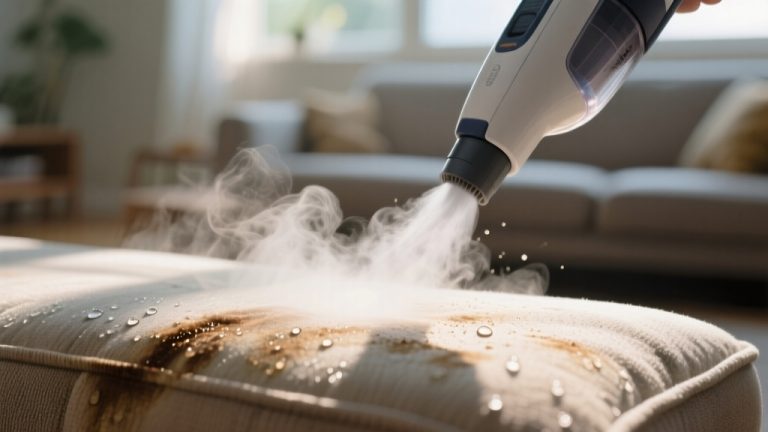
Remove Deep Carpet Dents With Steam
To get rid of those pesky deep carpet dents using steam, you’ll want to start by prepping the area. Just give it a light mist of water to shield the fibers from any heat damage.
Next, grab your steamer or iron with a steam function and hold it a few inches above the dent. Make sure to apply the moisture evenly for about 1 to 2 minutes.
Once you’ve steamed the area, it’s time to fluff those fibers back up! You can use your fingers or even a fork for this. Finally, give the carpet a good vacuum to bring back its original texture. Easy peasy!
For best results, use a microfiber cloth to gently blot any excess moisture and protect the carpet fibers during the process.
Preparing Carpet For Steam
Before applying steam to remove deep carpet dents, you’ll want to properly prepare the area to guarantee ideal results and prevent damage.
Start by clearing the space of any furniture or objects to access the dent fully.
Next, vacuum the carpet thoroughly to remove dirt and debris, which can interfere with steam penetration.
Then, lightly spray the dented area with water to help soften the fibers and protect the carpet from overheating during steaming.
Finally, place a damp towel over the dent to evenly distribute moisture and shield fibers from direct heat.
Following these steps makes certain your carpet is ready for effective steam treatment, reducing the risk of damage while maximizing the chance of restoring the fibers’ original shape. Proper preparation and ventilation can also help reduce the drying time after steam cleaning.
Applying Steam Effectively
Having prepared the carpet by clearing the area, vacuuming thoroughly, and applying moisture with a damp towel, you’re ready to apply steam for dent removal.
Place a damp towel over the dent to protect fibers from direct heat. Set your iron to medium-high and press it gently onto the towel for 1-2 minutes. Alternatively, use a handheld steamer held 4-6 inches above the area to release steam evenly.
Avoid overheating by misting the surrounding carpet lightly beforehand. After steaming, lift and fluff the carpet fibers with your fingers or a fork to restore their original shape.
Finally, vacuum the area to encourage the fibers to stand upright, enhancing the carpet’s appearance and fully diminishing the dent. Using steam at high temperatures with adjustable controls ensures effective cleaning while protecting carpet fibers.
Post-Steam Fiber Restoration
Fluffing and lifting carpet fibers immediately after steaming plays a crucial role in fully restoring deep dents.
Once you’ve steamed the area, take these steps to bring your carpet back to life:
- Use your fingers or a fork to gently lift and separate the damp fibers, encouraging them to regain their original shape.
- Vacuum the treated area to pull fibers upward and remove loosened debris.
- Spray the surrounding carpet lightly with water beforehand to avoid overheating and damage.
- Repeat steaming and fluffing if the dent remains noticeable, especially on thicker or synthetic carpets.
Following this routine guarantees deep dents soften and fibers spring back, restoring the carpet’s texture and appearance professionally and effectively. It is important to avoid excessive moisture during this process to protect carpet integrity and prevent further damage.
How to Use Heat to Restore Carpet Fibers?
Revive carpet fibers by applying controlled heat combined with moisture to lift and reshape dents effectively.
Begin by spritzing the dented area lightly with water from a spray bottle once or twice. Then, use a blow dryer on high heat while fluffing fibers gently with your fingers until the area dries.
For deeper dents, place a damp cotton cloth over the spot and iron on the highest safe temperature for your carpet type.
Repeat ironing one to three times, allowing the heat and moisture to penetrate and relax compressed fibers.
Protect synthetic carpets by always keeping a towel between the iron and fibers to prevent damage.
This method restores the carpet’s texture efficiently without harsh chemicals or excessive effort.
Fix Minor Carpet Dents With a Vacuum Brush
When you want to smooth out minor carpet dents quickly, using a vacuum brush attachment can be surprisingly effective. This method works by gently massaging the carpet fibers, encouraging them to regain their original shape and elasticity.
Here’s how to do it:
- Attach the brush head to your vacuum and set the height according to your carpet type.
- Position the vacuum directly over the dented area.
- Move the vacuum slowly back and forth, allowing the brush to agitate and lift the fibers.
- Repeat until the dent visibly improves or disappears.
This technique is ideal for minor to medium dents and requires no additional tools or moisture. It’s a practical, quick fix that maintains your carpet’s texture without risking damage.
Protect Your Carpet Fibers During Dent Removal
Preserving your carpet fibers during dent removal guarantees the material remains intact and looks its best after treatment.
To protect fibers, always avoid excessive moisture or heat that can weaken or discolor them. When using ice or steam methods, apply water sparingly and soak up any excess immediately.
If you use heat, place a damp cloth between the iron or blow dryer and the carpet to prevent direct contact. Gently lift fibers with tools like a spoon or fork rather than pulling aggressively, which can damage strands.
After treatment, fluff the fibers carefully with your fingers or a brush attachment on your vacuum to restore their natural texture. Taking these precautions makes certain your carpet regains its shape without compromising fiber strength or appearance.
When to Hire Professionals for Tough Carpet Dents?
Although many carpet dents can be effectively treated at home using ice, steam, or heat methods, you should consider hiring a professional cleaner if the dents are particularly deep, old, or caused by heavy furniture.
Professionals have specialized equipment and expertise to restore carpet fibers without damage. Here are situations when you should call in the experts:
- The dent has been in place for over a year and home methods haven’t worked.
- The carpet is made of delicate or synthetic fibers that risk damage from DIY heat or steam.
- Heavy furniture left deep, persistent marks that don’t respond to ice or vacuum methods.
- You want a guaranteed, thorough restoration without risking further fiber damage.
Hiring a professional guarantees safe, effective dent removal and extends your carpet’s life.
Frequently Asked Questions
Can Furniture Dents Cause Permanent Carpet Damage if Untreated?
Yes, furniture dents can cause permanent carpet damage if you leave them untreated. The fibers can become crushed and lose elasticity over time, especially with heavy furniture or long-term pressure.
This leads to flattened areas that mightn’t fully recover, affecting your carpet’s appearance and texture. To avoid permanent dents, it’s best to address them promptly using appropriate methods like steam or heat to restore the fibers’ springiness and maintain your carpet’s integrity.
How Long Does It Take for Carpet Fibers to Naturally Recover?
Carpet fibers typically take several days to a few weeks to naturally recover from furniture dents, depending on fiber type and dent depth.
Nylon fibers bounce back faster than polyester, which is less elastic. Heavy furniture or prolonged pressure can slow recovery markedly.
You can speed this up by fluffing fibers or using gentle steam or heat treatments. Regular vacuuming also helps restore fiber shape more quickly and effectively.
Are There Specific Carpet Types More Prone to Furniture Dents?
When it comes to furniture dents, some carpet types are an open book.
Polyester carpets tend to take a bigger hit because they’re less elastic, making dents stick around longer.
Nylon, on the other hand, bounces back faster thanks to its resilience.
If you’re dealing with heavy furniture or long-term dents, expect to put in more effort, especially with synthetic fibers.
Knowing your carpet type helps you pick the right fix and get your carpet looking shipshape.
Can Carpet Protectors Prevent Dents From Forming Under Heavy Furniture?
Yes, carpet protectors can help prevent dents under heavy furniture by distributing weight more evenly and reducing pressure points.
When you place protectors, like plastic or rubber mats, under legs, they minimize fiber compression and slow dent formation.
However, they aren’t foolproof; very heavy furniture or prolonged pressure may still cause dents.
Combining protectors with regular repositioning and maintenance guarantees your carpet stays in better shape over time.
How Do Humidity and Room Temperature Affect Carpet Dent Recovery?
Humidity and room temperature markedly impact carpet dent recovery. When humidity is higher, your carpet fibers absorb moisture, making them more pliable and easier to reshape.
Warm temperatures also help fibers regain their original form faster by increasing flexibility. Conversely, dry or cold conditions stiffen fibers, slowing recovery.
To speed up dent removal, you can increase humidity with a damp cloth or steam. Maintaining a warm room temperature promotes fiber elasticity and effective restoration.
Restore the Comfort: Bring Your Carpet Back to Life
Think of your carpet dents like footprints in fresh snow. They are temporary impressions that can be gently erased.
By choosing the right method, whether ice, steam, or heat, you restore your carpet’s natural resilience and beauty.
With careful care, those dents won’t define your space. Remember, protecting the fibers during the process is key. When in doubt, professionals are your trusted guides to bring your carpet back to life.