Best Way to Clean Mirrors: Easy Methods That Actually Work
To clean mirrors effectively, start by dusting with a dry microfiber cloth to avoid scratches.
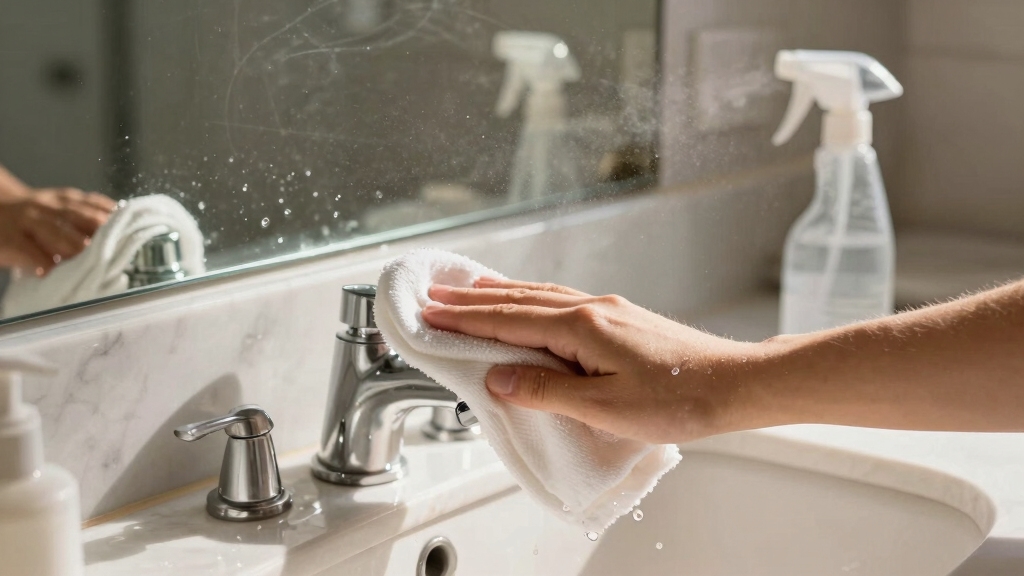
Spray a gentle vinegar-based solution onto a lint-free microfiber cloth. Never spray directly on the mirror to prevent moisture damage.
Wipe in a zigzag motion from top to bottom, using gentle pressure. For foggy spots, dab rubbing alcohol on a cotton ball.
Dry edges thoroughly to protect the backing. Following these careful steps guarantees a streak-free shine and long-lasting mirror clarity.
You’ll find even more tips on maintaining your mirror’s pristine condition ahead.
Key Takeaways
- Dust mirrors first with a dry microfiber cloth or feather duster to remove loose particles without scratching.
- Spray cleaning solution onto a lint-free microfiber cloth, not directly on the mirror, to avoid moisture damage at edges.
- Use a gentle, vinegar-based homemade cleaner or a quality glass cleaner for streak-free results.
- Wipe in a zigzag pattern from top to bottom with gentle pressure, then buff streaks with a dry microfiber cloth.
- Thoroughly dry mirror edges after cleaning to prevent backing damage and silver tarnish.
Essential Tools for Mirror Cleaning

Gathering the right tools is essential for effective mirror cleaning. You’ll need a lint-free microfiber cloth to capture dirt and avoid scratches.
Start with a soft cloth or feather duster to remove loose dust. For tougher grime, keep cotton balls handy, especially for applying rubbing alcohol or vodka on hazy spots.
A quality glass cleaner like Windex works well, but homemade solutions can be just as effective. Consider a squeegee or cordless window vac for steam cleaning removal.
Avoid rough fibers or abrasive materials that might damage the glass. Store your homemade cleaning mixtures in a cool, dark place to maintain efficacy.
Using these tools methodically guarantees a streak-free, spotless surface without harming your mirror’s delicate backing or edges.
Replace wet microfiber cloths frequently to maintain absorbency and prevent redepositing dirt when cleaning mirrors with a microfiber cloth.
Preparing Your Mirror for Cleaning
Sure! Here’s a more conversational version of your text:
—
First things first, grab a dry microfiber cloth and give your mirror a quick dusting.
This helps get rid of any loose dirt and debris that might be hanging around.
Next up, take a soft cloth and dampen it with some rubbing alcohol.
Give those visible spots and stubborn particles a good wipe-down; you’ll be amazed at how well it works!
Now, let’s get the mirror ready for a thorough clean.
Lightly mist it with some warm water using a spray bottle or a damp cloth.
This will help prep the surface for the next steps!
Using a high-quality microfiber cloth ensures a streak-free shine without scratching your mirror.
—
Dusting Surface First
Removing dust from your mirror’s surface is a crucial first step before applying any cleaning solution. You want to avoid scratching the glass by gently lifting dust and loose particles first.
Use a dry microfiber cloth or a soft feather duster designed to capture dust without abrasion.
Here’s a quick guide to effective dusting:
| Tool | Purpose |
|---|---|
| Microfiber cloth | Captures fine dust safely |
| Feather duster | Removes loose particles |
| Soft brush | Reaches corners and edges |
| Avoid rough fibers | Prevents scratching |
Choosing the right lint-free quality cloth ensures dust is removed without leaving residues that can dull the mirror’s surface over time.
Removing Visible Debris
Focus on eliminating any visible debris on the mirror before applying your cleaning solution to guarantee a spotless finish.
Begin by inspecting the surface for dust, smudges, or spots that can interfere with effective cleaning. Use a dry microfiber cloth to gently remove loose dirt without scratching.
For stubborn particles, lightly dab a soft cloth corner with rubbing alcohol and carefully lift the debris.
To prepare thoroughly, follow these steps:
Dust the mirror surface with a microfiber or feather duster.
Spot clean visible debris with a cloth moistened by rubbing alcohol.
Avoid pressing hard to prevent scratching or damaging the mirror.
Focus on corners and edges where buildup often accumulates.
This targeted debris removal makes certain your cleaning solution works efficiently.
It is important to avoid abrasive tools to prevent damage during cleaning.
Moistening Mirror Properly
Moistening your mirror properly sets the stage for effective cleaning by loosening dirt without causing damage.
Begin by using a spray bottle filled with warm water to lightly mist the surface. Avoid soaking the mirror to protect the silver backing.
Alternatively, dampen a microfiber cloth with warm water and gently wipe the glass. If you’re using a homemade cleaning solution, lightly mist the solution onto the cloth rather than spraying directly on the mirror.
Focus on the center and spare the edges to prevent seepage. This careful moistening softens grime and prepares the surface for wiping.
It reduces the risk of streaks and scratches. Proper moistening guarantees your cleaning efforts are efficient and preserves the mirror’s finish over time.
Using a non-toxic glass cleaner with plant-based ingredients can further enhance the safety and effectiveness of your cleaning routine.
Homemade Mirror Cleaning Solutions
Crafting your own mirror cleaning solution allows you to avoid harsh chemicals while achieving a sparkling, streak-free finish. You can tailor mixtures using common household ingredients that are safe and effective. Start with simple blends, then experiment to find what works best for your mirror.
Try these homemade solutions:
Equal parts distilled water and white vinegar for a non-toxic cleaner.
Half cup water, half cup vinegar, and a tablespoon of cornstarch for a basic spray.
Quarter cup vodka, quarter cup vinegar, tablespoon cornstarch, and two cups warm water for streak-free results.
One cup ammonia, half cup rubbing alcohol, tablespoon dish soap, and one gallon warm water for tough cleaning.
Store mixtures in a cool, dark place and avoid excess liquid near mirror edges. Using 70% isopropyl alcohol in your mixture can enhance cleaning effectiveness while minimizing streaks and residue.
How to Wipe Your Mirror for a Streak-Free Shine?
When wiping your mirror for a streak-free shine, start by using a clean microfiber cloth. Apply your cleaning solution lightly to its surface rather than spraying directly onto the glass.
Use a clean microfiber cloth and apply cleaning solution to it, not directly onto the mirror, for streak-free results.
Wipe the mirror in a zigzag pattern from top to bottom, ensuring even coverage without missing spots. Avoid circular motions, which can redeposit dust and create streaks.
Use gentle, consistent pressure to lift dirt without scratching. Focus on small sections, reapplying the solution to the cloth as needed.
After cleaning, buff any remaining streaks with a dry microfiber cloth or crumpled newspaper for a polished finish.
Be careful not to let liquid seep near the edges, preventing damage to the mirror’s backing. This methodical approach guarantees a clear, streak-free reflection every time.
For best results, clean mirrors on cloudy days to avoid quick drying and streaks.
Special Techniques for Foggy and Stubborn Mirrors
Although foggy and stubborn mirrors can be challenging to clean, using the right techniques makes the process straightforward. You’ll want to target haze and tough stains efficiently without damaging the surface.
Start by removing dust, then apply specialized solutions for peak clarity.
Try these methods:
Dab rubbing alcohol or vodka on a cotton ball to dissolve fog and haze.
Spray a mix of 1 cup water, 1 cup vinegar, and 1 teaspoon dish soap to prevent fog buildup.
Use a steam cleaner with a microfiber cover to loosen dirt gently without harsh detergents.
Create a paste from baking soda and white vinegar for persistent stains; apply carefully and rinse.
Follow these precise steps to restore your mirror’s clarity safely and effectively.
Steam cleaning not only loosens dirt but also kills bacteria and microbes, ensuring a hygienic and odor-free surface.
Protecting and Maintaining Your Mirror’s Surface
To keep your mirror looking pristine over time, you’ll need to protect its delicate surface from damage and maintain it regularly. Avoid excess liquid near edges to prevent backing damage. Always dry edges thoroughly after cleaning.
Use only soft, lint-free cloths. Avoid ammonia or bleach-based cleaners that erode coatings. Store homemade solutions in a cool, dark place to preserve effectiveness.
Be cautious about using disinfectant wipes that contain harsh chemicals, as these can cause damage similar to that seen on granite and other natural stone surfaces, so opt for products safe for delicate finishes with a pH-neutral formula.
| Action | Why It Matters | Recommended Practice |
|---|---|---|
| Avoid edge moisture | Prevents silver tarnish | Spray cloth, not mirror edges |
| Use soft cloths | Prevents scratches | Microfiber preferred |
| Dry edges thoroughly | Protects mirror film | Wipe with dry cloth after cleaning |
| Skip harsh chemicals | Avoids surface erosion | Use vinegar-based or mild solutions |
| Store cleaners right | Maintains solution efficacy | Cool, dark, sealed container |
Frequently Asked Questions
Can Mirrors Be Cleaned With Commercial Glass Cleaners Safely?
Yes, you can safely clean mirrors with commercial glass cleaners like Windex or Sprayway if you use them properly.
Avoid spraying directly on the edges to prevent damage to the silver backing. Always apply cleaner to a microfiber cloth first, then wipe with gentle, straight strokes.
Avoid ammonia or bleach-based options that can erode the surface. After cleaning, dry edges thoroughly to protect the mirror’s finish and prevent tarnishing.
How Often Should Mirrors Be Professionally Cleaned?
You should have your mirrors professionally cleaned about once or twice a year, depending on usage and environment.
If you live in a humid or dusty area or notice persistent stains or damage, consider more frequent cleanings.
Regular professional care helps preserve the mirror’s backing and prevents buildup that home cleaning can’t fully remove.
Between appointments, maintain them with gentle, routine cleaning to extend the intervals safely.
Is It Safe to Use Paper Towels on Mirrors?
Imagine trying to polish a delicate painting with sandpaper. That’s what using paper towels on mirrors feels like. You shouldn’t use paper towels because they can scratch the glass and leave lint behind.
Instead, grab a soft microfiber cloth that captures dirt without damaging the surface. Paper towels are rough, tend to tear, and often leave streaks. For a clear, streak-free shine, stick to lint-free materials designed for glass cleaning.
What Causes Mirror Silvering to Deteriorate Over Time?
Mirror silvering deteriorates over time mainly because moisture and cleaning chemicals seep into the edges, causing the reflective backing to tarnish or rust.
You’ll want to avoid excess liquid near the edges and skip abrasive or ammonia-based cleaners that erode the silver layer.
Also, improper drying and rough fibers can scratch or damage it.
Taking these precautions helps preserve the mirror’s reflective coating and prolong its lifespan.
Can Mirrors Be Cleaned Outdoors Without Damage?
You can clean mirrors outdoors, but tread carefully like walking on thin ice.
Avoid direct sunlight to prevent streaks and rapid drying that can damage the silver backing.
Use a soft microfiber cloth and mist your cleaning solution lightly onto the cloth—not the mirror—to avoid excess moisture near edges.
Dry the edges thoroughly afterward.
Keep away from harsh chemicals and rough fibers to preserve the mirror’s integrity during your outdoor cleaning session.
Keep Your Mirrors Crystal Clear with Simple Cleaning Techniques
Now that you’ve armed yourself with the right tools and techniques, cleaning your mirror becomes a breeze.
Picture your mirror transforming from a cloudy blur to a crystal-clear reflection with each swipe.
By preparing properly, using effective homemade solutions, and applying streak-free wiping methods, you’ll keep your mirror sparkling like new.
Remember, regular care protects its surface, ensuring it shines bright every day.
Clean mirrors aren’t just reflections; they’re clarity you can count on.