
How to Keep Area Rug on Carpet From Moving: Easy Fixes
To keep your area rug from slipping on carpet, choose a medium-thickness rug with enough weight to grip carpet fibers without creating lumps.
Use a dual-layer carpet-to-carpet rug pad featuring natural rubber on top and felt underneath to add stability and cushioning.
Secure edges with carpet-specific double-sided tape or Velcro, and strategically anchor one side under heavy furniture.
These methods enhance safety and style while preventing movement. Explore further to discover even more effective ways to maintain your rug’s perfect placement.
Key Takeaways
- Use a carpet-to-carpet rug pad with natural rubber top and felt bottom to grip both rug and carpet securely.
- Apply carpet-specific double-sided tape along rug edges on a clean, dry surface to prevent slipping without damaging carpet fibers.
- Position heavy furniture with broad bases over rug edges to anchor and stabilize the rug, especially in high-traffic areas.
- Choose medium-thickness, heavier rugs that provide sufficient friction and weight to resist sliding on soft carpet piles.
- Combine non-slip pads, adhesive solutions, and furniture anchoring for maximum stability and to maintain room aesthetics.
Why Do Rugs Slip on Carpet and How to Fix It?
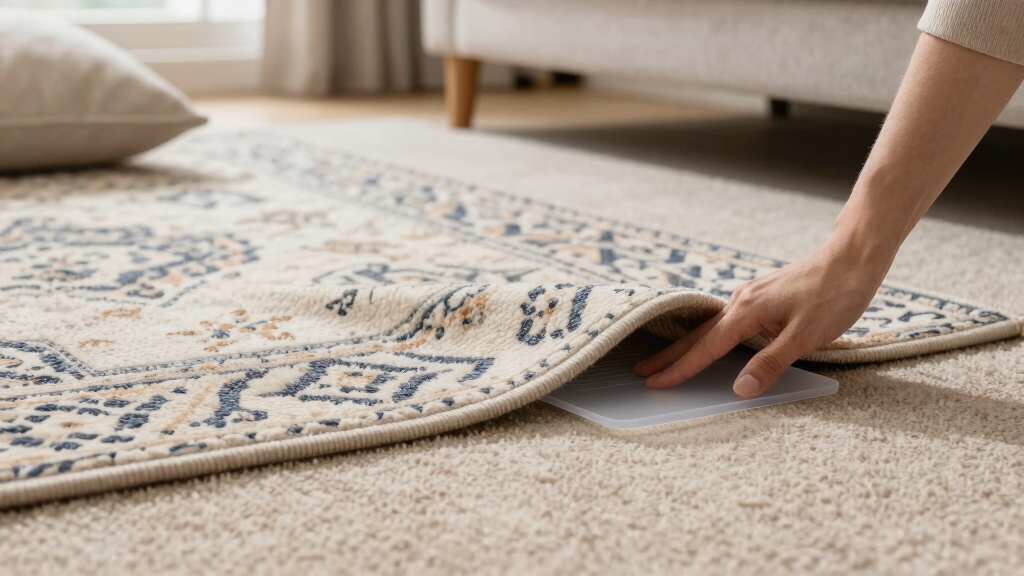
Although carpets provide a soft, cushioned surface, they often cause area rugs to slip and shift because both surfaces lack sufficient friction.
When you place a rug on carpet, the smooth backing of many rugs can’t grip the carpet fibers effectively, leading to unwanted movement.
This sliding not only disrupts your room’s aesthetic but can also pose a safety hazard.
To fix this, you need to increase friction between the rug and carpet.
Start by choosing a rug or pad with a textured underside that interacts with carpet fibers.
You can also trim pads slightly smaller than your rug to guarantee a flat, secure fit.
These steps help maintain the rug’s position, preserving both its appearance and your safety.
For added security, consider using a rug pad designed for carpets with soft brush attachments to prevent slipping and protect fibers.
How Carpet-to-Carpet Rug Pads Prevent Sliding?
Carpet-to-carpet rug pads are pretty neat! They feature a natural rubber top layer that grips your rug’s underside really well. This means your rug won’t be sliding all over the place. Plus, the felt bottom sticks to the carpet fibers underneath, adding extra stability.
But that’s not all! This dual-layer design not only keeps things in place, but it also cushions both your rug and the carpet below. It’s a great way to help extend the lifespan of both surfaces.
Just a quick tip: if you fit the pad slightly smaller than your rug, you’ll ensure it lays flat and keeps everything looking neat and tidy. So, you can enjoy your space without worrying about slips and slides!
For the best results, consider using pads with enhanced weight distribution properties to further prevent carpet dents and maintain stability.
Rubber and Felt Grip
Enhance your area rug’s stability by using carpet-to-carpet rug pads. These pads combine natural rubber and felt to create a secure grip between the rug and carpet fibers.
The felt side fastens gently yet firmly to the carpet pile. The rubber layer grips the underside of the rug, preventing unwanted sliding.
This dual-surface design stabilizes your rug and cushions it, helping to prolong the life of both the rug and carpet beneath.
When installing, cut the pad about two inches smaller than your rug’s dimensions to guarantee a smooth, flat edge.
Additionally, maintaining proper humidity levels can help preserve the rug’s fibers and prevent damage over time.
Rug and Carpet Protection
Protecting both your rug and carpet starts with choosing the right carpet-to-carpet rug pad, which prevents sliding by combining a natural rubber surface with a felt backing.
The felt side fastens securely to the carpet fibers, while the natural rubber grips the underside of your rug, creating a firm, slip-resistant bond.
This dual-layer design not only keeps your rug in place but also cushions foot traffic, prolonging the life of both surfaces by reducing friction and wear.
For best results, cut the pad about two inches smaller than your rug, leaving a one-inch border visible to guarantee a smooth, flat lay.
Using a quality rug pad also helps maintain cleanliness by minimizing dirt and debris buildup, which can be effectively managed with compact wet and dry vacuums.
How Double-Sided Tape Secures Rugs on Carpet?
When securing a rug on carpet, double-sided tape offers a practical and straightforward solution that keeps your area rug firmly in place.
Double-sided tape provides a simple, effective way to keep your area rug securely in place on carpet.
You’ll find it especially useful for preventing slipping and bunching without bulky pads.
To use it effectively:
- Peel the tape backing and apply it along the rug’s edges and corners, where most movement occurs.
- Press the rug firmly onto the carpet to activate a strong bond that holds well during routine vacuuming.
- Choose carpet-specific double-sided tape to avoid damaging carpet fibers when removing the rug later.
This method is cost-effective, quick to install, and maintains a clean, flat aesthetic.
Keep in mind, the adhesive may weaken over time, making it ideal for short-term or moderate-traffic areas.
For enhanced maintenance, combining double-sided tape with ergonomic and lightweight tools can help keep surrounding areas clean and free of debris.
Using Rug Grippers and Velcro to Stop Movement
To firmly secure your area rug and prevent unwanted slipping or curling, rug grippers and Velcro strips offer reliable, easy-to-install solutions.
You can choose corner grippers to specifically stop edges from curling or full-size grippers that cover the entire rug underside for thorough stability.
Strip grippers work well along edges or in select areas to keep the rug flat.
Velcro strips provide a versatile option: attach one side firmly to the carpet and the other to the rug’s underside.
Make sure both surfaces are clean and dry before application to guarantee strong adhesion.
These methods not only maintain your rug’s aesthetic appeal but also enhance safety by minimizing trip hazards.
They’re ideal for high-traffic spaces where consistent grip is essential.
For best results, ensure the surfaces are free of dust and debris by vacuuming with a soft brush attachment before applying grippers or Velcro.
How to Anchor Rugs With Furniture for Stability?
Anchor your area rug effectively by positioning furniture with broad bases over its edges. This leverages weight to keep the rug firmly in place.
This method stabilizes the rug, especially in high-traffic zones, by distributing pressure that prevents slipping. To maximize this technique:
- Place sofas or chairs so their legs rest securely on rug edges, anchoring one side.
- Use coffee tables or ottomans with wide bases to stabilize central rug areas.
- Position heavier pieces near corners to reduce curling and shifting.
While furniture anchoring secures part of the rug, unanchored edges might still move. Combine with other methods if needed.
This approach enhances room aesthetics while maintaining functional stability for your carpeted area rug. Using the right tools and techniques helps maintain both the rug and surrounding furniture in optimal condition.
Non-Slip Backing and Silicone Caulk for Carpeted Rugs
For carpeted rugs, incorporating non-slip backing materials or applying silicone caulk can markedly enhance stability without risking damage to your carpet fibers.
Non-slip rubber backing mats offer a strong grip, preventing unwanted movement while being gentle on the carpet. These mats come in various sizes and are easy to cut, allowing you to customize coverage for your rug.
Alternatively, silicone caulk provides a cost-effective solution, especially for inexpensive or smaller rugs. Apply small dots of caulk to the rug’s underside, let it dry, then place the rug on the carpet to create a secure bond that resists sliding.
Both methods combine functionality with simplicity, ensuring your rug stays put while maintaining the carpet’s integrity and appearance over time. It is important to avoid harsh detergents on backing materials to prevent damage and prolong their effectiveness.
Pick the Right Rug Thickness and Weight to Prevent Sliding
Choosing the right rug thickness is super important for keeping it in place on carpeted floors. You know, heavier rugs tend to stay put better, which means less fussing around with securing methods.
It’s all about finding that sweet spot between thickness and weight so your rug looks great and works well in your space. Additionally, using a vacuum with soft bristles and tangle-free rollers can help maintain the rug’s surface without causing damage.
Rug Thickness Importance
Consider how the thickness and weight of your area rug influence its stability on carpeted floors. Choosing the right thickness plays a pivotal role in preventing unwanted sliding.
Thicker rugs provide better friction and create a more secure grip against the carpet fibers, reducing movement. However, overly thick rugs may create uneven surfaces, so balance is key.
Keep these points in mind:
- Opt for medium-thickness rugs to maximize contact with carpet fibers without causing lumps.
- Make certain your rug’s weight complements its thickness to enhance grip without risking damage to the carpet.
- Avoid ultra-thin rugs, as their lightness often leads to slipping, especially on soft carpet piles.
Additionally, maintaining minimal moisture on your floors is essential, as excess water can reduce friction and lead to surface damage over time.
Weight Effects on Stability
Balance weight and thickness carefully to enhance your rug’s stability on carpeted floors. Heavier, thicker rugs naturally resist sliding because their mass anchors them against carpet fibers.
When selecting a rug, opt for a density that complements your carpet’s softness. Too light, and it’ll shift easily; too heavy, and it may compress the carpet underneath.
Consider how thickness affects contact with the carpet pile. A moderate thickness guarantees enough friction without causing uneven surfaces.
You can further improve stability by pairing your rug with a quality carpet-to-carpet rug pad. This adds grip without damaging fibers.
In high-traffic areas, prioritize weight and thickness alongside additional securing methods to maintain both safety and aesthetic appeal.
This balanced approach guarantees your rug stays flat, secure, and visually harmonious.
Best Rug-Securing Tips for High-Traffic Carpet Areas
Secure your rug effectively in high-traffic carpet areas by combining durable solutions like non-slip rug pads with furniture anchoring. This approach guarantees your rug stays put even under constant foot traffic.
Ensure your rug remains secure in busy areas by using non-slip pads and strategic furniture placement.
Focus on these key methods:
- Non-slip Rug Pads: Choose carpet-to-carpet pads with a felt bottom and natural rubber top. Cut the pad 2 inches smaller than your rug for a perfect fit. They grip both rug and carpet, prolonging their life.
- Furniture Anchoring: Place heavy furniture strategically over rug edges to anchor one side firmly. This prevents slippage and corner curling.
- Double-Sided Carpet Tape: Apply carpet-specific tape along rug edges for added security. Press firmly to guarantee strong adhesion without damaging fibers.
Combine these for maximum stability, maintaining both safety and aesthetics in busy spaces.
Frequently Asked Questions
Can Rug Pads Cause Damage to Delicate Carpet Fibers?
Rug pads generally won’t damage delicate carpet fibers if chosen carefully.
You should pick a carpet-to-carpet non-slip pad with natural rubber and felt. These materials grip gently without harsh abrasion.
Make sure the pad fits properly; cut it slightly smaller than your rug to avoid bunching.
However, avoid pads with aggressive adhesives or rough backing, since those can wear or pull fibers.
Regularly check and adjust the pad to keep your carpet pristine.
How Often Should Double-Sided Tape Be Replaced on Rugs?
You should replace double-sided tape on rugs about every 3 to 6 months, or whenever you notice it losing its grip.
High-traffic areas may require more frequent changes.
Always press firmly after applying new tape and use carpet-specific adhesive to protect fibers.
Regular replacement guarantees your rug stays secure, making your space both safe and stylish without any annoying slipping or sliding.
Are There Eco-Friendly Options for Non-Slip Rug Pads?
Yes, you can choose eco-friendly non-slip rug pads made from natural rubber and organic felt.
These materials are biodegradable and free from harmful chemicals.
They grip both carpet and rug gently, preventing movement while extending rug life.
Look for pads labeled as sustainably sourced or recycled.
They offer a natural, durable grip without synthetic adhesives, aligning with your commitment to a greener home environment.
You won’t have to sacrifice effectiveness or style.
Can Rugs Be Secured on Carpeted Stairs Safely?
Yes, you can safely secure rugs on carpeted stairs by using double-sided carpet tape or carpet-specific Velcro strips. These options provide strong adhesion without damaging fibers.
Rug grippers designed for stairs prevent slipping and curling at edges. For added stability, consider non-slip rug pads cut to stair dimensions.
Always clean surfaces before applying adhesives. Make certain the rug fits snugly to avoid trip hazards while maintaining an elegant, secure stair appearance.
What Maintenance Is Needed for Velcro Rug Strips?
Maintaining velcro rug strips is like tending a garden: you need regular care to keep them effective.
You should clean both the rug underside and carpet surface before reattaching, removing dust and debris that weaken adhesion.
Inspect strips for wear or loss of stickiness, replacing them as needed.
Avoid wetting the velcro, as moisture diminishes grip.
With consistent upkeep, your rug stays securely in place, preserving both safety and style.
Create a Safer, More Stable Space with the Right Rug Setup
Keeping your area rug firmly in place on carpet doesn’t have to be a juggling act. With the right tools like carpet-to-carpet pads, double-sided tape, or rug grippers, you can anchor your rug as securely as a ship in harbor.
Remember, choosing the proper rug thickness and weight plays an essential role in stability. By combining these methods, you’ll transform your space into a safe, stylish haven where your rug stays put, no matter the traffic.