
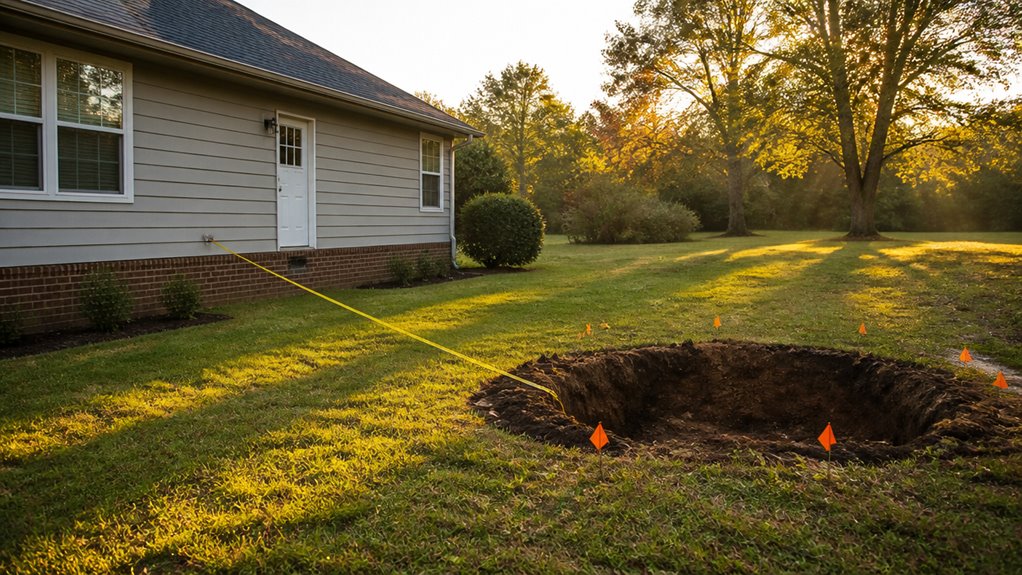
How Far Does Septic Tank Have to Be From House
You’ll need to place your septic tank at least 10 to 20 feet from your house foundation to protect structural integrity and allow proper maintenance access.
Some areas permit setbacks as close as 5 feet, but local codes vary widely, often requiring greater distances near wells or water bodies.
Proper setback also guarantees effective waste flow and minimizes foundation risks. Understanding these factors helps you plan an efficient, code-compliant system and avoid common installation mistakes.
Key Takeaways
- Septic tanks are typically placed 10 to 20 feet away from the house foundation to protect structural integrity and allow maintenance access.
- Some local codes permit setbacks as close as 5 feet, while others, like UK guidelines, recommend about 21 feet (7 meters).
- Proper setback distances prevent foundation damage from soil disturbance and reduce risks of sewage infiltration and hydrostatic pressure.
- Setbacks ensure sufficient clearance for inspection, pumping, and repair, typically requiring at least 3 feet around the tank access point.
- Always consult local regulations since setback requirements vary widely based on soil, groundwater, and environmental safety considerations.
Typical Septic Tank Distance From a House Foundation

Although septic tank setback requirements vary widely, you’ll typically find regulations calling for a distance between 10 and 20 feet from the house foundation.
Septic tank setbacks usually range from 10 to 20 feet away from the house foundation.
This range reflects a balance between structural considerations and operational needs. Some jurisdictions require setbacks as close as 5 feet, while others, like UK guidelines, specify approximately 21 feet (7 meters).
These distances account for factors such as excavation disturbance, foundation integrity, and ease of maintenance access.
You should also note that local health departments usually set these minimum distances, making adherence to local code critical.
When planning placement, consider the slope from the house outlet to the tank to ensure proper waste flow, as well as sufficient clearance for inspection and pumping activities without risking damage to the foundation.
Why Septic Tank Setbacks Matter to Your Home?
When it comes to your septic tank, distance really does matter. You want to make sure it’s placed far enough away to keep your foundation safe from any potential issues, like weakening from excavation or sewage exposure.
But it’s not just about protecting your home’s structure. Proper setbacks also mean you’ll have easy access for inspections, pump-outs, and routine maintenance. This way, you won’t have to worry about causing any damage while keeping everything running smoothly.
Using regular septic tank treatments can also help maintain system health and prevent costly repairs related to poor placement.
Foundation Protection
Protecting your home’s foundation starts with properly locating the septic tank at a safe distance. Placing the tank too close risks weakening the foundation through soil disturbance during excavation.
Potential sewage infiltration can degrade structural materials. Regulations commonly require 10 to 20 feet setbacks, balancing structural safety and functional plumbing slope.
This distance minimizes hydrostatic pressure and prevents waste effluent from wicking into foundation soils. Such issues could cause moisture damage or settlement problems.
Additionally, proper setback guarantees the septic tank installation avoids flood-prone areas and large tree roots. These factors could disrupt both the tank and foundation integrity.
While local codes vary, prioritizing adequate separation protects your home’s structural stability. It also prolongs foundation lifespan by reducing exposure to environmental and mechanical stresses linked to septic system placement.
Ignoring structural risks from moisture and soil disturbance can lead to costly repairs and safety hazards associated with foundation damage.
Maintenance Accessibility
Because septic tanks require regular inspection, pumping, and occasional repairs, maintaining clear and adequate access is critical for their long-term functionality.
You need to make certain the tank is placed far enough from your house, typically 10 to 20 feet, to allow service vehicles and personnel unimpeded access.
Restricted space complicates maintenance, increasing the risk of improper servicing, which can lead to system failure or costly repairs.
The access route must also maintain stable ground to support equipment and avoid obstructions like landscaping or structures.
Additionally, positioning the tank with sufficient setback facilitates proper inlet slope from the house plumbing, preventing solids buildup.
Ultimately, balancing code requirements with practical accessibility preserves system integrity and simplifies upkeep. Always verify local regulations before installation.
Using harsh chemical cleaners like Drano near the septic tank can disrupt beneficial bacteria essential for waste breakdown, further complicating maintenance and system health.
Planning Septic Tank Location for Proper Waste Flow
When planning a septic tank location, making sure proper waste flow depends heavily on maintaining the correct slope from the house plumbing outlet to the tank. You need to establish a consistent fall, typically around 1/4 inch per foot, to allow solids and liquids to move efficiently by gravity without stagnation or backflow.
Consider these key factors:
- Confirm the pipe slope aligns with local standards to prevent solids buildup or clogging.
- Position the tank close enough to maintain gravity flow but far enough to protect the foundation.
- Avoid excessive distance that requires pumping or additional cleanouts to manage solids transport.
- Choose level terrain with minimal slope variation to ensure consistent flow and tank stability.
Accurate slope and strategic distance balance hydraulic function and structural safety in your septic system design. Additionally, selecting the right septic tank root killer can help maintain clear pipes and prevent costly blockages caused by invasive roots.
How Local Codes Influence Septic Tank Placement?
Maintaining proper slope and distance for waste flow is only part of the design equation. You must also adhere to local codes that dictate septic tank placement.
These regulations vary widely, often specifying minimum setbacks from the house foundation, property lines, wells, and water bodies to prevent structural damage and contamination.
For example, some jurisdictions require as little as 5 feet from buildings, while others mandate distances up to 7 meters or more.
You’ll find that local health departments prioritize factors like foundation protection, access for inspection and maintenance, and environmental safety.
Because no universal standard exists, you must consult local permitting authorities to ensure compliance.
Balancing code requirements with slope, access, and site conditions is essential to optimize septic system performance and longevity.
Additionally, incorporating monitoring and maintenance convenience into the placement plan can enhance long-term system reliability.
Minimum Septic Tank Setbacks in Different Regions
Septic tank setback requirements can really vary depending on where you are. It’s interesting to see how local environmental and safety priorities shape these regulations.
For instance, in some areas, you might only need to maintain a distance of 5 feet from structures. But then, there are places like the UK where the requirement jumps to over 20 feet!
Before you get too far into your installation plans, it’s a good idea to check your local codes. You want to make sure that you’re not only meeting those minimum distances but also considering practical access needs.
It’s all about keeping things safe and efficient!
Regional Distance Variations
Although septic tank setback requirements serve similar purposes across regions, the minimum distances vary appreciably depending on local regulations and environmental conditions.
You’ll find that these variations reflect differing priorities in foundation protection, sewage management, and environmental safety.
Consider these regional examples:
- Kern County, California mandates a minimum of 5 feet from buildings to septic tanks, emphasizing compact property use.
- UK guidelines require at least 7 meters (about 21 feet) from any building, reflecting stricter environmental precautions.
- Many U.S. jurisdictions adopt a typical range of 10 to 20 feet, balancing access and safety.
- Setbacks can extend appreciably near water sources, with distances up to 100 feet to wells or 50 feet to streams.
Always account for these regional differences when planning your septic system placement. Proper inspection and sealing of potential entry points is essential in maintaining structural integrity and preventing contamination risks associated with septic systems.
Local Code Requirements
When determining the minimum septic tank setback for your property, local codes play a decisive role. They reflect environmental conditions, land use patterns, and public health priorities specific to each jurisdiction.
For example, Kern County, California mandates a minimum 5-foot horizontal distance from buildings and property lines to the septic tank. In contrast, UK regulations require about 7 meters (21 feet) from any building.
These variations stem from differing soil types, groundwater concerns, and inspection needs. You must also consider setbacks from wells, streams, and other water features, which can range from 25 to 150 feet depending on local rules.
Ultimately, your tank placement should comply with the local permitting authority’s requirements. This balances foundation protection, service access, and hydraulic slope for peak system performance. Always verify your local code before installation. Proper inspection and maintenance of septic systems also help ensure long-term safety and functionality.
Septic Tank System Parts That Need Distance From Your House
Because a septic system includes multiple components beyond just the tank itself, you must consider specific setback distances for each part relative to your house. Proper spacing guarantees structural integrity and system function.
Key parts with regulated distances include:
1. Septic Tank
Typically 10 to 20 feet away to prevent foundation damage and allow maintenance access.
2. Drainfield (Soakaway)
Requires greater setback, often 45 feet or more, to avoid contamination and soil saturation near the house.
3. Distribution Box
Usually placed between the tank and drainfield, needing clearance for inspection and flow control.
4. Piping Lines
Must maintain proper slope and separation from foundations to prevent sewage backup and structural issues.
Always check local codes, as setback requirements vary by jurisdiction and terrain conditions. Maintaining proper distance also helps protect your plumbing system from damage and supports the use of septic-safe drain cleaners to prevent costly backups.
Septic Tank Access and Maintenance Tips
Proper setback distances guarantee your septic system functions safely, but maintaining that system requires clear and convenient access to the septic tank.
Clear, convenient access to your septic tank is essential for safe and effective system maintenance.
You should make certain the tank’s access lid remains unobstructed by landscaping, structures, or heavy traffic, which can hinder inspection or pumping.
Position the tank on level ground with adequate slope from the house for efficient waste flow and to prevent solids buildup.
When planning access, account for equipment size used in pumping services and provide at least 3 feet of clearance around the access point.
Avoid placing tanks under driveways unless specifically designed for load conditions.
Regular inspections every 3 to 5 years help detect issues early.
Maintaining these access protocols safeguards system longevity and minimizes costly repairs.
Avoid These Septic Tank Distance and Safety Mistakes
Although septic tank placement involves multiple technical considerations, failing to observe recommended distance setbacks and safety guidelines can lead to structural damage, health hazards, and costly repairs.
You must avoid these common mistakes:
- Placing the tank too close (under local minimums), risking foundation weakening and sewage seepage.
- Ignoring proper slope from house outlet to tank, causing solids buildup and flow obstruction.
- Installing the tank in flood-prone or heavily trafficked areas without adequate protection, which compromises structural integrity.
- Overlooking required clearance for inspection and maintenance access, complicating future servicing and increasing repair costs.
Always verify local codes and site conditions before installation to guarantee compliance and long-term system performance.
Neglecting these factors can undermine your septic system’s safety and functionality. Additionally, controlling moisture levels around the septic system is essential to prevent mold growth and structural damage in nearby areas.
Frequently Asked Questions
Can I Plant Trees Near My Septic Tank Without Causing Damage?
You shouldn’t plant trees near your septic tank because roots can infiltrate and damage the tank or pipes.
Tree roots seek moisture and can cause blockages or structural compromise. Keep trees and large shrubs at a safe distance, usually several meters away, to prevent root intrusion.
Opt for shallow-rooted plants and maintain clear access for inspections and maintenance. This approach protects your system’s integrity and guarantees long-term functionality.
How Deep Should a Septic Tank Be Installed Underground?
Imagine a large, sturdy container nestled beneath your yard, buried deep enough to avoid surface disruption yet accessible for maintenance.
Typically, you’ll install your septic tank about 3 to 4 feet underground, depending on your local frost line and soil conditions.
This depth guarantees proper gravity flow and prevents freezing.
You’ll need to follow precise measurements from your installer or local code to balance accessibility, protection, and system efficiency.
What Materials Are Septic Tanks Commonly Made From?
Septic tanks are commonly made from concrete, polyethylene, or fiberglass.
Concrete tanks are valued for durability and weight, reducing floatation risks in high water tables.
Polyethylene tanks offer corrosion resistance and are lightweight, easing installation.
Fiberglass tanks combine strength and lightness but require careful handling to avoid damage.
When choosing, consider soil conditions, tank size, and local regulations. Each material has specific advantages and installation requirements.
How Long Does a Typical Septic Tank Last Before Replacement?
A typical septic tank lasts anywhere from 20 to 40 years. Its lifespan depends on material quality, maintenance frequency, and usage patterns.
Concrete tanks often endure longer than plastic or fiberglass but can crack if soil shifts. You should schedule regular inspections and pumping every 3-5 years to prevent premature failure.
Proper care dramatically extends your septic system’s reliable service life.
Are There Any Odor Control Methods for Septic Tanks Near Homes?
Yes, you can control septic tank odors near your home by ensuring proper ventilation through vent pipes that release gases safely above your roofline.
Regular maintenance, like pumping solids and avoiding chemical disruptors, also minimizes odors.
Installing biofilters or activated carbon filters on vent outlets can further reduce smells.
Additionally, sealed tanks with tight lids prevent gas leaks.
Combining these methods helps you maintain a sanitary, odor-free environment around your septic system.
How Far Should a Septic Tank Be from a House?
Now that you understand the critical setbacks and local code requirements for septic tank placement, can you afford to overlook these distances?
Proper spacing guarantees efficient waste flow, protects your home’s foundation, and simplifies maintenance.
Ignoring these guidelines risks costly damage and health hazards.
By carefully planning your septic tank location with precise setbacks, you safeguard your property and comply with regulations, making your investment both safe and sustainable.