
Is Dove Deodorant Safe: Ingredients, Safety & Expert Insights
You can use Dove deodorants safely by choosing products that suit your skin type. Most Dove antiperspirants contain aluminum compounds, which are considered safe at typical levels but may increase sensitivity for some.
Fragrances and preservatives like BHT can cause irritation in sensitive skin. Dove offers dermatologist-tested, alcohol-free, and fragrance-free options to reduce irritation risks.
Proper application and avoiding broken skin help maintain safety. Learn how formulation and usage impact tolerability and effectiveness.
Key Takeaways
- Dove deodorants with aluminum compounds effectively reduce sweat and are deemed safe by regulatory agencies at typical usage levels.
- Aluminum-free Dove options minimize risk for sensitive skin but may contain fragrances and preservatives that can cause irritation.
- Dermatologist-tested Dove formulas often exclude alcohol and harsh fragrances, enhancing safety for sensitive or allergy-prone skin.
- Spray formats pose inhalation risks due to propellants like hydrofluorocarbon 152A and should be used cautiously in well-ventilated areas.
- Users should monitor skin reactions, discontinue use if irritation occurs, and apply only to clean, dry, unbroken skin for safety.
What Ingredients Are in Dove Deodorants and Antiperspirants?
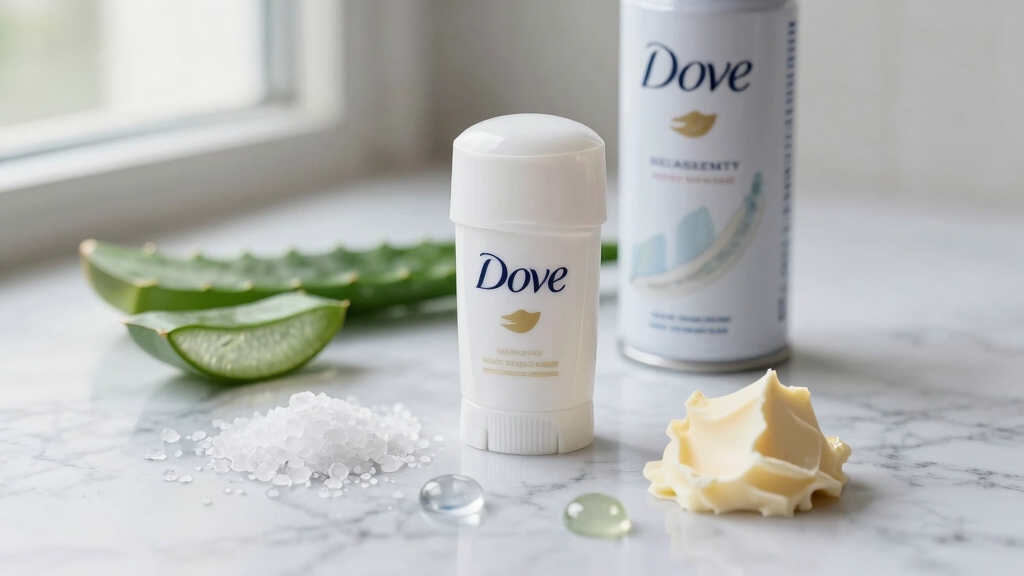
Although Dove offers various deodorant and antiperspirant formulations, the ingredient composition varies markedly between product lines, influencing their safety and function.
Dove’s deodorants differ significantly in ingredients, impacting their effectiveness and safety.
You’ll find that conventional antiperspirants contain aluminum-based compounds to reduce sweating. Aluminum-free deodorants omit these but may still include ingredients such as BHT, fragrance, and ethoxylated compounds.
Spray formats incorporate hydrofluorocarbon 152A as a propellant, which raises inhalation concerns. Dove markets some formulas as gentle and dermatologist-tested, emphasizing suitability for sensitive skin. However, fragrance and other additives can still pose irritation risks.
When choosing a Dove product, you should carefully review ingredient lists since components differ substantially across lines. This affects tolerability, efficacy, and safety profiles for routine use or sensitive individuals. For those concerned about skin irritation, selecting products with ergonomic and gentle formulations can help minimize adverse reactions.
Is Aluminum in Dove Antiperspirants Safe?
Understanding the presence of aluminum-based compounds in many Dove antiperspirants is important when considering product safety. Aluminum salts temporarily block sweat glands, reducing perspiration. Regulatory agencies deem aluminum safe in cosmetic use at typical levels. However, some consumers worry about potential long-term effects and skin sensitivity.
| Feeling | Concern Level | Impact on Use |
|---|---|---|
| Confidence | Low | Effective sweat control |
| Caution | Medium | Watch for skin irritation |
| Anxiety | High | Consider aluminum-free options |
| Reassurance | Moderate | Trust dermatologist-tested |
| Uncertainty | Variable | Research ingredients carefully |
If you have sensitive skin or health concerns, try aluminum-free Dove products to minimize risk while maintaining odor protection. It is also important to note that some ingredients in personal care products, like those in hand soaps, may cause skin irritation or sensitivity, so choosing formulations designed for your skin type can help reduce adverse reactions from fragrances and moisturizers.
Are Fragrance and BHT in Dove Products Harmful?
How do fragrance and BHT, common ingredients in Dove products, affect safety?
Fragrance compounds in deodorants can cause skin irritation or allergic reactions, especially for individuals with sensitive skin.
While Dove markets some formulas as gentle, synthetic fragrances remain a potential irritant.
BHT (butylated hydroxytoluene) serves as an antioxidant preservative.
Current evidence classifies it as safe at low concentrations typically used in cosmetics.
However, some consumers express concern over its long-term effects due to limited data on chronic exposure.
Overall, these ingredients don’t pose acute toxicity risks when used as directed, but they may contribute to irritation or sensitivity in susceptible users.
If you have sensitive skin or fragrance allergies, you might consider fragrance-free or dermatologist-tested options to minimize adverse reactions.
Prompt and gentle care, similar to methods used in stain removal, can help reduce irritation caused by these ingredients.
How Dove’s Dermatologist-Tested Formulas Reduce Irritation?
When you choose Dove’s dermatologist-tested formulas, you benefit from products specifically designed to minimize skin irritation by using milder ingredients and avoiding common irritants.
Choosing Dove’s dermatologist-tested formulas means selecting products crafted to reduce irritation with gentle, mild ingredients.
These formulas undergo clinical evaluation to confirm skin compatibility, reducing the risk of adverse reactions. Dove carefully selects ingredients to balance efficacy and gentleness, which helps protect your skin barrier during daily use.
Key features include:
- Use of alcohol-free bases to prevent dryness
- Exclusion of harsh synthetic fragrances in sensitive-skin lines
- Incorporation of moisturizing agents for skin hydration
- Minimization of known irritants like aluminum compounds in certain products
- Validation through dermatologist testing to guarantee safety for most users
This scientific approach supports comfort while maintaining deodorant effectiveness. Many products also incorporate plant-based moisturizing ingredients like aloe vera and glycerin to nourish and hydrate skin during use.
How Dove Addresses Skin Sensitivity and Irritation Risks?
Although deodorants inherently carry some risk of irritation, Dove actively formulates products to mitigate skin sensitivity by selecting milder ingredients and testing their compatibility on diverse skin types.
You’ll find that Dove emphasizes dermatologist-tested formulas designed for gentle use on multiple skin areas, reducing the likelihood of adverse reactions.
When using Dove products, applying a thin, even layer to clean, dry skin helps lower irritation risk.
However, if you have sensitive skin, it’s advisable to avoid formulas containing fragrance or known irritants, even among those labeled gentle.
Dove’s approach balances efficacy with skin tolerance, but individual sensitivity varies.
You should monitor your skin’s response and discontinue use if irritation occurs.
This targeted formulation strategy aims to provide effective odor control while minimizing discomfort for sensitive users.
It is important to note that certain chemical components can act as skin sensitizers, potentially causing allergic reactions with repeated exposure.
Are Dove Spray Deodorants Safe to Use and Breathe?
Considering the aerosol nature of Dove spray deodorants, inhalation exposure during use presents a notable safety concern.
When you use these sprays, tiny particles and propellants like hydrofluorocarbon 152A can be inhaled, potentially causing respiratory irritation.
Although the Illinois Poison Center classifies these products as minimally toxic, aerosol forms increase the likelihood of coughing or breathing discomfort.
To minimize risks, you should:
- Apply sprays in well-ventilated areas
- Avoid direct inhalation during application
- Use thin, even layers on clean, dry skin
- Choose fragrance-free or dermatologist-tested formulas if sensitive
- Limit frequency to reduce cumulative exposure
While routine use typically poses low acute toxicity, inhalation remains the primary safety concern with Dove spray deodorants. It is important to follow proper safety practices to reduce respiratory risks associated with aerosol exposure.
Are Whole-Body Dove Deodorants Safe for Multiple Skin Areas?
You can usually trust whole-body Dove deodorants that are labeled as dermatologist-tested for safe use on various skin areas. Just remember to apply a thin, even layer on clean, dry skin to minimize any irritation.
It’s all about keeping it simple and not overdoing it!
If you have sensitive skin, it’s a good idea to take a closer look at the ingredient list. Pay special attention to any fragrances or potential irritants, just to be safe.
Always better to be cautious, right?
For those concerned about safety, working in a well-ventilated area when applying or testing new products can help reduce exposure to airborne irritants.
Dermatologist-Tested Formula Safety
When selecting a deodorant for use on multiple skin areas, you should prioritize dermatologist-tested formulas to minimize irritation risks.
Dove’s dermatologist-tested whole-body deodorants are designed to be gentle across diverse skin types, reducing the likelihood of adverse reactions.
These formulations undergo clinical evaluation to assess compatibility with sensitive areas, ensuring safety beyond underarm use.
Key points to bear in mind:
- Dermatologist testing confirms reduced irritation potential.
- Formulas often avoid harsh synthetic fragrances.
- Aluminum-free options minimize sweat-blocking chemical exposure.
- Alcohol-free variants decrease drying and sensitivity risks.
- Suitable for clean, dry skin application on multiple body regions.
Additionally, choosing products formulated with mild surfactants helps maintain the skin’s natural barrier during cleansing and deodorant application.
Application Guidelines and Precautions
Building on the importance of dermatologist-tested formulations, proper application plays a significant role in ensuring the safety of whole-body Dove deodorants across various skin areas.
You should apply a thin, even layer to clean, dry skin, avoiding broken or irritated areas to minimize potential irritation.
Since whole-body deodorants are intended for multiple sites, selective use on sensitive or compromised skin is advisable.
Avoid overuse, especially with spray formats, as inhalation of aerosolized particles can cause respiratory symptoms.
If you have sensitive skin, choose fragrance-free or alcohol-free formulas to reduce irritation risk.
Reapply after heavy sweating or as needed, but don’t exceed recommended amounts.
Following these guidelines helps maintain safety and tolerability across diverse skin regions during routine use.
For enhanced skin comfort, consider formulations that include moisturizing ingredients such as Vitamin E and Aloe to reduce irritation and support skin hydration.
How to Choose the Right Dove Deodorant for Your Skin Type?
When picking out a Dove deodorant, start by checking how sensitive your skin is. This can help you spot any potential irritants, like fragrances or aluminum compounds.
You might want to go for options that are dermatologist-tested and alcohol-free. These choices can really help minimize the risk of irritation.
Also, take a good look at the ingredient lists. This way, you can find products that match your skin’s tolerance and safety needs. Your skin will thank you for it!
Additionally, avoiding products with harsh chemicals similar to those found in Clorox wipes can help prevent skin dryness and damage.
Identify Your Skin Sensitivity
Understanding your skin’s sensitivity plays an essential role in selecting the right Dove deodorant. You need to assess how your skin reacts to common deodorant ingredients and product types. Sensitive skin may respond with irritation, redness, or itching, especially if exposed to fragrances or alcohol.
To identify your skin sensitivity, consider the following:
Monitor for irritation after applying deodorant.
Note any allergic reactions such as redness or swelling.
Test products on a small skin area before full use.
Recognize if you have a history of skin conditions like eczema.
Be aware that aerosol sprays may cause respiratory discomfort in sensitive users.
Select Suitable Ingredients
Several key ingredients in Dove deodorants influence their suitability for different skin types. It’s essential to select products based on your specific skin sensitivity and safety concerns.
If you have sensitive skin, avoid formulas containing fragrance, BHT, or ethoxylated compounds, as they may cause irritation. For effective sweat control, consider antiperspirants with aluminum-based compounds, but be aware these might increase sensitivity risk.
If you want to avoid aluminum, choose aluminum-free options, though they may still include other potentially irritating ingredients. Aerosol sprays present inhalation risks and are less suitable for sensitive users.
Prioritize dermatologist-tested, alcohol-free formulas for lower irritation potential. Applying a thin, even layer to clean, dry skin can also reduce adverse reactions. Selecting ingredients thoughtfully guarantees safer, more comfortable deodorant use tailored to your skin’s needs.
How to Use Dove Deodorants Safely for Best Results?
When applying Dove deodorants, make sure your skin is clean and dry to maximize effectiveness and minimize irritation.
Proper use helps guarantee prime odor and sweat control while reducing the risk of adverse skin reactions.
Follow these guidelines for best results:
Apply a thin, even layer to avoid overuse and potential irritation.
Choose formulas labeled dermatologist-tested for sensitive skin.
Use aluminum-free products if you prefer to avoid aluminum compounds.
Avoid applying immediately after shaving to reduce skin sensitivity.
Reapply only as needed, especially after heavy activity or sweating.
How to Handle Irritation or Accidental Exposure?
If you find that Dove deodorant is causing you some skin irritation, the first thing you should do is stop using it right away. Then, rinse the affected area with lukewarm water. It’s pretty straightforward, but it’s important to act fast.
Now, if you accidentally get it in your eyes or somehow ingest it, don’t panic. Just rinse your eyes gently with water for about 15 minutes. If things still don’t feel right after that, it’s a good idea to seek medical advice. Better safe than sorry, right?
Also, keep an eye on how your skin reacts over time. If you know certain ingredients trigger irritation for you, try to steer clear of products that contain them. It can really help reduce any unwanted reactions in the future.
Managing Skin Irritation
Recognize that skin irritation from Dove deodorants often results from sensitivity to ingredients like fragrance or aluminum compounds. If you notice redness, itching, or discomfort, promptly adjust your routine to minimize further irritation.
You should apply deodorant on clean, dry skin to reduce reaction risk. Use dermatologist-tested, fragrance-free, and alcohol-free formulas. Avoid overapplication; apply a thin, even layer only.
Discontinue use if irritation persists or worsens. Consult a healthcare professional if severe or prolonged symptoms occur.
These steps help you manage mild irritation effectively while maintaining hygiene. Understanding your skin’s response to specific ingredients is key to selecting the safest product for your needs.
Responding To Accidental Exposure
Accidental exposure to Dove deodorants, whether through ingestion, inhalation, or eye contact, demands prompt and appropriate response to minimize adverse effects.
If you ingest the product, avoid inducing vomiting and seek medical advice, as mild gastrointestinal irritation may occur.
For inhalation, especially with aerosol sprays, move to fresh air immediately to reduce respiratory symptoms like coughing.
In the case of eye contact, rinse your eyes with lukewarm water continuously for at least 15 minutes to prevent irritation.
If skin irritation develops, wash the affected area with mild soap and water, and discontinue use.
Monitor symptoms closely and seek medical attention if irritation persists or worsens.
Following these steps guarantees effective management of accidental exposure while minimizing potential health risks.
Frequently Asked Questions
Can Dove Deodorants Cause Allergic Reactions Beyond Skin Irritation?
Yes, Dove deodorants can cause allergic reactions beyond skin irritation, especially if you have sensitivities to ingredients like fragrance, BHT, or aluminum compounds.
While most reactions are mild, such as redness or itching, some users might experience more pronounced allergic responses.
If you’re prone to allergies, you should carefully review ingredient lists and consider dermatologist-tested, fragrance-free options to minimize risk.
Always discontinue use if you notice unusual symptoms.
How Long Does Dove Deodorant Protection Typically Last?
Dove deodorant protection typically lasts around 24 to 48 hours, depending on the specific formula and your activity level.
For example, Dove’s Advanced Care line claims up to 48-hour odor and sweat protection.
Factors like skin type, temperature, and physical exertion influence effectiveness duration.
Applying a thin, even layer on clean, dry skin helps maximize protection.
Reapplication after heavy sweating or extended activity is recommended for consistent odor control.
Are Dove Deodorants Safe for Use During Pregnancy?
You can generally use Dove deodorants during pregnancy, but you should choose formulas carefully.
Avoid products with aluminum compounds or strong fragrances if you have sensitive skin.
Dermatologist-tested, aluminum-free options might be safer to reduce irritation risk.
Since aerosol sprays can cause inhalation exposure, stick or roll-on formats are preferable.
Always apply to clean, dry skin, and consult your healthcare provider if you have concerns about specific ingredients or sensitivities.
Do Dove Deodorants Stain or Affect Clothing?
Ever wondered if Dove deodorants stain your clothes? Generally, Dove deodorants are formulated to minimize staining.
However, some ingredients like aluminum compounds in antiperspirants can leave white marks or yellowish stains on fabrics. To reduce this, apply the product sparingly and allow it to dry before dressing.
Using aluminum-free variants or clear formulas may further decrease staining risk. Always test new products on fabric swatches for best results.
Can Dove Deodorants Be Used Immediately After Shaving?
You can use Dove deodorants immediately after shaving, but you should proceed with caution.
Shaved skin is more sensitive and prone to irritation, especially if the product contains fragrance, alcohol, or other potential irritants.
Choosing a dermatologist-tested, gentle, alcohol-free formula minimizes discomfort.
Apply a thin, even layer on clean, dry skin to reduce the risk of stinging or redness.
If irritation occurs, discontinue use and allow skin to heal before reapplying.
Is Dove Deodorant Safe to Use Every Day?
When it comes to Dove deodorants, safety hinges on understanding ingredients like aluminum, fragrance, and BHT, which are generally safe in regulated amounts.
Since Dove’s dermatologist-tested formulas aim to minimize irritation, you can confidently choose products suited to your skin type.
Remember, “better safe than sorry”: always patch test new products and follow usage instructions carefully.
If irritation occurs, discontinue use and consult a healthcare professional to protect your skin effectively.