
Will Baking Soda Kill Mites: Best Ways to Remove Mites
You shouldn’t rely on baking soda to kill dust mites because scientific evidence shows it has no direct acaricidal effect.
While baking soda absorbs moisture and neutralizes odors, its impact is limited to surface freshness.
It loosens dust for better vacuuming, but doesn’t reach mites embedded deep in fabrics.
Effective mite control requires targeted strategies like hot washing, humidity reduction, and HEPA vacuuming.
Discovering these proven methods can offer you more reliable mite relief and cleaner environments.
Key Takeaways
- Baking soda does not have reliable acaricidal properties and cannot kill dust mites effectively.
- Its moisture-absorbing and odor-neutralizing effects only improve surface freshness, not mite elimination.
- Baking soda loosens surface dust, aiding vacuuming but cannot penetrate deep fabrics where mites reside.
- Effective mite eradication requires hot washing, humidity control below 50%, HEPA vacuuming, and heat treatments.
- Baking soda should be used as a supplementary cleaning aid, not a standalone solution for dust mite control.
Does Baking Soda Actually Kill Dust Mites?

Although some people believe baking soda can kill dust mites, research and expert sources show it doesn’t have a reliable acaricidal effect.
Research shows baking soda does not reliably kill dust mites despite popular belief.
Scientific studies and clinical guidelines consistently report no evidence that baking soda eradicates dust mites in mattresses, carpets, or upholstery.
Its physical properties, such as absorbing moisture and odors, may improve environmental conditions but don’t directly eliminate mites.
Dust mites reside deep within fabrics where baking soda’s surface application can’t penetrate effectively.
Medical and practical resources emphasize that heat treatment, washing bedding at temperatures above 122°F, humidity control, and specialized vacuuming are necessary for mite reduction.
Consequently, you shouldn’t rely on baking soda as a mite-killing agent.
Instead, consider it a supplementary cleaning aid without proven acaricidal efficacy.
The strongest evidence refutes claims that baking soda alone can reliably kill dust mites.
Controlling humidity levels and ensuring proper drying are crucial steps in reducing mite populations and preventing mold growth in fabrics.
What Baking Soda Really Does to Dust Mites?
You might think that baking soda actually kills dust mites, but it turns out that’s not quite the case. Its effects are mostly indirect.
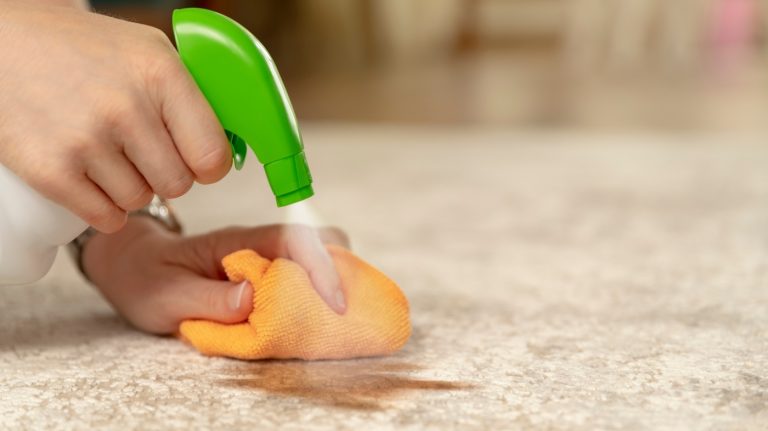
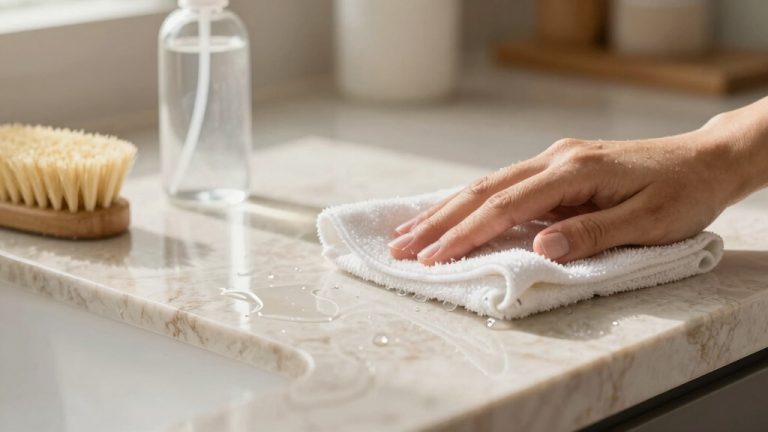
For one, it can absorb moisture and help reduce odors, which makes things less inviting for those pesky mites. However, it doesn’t really get deep enough into surfaces to get rid of them effectively. Regular cleaning and drying with a microfiber cloth can help prevent mite buildup by removing moisture and debris.
Baking Soda’s Indirect Effects
When applied to bedding or upholstery, baking soda primarily acts by absorbing moisture and neutralizing odors rather than directly killing dust mites.
You’ll find that its effects are indirect and supportive rather than curative.
Here’s what baking soda can do for you:
- Absorb excess moisture, reducing humidity that dust mites favor.
- Neutralize odors produced by mites and other allergens, improving fabric freshness.
- Loosen surface dust and debris, making vacuuming more effective.
- Create a drier and less hospitable environment, potentially limiting mite proliferation.
These mechanisms help improve the environment where dust mites live but don’t eliminate the mites themselves.
Baking soda’s role is adjunctive, supporting cleaning and odor control rather than a standalone solution for mite eradication.
For best results, it is important to vacuum regularly to remove loosened debris and maintain a healthier living environment.
Limitations In Mite Control
Since baking soda can’t penetrate deeply into bedding or upholstery, it fails to reach dust mites residing within these materials, limiting its effectiveness as a mite control agent.
You should understand that baking soda primarily absorbs surface moisture and odors, creating an environment less hospitable to mites but not directly killing them.
Scientific evidence doesn’t support claims that baking soda eradicates dust mites. Its action is mostly indirect, improving surface conditions rather than eliminating mite populations embedded deep in fabrics.
For effective mite control, you need methods like hot water washing, heat drying, humidity reduction, and allergen-proof encasements that target mites at their source.
Baking soda can complement cleaning routines but shouldn’t replace established, evidence-based mite management strategies.
Professional cleaning techniques use advanced extraction methods to reach deep into fibers and remove contaminants more effectively than surface treatments like baking soda.
Why Baking Soda Doesn’t Reliably Kill Dust Mites?
Although baking soda can absorb moisture and reduce surface odors, it doesn’t possess the chemical or physical properties necessary to kill dust mites effectively.
You should understand that baking soda’s benefits are indirect and limited:
- It reduces surface dampness, which may slightly hinder mite proliferation but doesn’t eliminate them.
- It helps deodorize fabrics, improving perceived cleanliness without affecting mites.
- It can’t penetrate deep into bedding or upholstery where mites reside, limiting its impact.
- Scientific evidence and practical guidelines show no clinically proven mite eradication from baking soda use.
Thus, while baking soda can assist in surface cleaning and odor control, it doesn’t reliably kill dust mites.
You’ll need more targeted methods to reduce or eliminate mite populations effectively, such as steam or hot water extraction which can kill dust mites and break down allergenic proteins.
Effective Ways to Get Rid of Dust Mites
To effectively reduce dust mites, it’s really important to focus on heat-based treatments. For example, washing your bedding in water that’s above 130°F can do wonders, and using the dryer heat is another great way to kill off those pesky mites.
You know, controlling indoor humidity is also key. Keeping it below 50% creates an environment that’s just not friendly for dust mites. They thrive in humidity, so lowering it can really help.
And don’t forget about regular cleaning! Using a HEPA vacuum regularly can help remove mites and their allergens from surfaces where they tend to accumulate. It’s a simple step that makes a big difference!
Sustained exposure to temperatures above 130°F is necessary to reliably kill dust mites and their eggs, as brief heat may not be sufficient to ensure complete eradication of heat-sensitive pests.
Heat-Based Mite Control
When you want to effectively reduce dust mite populations, applying heat is one of the most reliable methods. Dust mites can’t survive high temperatures, making heat a scientifically proven control strategy.
To implement heat-based mite control, consider these key points:
- Wash bedding and fabrics at 130°F (54.4°C) or above to guarantee mite mortality.
- Use a clothes dryer on a high heat setting for at least 30 minutes to kill mites embedded in textiles.
- Steam cleaning upholstery and mattresses can reach lethal temperatures for mites without chemicals.
- Avoid relying on low heat or brief exposure, as mites tolerate moderate temperatures and survive insufficient heat treatment.
Applying consistent, adequate heat penetrates mite habitats more effectively than powders like baking soda, guaranteeing a significant reduction in mite populations.
Additionally, steam cleaning not only kills mites but also penetrates deeply into upholstery to sanitize and remove odor-causing residues effectively.
Humidity And Vacuuming
Heat treatments effectively kill dust mites by exceeding their thermal tolerance, but controlling environmental conditions and mechanical removal also play essential roles.
You should maintain indoor humidity below 50% because dust mites thrive in moist environments. Reducing humidity limits their survival and reproduction.
Using a vacuum cleaner equipped with a HEPA filter effectively removes mites, allergens, and debris from bedding, carpets, and upholstery. Regular vacuuming disrupts mite habitats and minimizes allergen accumulation, reducing allergic reactions.
However, vacuuming alone won’t eradicate mites deeply embedded in fabrics. Combining low humidity with frequent HEPA vacuuming creates an inhospitable environment and physically eliminates surface mites.
This approach provides a more reliable control method than treatments like baking soda. Prioritizing these strategies guarantees a scientifically grounded approach to dust mite management.
Additionally, improving airflow and using dehumidifiers can accelerate drying times and reduce moisture buildup, which helps limit dust mite proliferation and mold growth risk.
How to Use Baking Soda as Part of Dust Mite Cleaning?
As part of your dust mite cleaning routine, you can apply baking soda to absorb moisture and reduce odors on surfaces like mattresses and upholstery.
Although baking soda doesn’t kill mites directly, it aids in surface cleaning and odor control, making your environment less hospitable to them.
Here’s how to use it effectively:
- Lightly sprinkle baking soda evenly over the surface.
- Let it sit for at least 30 minutes to absorb moisture and odors.
- Vacuum thoroughly with a HEPA-filter vacuum to remove baking soda and loosened dust.
- Repeat regularly as part of your cleaning schedule.
This approach supports mite management by improving surface conditions but doesn’t replace heat treatments or humidity control necessary for true mite reduction. Using additional methods such as ultrafiltration membranes can provide enhanced removal of microscopic contaminants and improve overall cleanliness in your home.
Controlling Humidity and Heat to Fight Dust Mites
Controlling indoor humidity and temperature plays a critical role in managing dust mite populations effectively. Dust mites thrive in environments with relative humidity above 50% and temperatures between 68°F and 77°F.
By reducing humidity below 50%, you disrupt their breeding and survival cycles, limiting allergen production. Using dehumidifiers or air conditioners helps maintain ideal dryness.
Similarly, exposing bedding and fabrics to heat above 130°F reliably kills dust mites, as their proteins denature under such temperatures. You can achieve this through hot washing or dryer heat.
Unlike baking soda, which only absorbs moisture superficially, controlling these physical factors targets mites at a biological level.
Prioritizing humidity control and heat treatments provides a scientifically validated method to reduce dust mite populations and associated allergic reactions effectively.
Additionally, using devices with heat and airflow technologies can accelerate drying time and further reduce the risk of mite-related mold growth.
Best Vacuuming and Bedding Practices for Dust Mite Reduction
Alongside managing humidity and temperature, regular vacuuming and proper bedding care play significant roles in reducing dust mite populations.
You can effectively lower mite presence by following these key practices:
- Vacuum your mattress, carpets, and upholstery weekly using a HEPA-filter vacuum to capture mite allergens and debris efficiently.
- Wash bedding in hot water at 130°F (54.4°C) or above to kill mites embedded deep within fabrics.
- Use allergen-proof mattress and pillow covers to create a physical barrier, preventing mites from colonizing your bedding.
- Dry washed bedding thoroughly with heat, as dryer temperatures above 122°F (50°C) further eliminate mites.
How Odor Control Differs From Killing Dust Mites?
While odor control can improve the freshness of your bedding and living spaces, it doesn’t equate to eliminating dust mites.
Odor control, often achieved through baking soda’s moisture absorption and neutralizing properties, reduces surface smells and dampness. However, it doesn’t kill mites embedded deep within fabrics.
Dust mites thrive in warm, humid environments, requiring targeted interventions like hot washing (above 122°F), humidity reduction below 50%, and HEPA vacuuming for effective eradication.
Baking soda’s effect is indirect; it improves conditions that might discourage mite proliferation but doesn’t provide a lethal mechanism.
Consequently, you shouldn’t rely on odor control methods alone if your goal is mite elimination.
For thorough dust mite management, prioritize physical and thermal controls rather than surface freshening alone.
Frequently Asked Questions
Can Baking Soda Cause Allergic Reactions in Sensitive Individuals?
Yes, baking soda can cause allergic reactions in sensitive individuals, although such cases are rare.
If you have sensitive skin or respiratory issues, exposure may trigger irritation, redness, or itching.
Inhalation of baking soda dust might exacerbate asthma or cause coughing.
You should test a small skin area before wider use and avoid inhaling the powder.
If symptoms appear, discontinue use and consult a healthcare professional promptly.
Is It Safe to Use Baking Soda on All Types of Fabrics?
You can generally use baking soda safely on most fabrics since it’s a mild alkaline powder that won’t cause harsh damage.
However, avoid applying it directly to delicate or silk materials without testing first, as it might affect color or texture.
Always do a spot test on an inconspicuous area to check for any adverse effects.
Using baking soda dissolved in water also reduces risk and guarantees even, gentle application across fabric types.
How Often Should Baking Soda Be Applied for Odor Control?
You should apply baking soda for odor control about once every one to two weeks, depending on use and moisture levels.
Sprinkle it evenly on fabrics or mattresses, let it sit for at least 15–30 minutes to absorb odors, then vacuum thoroughly.
Frequent application beyond this offers diminishing returns and may create residue buildup.
Adjust frequency based on odor intensity and fabric type, ensuring proper cleaning to maintain effectiveness without damaging surfaces.
Does Baking Soda Affect the Lifespan of Mattresses or Pillows?
Think of your mattress and pillows as delicate ecosystems.
Baking soda won’t harm their lifespan directly; it acts like a gentle breeze, freshening surface odors and absorbing moisture without abrasive effects.
However, overuse or harsh scrubbing with baking soda might degrade fabrics or foams subtly.
Can Baking Soda Be Combined With Other Cleaning Agents Safely?
You can safely combine baking soda with many mild cleaning agents like vinegar or mild detergents.
Avoid mixing it with strong acids or bleach, as this can cause harmful chemical reactions or release toxic gases. Always test combinations on small surfaces first and ensure proper ventilation.
Using baking soda alongside other cleaners can enhance odor control and surface cleaning.
Follow safety guidelines and manufacturer instructions to prevent damage or health risks.
How to Reduce Dust Mites Beyond Using Baking Soda
While baking soda doesn’t reliably kill dust mites, it plays a valuable role in odor control and cleaning.
Studies show dust mites can produce up to 20,000 droppings per day, contributing greatly to indoor allergens.
To effectively reduce their presence, you need a multi-faceted approach. This includes controlling humidity, using high-efficiency vacuuming, and washing bedding regularly.
Incorporating baking soda into your cleaning routine supports these efforts but shouldn’t be your sole strategy against dust mites.