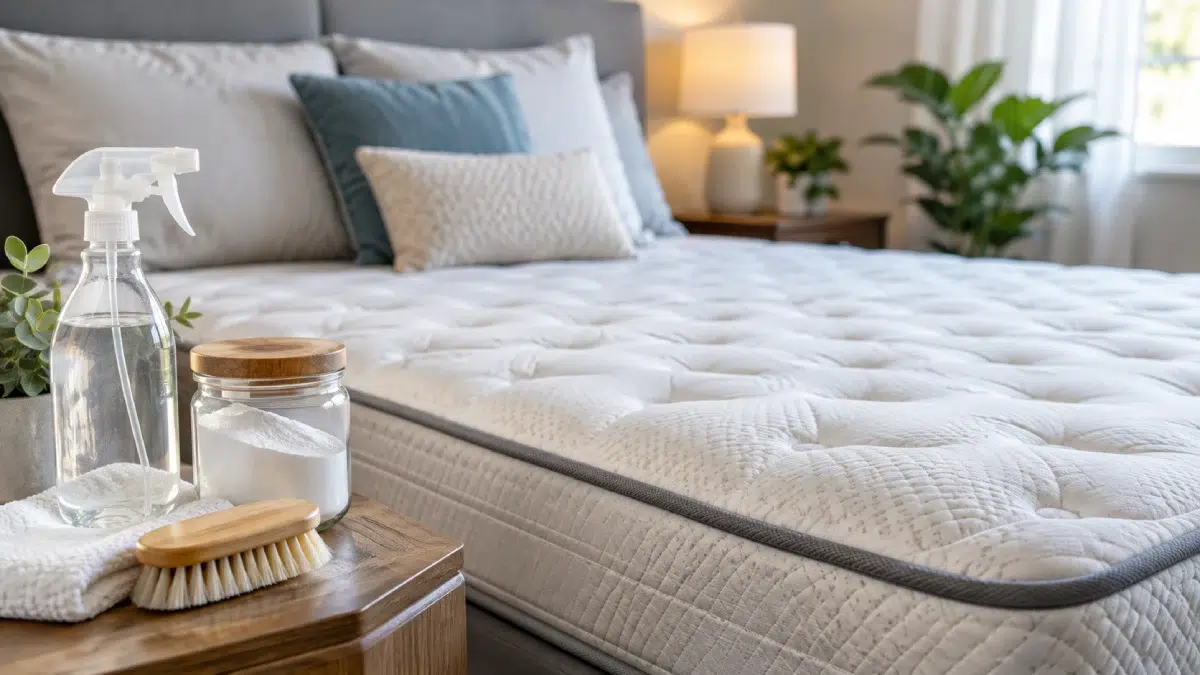
Best Way to Disinfect a Mattress: Easy Steps That Work
To disinfect your mattress effectively, start by stripping and washing all bedding in hot water.
Vacuum the mattress carefully using upholstery and crevice tools with a HEPA filter vacuum.
Choose a disinfection method suited to your mattress fabric, like steam cleaning or safe EPA-approved sprays.
Apply moisture sparingly to avoid mold.
Ensure thorough drying by promoting airflow with fans and dehumidifiers.
Finish with baking soda to neutralize odors.
Keeping these steps precise protects your mattress and extends its life. More detailed guidance follows.
Key Takeaways
- Use steam cleaning for chemical-free disinfection, especially if sensitive to harsh agents or unsure about mattress fabric compatibility.
- Apply EPA-approved disinfectant sprays only if safe for your mattress type, avoiding bleach unless manufacturer recommends it.
- Vacuum mattress thoroughly with a HEPA-filter vacuum using upholstery and crevice tools to remove dust, allergens, and surface contaminants.
- Allow mattress to dry completely using fans, dehumidifiers, and good ventilation to prevent mold and maintain hygiene.
- Supplement disinfection by airing mattress in indirect sunlight for a few hours to reduce dust mites and mold spores safely.
Preparing Your Mattress and Bedding for Cleaning

Before you begin disinfecting your mattress, start by stripping all bedding, including sheets, pillowcases, mattress pads, and protectors.
Begin mattress disinfection by removing all bedding—sheets, pillowcases, pads, and protectors for a thorough clean.
Remove everything carefully to avoid spreading dust or allergens. Wash these items in hot water, ideally at least 130°F (54°C), when fabric care labels permit.
This temperature effectively kills dust mites and bacteria. If your bedding’s labels recommend 40°C or 60°C, follow those guidelines for peak cleanliness.
This washing minimizes recontamination risk once you clean your mattress. Remember to disconnect any electric blankets before laundering nearby bedding and adhere to their specific care instructions.
Properly preparing your bedding guarantees that when you disinfect the mattress itself, you’re working with a clean, contaminant-free foundation. This increases the overall effectiveness of your mattress cleaning routine.
Using a mattress vacuum cleaner with HEPA filtration can further reduce allergens embedded in mattress fabrics before disinfection.
How to Vacuum Your Mattress for Effective Cleaning?
When you’re ready to vacuum your mattress, grab that upholstery brush attachment and the crevice tool. These tools are super handy for getting into those seams, tufts, and edges where dust loves to hide.
Now, here’s a little tip: it helps to work methodically. Start at the top and move your way down, going from left to right. This way, you can make sure you don’t miss any spots.
Why is this important? Well, a thorough vacuuming not only picks up all that pesky debris but also ensures that your disinfectants can do their job properly. Happy cleaning!
For best results, use a vacuum with upholstery-specific attachments to effectively trap fine particles and allergens.
Vacuum Tools And Techniques
When tackling mattress cleaning, start by vacuuming the surface thoroughly to remove dust, dead skin cells, and other debris that can hinder disinfectant effectiveness.
Use an upholstery brush attachment to clean the flat areas, then switch to a crevice tool for seams, tufts, and edges where particles accumulate.
Work methodically from top to bottom, left to right, ensuring no spot is missed.
Avoid rushing to maximize debris removal, as this step enhances disinfectant contact.
Regularly empty the vacuum to maintain suction power.
Choose a vacuum with strong filtration to trap allergens and dust mites effectively.
Ensuring proper ventilation during and after vacuuming helps reduce moisture buildup that can contribute to mold growth prevention.
Cleaning Pattern Tips
Although vacuuming may seem straightforward, following a consistent cleaning pattern guarantees thorough debris removal from your mattress.
Start at the top-left corner and methodically move left to right, ensuring every inch is covered.
Use an upholstery brush attachment for broad surfaces and a crevice tool to reach seams, tufts, and edges where dust and dead skin accumulate.
Work from top to bottom to avoid recontaminating cleaned areas. This systematic approach maximizes the removal of particles that can hinder disinfection effectiveness.
Avoid rushing or skipping sections; missing spots reduces your cleaning’s overall impact.
By adhering to this pattern, you set the stage for better sanitizing results and extend your mattress’s cleanliness and lifespan.
Consistency is key to maintaining a hygienic sleep surface.
For enhanced disinfection, consider using filtration methods that reduce bacteria and allergens, such as ultrafiltration technology, which operates efficiently without electricity.
How to Choose the Best Disinfection Method
Since mattresses vary in material and usage, selecting the best disinfection method requires considering fabric sensitivity, the types of contaminants present, and product safety guidelines.
First, identify your mattress fabric and review manufacturer instructions to avoid damage. For chemical sensitivity, opt for steam cleaning, which sanitizes without harsh agents.
When targeting bacteria or viruses, choose EPA-approved disinfectant sprays, making certain they’re safe for your mattress type. Avoid bleach-based products unless explicitly recommended, as they can degrade fabric fibers.
DIY solutions like hydrogen peroxide or vinegar work well for spot treatments but must be tested on inconspicuous areas first.
Always match the disinfection method to the specific contamination. Dust mites require heat, while stains may need targeted cleaners. This systematic approach ensures effective sanitation without compromising your mattress’s integrity.
For sensitive materials, it is recommended to use pH-neutral, non-toxic cleaners to prevent damage while maintaining effective disinfection.
How to Apply Moisture Safely Without Damaging Your Mattress?
You should always apply moisture cautiously to avoid damaging your mattress. Excess moisture can promote mold and mildew growth inside, so avoid soaking or heavy saturation.
Instead, use light misting or short steam bursts to limit dampness. Apply cleaning solutions like hydrogen peroxide selectively and sparingly, targeting stains only. Control moisture to preserve mattress structure and ensure faster drying.
Proper airflow and ventilation strategies help accelerate drying and prevent mold growth.
| Moisture Application | Recommended Method | Reason |
|---|---|---|
| Light misting | Spray lightly, avoid soaking | Limits moisture buildup |
| Steam bursts | Short, targeted bursts | Sanitizes without excess wetness |
| Spot treatment | Dab with hydrogen peroxide | Controls stains without soaking |
| Avoid soaking | No heavy saturation | Prevents mold/mildew formation |
Apply moisture methodically and minimally for safe, effective mattress disinfection.
Tips for Drying Your Mattress Completely to Prevent Mold
To dry your mattress completely and keep mold at bay, it’s important to boost air circulation. A great way to do this is by opening windows and using fans to help speed up evaporation. Trust me, a little breeze can make a big difference!
If you can, try positioning the mattress vertically. This really helps with airflow around all its surfaces, ensuring everything dries out properly.
Now, let’s talk about sunlight. It can definitely help reduce mold spores, but be careful! You don’t want to leave your mattress out in the sun for too long, as that might damage the materials. So, just a bit of sun here and there’s a good idea!
Using a dehumidifier alongside fans can further enhance drying by reducing indoor humidity and preventing mold growth.
Enhance Air Circulation
Although drying a mattress thoroughly can be challenging, enhancing air circulation plays a critical role in preventing mold growth.
To maximize airflow, open windows and use fans to create consistent ventilation around the mattress. Position fans to blow air across the mattress surface rather than directly at one spot, promoting even drying.
If possible, prop the mattress vertically against a wall to expose more surface area to air. Avoid placing the mattress in enclosed or humid spaces, as trapped moisture encourages mold.
Maintain circulation by keeping the room door open and removing any obstructions that block airflow. This methodical approach accelerates moisture evaporation, reducing the risk of mildew inside the mattress.
Ensuring your mattress is completely dry before remaking your bed is essential for long-term hygiene and mold prevention.
Using natural disinfectants can further help prevent mold and mildew growth during the drying process.
Use Sunlight Carefully
Maximizing airflow sets the stage for effective mattress drying, but sunlight can add an extra layer of benefit when used judiciously.
Sunlight’s ultraviolet rays help reduce dust mites and mold spores, enhancing disinfection.
However, avoid prolonged direct exposure to prevent fabric fading and material degradation.
Position the mattress in indirect sunlight for a few hours, ideally during mid-morning when UV intensity is moderate.
Combine sunlight with open windows and fans to accelerate moisture evaporation.
Always check the mattress’s care guidelines to make certain sunlight won’t damage its components.
Keep the mattress elevated or vertical to maximize air circulation on all sides.
Only remake your bed once the mattress is thoroughly dry to prevent mold growth and maintain a hygienic sleeping surface.
For persistent moisture, consider using dehumidifiers and fans to ensure complete drying and prevent mold and odor recurrence.
How to Use Baking Soda to Clean and Deodorize Your Mattress?
Regularly applying baking soda to your mattress effectively neutralizes odors and absorbs moisture. This makes it a practical step in mattress maintenance.
To use baking soda efficiently, follow these steps:
- Sprinkle Evenly: Distribute a thin, uniform layer of baking soda across the entire mattress surface. Focus on odor-prone areas.
- Let Sit: Allow the baking soda to rest for at least 30 minutes. For stronger deodorizing, extend the time to several hours or overnight. This enhances moisture absorption and odor neutralization.
- Vacuum Thoroughly: Use a vacuum with an upholstery attachment to remove all baking soda residue. This step prevents powder buildup and guarantees your mattress remains clean and fresh.
Applying baking soda this way maintains mattress hygiene by minimizing odors and moisture. It complements deeper cleaning routines without introducing moisture that can promote mold. For persistent odors, consider combining baking soda treatment with an enzymatic cleaner to break down organic matter effectively.
How to Maintain Mattress Cleanliness Between Deep Cleanings?
Maintaining mattress cleanliness between deep cleanings requires consistent, targeted actions that prevent buildup of dust mites, bacteria, and odors.
Consistent care between deep cleans prevents dust mites, bacteria, and unpleasant odors in your mattress.
Start by washing all bedding weekly in hot water, ideally 130°F or 40-60°C depending on fabric care, to reduce allergens and bacterial recontamination.
Use a mattress protector to minimize direct soiling and dust accumulation.
Vacuum the mattress surface regularly using an upholstery brush and crevice tool, focusing on seams and edges to remove dust and debris.
Ensure the mattress remains dry; avoid moisture buildup by airing it out and keeping the room ventilated.
These methodical steps maintain hygiene, extend the mattress’s life, and improve sleep quality between intensive disinfecting sessions.
Frequently Asked Questions
Can Mattress Disinfecting Sprays Harm People With Allergies?
Yes, mattress disinfecting sprays can irritate people with allergies, especially if they contain strong chemicals or fragrances.
You’ll want to check product labels carefully for allergens or harsh ingredients like bleach.
Opt for sprays with gentle, hypoallergenic formulations or natural alternatives like hydrogen peroxide or vinegar.
Always use sprays in well-ventilated rooms and test on a small area first to reduce airborne particles that might trigger your allergic reactions.
How Often Should I Deep Disinfect My Mattress?
You should deep disinfect your mattress every 3 to 6 months to maintain hygiene and reduce allergens like dust mites and bacteria.
If you have allergies, asthma, or pets, consider disinfecting monthly.
Regular cleaning prevents buildup and keeps your sleeping environment healthy.
Always combine deep disinfection with routine vacuuming, washing bedding in hot water, and using mattress protectors to extend freshness and minimize contamination over time.
Are Mattress Disinfectants Safe for Memory Foam?
Memory foam mattress disinfectants demand deliberate decisions.
Many disinfectant sprays contain harsh chemicals that can damage memory foam’s delicate density and degrade its durability.
You should select gentle, foam-friendly formulas, like diluted hydrogen peroxide or vinegar solutions, applied sparingly and with limited moisture.
Avoid bleach-based products and heavy soaking, which can harm the foam’s structure and promote mold.
Always test a small area first, then dry thoroughly to preserve your mattress’s performance and longevity.
Can UV Light Effectively Disinfect a Mattress?
Yes, UV light can effectively disinfect a mattress by killing bacteria, viruses, and dust mites on its surface.
However, its effectiveness depends on direct exposure and duration, so you need to move the UV device methodically across the entire mattress.
Keep in mind UV light won’t penetrate deep layers, so it works best combined with other cleaning steps like vacuuming and washing bedding.
Always follow safety guidelines to avoid skin or eye damage.
Should I Disinfect My Mattress After Illness Recovery?
Yes, you should disinfect your mattress after recovering from an illness to reduce germs and prevent reinfection.
Start by stripping and washing all bedding in hot water. Then vacuum the mattress thoroughly.
Use a suitable disinfectant, like steam or an antibacterial spray, avoiding excessive moisture.
Make sure the mattress dries completely before remaking the bed.
This methodical approach helps eliminate pathogens and supports a healthier sleeping environment post-recovery.
How to Keep Your Mattress Clean, Fresh, and Disinfected
Now, imagine sliding into a mattress that’s not just clean but truly disinfected, free from dust mites, bacteria, and odors.
You’ve prepped, vacuumed, and chosen the right method carefully. Moisture was applied sparingly, with drying guaranteed to prevent mold.
Baking soda worked its magic, and maintenance keeps it fresh. This methodical approach doesn’t just clean your mattress; it transforms your sleep environment.
It promises healthier, more restful nights ahead. Ready to experience it?