
Does Vinegar Kill Mold on Decks? What You Need to Know
You can use undiluted white distilled vinegar to kill about 82% of surface mold on your deck effectively.
It works best on light, surface mold and unfinished wood without causing damage.
However, vinegar struggles with deeply embedded mold or heavy infestations.
It might not eliminate stains or spores entirely.
For persistent mold, you’ll likely need additional treatments or alternative methods.
Keep exploring to understand when vinegar will help and what to try if mold returns.
Key Takeaways
- Undiluted white distilled vinegar kills about 82% of mold species on deck surfaces by penetrating and disrupting mold spores.
- Vinegar effectively removes light surface mold but is less effective on deep, heavy, or embedded mold infestations.
- Vinegar is safe for unfinished, raw wood decks but may damage finished or sealed deck coatings.
- Repeated vinegar treatments or additional methods like power washing may be necessary for persistent mold.
- Prevent mold regrowth by maintaining dry conditions, good airflow, and regular debris removal on the deck.
How to Use Vinegar to Remove Deck Mold?

To tackle mold on your deck using vinegar, start by applying undiluted white distilled vinegar directly onto the affected areas.
Make certain the surface is fully covered to maximize contact with mold spores.
Ensure the entire surface is thoroughly coated to effectively reach and eliminate mold spores.
Let the vinegar sit for about 60 minutes to allow the acetic acid to penetrate and disrupt mold growth effectively.
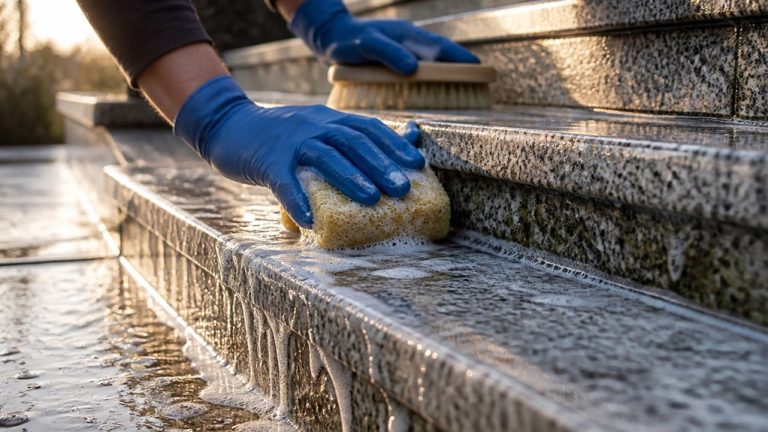
After this dwell time, scrub the deck with a stiff brush to lift mold residues from the wood grain.
Rinse or wipe the area to remove loosened material and allow the deck to dry completely.
If mold remains visible, repeat the process.
Note that vinegar works best on unfinished wood and surface mold.
Protect nearby plants and yourself by wearing gloves and ensuring good ventilation during application.
For best results, avoid wetting the wood excessively during cleaning to prevent moisture damage and mold recurrence, and maintain indoor humidity between 30% and 50% with proper ventilation and dehumidification to inhibit future growth of mold spores.
How Effective Is Vinegar at Killing Deck Mold?
Although vinegar doesn’t guarantee complete mold eradication, it proves quite effective at killing a significant portion of surface mold on decks.
Studies indicate that 5% acetic acid in white distilled vinegar can eliminate roughly 82% of mold species on contact, particularly targeting light or surface-level growth.
You’ll get best results by applying undiluted vinegar and allowing it to dwell for about 60 minutes before scrubbing.
However, vinegar is less effective on deep or heavy infestations and won’t address moisture issues that cause mold regrowth.
While vinegar cleans visible mold well, it mightn’t remove residual staining or spores entirely.
For persistent mold, repeated treatments or alternative solutions may be necessary. Vinegar primarily serves as a practical, accessible option for managing surface mold rather than thorough remediation.
It is important to ensure proper ventilation during and after cleaning to reduce mold regrowth and moisture buildup.
Which Deck Surfaces Can You Safely Treat With Vinegar?
Deck surface type plays a critical role in determining whether vinegar is a safe and effective treatment for mold removal.
You can confidently use undiluted white distilled vinegar on unfinished, raw wood decks because it penetrates mold on the surface without damaging the material.
However, on finished, painted, or sealed decks, vinegar’s acetic acid risks degrading protective coatings, potentially causing discoloration or surface damage.
For rough or porous woods, you’ll need a stiff brush to reach mold embedded in textures, but the wood itself won’t be harmed by vinegar.
Before applying vinegar, inspect your deck’s material and finish carefully, since treatment can alter appearance or protective layers.
This evidence-based approach helps you avoid unintended damage while effectively targeting surface mold on compatible deck surfaces.
Additionally, using plant-based enzymes can offer a gentle and effective alternative for mold and stain removal on sensitive surfaces.
What to Do When Vinegar Doesn’t Remove Mold or Stains?
When vinegar doesn’t fully eliminate mold or the stains it leaves behind, it signals that the infestation may be deeper or more established than surface cleaning can address.
Persistent mold after vinegar treatment indicates a deeper, more entrenched problem beyond surface cleaning.
In such cases, repeated vinegar applications might help, but don’t expect complete resolution if mold has penetrated porous wood or if moisture issues persist.
You should consider mechanical methods like power washing or sanding to remove embedded mold and stains more effectively.
Additionally, commercial mold removers with fungicidal properties may offer stronger results but require careful handling and compatibility checks with your deck’s finish.
Always assess the deck material and test treatments on small areas first.
If persistent staining or mold remains despite these efforts, consulting a professional mold remediation service could guarantee thorough removal and safeguard structural integrity.
For long-term prevention, maintaining good drainage around your deck will reduce moisture buildup that encourages mold growth.
How to Prevent Mold From Returning After Vinegar Treatment?
Maintaining a dry and well-ventilated environment is essential to preventing mold from returning after vinegar treatment. Mold thrives in damp, shaded areas, so you should remove organic debris regularly.
Make certain your deck receives adequate sunlight and airflow. Addressing moisture sources, such as poor drainage or water pooling, is critical. These conditions promote mold regrowth despite surface cleaning.
Periodic inspection helps detect early mold presence, allowing timely intervention before deep infestation. Since vinegar primarily kills surface mold, combining treatment with moisture control yields better long-term results.
Avoiding excessive shade, trimming overhanging vegetation, and using breathable deck materials can also reduce mold risk. By integrating these preventive measures, you minimize the likelihood of mold returning, improving your deck’s durability and appearance after vinegar application.
For enhanced protection, consider using advanced activated carbon block filtration systems to reduce chemical contaminants that may affect wood treatments and environmental health.
Frequently Asked Questions
Can Vinegar Harm Nearby Plants During Deck Mold Treatment?
Yes, vinegar can harm nearby plants during deck mold treatment because its acetic acid may damage or stress vegetation if it contacts leaves or soil.
To protect your plants, water them well before applying vinegar to reduce absorption of runoff.
Also, rinse any vinegar residue from surrounding surfaces promptly.
Taking these precautions helps minimize potential harm while you effectively clean your deck mold.
What Safety Gear Is Recommended When Using Vinegar on Mold?
When handling vinegar on mold, gear up like a scientist in a lab: wear protective gloves, goggles, and a mask to shield your skin, eyes, and lungs from irritants.
Good ventilation is vital to keep fumes at bay. These precautions reduce exposure risks linked to acetic acid.
Also, water nearby plants before treatment to minimize runoff harm. Following this gear protocol guarantees your safety while effectively tackling mold on your deck.
How Long Does Vinegar Take to Dry on a Deck Surface?
Vinegar typically takes about 1 to 2 hours to dry on a deck surface, depending on temperature, humidity, and airflow.
You should allow the vinegar to sit for around 60 minutes to maximize mold-killing effectiveness before scrubbing.
After scrubbing, drying time varies but usually completes within a couple of hours in well-ventilated, sunny conditions.
Avoid rushing drying, as residual moisture can affect the deck’s condition and mold regrowth risk.
Is Vinegar Safe to Use on Composite or Synthetic Decking?
You wouldn’t want to douse your composite deck in vinegar like it’s a magic potion because vinegar can damage composite or synthetic decking surfaces.
The acetic acid may degrade protective coatings, leading to discoloration or surface weakening over time.
Instead, check manufacturer guidelines and use cleaners specifically designed for composites.
While vinegar’s great for unfinished wood, it’s safer to avoid it on synthetic decks to prevent costly damage and preserve their lifespan.
Can Vinegar Be Mixed With Other Cleaners for Better Mold Removal?
You shouldn’t mix vinegar with other cleaners for mold removal because chemical reactions can occur, reducing effectiveness or creating harmful fumes.
Vinegar works best undiluted and alone, especially on surface mold. Combining it with bleach or ammonia poses health risks.
To enhance mold removal, focus on proper application, scrubbing, and repeated treatments rather than mixing products.
Always prioritize safety and manufacturer guidelines for your deck’s material.
Vinegar for Deck Mold: Benefits, Limits, and Safety
Vinegar can be a powerful ally in your fight against deck mold, effectively killing many types without harsh chemicals.
However, it’s not a miracle cure for every stubborn stain, so be prepared to try alternative treatments if needed.
You can safely use vinegar on most wood and composite decks, but always test a small area first.
With regular cleaning and proper sealing, you’ll prevent mold from returning, keeping your deck looking fresh as a mountain breeze.