
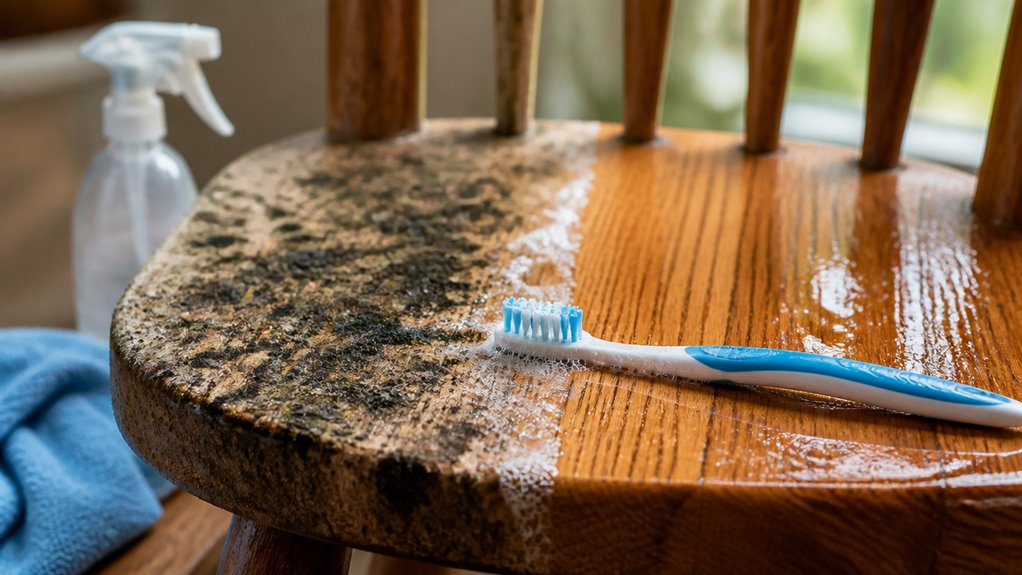
How to Get Rid of Mold on Wood Furniture: Easy DIY Guide
To get rid of mold on wood furniture, start by wearing gloves, a tight N95 mask, and goggles for protection. Move the piece to a well-ventilated area and vacuum gently with a HEPA filter.
Clean with a mild soap solution, wiping with a damp cloth following the grain. For tough spots, try vinegar or hydrogen peroxide. Lightly sand stained areas if needed.
Finish with appropriate sealing to protect the wood. Keep humidity low and airflow steady to prevent mold’s return. Learn more for deeper restoration tips.
Key Takeaways
- Wear protective gear like gloves, N95 respirator, and goggles to prevent mold spore exposure during cleaning and sanding.
- Increase ventilation, lower indoor humidity to 30%-50%, and vacuum gently with a HEPA filter before cleaning moldy wood.
- Clean mold with a damp cloth using mild soapy water, wiping with the grain, and air dry thoroughly to prevent mold recurrence.
- Use diluted vinegar or 3% hydrogen peroxide for stubborn mold, then gently sand stained areas with fine-grit sandpaper and vacuum residual dust.
- Refinish wood with appropriate stain and sealant, replace severely damaged wood, and maintain low humidity and airflow to prevent future mold growth.
Safety Gear for Mold Cleanup

Before you start removing mold from wood furniture, make sure you’re fully equipped with the right safety gear to protect yourself from harmful spores.
Wear gloves to avoid skin contact, long sleeves and pants to cover exposed skin, and a tightly fitting face mask, preferably an N95 respirator, to prevent inhaling airborne spores.
Wear gloves, long sleeves, pants, and a tightly fitting N95 mask to protect against mold spores.
Move the furniture outdoors or to a well-ventilated area and open windows to increase airflow.
Use a HEPA vacuum to gently remove loose mold spores without spreading them.
Keep your cleaning tools and rags isolated in sealed bags or containers to avoid cross-contamination.
This gear and setup minimize your exposure and reduce the risk of spreading mold spores to other areas, ensuring a safer and more effective cleanup process.
For added safety, always conduct mold removal in a well-ventilated environment to reduce spore concentration in the air.
Preparing Wood Furniture for Mold Removal
Once you have your safety gear on and your workspace set up to minimize mold spread, it’s time to prepare the wood furniture itself for cleaning.
First, move the furniture to a well-ventilated area, preferably outdoors or in a garage, to guarantee airflow and reduce mold spore buildup indoors.
Next, use a HEPA vacuum to carefully remove loose mold spores from the surface. This prevents spreading spores during cleaning.
Make sure to isolate all rags and cleaning tools to avoid cross-contamination.
Avoid wetting the wood at this stage; instead, gently vacuum and inspect the furniture for any damaged areas needing special attention later.
Proper preparation helps make the subsequent cleaning steps safer and more effective while protecting both you and your home.
Wear protective gear such as gloves, goggles, and an N95 respirator to ensure safe handling of mold spores during the process.
Cleaning Mold From Wood Furniture With Mild Soap
Start by mixing a mild soap with warm water. Add just a small amount of dish soap to a bucket of water to create a gentle cleaning solution.
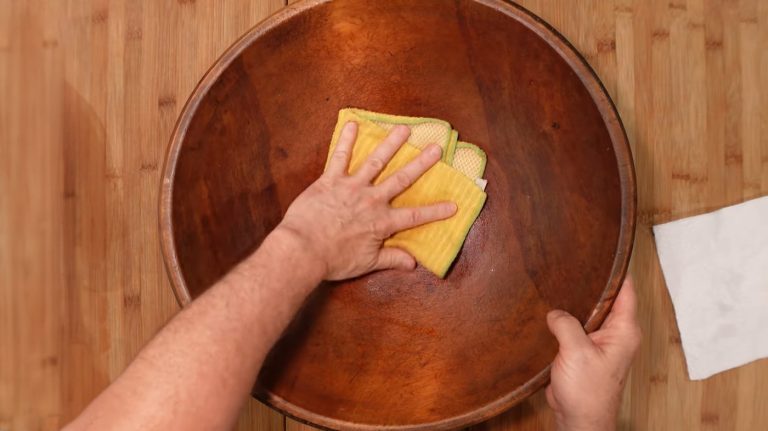
Dampen a lint-free cloth with this mixture, then wring it out thoroughly to avoid soaking the wood. Gently wipe the moldy areas following the grain of the wood to lift mold without damaging the surface.
Rinse and wring the cloth frequently in clean water to prevent spreading mold spores. Avoid scrubbing hard, as this may scratch the wood.
After wiping, let the furniture air dry completely in a well-ventilated area. This mild soap method effectively removes surface mold while protecting your wood furniture’s finish before moving on to stronger treatments if needed. Ensure you maintain good airflow to promote drying and prevent mold recurrence.
How to Use Vinegar and Hydrogen Peroxide to Remove Mold?
Although mild soap removes surface mold, you’ll need stronger solutions like vinegar and hydrogen peroxide to tackle stubborn mold stains on wood furniture. Start by mixing equal parts white vinegar and water in a spray bottle.
Lightly mist the affected area and let it sit for about an hour to penetrate the mold. For tougher spots, apply 3% hydrogen peroxide, letting it work for 10 minutes before gently scrubbing with a soft brush.
It is important to avoid harsh acids and full-strength bleach, as these can damage the wood and its finish, similar to how delicate surfaces require pH-neutral cleaners for safe maintenance.
| Step | Details |
|---|---|
| Vinegar Solution | Mix 1:1 vinegar and water |
| Application | Light mist, avoid soaking |
| Waiting Time | 1 hour for vinegar, 10 mins for peroxide |
| Scrubbing | Use soft brush after solution sets |
| Safety | Wear gloves, mask, ventilate area |
This method helps remove mold without damaging the wood.
Removing Mold Stains and Residue Effectively
After treating mold with vinegar or hydrogen peroxide, you’ll need to remove any remaining stains and residue to fully restore your wood furniture.
Start by wiping the surface with a damp cloth to lift off loosened mold and cleaning solution.
Follow this with a plain water-dampened cloth to clear away any vinegar or peroxide traces.
Next, dry the wood thoroughly using a soft, dry cloth to prevent moisture damage.
To eliminate odors and residual moisture, sprinkle baking soda evenly over the surface, letting it sit for a few hours.
Finally, vacuum the baking soda carefully to avoid spreading spores.
For ongoing prevention, consider using a plant-based cleaner that helps inhibit mold regrowth without harsh chemicals.
Sanding Moldy Wood Furniture to Remove Stains
If stains remain stubborn even after removing mold residues and odors, sanding the wood surface can help eliminate deep-set discoloration.
Begin by moving your furniture to a well-ventilated area and wearing protective gear, including a mask and gloves.
Use fine-grit sandpaper (220-grit or higher) and always sand gently in the direction of the wood grain to avoid scratches.
Focus on the stained areas, applying light pressure to remove discoloration without damaging the wood.
After sanding, vacuum the dust and dislodged spores using a HEPA-filter vacuum to prevent spreading mold particles.
Avoid over-sanding, which can thin the wood surface.
Once sanding is complete and the area is clean, you’re ready for the next step of restoration.
This method guarantees thorough stain removal while preserving your wood furniture’s integrity.
For effective mold removal, ensure proper ventilation and consider using a baking soda paste to gently scrub mold residues before sanding.
How to Refinish Mold-Damaged Wood Furniture?
First things first, take a good look at your furniture and see just how much mold damage there is. This will help you figure out if sanding is really needed. If you decide to go ahead, grab some fine-grit sandpaper. You’ll want to gently sand away any lingering stains, and remember—always go with the grain! This helps prevent scratches.
Once you’ve got the surface all clean and smooth, it’s time to put on some finish treatments. This won’t only restore the wood’s beauty but also protect it for the future. Be sure to apply 2-3 coats of appropriate finishes, allowing sufficient drying time between each, to ensure proper adhesion and lasting protection of the wood surface protective finishes.
Assessing Damage Extent
When you’re ready to refinish mold-damaged wood furniture, you need to carefully assess the extent of the damage to determine the right restoration approach.
Start by inspecting the surface for visible mold and discoloration. Then check for wood softness or structural weakness caused by prolonged moisture exposure.
Use a flashlight to spot hidden mold in crevices and joints. Consider how deep the mold penetrates the wood, as surface stains may need less intensive treatment than deep-seated damage.
Finally, evaluate if any parts require replacement rather than restoration. Key factors to assess include:
- Surface mold coverage and staining extent
- Wood softness or decay under the affected areas
- Hidden mold in joints or corners
- Depth of mold penetration into the wood fibers
- Structural integrity and need for part replacement
Since mold growth thrives in environments with high indoor humidity, controlling moisture around your furniture is essential to prevent further damage.
Sanding Mold Stains
Start sanding mold stains gently using fine-grit sandpaper (220-grit or higher) to avoid damaging the wood surface. Always sand in the direction of the grain to prevent scratches and maintain the wood’s natural texture.
Focus on stained areas, applying light pressure and checking frequently to avoid over-sanding. After sanding, use a HEPA vacuum to remove dust and dislodged spores thoroughly.
This step is essential to prevent mold from spreading or returning. If the mold has deeply penetrated or particleboard is damaged, consider replacing those sections.
Remember to wear protective gear during sanding to avoid inhaling spores. Once the surface feels smooth and clean, you’re ready for the next step in refinishing.
Sanding effectively removes stubborn stains and prepares the wood for finishing treatments.
Applying Finish Treatments
Restore the beauty and integrity of your mold-damaged wood furniture by applying appropriate finish treatments. After thorough cleaning and sanding, refinishing will protect and enhance the wood’s surface.
First, choose a finish compatible with your wood type and desired look. Here’s how to proceed:
Apply a wood conditioner if using stain to guarantee even absorption. Use a stain or wood dye to restore color, applying with a cloth or brush. Let the stain dry completely before sealing.
Seal the surface with a polyurethane or water-based clear coat to protect against moisture. Apply multiple thin coats, sanding lightly between each for smoothness.
For best results, always use soft microfiber cloths when handling wood finishes to avoid scratches and maintain the wood’s natural beauty.
Dealing With Irreparable Mold Damage on Wood Furniture
Although you may have tried multiple cleaning and treatment methods, some mold damage on wood furniture can become irreparable, especially if it has deeply penetrated the wood fibers or caused structural weakening.
In these cases, it’s best to assess the extent of the damage carefully.
If the wood feels soft, crumbly, or has visible rot, continuing restoration could be unsafe and ineffective.
You might need to replace the entire piece or salvage undamaged sections. For particle board or plywood, replacing affected panels is often the only solution.
Always dispose of heavily mold-infested parts safely to prevent spreading spores. Consider consulting a professional if the furniture has significant value.
Proper drying and ventilation are crucial to prevent mold growth from worsening or recurring after treatment.
Preventing Mold Growth on Wood Furniture Long-Term
Since mold thrives in damp, poorly ventilated environments, you’ll need to control moisture and airflow around your wood furniture to prevent future growth.
Mold grows best in damp, stagnant areas, so managing moisture and airflow is essential to protect your wood furniture.
Consistently maintaining a dry environment is key to long-term protection.
Here’s what you should do:
Keep indoor humidity between 30% and 50% using a dehumidifier or HVAC system.
Place furniture in well-ventilated areas; use fans to circulate air.
Apply borate-based wood treatments or antimicrobial sealants for added defense.
Avoid placing furniture directly against damp walls or floors.
Regularly inspect and clean furniture to catch mold early.
Frequently Asked Questions
Can Mold on Wood Furniture Cause Allergic Reactions?
Yes, mold on wood furniture can cause allergic reactions.
When you come into contact with mold spores, you might experience symptoms like sneezing, coughing, itchy eyes, or skin rashes.
If you have asthma or mold sensitivities, exposure could trigger more severe respiratory issues.
To protect yourself, always wear protective gear while cleaning and keep the area well-ventilated.
Taking these precautions helps reduce your risk of allergic reactions from mold.
Is It Safe to Use Bleach on Moldy Wood Furniture?
You shouldn’t use bleach on moldy wood furniture because it can damage the wood fibers and won’t fully penetrate porous surfaces to kill mold roots.
Instead, opt for milder solutions like vinegar or hydrogen peroxide, which clean effectively without harming the wood.
If you do use bleach, test it on a hidden area first. Always wear protective gear to avoid inhaling fumes or contact with skin.
How Long Does Mold Take to Grow on Wood Furniture?
Mold might materialize on moist wood within 24 to 48 hours, especially when humidity hovers high.
If you don’t dry damp furniture quickly, spores seize the chance to settle and spread.
Warm, wet, and poorly ventilated spots speed up mold’s sneaky spread.
You should act fast to control moisture, keep air flowing, and maintain indoor humidity between 30% and 50% to halt mold’s harsh hold on your wood furniture.
Can Professional Mold Remediation Services Be Used for Furniture?
Yes, you can use professional mold remediation services for furniture.
They have specialized tools and expertise to safely remove mold without damaging your wood pieces.
Professionals also handle containment and disposal of mold spores, reducing health risks.
If your furniture has extensive mold or you’re unsure about DIY methods, hiring experts guarantees thorough cleaning and restoration.
Just be sure to discuss the process and costs upfront before proceeding.
Does Sunlight Help Kill Mold on Wood Furniture?
Sunlight is a natural mold fighter, but don’t rely on it alone. A stitch in time saves nine.
While UV rays can help kill mold spores on wood furniture, they won’t remove stubborn mold or deeply embedded spores.
You should combine sunlight exposure with thorough cleaning, like using vinegar or hydrogen peroxide treatments.
Always dry the furniture completely afterward, since moisture encourages mold growth.
Sunlight helps, but it’s just one part of effective mold control.
Restore Moldy Wood Furniture Safely and Effectively
Now that you know how to tackle mold on wood furniture, don’t let it snowball into a bigger problem.
With proper safety gear, thorough cleaning, and refinishing, you can restore your pieces to their former glory.
Remember, prevention is key: keep your furniture dry and well-ventilated to stay one step ahead.
Taking these steps will help you keep your wood furniture mold-free and looking great for years to come.



One Comment