Why No Drano in Toilet: Risks & Safer Alternatives
You shouldn’t use Drano in your toilet because its gel formula can’t navigate the curved trap or clear dense blockages like compacted waste and toilet paper.
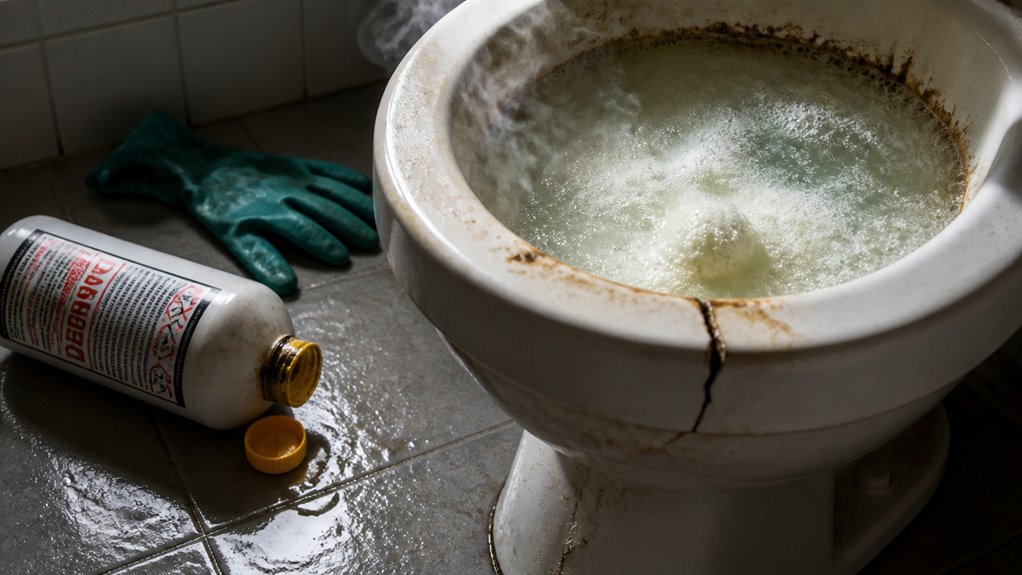
The chemicals may sit idle, risking damage to porcelain and plumbing. They also pose serious health hazards from toxic fumes and burns.
Drano’s harsh action can harm septic systems and the environment.
Using mechanical tools or enzyme cleaners is a safer, more effective choice. Keep exploring to understand better alternatives and risks involved.
Key Takeaways
- Drano’s chemical gel cannot effectively reach or dissolve toilet clogs due to the toilet’s curved trap design.
- Drano formulas target grease and hair buildup, not dense waste or toilet paper clogs common in toilets.
- Using Drano in toilets risks chemical damage to porcelain, PVC pipes, and can cause costly plumbing corrosion.
- Harsh chemicals in Drano pose health, environmental, and septic system risks when used in toilets.
- Mechanical methods like plungers or toilet augers are safer and more effective first-line solutions for toilet clogs.
Why Drano Isn’t Suitable for Toilet Clogs?

Although Drano works well for sinks and tubs, it isn’t designed for toilet clogs due to the unique trap configuration and materials involved.
Toilets have a curved trap that often prevents Drano’s chemical gel from reaching blockages effectively.
The product’s formula targets organic buildup common in sinks but struggles with dense toilet clogs caused by waste, paper, or foreign objects.
Drano’s own guidelines warn against using most of its products in toilets, except for Drano Max Build-Up Remover, which only addresses slow drains and never full clogs.
Using Drano in toilets risks leaving the product sitting idle, reducing its effectiveness and potentially causing damage.
Because of these factors, relying on Drano for toilet blockages is both ineffective and potentially harmful to your plumbing system.
Additionally, Drano’s harsh chemicals can disrupt the septic bacterial balance, leading to long-term issues in septic systems.
Toilet Plumbing Differences Affecting Drano Use
Because toilet plumbing features a distinct trap design compared to sinks and tubs, Drano’s chemical gel often fails to reach or effectively treat blockages in toilets.
Toilets use a larger, curved trap that retains water and waste differently, preventing chemical agents from flowing directly to the clog.
Unlike straight or S-shaped traps in sinks, this configuration can cause Drano to pool without penetrating dense obstructions.
Additionally, the materials and shape of toilet pipes limit the chemical’s contact with the blockage, reducing its efficacy.
You should also consider that the chemicals generate heat during reaction, which interacts differently with toilet components, risking damage.
Understanding these plumbing distinctions is critical.
Relying on Drano in toilets can lead to ineffective treatment and potential harm to your toilet’s structure and connected piping.
Moreover, using harsh chemicals like Drano can leave toxic residues that may degrade plumbing materials over time.
Why Drano Fails to Clear Toilet Blockages?
You know, one of the main reasons Drano doesn’t work well for toilet blockages is because of the trap configuration. It often stops the product from actually reaching the clog. So, even if you pour it in, it’s just not getting to where the problem is.
And let’s talk about the chemical side of things. Drano’s formula isn’t really designed to tackle those dense blockages made up of waste or toilet paper. It’s like trying to use a butter knife to cut through a steak—it just doesn’t have what it takes! Because of these physical and chemical limitations, it usually doesn’t clear toilet blockages completely. Additionally, harsh chemicals like those in Drano can disrupt septic system bacteria, causing further plumbing issues if used improperly.
Toilet Trap Configuration
When you pour Drano into a toilet, its effectiveness is limited by the toilet’s unique trap design. Unlike sinks or tubs, toilets feature an S-shaped trap built into the bowl that holds water and blocks sewer gases.
This curved trap prevents Drano’s gel or liquid from flowing directly to the clog, often leaving the chemical sitting stagnant in the bowl or upper trap area. Because the chemical can’t reliably reach blockages deep in the trap or further down the drain line, it fails to dissolve dense materials like waste or toilet paper.
Additionally, the trap’s shape slows chemical movement, reducing contact time with clogs. Understanding this configuration is essential; relying on Drano risks wasted product and potential damage without effectively clearing the obstruction. Moreover, since Drano is not designed to break down organic waste effectively in toilets, mechanical alternatives like a plunger or auger are often more reliable for toilet clogs.
Chemical Reach Limitations
Although Drano’s chemical formula is designed to break down organic material, it often fails to reach the actual clog within toilet plumbing due to the trap’s shape and the clog’s location. This limits its ability to dissolve blockages effectively.
You’ll find that the chemical gel may just sit in the bowl or pipe curve instead of contacting the obstruction directly. Additionally, clogs located further down the drain line remain unaffected.
Consider these limitations when using Drano in toilets:
- Toilet traps prevent gel from reaching deep blockages.
- Clogs often lie beyond Drano’s effective range.
- Chemicals can pool without penetrating dense material.
- Uneven pipe geometry restricts chemical flow.
- Drano isn’t formulated for toilet-specific plumbing challenges.
These factors explain why Drano often fails to clear toilet blockages safely and efficiently. Moreover, harsh chemical cleaners like Drano can corrode or weaken old or delicate plumbing over time, making their use in toilets risky.
Dense Clog Resistance
Since toilet clogs often consist of dense materials like compacted toilet paper, waste, and foreign objects, Drano’s chemical action struggles to break them down effectively.
The product’s formula is designed for grease and hair in sinks, not the heavy, solid masses in toilets.
Because of the trap’s shape and clog density, Drano gel often fails to contact the blockage directly, limiting its chemical reaction.
Even if it reaches the clog, the dense matter resists rapid breakdown, rendering the treatment ineffective.
You risk wasting time and exposing your plumbing to corrosive chemicals without resolving the issue.
Mechanical tools like plungers or augers physically disrupt dense clogs and are safer, more reliable first-line solutions.
Avoid relying on Drano for tough toilet blockages to prevent damage and prolonged plumbing problems.
For toilet clogs, enzyme-based cleaners provide a safer, pipe-friendly alternative by gradually breaking down organic buildup without corrosive chemicals.
Health Risks of Using Drano in Toilets
If you use Drano in your toilet, you risk serious chemical burns from splashes during plunging or augering afterward.
Drano’s caustic chemicals remain highly reactive and can cause skin and eye injuries on contact.
Additionally, mixing Drano with other household cleaners may release toxic gases, posing severe respiratory hazards.
Be aware of these health risks when considering Drano for toilet clogs:
- Chemical burns from splashed Drano during manual unclogging
- Toxic gas release when mixed with bleach or ammonia
- Eye and respiratory irritation from fumes
- Hazardous exposure to anyone handling treated plumbing
- Prolonged contact risks due to Drano lingering in toilet water
Mixing reactive chemicals like Drano with bleach or oxygen-based cleaners can release toxic gases and cause dangerous chemical reactions.
Prioritize safe, mechanical methods to avoid these serious health dangers.
How Drano Damages Toilet Plumbing Over Time?
Beyond the immediate health risks, using Drano in your toilet can cause significant damage to your plumbing system over time.
Drano’s caustic chemicals generate heat that may crack porcelain toilets and soften PVC pipes, compromising structural integrity.
Repeated exposure to these harsh chemicals accelerates corrosion in metal pipes, weakening them and increasing the likelihood of leaks.
The unique trap design in toilets often traps the chemical gel, prolonging contact with vulnerable materials and exacerbating damage.
Over time, this chemical assault reduces pipe lifespan and heightens repair costs.
You risk not only damaging your toilet but also harming connected plumbing lines and sewer systems.
For these reasons, relying on Drano for toilet clogs is both technically unsound and potentially costly.
Additionally, using such harsh chemicals can release harmful fumes and pose serious health risks during application.
Effective Mechanical Methods to Clear Toilet Clogs
Start by reaching for a plunger or toilet auger when you encounter a clog.
Begin clearing clogs with a plunger or toilet auger for safe, effective blockage removal.
These mechanical tools provide the safest and most effective method to clear blockages.
Avoid chemical use that risks damage or toxic exposure.
When using mechanical methods, make sure you:
Select a flange plunger designed specifically for toilets to maximize suction.
Position the plunger correctly over the drain and use steady, controlled pressure.
Employ a toilet auger to mechanically break up or retrieve stubborn blockages beyond the trap.
Avoid excessive force to prevent porcelain damage or pipe misalignment.
Sanitize tools thoroughly after use to prevent bacterial contamination.
These methods physically remove or dislodge blockages without corrosive risk.
This helps preserve your plumbing’s integrity and ensures safe, reliable toilet function.
Promptly addressing clogs helps avoid expensive repairs and further damage to your plumbing system.
Using Enzyme Cleaners Safely for Toilet Maintenance
You might want to think about using enzyme cleaners as a safer option for keeping your toilet’s drainage in good shape. These cleaners rely on biological agents to break down organic waste, and the best part? They do this without causing heat or corrosion, which means there’s less risk of damaging your pipes and porcelain.
Just a heads up, though—it’s really important to follow the manufacturer’s instructions closely. This ensures that the cleaner has enough contact time to be effective. Skipping this step could lead to less-than-stellar results! Many enzyme cleaners are formulated to penetrate deep and digest odor-causing molecules for genuine odor removal.
Benefits of Enzyme Cleaners
Frequently, enzyme cleaners offer a safer and more targeted approach for maintaining toilet drains compared to harsh chemical alternatives like Drano.
You’ll benefit from their specificity, as enzymes break down organic waste without damaging pipes or fixtures.
They don’t produce heat or toxic fumes, reducing risk to your plumbing and health.
Using enzyme cleaners regularly can prevent buildup and minimize clogs by digesting waste materials gently and effectively.
Key benefits include:
- Targeted breakdown of organic matter
- No corrosive chemical reactions or heat generation
- Safe for all plumbing materials, including PVC and porcelain
- Non-toxic and environmentally friendly
- Reduced risk of chemical burns or fumes
Proper Application Techniques
Although enzyme cleaners are safer than harsh chemicals, applying them correctly is essential to maintain their effectiveness and protect your toilet’s plumbing.
First, read the product instructions carefully. Dosage and contact time vary by formulation.
Always pre-rinse the bowl to remove excess debris that can inhibit enzyme activity. Pour the cleaner directly into the toilet bowl, avoiding splashes, and let it sit undisturbed for the recommended period, usually several hours or overnight.
Avoid flushing during this time to allow enzymes to break down organic waste properly. Use enzyme cleaners regularly to prevent buildup rather than as a reactive measure for severe clogs.
Finally, store enzyme products in a cool, dry place to preserve their biological agents. Always wear gloves to prevent skin irritation during application.
Environmental Impact and Safer Alternatives to Drano
Since harsh chemical drain cleaners like Drano can cause significant environmental damage when they enter wastewater systems, it’s crucial to weigh safer alternatives for toilet maintenance.
You should avoid introducing corrosive chemicals that disrupt microbial ecosystems and corrode plumbing infrastructure.
Instead, opt for mechanical or enzymatic methods that minimize environmental harm and protect your pipes.
Consider these safer approaches:
Use a plunger to dislodge clogs mechanically without chemicals.
Employ a toilet auger to reach blockages deeper in the trap.
Apply enzyme-based cleaners that biologically break down organic waste.
Regularly maintain your toilet with mild, non-corrosive household solutions like baking soda and vinegar.
Contact a professional plumber for persistent or severe blockages to prevent damage and pollution.
These methods reduce ecological risks and preserve your plumbing system’s integrity.
Frequently Asked Questions
Can Drano Be Used to Prevent Toilet Clogs?
You shouldn’t use Drano to prevent toilet clogs because it’s not designed for that purpose and can damage your plumbing.
Instead, rely on routine maintenance like flushing only appropriate materials and using enzyme-based cleaners made for toilets.
If you want to avoid clogs, mechanical methods like plungers or augers work safer and more effectively.
Using Drano regularly in toilets risks pipe corrosion, heat damage, and health hazards from chemical exposure.
How Long Should I Wait After Using Drano Before Flushing?
Waiting after using Drano is like letting paint dry; you need patience for it to work properly.
Usually, you should wait 15 to 30 minutes before flushing to let the chemicals break down the clog.
However, don’t exceed the product’s instructions, as leaving it too long can damage pipes.
Always flush slowly with plenty of water to clear the residue safely.
Avoid mixing with other cleaners to prevent hazardous reactions.
Is Drano Safe for Septic Tank Systems?
Drano isn’t safe for septic tank systems because its harsh chemicals can disrupt the beneficial bacteria essential for breaking down waste.
Using Drano may kill these bacteria, leading to reduced septic system efficiency and potential backups or failures.
Instead, you should opt for septic-safe, enzyme-based cleaners designed to maintain bacterial balance.
Always avoid chemical drain cleaners in septic systems to protect your plumbing and avoid costly repairs.
What Should I Do if Drano Causes a Chemical Burn?
If Drano causes a chemical burn, immediately rinse the affected area with plenty of cool water for at least 15 minutes to dilute the chemical.
Avoid using soaps or creams until you’ve flushed thoroughly. Remove contaminated clothing carefully to prevent further exposure.
Seek medical attention promptly, especially if the burn is severe, blistered, or causing intense pain.
Follow all safety instructions on the product label to minimize risk in the future.
Are There Any Toilet-Safe Chemical Drain Cleaners Besides Drano?
You’ve heard “a stitch in time saves nine,” so choosing the right product matters.
Yes, some enzyme-based cleaners are safer for toilets, breaking down organic buildup gently without harsh chemicals.
Avoid caustic options like Drano, as they can damage pipes and pose health risks.
Look for products specifically labeled “toilet-safe” and follow instructions carefully.
When in doubt, mechanical tools like plungers or augers remain your safest bet for clogs.
Safer Ways to Unclog a Toilet Without Drano
You shouldn’t use Drano in your toilet because it’s like trying to fix a delicate watch with a hammer: ineffective and damaging.
Drano’s harsh chemicals can corrode your plumbing, worsen clogs, and pose serious health risks.
Instead, rely on mechanical tools or enzyme cleaners designed for toilets.
These safer methods protect your pipes and the environment while effectively clearing blockages.
Always choose precision over brute force to maintain your toilet’s integrity.